
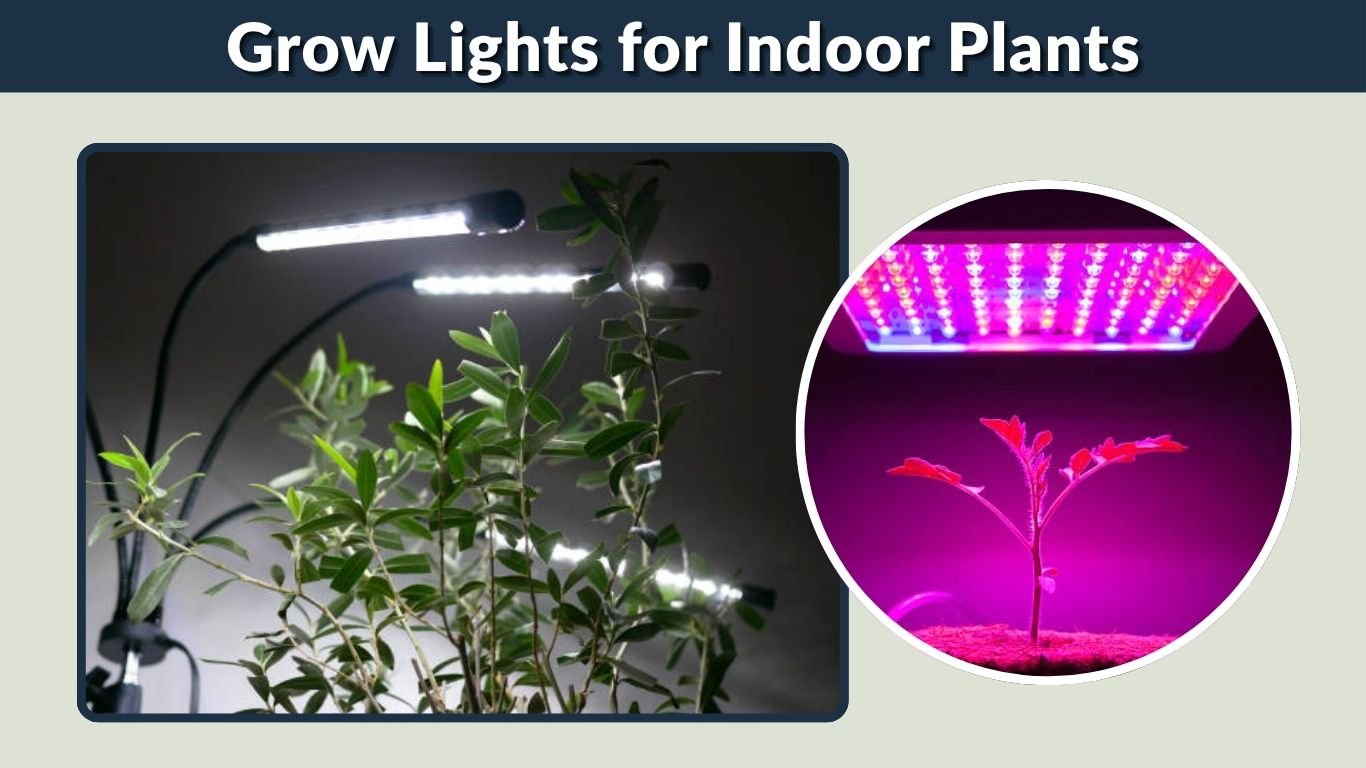
Grow lights for indoor plants provide artificial light that helps houseplants, herbs, seedlings, and vegetables grow when natural sunlight is limited. They are especially useful in dark rooms, during winter, or in homes without bright windows. The right grow light can support photosynthesis, improve leaf growth, prevent weak stems, and help plants stay healthy year-round. This guide explains the different types of indoor grow lights, how to choose one, proper placement, recommended lighting duration, and common mistakes to avoid.
What Are Grow Lights for Indoor Plants?
Grow lights are artificial lighting systems designed to provide plants with the wavelengths they need for photosynthesis. Indoor plants often receive less light than they would outdoors, especially when placed far from windows. A suitable grow light can supplement or replace natural sunlight, helping plants maintain stronger stems, greener foliage, healthier roots, and more consistent growth throughout the year.
How Grow Lights Help Indoor Plants
Plants use light to convert water and carbon dioxide into energy through photosynthesis. When indoor light levels are too low, growth may slow considerably.
Grow lights can help:
- Support healthy photosynthesis
- Reduce leggy or stretched growth
- Encourage stronger leaf development
- Improve seedling growth
- Extend growing seasons indoors
- Support flowering and fruit production
- Maintain plants during dark winter months
The amount of benefit depends on light intensity, spectrum, duration, and plant species.
Do All Indoor Plants Need Grow Lights?
Not every houseplant needs artificial lighting. Plants near bright windows may receive enough natural light.
However, grow lights are useful when plants show signs of inadequate lighting, such as pale leaves, stretched stems, slow growth, or leaning strongly toward a window.
Low-light plants may require less supplemental lighting than herbs, vegetables, succulents, and flowering plants.
Best Types of Grow Lights for Indoor Plants
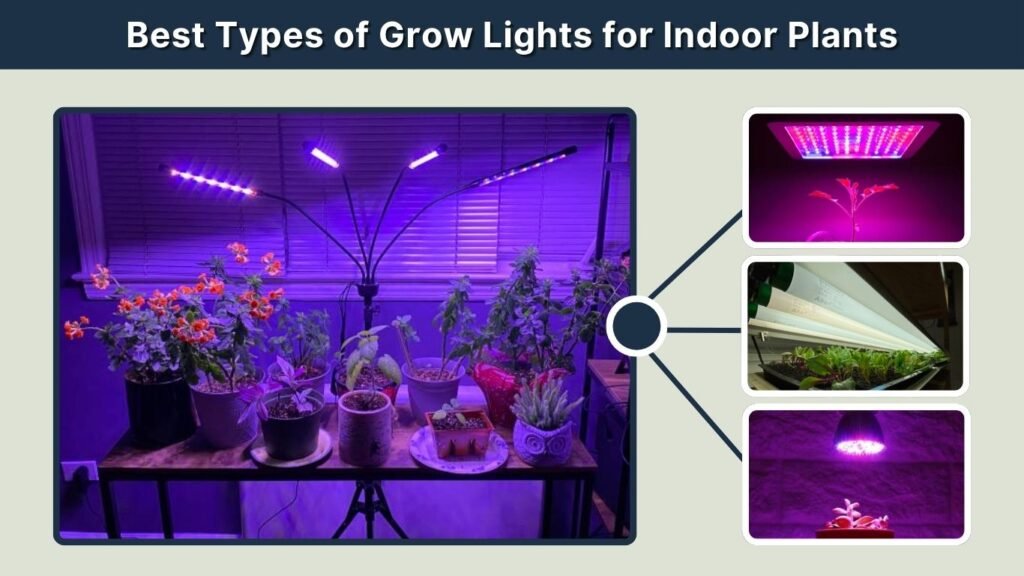
Several types of plant lights are available, but they differ in energy efficiency, heat production, lifespan, and light spectrum. LED grow lights have become one of the most popular options for home growers because they use relatively little electricity and can provide targeted plant-friendly wavelengths. Fluorescent and other lighting technologies may also work for particular indoor gardening setups.
LED Grow Lights
LED grow lights are among the best options for most indoor plant growers.
Their advantages include:
- Low energy consumption
- Long operating lifespan
- Relatively low heat output
- Full-spectrum options
- Multiple sizes and designs
- Suitable for seedlings and mature plants
- Easy installation in small spaces
Full-spectrum LED lights can imitate a broad range of natural sunlight wavelengths and work well for many plant types.
Fluorescent Grow Lights
Fluorescent lights have traditionally been used for seedlings, herbs, and leafy plants.
T5 fluorescent fixtures are capable of providing useful light over growing trays and shelves. However, they generally produce more heat and may consume more electricity compared with modern efficient LEDs.
They can still be effective for gardeners who already have fluorescent fixtures installed.
Full-Spectrum Grow Lights
Full-spectrum grow lights are designed to provide a broad range of wavelengths similar to natural daylight.
They can support plants through different growth stages, including:
- Germination
- Seedling development
- Vegetative growth
- Flowering
- Fruiting
For general indoor plant care, a full-spectrum LED light is often a practical all-purpose choice.
How to Choose Grow Lights for Indoor Plants
Choosing the right grow light depends on the type of plants you are growing, the amount of space available, and how much natural light your room already receives. A small herb pot may need only a compact lamp, while multiple seedlings or vegetables require stronger coverage. Light intensity, spectrum, fixture size, adjustability, and energy efficiency should all be considered.
Consider Your Plant’s Light Requirements
Different plants need different amounts of light.
Low-light houseplants such as pothos or snake plants generally need less artificial light than herbs, succulents, tomatoes, or peppers.
Before choosing a fixture, determine whether your plant prefers:
- Low light
- Medium light
- Bright indirect light
- Strong direct light
Higher-light plants usually require more powerful grow lights or longer exposure.
Check the Coverage Area
Grow lights illuminate a limited area.
A lamp that works well for one small plant may not provide sufficient coverage for six or eight pots.
Check the manufacturer’s recommended coverage dimensions and position plants within the effective light footprint.
Look for Adjustable Features
Adjustable grow lights make indoor plant care easier.
Useful features may include:
- Adjustable height
- Dimming controls
- Built-in timers
- Multiple brightness settings
- Flexible lamp arms
- Automatic on/off schedules
These features allow you to modify lighting as plants grow.
How Far Should Grow Lights Be From Indoor Plants?
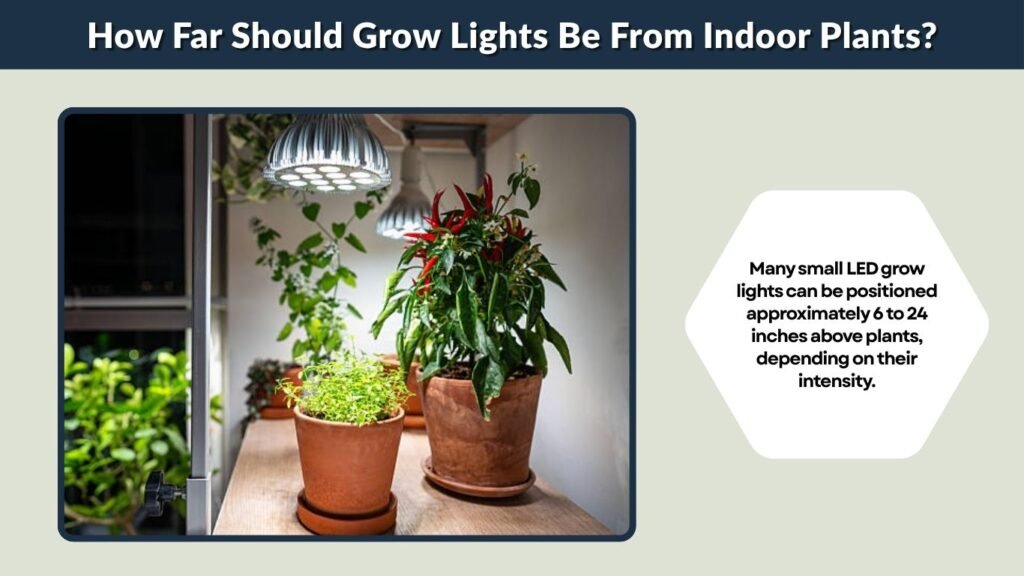
The distance between a grow light and plant foliage greatly affects light intensity. A lamp positioned too far away may provide insufficient light, while one positioned too close can cause excessive heat, leaf discoloration, or light stress. The ideal distance depends on the type and power of the fixture, so manufacturer instructions should always be your primary reference.
Recommended Grow Light Distance
Many small LED grow lights can be positioned approximately 6 to 24 inches above plants, depending on their intensity.
Seedlings often benefit from lights positioned relatively close because they require enough intensity to prevent stretching.
Stronger fixtures generally need more distance between the light and plant canopy.
Signs the Light Is Too Far Away
A grow light may be too distant if you notice:
- Long, thin stems
- Plants leaning toward the light
- Large spaces between leaves
- Pale foliage
- Slow development
Moving the light closer can improve intensity, provided the leaves do not show stress.
Signs the Light Is Too Close
Too much light may cause leaves to appear bleached, curled, dry, or scorched.
If these symptoms appear, increase the distance between the fixture and the plant or reduce the brightness level.
How Long Should Grow Lights Stay On?
Indoor plants require both periods of light and darkness. Keeping a grow light running continuously does not necessarily make plants grow faster and can interfere with normal plant processes. The correct lighting duration depends on plant species, natural sunlight, growth stage, and light intensity. Most indoor gardening setups use a consistent daily schedule controlled by a timer.
Typical Daily Lighting Schedule
Many indoor plants perform well with approximately:
- 8–12 hours: Low-light houseplants receiving some natural light
- 12–14 hours: Herbs and many foliage plants
- 14–16 hours: Seedlings and high-light plants
- 8–12 hours of darkness: For normal plant recovery and biological processes
These ranges are general guidelines rather than strict requirements.
Use a Timer
A timer helps maintain a consistent lighting schedule.
Instead of manually switching the light on and off every day, set an automatic schedule. Consistency makes plant care easier and helps prevent accidental periods of excessive or insufficient lighting.
Where to Place Grow Lights Indoors
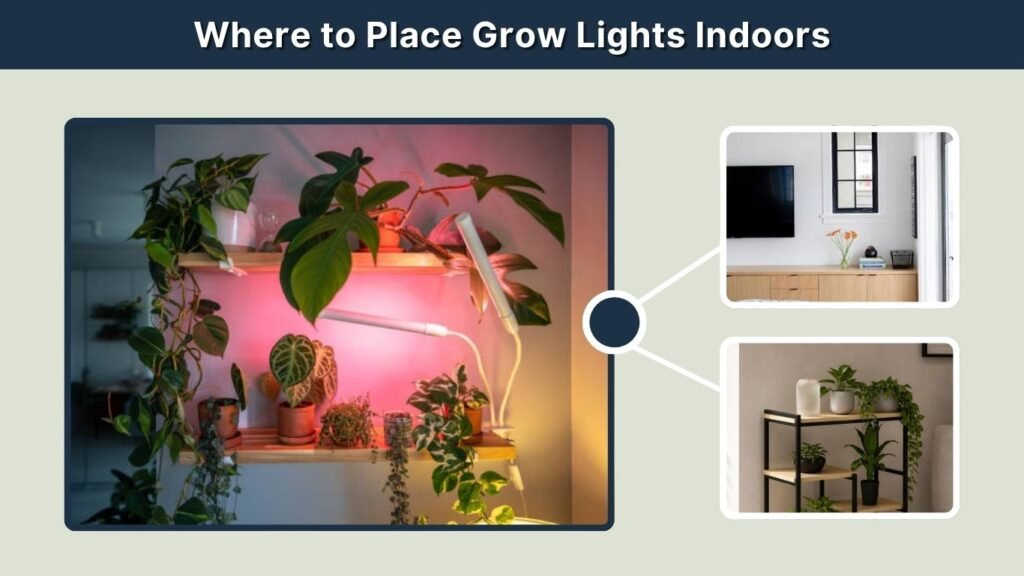
Correct positioning helps ensure that plants receive even illumination. Grow lights can be installed above shelves, mounted beneath cabinets, attached to plant stands, or placed on desks and windowsills. Overhead placement is often most effective because plants naturally grow toward light coming from above and are less likely to develop uneven, sideways growth.
Place Lights Above the Plant Canopy
Positioning lights directly above plants encourages upright growth.
When lighting comes mainly from one side, plants may lean toward the fixture. Overhead lights distribute illumination more evenly across leaves.
As plants grow taller, raise the fixture to maintain a suitable distance.
Group Plants With Similar Needs
Plants with similar light requirements can be placed together under one fixture.
For example, high-light herbs and seedlings can share a strong lighting area, while low-light houseplants can be positioned toward the edges or beneath a weaker fixture.
This arrangement improves efficiency and prevents overlighting sensitive plants.
Common Mistakes When Using Indoor Grow Lights
Grow lights are relatively easy to use, but improper setup can reduce their effectiveness. Problems often occur when gardeners choose fixtures that are too weak, position lights incorrectly, or leave them on for unsuitable periods. Monitoring plant growth and adjusting the setup when necessary is more effective than relying on a single fixed arrangement throughout the year.
Using a Light That Is Too Weak
A decorative lamp may appear bright to human eyes but still provide inadequate intensity for plants.
If plants remain leggy or grow slowly despite long lighting hours, the fixture may not be powerful enough.
Keeping Lights On 24 Hours
Plants generally need darkness as part of their normal growth cycle.
Continuous lighting can cause unnecessary energy use and may stress certain plants.
Ignoring Plant Responses
Watch your plants instead of relying only on preset numbers.
Adjust lighting when you notice:
- Stretching
- Scorched leaves
- Pale growth
- Leaf curling
- Slow development
- Unusual leaning
Plant appearance provides valuable feedback about whether your lighting setup is working.
Grow Lights for Seedlings, Herbs, and Houseplants
Different indoor plants respond differently to artificial light, so it helps to adjust your setup according to what you are growing. Seedlings typically need consistent, relatively strong light to prevent stretching. Herbs often grow best with brighter light, while many foliage houseplants can tolerate lower intensity. Matching the lighting conditions to the plant usually produces better results.
Grow Lights for Seedlings
Seedlings require strong, consistent lighting soon after germination.
Insufficient light often causes young seedlings to become thin and elongated. Keep lights appropriately close and gradually adjust their height as seedlings grow.
Grow Lights for Indoor Herbs
Herbs such as basil, mint, parsley, cilantro, and thyme generally perform best with relatively bright light.
A full-spectrum LED fixture can help herbs maintain compact growth and produce more usable foliage indoors.
Grow Lights for Houseplants
Many common houseplants can benefit from supplemental lighting during winter or in darker rooms.
Plants such as pothos, philodendrons, peace lilies, and snake plants may require less intense lighting than herbs or vegetables.
Are LED Grow Lights Worth It for Indoor Plants?
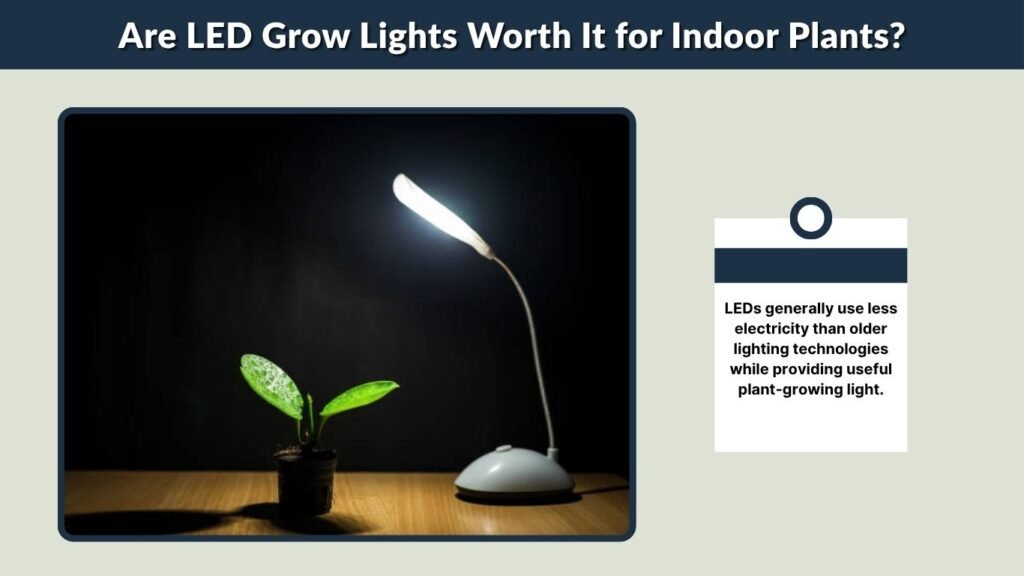
For many home growers, LED grow lights offer a practical balance of energy efficiency, lifespan, low heat output, and plant-friendly light. They are available in small clip-on styles for a single pot as well as larger fixtures for shelves and indoor gardens. The most effective option depends on your plant collection, growing space, and how much supplemental light is actually needed.
Energy Efficiency
LEDs generally use less electricity than older lighting technologies while providing useful plant-growing light.
This can be particularly beneficial when lights operate for 12 hours or more each day.
Long-Term Indoor Growing
LED fixtures can also last for many years under normal conditions.
For gardeners planning to grow herbs, seedlings, or houseplants continuously indoors, their long lifespan can make them a practical long-term solution.
FAQs
1. What Type of Grow Light Is Best for Indoor Plants?
Full-spectrum LED grow lights are a strong option for most indoor plants because they are energy-efficient, produce relatively little heat, and can support different stages of plant growth.
2. How Many Hours Should Grow Lights Be On?
Many indoor plants grow well with approximately 8 to 16 hours of artificial light per day, depending on the plant species, fixture intensity, and amount of natural sunlight available.
3. Can Grow Lights Replace Sunlight Completely?
Yes, suitable grow lights can provide enough artificial light for plants to grow without direct sunlight. However, the fixture must provide adequate spectrum, intensity, coverage, and duration.
4. How Close Should LED Grow Lights Be to Plants?
The correct distance depends on the fixture’s strength. Many smaller LED lights are placed approximately 6 to 24 inches above plants, but the manufacturer’s instructions should be followed for the specific model.
5. Can Grow Lights Burn Indoor Plants?
Yes. Very powerful lights positioned too close to foliage can cause bleaching, curling, or leaf damage. Increasing the distance or reducing intensity can help prevent light stress.