

Growing vegetables indoors is an excellent way to enjoy fresh, homegrown produce without needing a backyard or traditional garden. Whether you live in an apartment, have limited outdoor space, or want to grow vegetables during winter, indoor gardening provides a practical solution. With proper lighting, suitable containers, nutrient-rich soil, and consistent care, many vegetables can grow successfully inside your home. Understanding how indoor vegetable gardening works will help you create a productive growing environment, avoid common problems, and harvest healthy vegetables throughout the year.
Can You Grow Vegetables Indoors Successfully?
Yes, you can grow vegetables indoors successfully when you provide the right growing conditions. Indoor vegetable gardening allows you to control important environmental factors, including temperature, lighting, watering, and soil quality. Unlike outdoor gardening, indoor plants are less exposed to extreme weather conditions, although they can still experience pests and diseases.
How Indoor Vegetable Gardening Works
Indoor vegetable gardening involves growing edible plants in containers, raised planters, or hydroponic systems inside a home. Instead of relying entirely on natural sunlight and rainfall, gardeners manage plant requirements manually.
Most vegetables need sufficient light for photosynthesis, water for nutrient transportation, and a suitable growing medium for root development.
Leafy vegetables are generally easier to grow indoors because they require less intense lighting than fruiting crops. Tomatoes, peppers, and cucumbers need stronger light and more growing space to produce healthy fruits.
Benefits of Growing Vegetables Indoors
Indoor vegetable gardening provides several advantages for beginners and experienced gardeners.
- Year-round growing: Produce vegetables regardless of outdoor seasons when indoor conditions are suitable.
- Space efficiency: Grow vegetables on windowsills, shelves, balconies enclosed for growing, or dedicated indoor gardening stations.
- Environmental control: Manage lighting, temperature, moisture, and nutrients more consistently.
- Fresh harvesting: Pick vegetables when needed without depending entirely on grocery stores.
- Reduced weather damage: Protect plants from heavy rainfall, frost, strong winds, and extreme outdoor conditions.
- Convenient maintenance: Monitor plants and manage watering without leaving your home.
However, indoor gardening may require additional electricity, equipment, and regular attention.
What Vegetables Can You Grow Indoors?
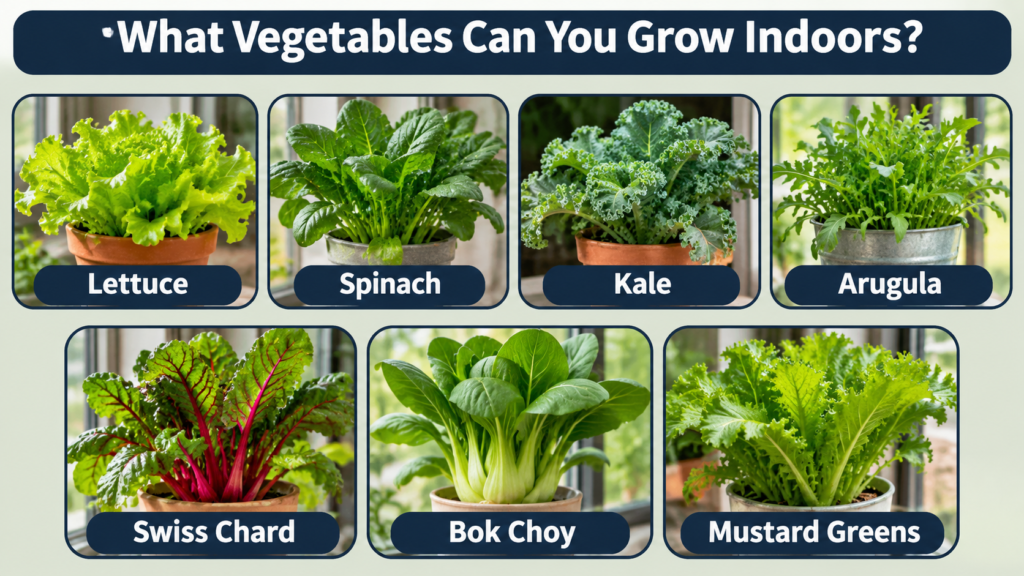
Many vegetables can grow indoors, but some adapt better to confined spaces and artificial lighting. Choosing suitable varieties is important because root systems, mature plant sizes, and lighting requirements differ among crops.
Beginners should start with fast-growing leafy vegetables before attempting larger fruiting plants.
Leafy Vegetables for Indoor Gardening
Leafy greens are among the easiest vegetables to cultivate indoors. They generally grow well in relatively small containers and provide harvestable leaves within a few weeks.
Suitable choices include:
- Lettuce
- Spinach
- Kale
- Arugula
- Swiss chard
- Bok choy
- Mustard greens
These vegetables grow best with consistent moisture, appropriate temperatures, and sufficient light. Harvesting outer leaves can encourage continued production in many varieties.
Root Vegetables You Can Grow Indoors
Certain root vegetables can grow successfully in containers when they have enough depth for root development.
Radishes, short-rooted carrots, small turnips, and beets are suitable options. Choose loose, well-draining potting mix to allow roots to expand without obstruction.
Radishes are particularly convenient because many varieties mature quickly. Carrots and beets generally require more patience and adequate spacing.
Fruiting Vegetables for Indoor Growing
Fruiting vegetables require more demanding conditions than leafy greens. However, compact varieties can produce successfully indoors with appropriate equipment.
Dwarf tomatoes, chili peppers, compact bell peppers, and small cucumber varieties are possible choices.
These plants require strong lighting, larger containers, consistent nutrition, and sometimes pollination assistance.
How to Start an Indoor Vegetable Garden
Starting an indoor vegetable garden requires thoughtful preparation rather than expensive equipment. Understanding plant requirements will help you choose suitable containers, growing locations, and lighting systems.
A simple indoor setup can begin with several pots near a bright window or a growing shelf equipped with LED grow lights.
Choose the Right Indoor Growing Location
Select an area with adequate lighting, stable temperatures, and convenient access to water.
South-facing windows are often useful in the Northern Hemisphere because they typically receive more direct sunlight. However, actual light exposure depends on nearby buildings, trees, and seasonal changes.
Avoid placing plants directly beside heating vents or air conditioners because sudden temperature changes can stress vegetables.
Select Suitable Containers and Soil
Containers should accommodate the mature root systems of your chosen vegetables. Always prioritize drainage to prevent water accumulation around roots.
| Vegetable | Suggested container depth |
| Lettuce | 6–8 inches |
| Spinach | 6–8 inches |
| Radishes | 6–8 inches |
| Short carrots | 8–12 inches |
| Kale | 8–12 inches |
| Tomatoes | 10–14 inches or deeper |
| Peppers | 10–12 inches or deeper |
Container width and total soil volume are also important, particularly for fruiting vegetables.
Use lightweight potting mix designed for container gardening. Avoid compacted garden soil, which can restrict drainage and root development.
Plant Seeds or Transplants Correctly
Follow these basic planting steps to establish a healthy indoor vegetable garden.
- Fill clean containers with slightly moistened potting mix.
- Sow seeds at the depth recommended on the seed packet.
- Space seeds appropriately to prevent overcrowding.
- Mist or water gently without disturbing the seeds.
- Place containers in a suitable location for germination.
- Provide adequate lighting once seedlings emerge.
- Thin crowded seedlings to create sufficient growing space.
Some vegetables, including tomatoes and peppers, are easier to establish indoors using healthy young transplants.
How Much Light Do Indoor Vegetables Need?
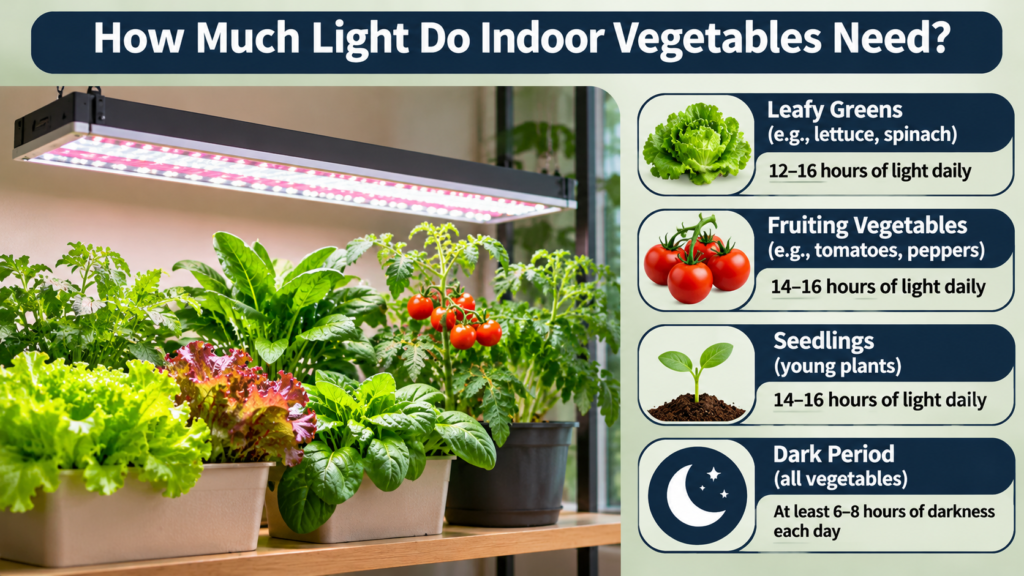
Lighting is one of the most important factors affecting indoor vegetable growth. Without sufficient light, plants may develop weak stems, pale leaves, slow growth, and poor harvests.
The amount of light required depends on the type of vegetable, its growth stage, and the intensity of available lighting.
Growing Vegetables Indoors With Natural Sunlight
Bright windows can support certain leafy vegetables and herbs, particularly when they receive several hours of direct sunlight daily.
However, light levels decline considerably during winter or in rooms surrounded by buildings.
Plants that receive insufficient sunlight may become elongated as they stretch toward the available light source.
For consistent production, supplemental grow lighting is often beneficial.
Can You Grow Vegetables Indoors With LED Lights?
Yes, LED grow lights are effective for indoor vegetable gardening. Modern horticultural LED lights can provide the light spectrum and intensity required for photosynthesis.
General starting recommendations include:
- Leafy greens: Around 12–16 hours of suitable artificial lighting daily.
- Tomatoes and peppers: Approximately 14–16 hours of sufficiently intense light daily.
- Seedlings: Usually 14–16 hours of appropriate lighting, depending on the crop.
- Dark period: Provide several hours of darkness each day for normal plant development.
Light intensity and fixture distance are just as important as lighting duration. Follow the manufacturer’s recommendations and adjust according to plant response.
Can You Grow Vegetables Indoors During Winter?
Yes, you can grow vegetables indoors during winter when lighting, temperature, and moisture are properly controlled. Indoor environments protect plants from freezing temperatures, making winter cultivation possible even in colder climates.
However, reduced natural daylight and dry indoor air may affect vegetable growth.
Best Growing Conditions for Winter Vegetables
Most cool-season leafy vegetables grow well in temperatures around 60–70°F, although individual crop requirements vary.
Winter indoor gardening requires attention to several important conditions.
- Maintain stable room temperatures suitable for your vegetables.
- Use grow lights when natural daylight is insufficient.
- Keep containers away from cold window glass and drafts.
- Monitor soil moisture because indoor heating can increase evaporation.
- Provide gentle air circulation to reduce excess humidity around foliage.
- Avoid placing plants near direct heat sources.
Lettuce, spinach, kale, microgreens, and green onions are practical options for winter indoor gardening.
How to Maintain Continuous Winter Harvests
Succession planting helps maintain a regular supply of fresh vegetables throughout winter.
Instead of planting all lettuce or spinach seeds simultaneously, sow smaller batches every one to three weeks.
This approach spreads harvest periods across several weeks rather than producing everything at once.
Fast-growing crops such as microgreens and radishes are particularly suitable for repeated indoor planting.
How to Water and Fertilize Indoor Vegetables
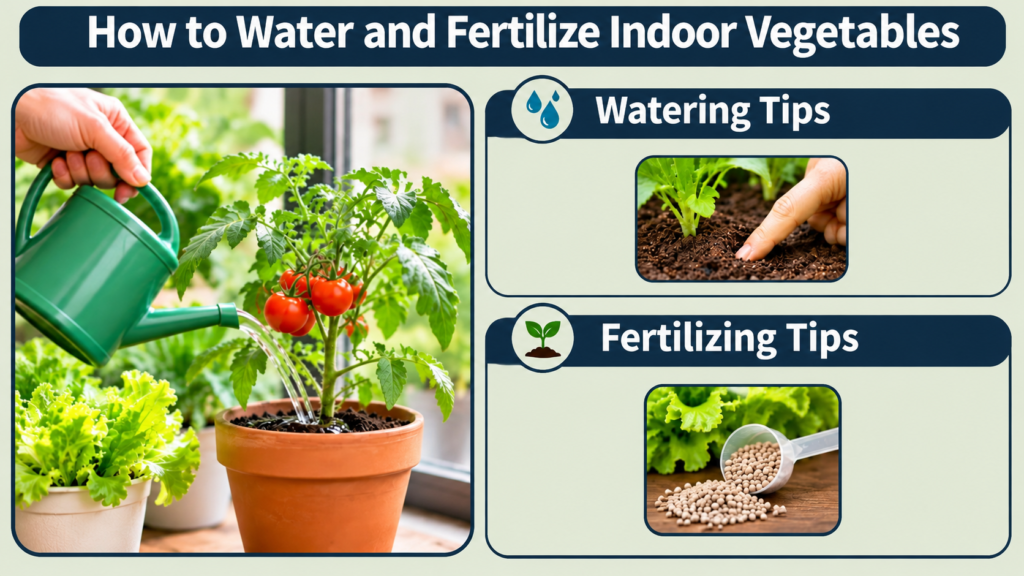
Indoor vegetables depend on consistent water and nutrient management because their root systems are restricted to containers. Unlike outdoor plants, container-grown vegetables cannot access moisture or nutrients beyond their growing medium.
Overwatering and excessive fertilization can damage plants, so monitoring their actual needs is essential.
Proper Watering Techniques
Watering frequency depends on container size, plant type, temperature, humidity, and growing medium.
Check the upper layer of soil before watering rather than following a rigid daily schedule.
When watering, apply enough moisture to reach the root zone and allow excess water to drain. Empty collected water from saucers to prevent prolonged saturation.
Seedlings and shallow-rooted vegetables may require more frequent moisture checks than established plants.
Fertilizing Vegetables Grown Indoors
Container-grown vegetables gradually use available nutrients, making supplemental fertilization beneficial during active growth.
Choose a fertilizer formulated for edible vegetables and follow the recommended application rate.
Leafy greens often benefit from adequate nitrogen for foliage development, while fruiting plants require balanced nutrition to support flowering and fruit production.
Avoid applying excessive fertilizer because salt accumulation can damage roots and cause leaf discoloration.
Common Problems When Growing Vegetables Indoors

Indoor vegetable gardening provides greater environmental control, but plants can still experience problems. Most issues result from improper lighting, watering mistakes, unsuitable temperatures, or nutrient imbalances.
Identifying problems early makes them easier to correct before plant health declines.
Common Indoor Vegetable Growing Problems and Solutions
| Problem | Possible cause | Recommended solution |
| Yellow leaves | Overwatering or nutrient deficiency | Check soil moisture and nutrition |
| Long, weak stems | Insufficient light | Increase appropriate light exposure |
| Slow growth | Low light or unsuitable temperature | Adjust lighting and temperature |
| Wilting leaves | Dry soil or damaged roots | Inspect root-zone moisture |
| Brown leaf edges | Water stress or excess fertilizer | Review watering and feeding |
| Poor fruit production | Inadequate light or pollination | Improve lighting and assist pollination |
| Mold on soil | Excess moisture and poor airflow | Reduce unnecessary watering and improve ventilation |
Indoor plants may also attract fungus gnats, aphids, whiteflies, or spider mites. Regular inspection, clean growing equipment, and appropriate pest management can prevent minor infestations from spreading.
How to Grow Vegetables Indoors Without Soil
Vegetables can also grow indoors using hydroponic systems instead of traditional potting soil. Hydroponics supplies water, dissolved nutrients, and oxygen directly to plant roots.
This growing method is useful for indoor spaces where gardeners want an organized system with controlled nutrient delivery.
Hydroponic Vegetable Gardening
Hydroponic systems commonly use nutrient solutions, growing baskets, reservoirs, and artificial lighting.
Lettuce, basil, spinach, bok choy, and several other leafy crops are popular hydroponic choices.
Successful hydroponic growing requires monitoring water quality, nutrient concentration, root oxygen availability, and suitable pH levels.
Although hydroponics can offer efficient growing conditions, it often involves higher initial equipment costs and more technical maintenance than traditional container gardening.
FAQs
1. Can You Grow Vegetables Indoors All Year Round?
Yes, you can grow vegetables indoors throughout the year with proper lighting, suitable temperatures, watering, and nutrition. Leafy greens and microgreens are particularly convenient for continuous cultivation. Fruiting vegetables also grow indoors, although they typically require stronger artificial lighting and larger containers.
2. What Vegetables Are Easiest to Grow Indoors for Beginners?
Lettuce, spinach, green onions, radishes, arugula, and microgreens are excellent vegetables for beginners. They generally require relatively little space and have manageable growing requirements. Many of these crops also produce harvestable leaves or roots within a few weeks under suitable conditions.
3. Can You Grow Vegetables Indoors Without Sunlight?
Yes, vegetables can grow indoors without natural sunlight when appropriate artificial lighting is provided. Full-spectrum LED grow lights can support photosynthesis and healthy development. However, most vegetables cannot grow productively in complete darkness or with insufficient ordinary household lighting.
4. What Vegetables Can You Grow in Pots Indoors?
You can grow lettuce, kale, spinach, radishes, short carrots, peppers, and compact tomatoes in indoor pots. The container must provide sufficient root space and proper drainage. Larger fruiting vegetables generally need deeper containers, stronger lighting, and more nutrients than leafy crops.
5. Can You Grow Vegetables Indoors During Winter Without Heating?
Some cool-season vegetables can grow indoors without additional heating when room temperatures remain within their suitable growing range. Lettuce, spinach, kale, and certain microgreens tolerate relatively cool conditions. However, freezing temperatures and excessively cold rooms can slow growth or damage plants.