
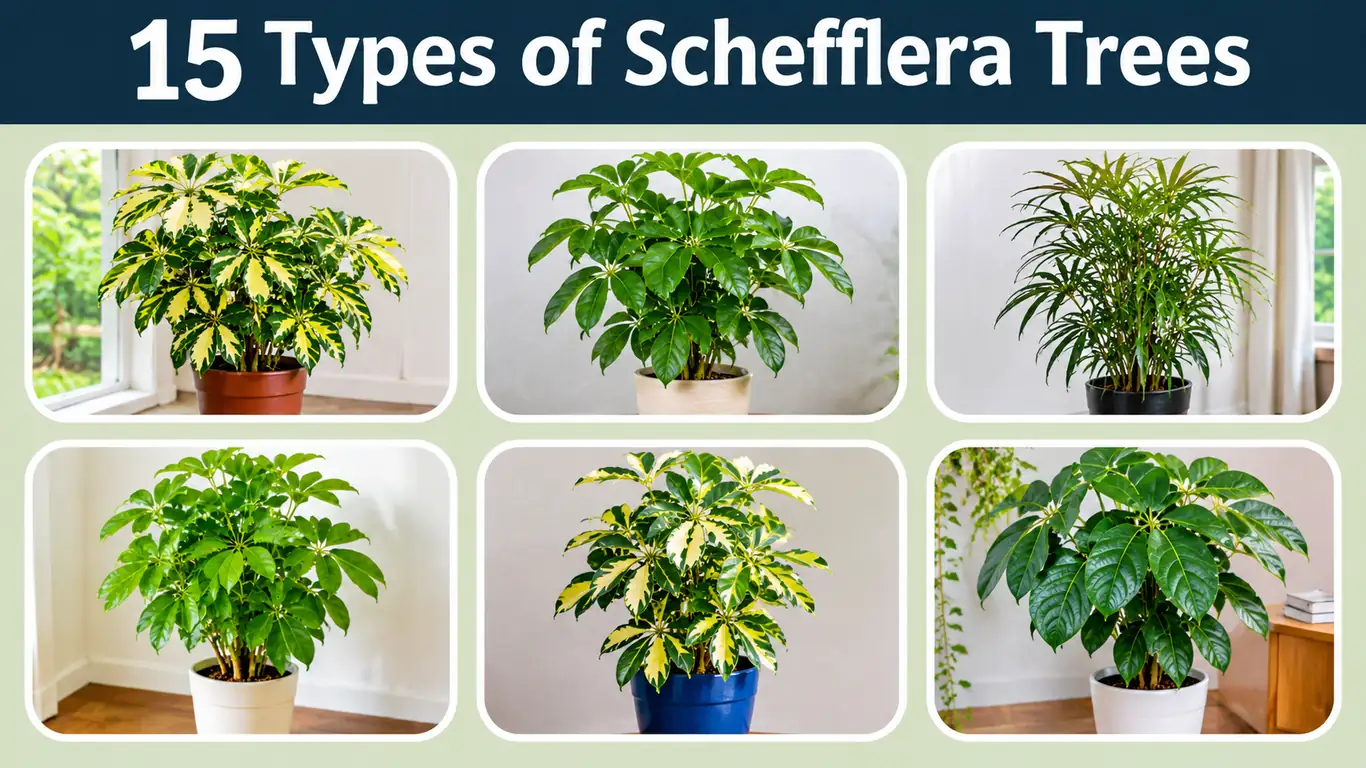
Schefflera trees are attractive indoor plants known for their glossy green leaves, umbrella- shaped foliage, and elegant growth habits. From the popular Dwarf Umbrella Tree to rare tropical species, these plants bring natural beauty to living spaces. While some varieties are easy to maintain, others require specialized care. Explore 15 types of Schefflera trees, their unique characteristics, ideal growing conditions, and essential maintenance tips.
1. Schefflera arboricola (Dwarf Umbrella Tree)
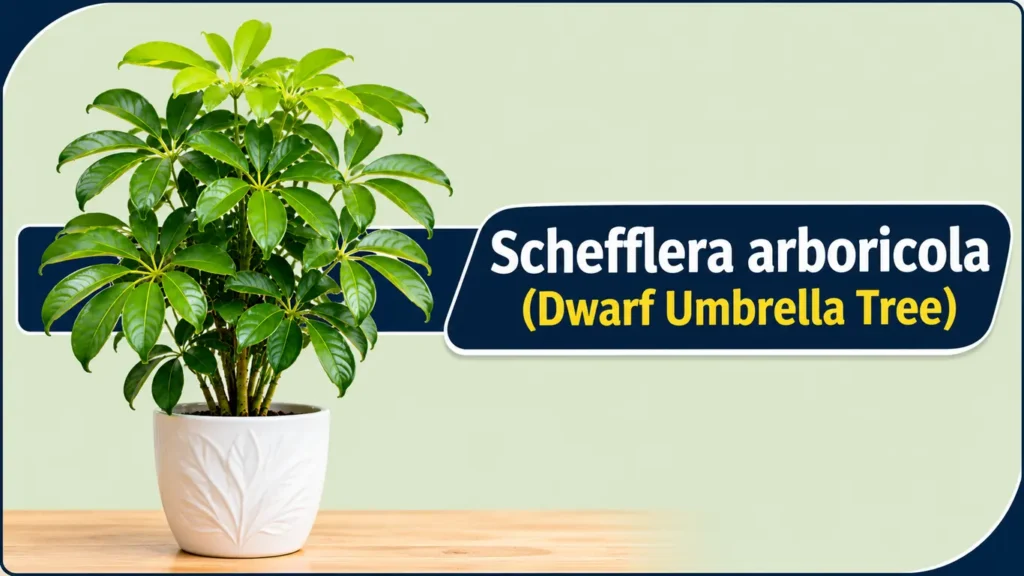
Schefflera arboricola, commonly known as the Dwarf Umbrella Tree, is one of the most popular tropical plants for indoor growing. Native to Taiwan and Hainan, this evergreen plant is admired for its glossy, umbrella-shaped leaves and compact growth habit. It adapts well to indoor environments and requires relatively simple maintenance. Its attractive foliage makes it an excellent choice for living rooms, offices, bedrooms, and indoor gardens.
Identification
- Scientific Name: Schefflera arboricola (also classified as Heptapleurum arboricola)
- Common Name: Dwarf Umbrella Tree
- Family: Araliaceae
- Plant Height: Typically 3–6 feet indoors
- Leaf Color: Glossy green or green with yellow and cream variegation
- Leaf Shape: Palmately compound, usually with 7–9 oval leaflets
- Growth Habit: Upright, bushy evergreen shrub or small tree
- Appearance: Slender woody stems with clusters of glossy leaves arranged like umbrella spokes
Ideal Indoor Growing Conditions
Schefflera arboricola grows best in bright, indirect sunlight but can tolerate moderate indoor light. Position it near an east-facing window or a few feet away from a bright south-facing window. Variegated varieties generally need brighter conditions to maintain their attractive leaf patterns.
This tropical plant prefers temperatures between 60°F and 80°F (16°C–27°C). Average household humidity is usually sufficient, although moderate humidity encourages healthy foliage. Use a loose, well-draining potting mixture containing peat or coco coir, perlite, and organic matter.
Watering and Maintenance Tips
Water your Dwarf Umbrella Tree when the top 1–2 inches of soil feel dry. Avoid overwatering because constantly wet soil can cause root rot and yellowing leaves.
Prune long or leggy stems during spring or summer to maintain a compact, bushy appearance. Apply diluted balanced houseplant fertilizer every four to six weeks during active growth. Rotate the pot occasionally for even development and regularly inspect the leaves for spider mites, scale insects, and mealybugs.
2. Schefflera actinophylla (Australian Umbrella Tree)
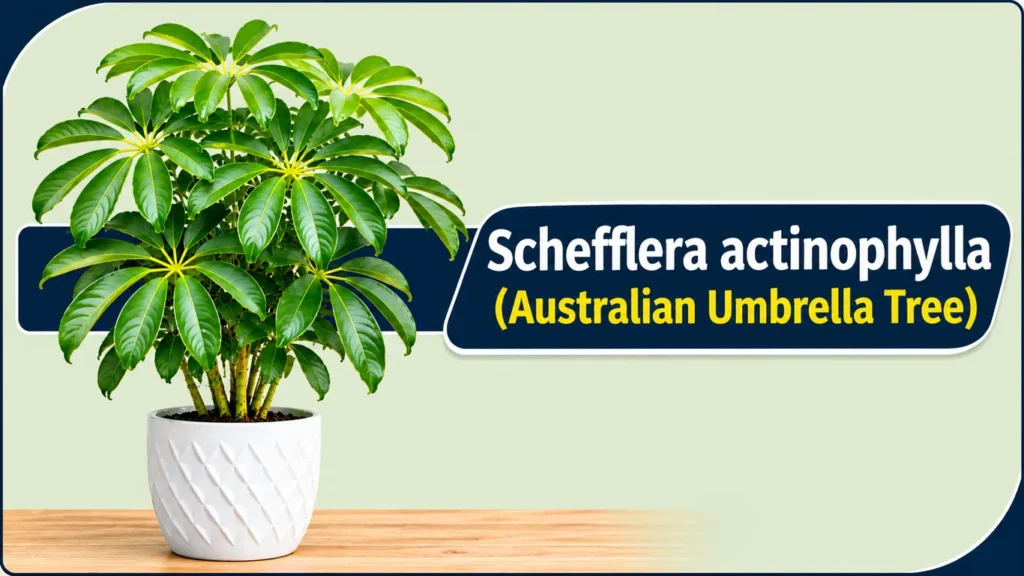
Schefflera actinophylla, commonly known as the Australian Umbrella Tree, is a tropical evergreen tree admired for its large, glossy leaves and impressive upright growth. Native to Australia and New Guinea, this species creates a bold tropical appearance in spacious indoor environments. Its umbrella-shaped leaf clusters and sturdy trunk make it an attractive ornamental plant. Although it can become a large tree outdoors, regular pruning helps maintain a manageable size indoors.
Identification
- Scientific Name: Schefflera actinophylla (also classified as Heptapleurum actinophyllum)
- Common Name: Australian Umbrella Tree, Octopus Tree
- Family: Araliaceae
- Plant Height: Approximately 6–10 feet indoors, sometimes taller
- Leaf Color: Glossy dark green
- Leaf Shape: Palmately compound with 7–16 elongated leaflets
- Growth Habit: Upright tropical evergreen tree
- Appearance: Strong woody stems with large, umbrella-like clusters of shiny green leaves
Ideal Indoor Growing Conditions
Schefflera actinophylla prefers bright, indirect sunlight and grows best near large windows where it receives consistent natural light. Gentle morning sunlight is beneficial, but prolonged exposure to intense afternoon sun may scorch the foliage.
Maintain temperatures between 65°F and 85°F (18°C–29°C). Moderate humidity supports healthy leaf development, while a well-draining potting mixture containing organic matter and perlite helps maintain proper root aeration.
Watering and Maintenance Tips
Water your Australian Umbrella Tree when the top 1–2 inches of soil become dry. Allow excess water to drain completely and avoid leaving the container in standing water.
Prune tall or overcrowded branches to control its height and encourage balanced growth. Feed with diluted balanced fertilizer every four to six weeks during spring and summer. Regularly inspect the foliage for spider mites, scale insects, and mealybugs.
3. Schefflera elegantissima (False Aralia)
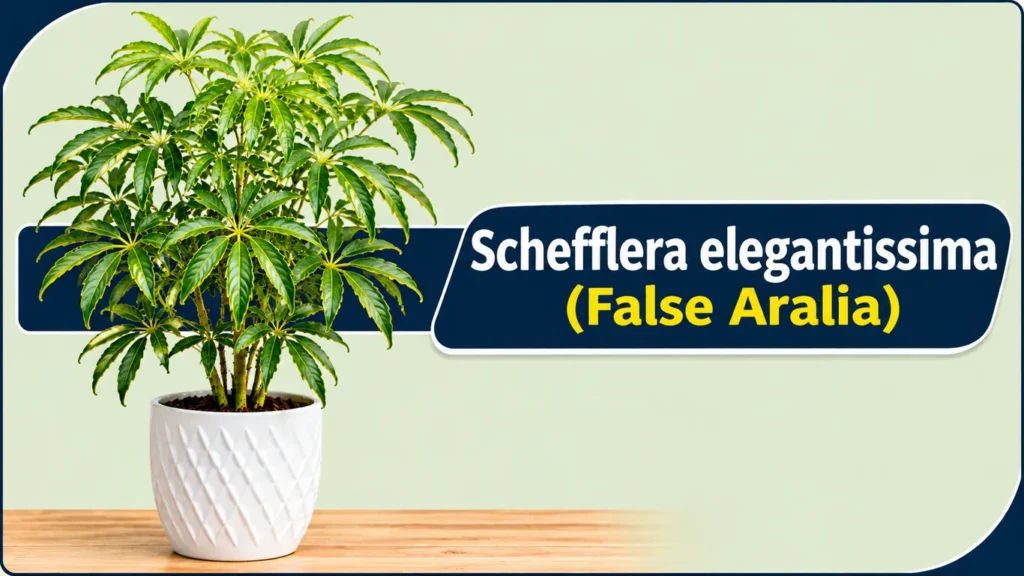
Schefflera elegantissima, commonly known as False Aralia, is a distinctive tropical plant recognized for its narrow, finely divided leaves and elegant upright appearance. Native to New Caledonia, this species is especially popular among indoor gardeners who appreciate unusual foliage. Young plants display slender, dark green to bronze-colored leaflets with serrated edges. Its delicate texture and graceful growth habit make it an attractive choice for living rooms, offices, and decorative indoor plant collections.
Identification
- Scientific Name: Schefflera elegantissima (currently classified as Plerandra elegantissima)
- Common Name: False Aralia, Spider Aralia
- Family: Araliaceae
- Plant Height: Typically 3–6 feet indoors
- Leaf Color: Dark green, bronze, or coppery green
- Leaf Shape: Narrow, finger-like leaflets with finely toothed edges
- Growth Habit: Upright evergreen shrub or small tree
- Appearance: Thin woody stems with delicate, feathery foliage and an elegant vertical form
Ideal Indoor Growing Conditions
False Aralia thrives in bright, indirect sunlight and prefers consistent indoor lighting. Place it near an east-facing window or behind a sheer curtain where it receives filtered natural light. Avoid harsh direct sunlight, which can damage its delicate foliage.
Maintain temperatures between 65°F and 80°F (18°C–27°C). This tropical plant appreciates moderate to high humidity, making it suitable for humid indoor environments. Use a loose, well-draining potting mixture rich in organic matter.
Watering and Maintenance Tips
Water Schefflera elegantissima when the upper inch of soil begins to dry. Keep the growing medium lightly moist without allowing it to become waterlogged.
Remove damaged leaves and prune leggy stems to encourage a fuller appearance. Apply diluted balanced fertilizer approximately once a month during the growing season. Protect the plant from cold drafts and sudden environmental changes, which may cause leaf drop.
4. Schefflera taiwaniana (Taiwan Schefflera)

Schefflera taiwaniana, commonly known as Taiwan Schefflera, is an attractive evergreen shrub or small tree valued for its distinctive palm-shaped foliage. Native to Taiwan, this species features narrow, elongated leaflets arranged in elegant clusters. Although it is more commonly cultivated outdoors in mild climates, young plants can potentially be grown in bright, cool indoor environments. Its unusual foliage and architectural growth habit make it an interesting choice for experienced indoor gardeners.
Identification
- Scientific Name: Schefflera taiwaniana (also classified as Heptapleurum taiwanianum)
- Common Name: Taiwan Schefflera
- Family: Araliaceae
- Plant Height: Container-grown plants may reach several feet; indoor height varies
- Leaf Color: Dark green
- Leaf Shape: Palmately compound with narrow, elongated leaflets
- Growth Habit: Upright evergreen shrub or small tree
- Appearance: Slender stems supporting clusters of long, pointed leaflets arranged in umbrella-like patterns
Ideal Indoor Growing Conditions
Schefflera taiwaniana prefers bright, filtered sunlight and generally performs better in cooler conditions than many tropical Schefflera species. Position it near a bright window with gentle morning sunlight and protection from intense afternoon heat.
A temperature range of approximately 50°F–75°F (10°C–24°C) can be a reasonable starting point for container cultivation. Good air circulation and a well-draining potting mixture containing organic matter, bark, and perlite help support healthy root development.
Watering and Maintenance Tips
Water Taiwan Schefflera when the upper layer of soil begins to dry. Maintain consistent moisture during active growth while avoiding prolonged waterlogging. Remove damaged branches and lightly prune when necessary to maintain an attractive shape. Apply diluted balanced fertilizer occasionally during spring and summer.
Because Schefflera taiwaniana is not a conventional indoor houseplant, provide adequate light, avoid excessively warm and dry rooms, and monitor its response to indoor conditions carefully.
5. Schefflera digitata (Seven-Finger Tree)
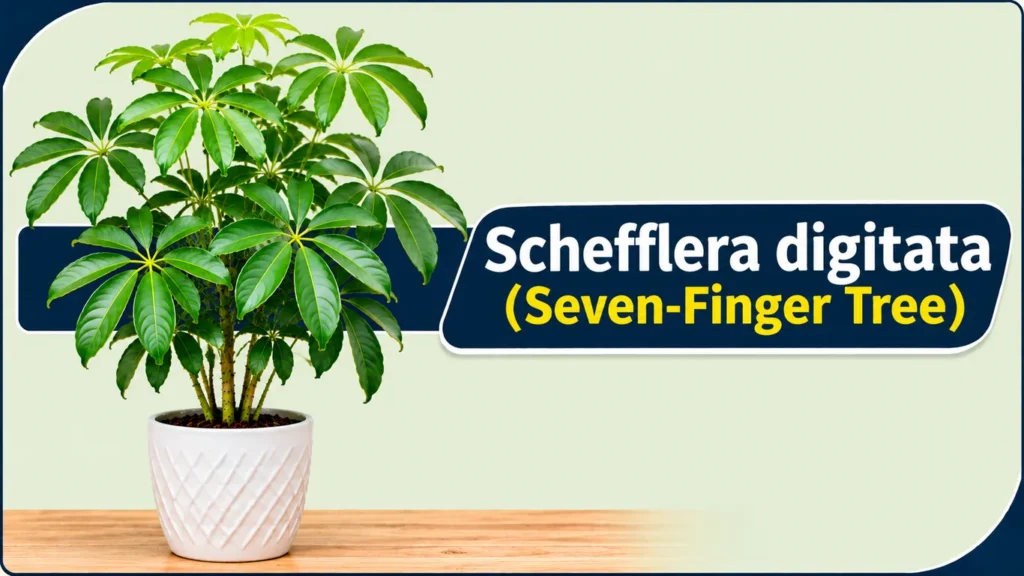
Schefflera digitata, commonly known as the Seven-Finger Tree or Pate, is an evergreen tree native to New Zealand. It is admired for its attractive palm-shaped leaves and graceful growth habit. Unlike many tropical Schefflera species, this plant naturally grows in temperate rainforest environments. Although it is primarily cultivated outdoors, young specimens can potentially be grown indoors in cool, bright locations. Its delicate foliage makes it an interesting choice for indoor plant collectors.
Identification
- Scientific Name: Schefflera digitata (also classified as Pseudopanax digitatus)
- Common Name: Seven-Finger Tree, Pate
- Family: Araliaceae
- Plant Height: Several feet indoors with suitable conditions and pruning
- Leaf Color: Bright to dark green
- Leaf Shape: Palmately compound with 3–9 toothed leaflets, commonly seven
- Growth Habit: Evergreen shrub or small tree
- Appearance: Slender woody stems with clusters of thin, elongated leaflets
Ideal Indoor Growing Conditions
Schefflera digitata prefers bright, indirect sunlight and a cool, humid environment. Position it near an east-facing window where it receives gentle morning light. Avoid prolonged exposure to intense afternoon sunlight, which may damage its delicate foliage.
This species generally prefers cooler growing conditions than typical tropical umbrella trees. Temperatures around 50°F–75°F (10°C–24°C) may provide a useful starting range for indoor cultivation. Use a fertile, well-draining potting mixture containing organic matter and perlite.
Watering and Maintenance Tips
Water Schefflera digitata when the upper layer of soil begins to dry. Keep the soil moderately moist during active growth without allowing the roots to remain waterlogged.
Remove damaged leaves and prune lightly to maintain a balanced shape. Feed occasionally with diluted balanced fertilizer during spring and summer. Avoid placing the plant near heating vents or excessively dry indoor environments.
6. Schefflera delavayi (Hardy Schefflera)
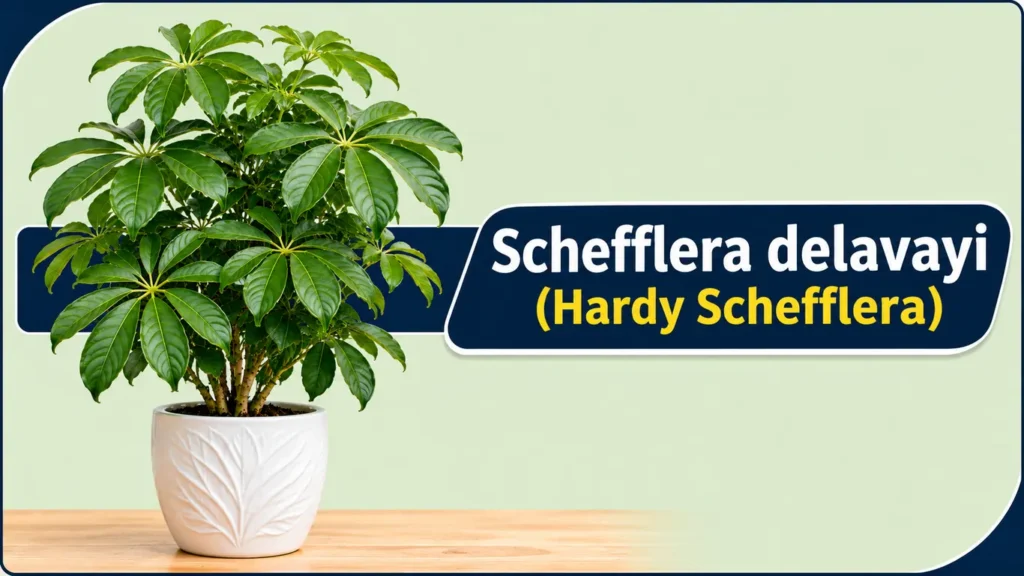
Schefflera delavayi, commonly known as Hardy Schefflera, is an attractive evergreen shrub or small tree native to southwestern China and nearby regions. It is valued for its large, palm-shaped leaves and unusual tropical appearance. This species is more cold-tolerant than many familiar Schefflera varieties, making it popular among collectors of exotic foliage plants. Although primarily grown outdoors, young specimens may be maintained in spacious containers in bright indoor environments.
Identification
- Scientific Name: Schefflera delavayi (also classified as Heptapleurum delavayi)
- Common Name: Hardy Schefflera
- Family: Araliaceae
- Plant Height: Several feet in containers; indoor height varies
- Leaf Color: Deep green with paler undersides
- Leaf Shape: Large, palmately compound leaves with elongated leaflets
- Growth Habit: Evergreen shrub or small tree
- Appearance: Strong woody stems supporting broad clusters of tropical-looking foliage
Ideal Indoor Growing Conditions
Schefflera delavayi prefers bright, filtered sunlight and generally benefits from good air circulation. Position it near a large window where it receives consistent daylight without excessive afternoon heat. Unlike tropical umbrella plants, it may perform better in cooler indoor environments.
Temperatures around 50°F–75°F (10°C–24°C) can provide reasonable growing conditions, although its tolerance depends on plant maturity and acclimatization. Use a loose, well-draining potting mixture containing composted bark, organic matter, and perlite.
Watering and Maintenance Tips
Water Hardy Schefflera when the upper portion of the soil begins to dry. Keep the growing medium moderately moist during active growth while ensuring excess water drains freely. Prune damaged or overcrowded branches to maintain a manageable shape. Apply diluted balanced fertilizer occasionally during spring and summer.
Because this species can develop large leaves and substantial woody growth, provide adequate space and repot when necessary. Avoid keeping it in excessively hot, dry rooms for extended periods.
7. Schefflera heptaphylla (Seven-Leaf Umbrella Tree)
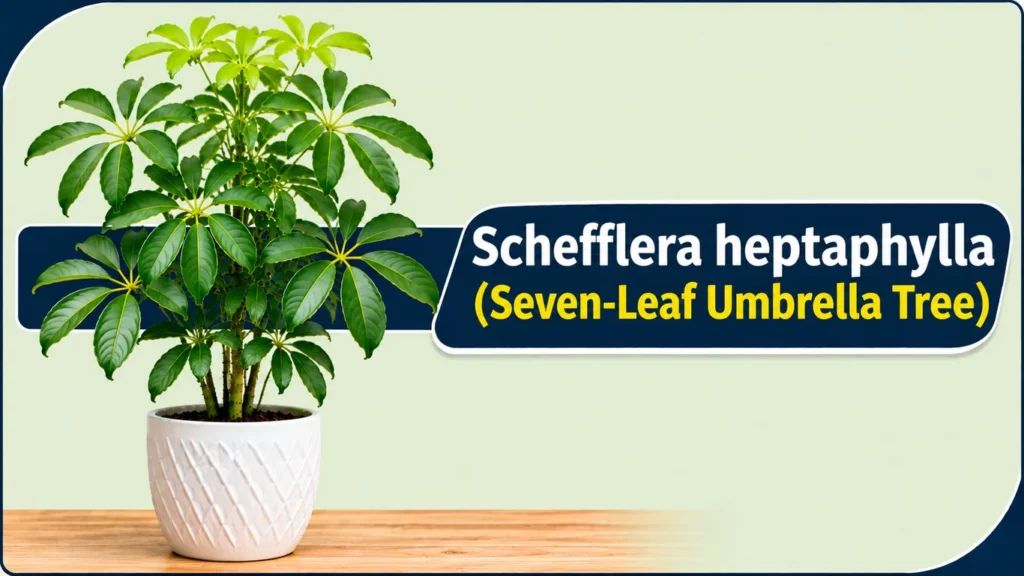
Schefflera heptaphylla, commonly known as the Seven-Leaf Umbrella Tree, is a tropical evergreen tree native to parts of southern China and Southeast Asia. It is admired for its glossy green leaves arranged in umbrella-like clusters. This species naturally grows in warm forests and can develop into a substantial tree outdoors. Although less common than Schefflera arboricola, young specimens may be cultivated indoors with sufficient space, bright light, and careful maintenance.
Identification
- Scientific Name: Schefflera heptaphylla (also classified as Heptapleurum heptaphyllum)
- Common Name: Seven-Leaf Umbrella Tree
- Family: Araliaceae
- Plant Height: Approximately 4–8 feet indoors under suitable conditions, though not well established
- Leaf Color: Glossy dark green
- Leaf Shape: Palmately compound, commonly with 5–9 leaflets
- Growth Habit: Upright evergreen tree
- Appearance: Woody stems with clusters of smooth, elongated green leaflets
Ideal Indoor Growing Conditions
Schefflera heptaphylla prefers bright, indirect sunlight and a consistently warm growing environment. Position young plants near an east-facing window or another location receiving filtered natural light. Adequate lighting encourages healthy foliage development and helps prevent weak, elongated growth.
Maintain temperatures around 65°F–85°F (18°C–29°C). Moderate to high humidity may support healthy leaf growth, particularly during dry indoor conditions. Use a fertile, well-draining potting mixture containing organic matter, bark, and perlite to maintain root aeration.
Watering and Maintenance Tips
Water the Seven-Leaf Umbrella Tree when the upper 1–2 inches of soil feel dry. Water thoroughly and allow excess moisture to drain from the container. Prune overly long stems during active growth to encourage a more compact appearance. Apply diluted balanced houseplant fertilizer every four to six weeks during spring and summer.
Inspect the foliage regularly for spider mites, scale insects, and mealybugs. Since this species is less established as a houseplant, its indoor growth rate and mature size may vary considerably depending on growing conditions.
8. Schefflera alpina (Alpine Schefflera)
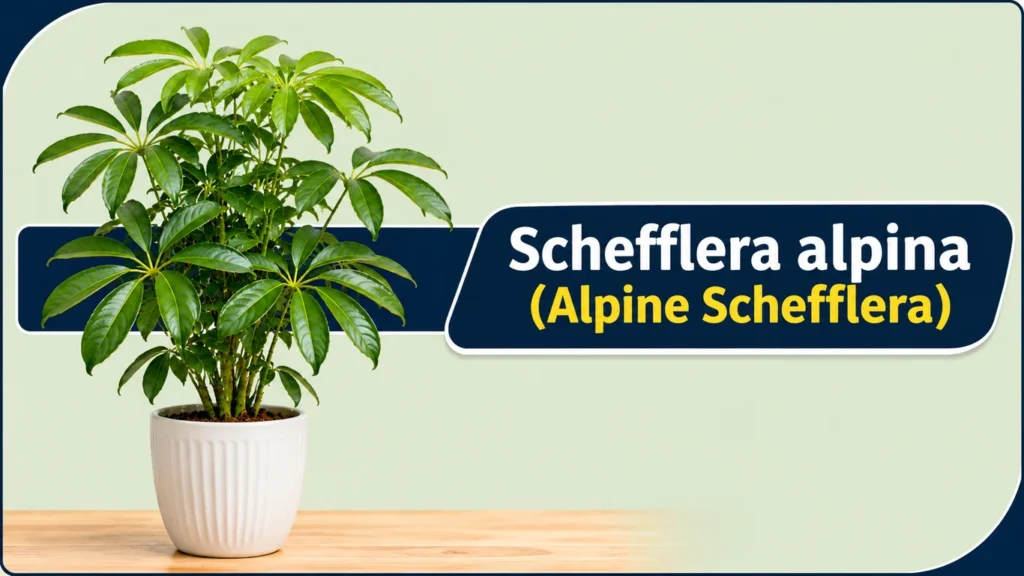
Schefflera alpina, commonly called Alpine Schefflera, is a lesser-known evergreen shrub or small tree associated with the mountainous regions of Southeast Asia. It belongs to the Araliaceae family and is admired for its attractive foliage and tropical appearance. Although uncommon as a houseplant, this species may interest collectors who enjoy growing unusual Schefflera varieties. Young specimens may be maintained in containers when provided with suitable light, moderate temperatures, and careful watering.
Identification
- Scientific Name: Schefflera alpina
- Common Name: Alpine Schefflera
- Family: Araliaceae
- Plant Height: Indoor mature height is not well documented
- Leaf Color: Dark green
- Leaf Shape: Palmately compound leaves with elongated leaflets
- Growth Habit: Evergreen shrub or small tree
- Appearance: Woody stems supporting clusters of green leaflets with an attractive tropical appearance
Ideal Indoor Growing Conditions
Schefflera alpina prefers bright, filtered sunlight and may benefit from cooler conditions compared with tropical lowland Schefflera species. Position young plants near an east-facing window where they receive gentle morning sunlight without excessive afternoon heat.
Temperatures around 55°F–75°F (13°C–24°C) may provide reasonable starting conditions for experimental indoor cultivation. Use a loose, well-draining potting mixture containing organic matter, composted bark, and perlite. Moderate humidity and good air circulation may help maintain healthy foliage. Avoid placing the plant directly beside heating vents or in areas with sudden temperature changes.
Watering and Maintenance Tips
Water Alpine Schefflera when the upper portion of the soil begins to dry. Maintain moderate moisture without allowing water to accumulate around the roots.
Remove damaged leaves and prune lightly when necessary to maintain balanced appearance. Apply diluted balanced fertilizer occasionally during the growing season. Because this species is uncommon in indoor cultivation, monitor new growth and adjust watering, light, and humidity according to the plant’s response.
9. Schefflera brevipedunculata
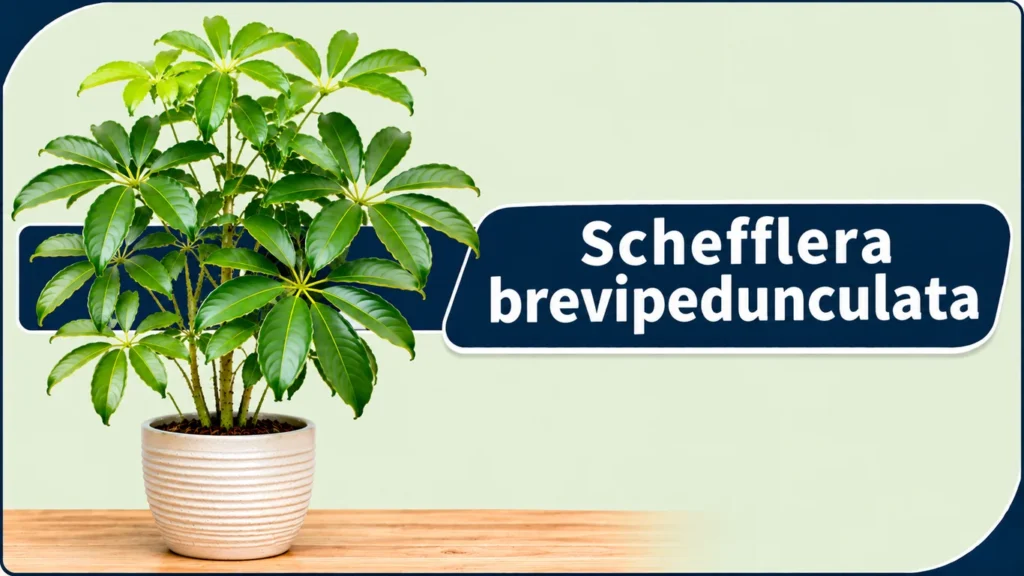
Schefflera brevipedunculata is a rare evergreen woody plant belonging to the Araliaceae family. It is primarily known through botanical collections rather than commercial indoor plant cultivation. Like other members of the traditional Schefflera group, it is of interest for its foliage and ornamental potential. Although it is not widely available as a houseplant, experienced gardeners may experiment with growing young specimens in containers under carefully controlled conditions.
Identification
- Scientific Name: Schefflera brevipedunculata
- Common Name: No widely established common name
- Family: Araliaceae
- Plant Height: Indoor height is not reliably documented
- Leaf Color: Green
- Plant Type: Woody evergreen plant
- Growth Habit: Shrub or tree-like growth
- Appearance: Green foliage supported by woody stems; detailed indoor ornamental characteristics are poorly documented
Ideal Indoor Growing Conditions
Schefflera brevipedunculata has limited documented history as an indoor ornamental plant. Bright, indirect sunlight may provide a reasonable starting point for cultivating young specimens. Position the container near a bright window while protecting the foliage from harsh afternoon sunlight.
A warm, stable environment may help support healthy development. Temperatures around 60°F–80°F (16°C–27°C) can be considered an experimental starting range rather than a confirmed species-specific requirement. Use a well-draining potting mixture containing organic matter, perlite, and fine bark. Moderate humidity and proper air circulation may also benefit container-grown plants.
Watering and Maintenance Tips
Water Schefflera brevipedunculata when the upper layer of soil begins to dry. Ensure that the pot has sufficient drainage holes to prevent excess water from accumulating.
Remove dead or damaged leaves and inspect stems for signs of pest activity. Apply diluted balanced fertilizer sparingly during active growth. Avoid aggressive pruning or frequent repotting until the plant becomes established. Since reliable indoor growing instructions are unavailable, monitor its response to environmental conditions carefully.
10. Schefflera venulosa
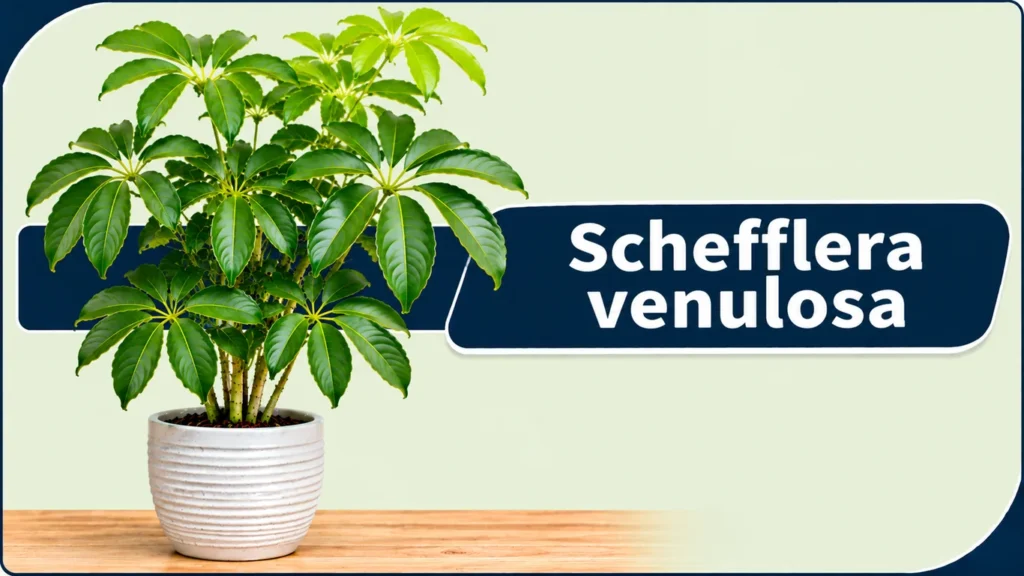
Schefflera venulosa is a tropical climbing shrub belonging to the Araliaceae family. Native to parts of tropical Asia, this species is less familiar to indoor gardeners than the common Dwarf Umbrella Tree. It is known for its woody climbing growth habit and attractive green foliage. Although rarely sold as a conventional houseplant, it may interest collectors seeking unusual tropical foliage plants. Container cultivation is possible to explore, but its specific indoor requirements are not well established.
Identification
- Scientific Name: Schefflera venulosa (also classified as Heptapleurum venulosum)
- Common Name: No widely established common name
- Family: Araliaceae
- Plant Height: Indoor height is not well documented
- Leaf Color: Green to dark green
- Leaf Shape: Palmately compound leaves with elongated leaflets
- Growth Habit: Woody climbing shrub
- Appearance: Flexible woody stems and clusters of green leaflets, with a climbing or spreading growth pattern
Ideal Indoor Growing Conditions
Schefflera venulosa naturally occurs in tropical environments, suggesting that warm temperatures and moderate humidity may be beneficial. Bright, indirect sunlight is a reasonable starting point for indoor cultivation. Position young plants near a bright window where they receive consistent filtered daylight.
Maintain temperatures around 65°F–85°F (18°C–29°C) as an initial growing range. Use a loose, well-draining potting mixture containing composted bark, organic matter, and perlite. Because this species has a climbing growth habit, a sturdy support or trellis may help manage its stems in containers.
Watering and Maintenance Tips
Water Schefflera venulosa when the upper 1–2 inches of soil begin to dry. Avoid constantly saturated conditions, which may affect root health. Remove damaged foliage and lightly trim excessively long stems to control its spread. Apply diluted balanced fertilizer occasionally during the active growing season.
Inspect the plant regularly for spider mites, scale insects, and mealybugs. Since this species is not commonly cultivated indoors, carefully observe its growth and adjust its care as needed.
11. Schefflera elliptica
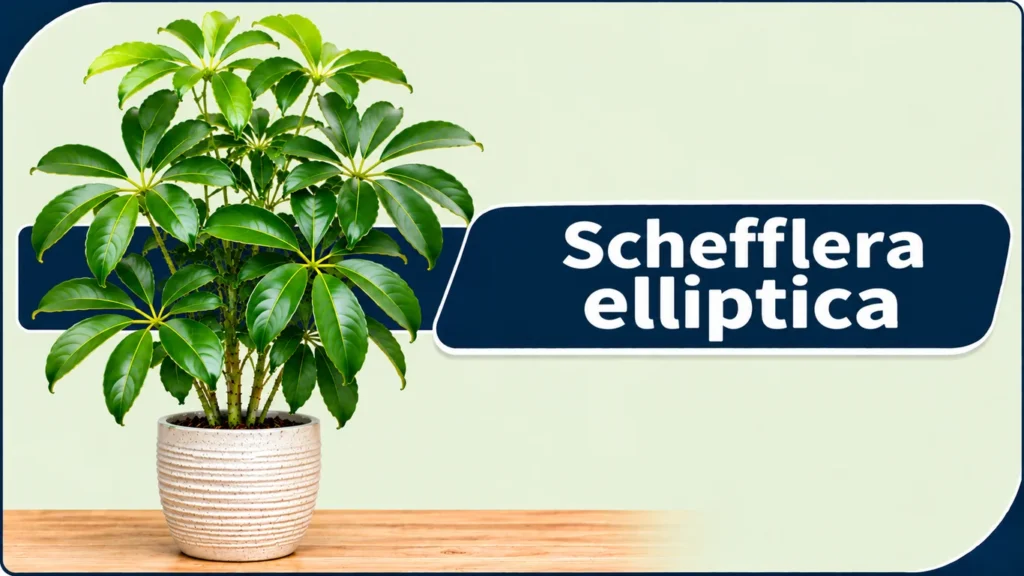
Schefflera elliptica is a tropical evergreen climbing shrub belonging to the Araliaceae family. Native to parts of Southeast Asia, this species is recognized for its attractive green foliage and flexible woody stems. Unlike the commonly cultivated Dwarf Umbrella Tree, Schefflera elliptica is rarely found in ordinary houseplant nurseries. However, its climbing growth habit makes it an interesting option for experienced indoor gardeners who enjoy collecting uncommon tropical plants.
Identification
- Scientific Name: Schefflera elliptica (also classified as Heptapleurum ellipticum)
- Common Name: No widely established common name
- Family: Araliaceae
- Plant Height: Indoor height is not well documented
- Leaf Color: Glossy green to dark green
- Leaf Shape: Palmately compound leaves with elliptical leaflets
- Growth Habit: Evergreen climbing shrub
- Appearance: Woody climbing stems supporting clusters of smooth, oval-shaped green leaflets
Ideal Indoor Growing Conditions
Schefflera elliptica may benefit from bright, indirect sunlight and warm indoor temperatures. Position young plants near an east-facing window or another location that receives consistent filtered daylight. Avoid exposing the foliage to intense afternoon sunlight without gradual acclimatization.
Temperatures around 65°F–85°F (18°C–29°C) may provide suitable starting conditions. Use a loose, well-draining potting mixture containing organic matter, composted bark, and perlite. Moderate to high humidity may support foliage development. Providing a moss pole or sturdy climbing support can help accommodate its natural growth habit.
Watering and Maintenance Tips
Water Schefflera elliptica when the upper 1–2 inches of soil begin to dry. Maintain moderate moisture while ensuring excess water drains freely.
Prune overly long stems when necessary to control their spread. Apply diluted balanced fertilizer occasionally during spring and summer. Regularly inspect the foliage for spider mites, mealybugs, and scale insects. Because indoor cultivation information is limited, monitor the plant’s growth carefully.
12. Schefflera rhododendrifolia
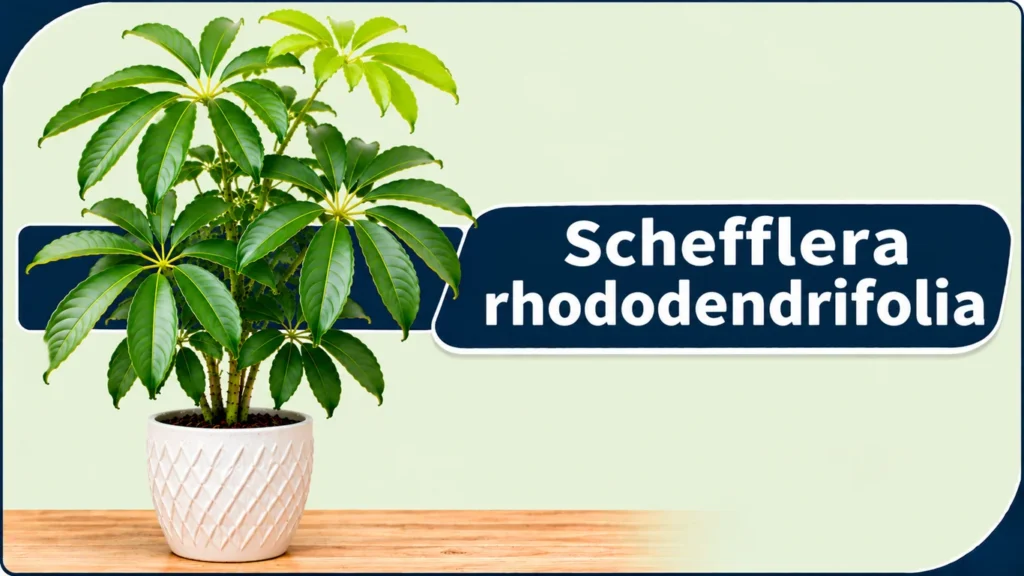
Schefflera rhododendrifolia is an evergreen shrub or small tree associated with the Himalayan region. It belongs to the Araliaceae family and is admired by collectors for its attractive foliage and upright growth. Unlike tropical umbrella trees commonly grown indoors, this species is more frequently cultivated outdoors in mild climates. However, young specimens may be maintained in spacious containers in cool, bright indoor environments with appropriate care.
Identification
- Scientific Name: Schefflera rhododendrifolia (also classified as Heptapleurum rhododendrifolium)
- Common Name: Himalayan Schefflera
- Family: Araliaceae
- Plant Height: Several feet in containers; indoor height varies
- Leaf Color: Dark green
- Leaf Shape: Palmately compound leaves with narrow, elongated leaflets
- Growth Habit: Evergreen shrub or small tree
- Appearance: Woody upright stems with elegant clusters of pointed green leaflets
Ideal Indoor Growing Conditions
Schefflera rhododendrifolia prefers bright, filtered sunlight and may perform better in cooler indoor environments than many tropical Schefflera species. A position near a large east-facing window can provide sufficient light without excessive afternoon heat.
Temperatures around 50°F–75°F (10°C–24°C) may be suitable for container cultivation. Avoid placing the plant beside heaters or in rooms that remain excessively hot and dry. Use a well-draining potting mixture containing organic matter, perlite, and composted bark. Moderate humidity and good air circulation can help maintain healthy foliage.
Watering and Maintenance Tips
Water Himalayan Schefflera when the upper layer of soil begins to dry. Keep the growing medium moderately moist during active growth, but avoid prolonged waterlogging.
Remove damaged leaves and lightly prune overcrowded branches to maintain an attractive shape. Apply diluted balanced fertilizer occasionally during spring and summer. Because this species can develop substantial woody growth, provide adequate space and repot when roots outgrow the container. Monitor its response to indoor temperatures and lighting conditions.
13. Schefflera macrophylla (Large-Leaf Schefflera)
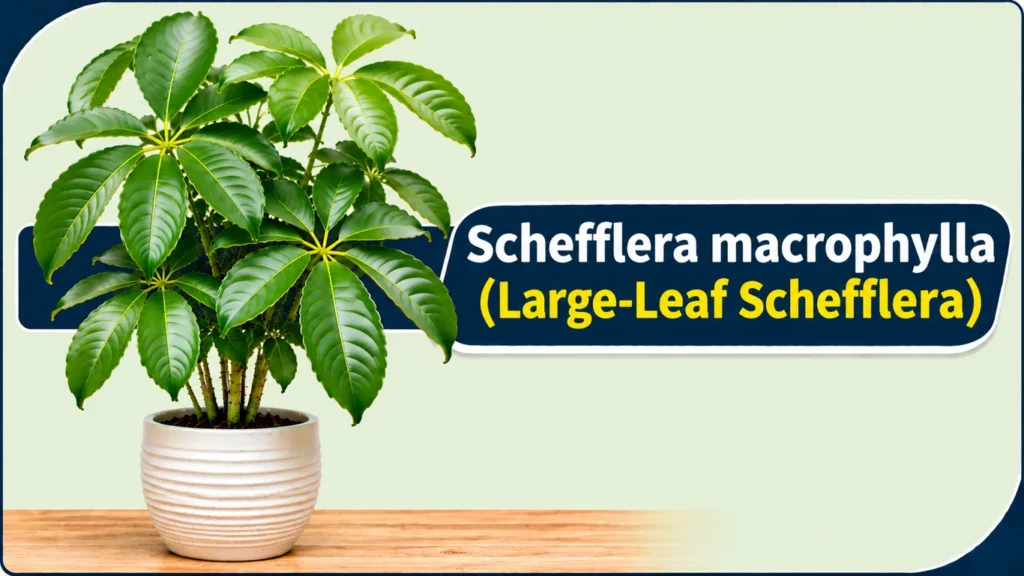
Schefflera macrophylla, commonly called Large-Leaf Schefflera, is an impressive subtropical tree admired for its exceptionally large, textured foliage. Native to southwestern China and parts of Southeast Asia, this species produces broad green leaflets that create a dramatic tropical appearance. Although it can become a substantial tree outdoors, it can also be grown in containers or spacious indoor environments. Its architectural foliage makes it particularly attractive for conservatories and large indoor plant collections.
Identification
- Scientific Name: Schefflera macrophylla (currently accepted as Heptapleurum macrophyllum)
- Common Name: Large-Leaf Schefflera
- Family: Araliaceae
- Plant Height: Container height varies; mature outdoor trees may exceed 20 feet
- Leaf Color: Green upper surfaces with pale, softly hairy undersides
- Leaf Shape: Large, palmately compound leaves with 5–7 broad leaflets
- Growth Habit: Upright subtropical tree
- Appearance: Thick leaf stalks, broad leathery leaflets, and prominently veined foliage
Ideal Indoor Growing Conditions
Schefflera macrophylla grows best in bright, filtered sunlight. Position it near a large window where it receives plenty of natural light without prolonged exposure to harsh midday sunshine. Its exceptionally large leaves require adequate space for healthy development.
This species benefits from moderate temperatures, good ventilation, and a well-draining growing medium. A mixture containing organic matter, composted bark, and perlite can help maintain moisture while preventing waterlogging.
Watering and Maintenance Tips
Water Large-Leaf Schefflera when the upper portion of the soil begins to dry. Maintain moderate moisture during active growth, but avoid leaving the container standing in water.
Feed occasionally with balanced fertilizer during spring and summer. Remove damaged leaves and prune upward-growing shoots when necessary to encourage a compact appearance. Inspect the foliage regularly for mealybugs, aphids, and spider mites. Provide sufficient room for its large leaves, and protect the plant from prolonged cold drafts.
14. Schefflera pueckleri (Tupidanthus)
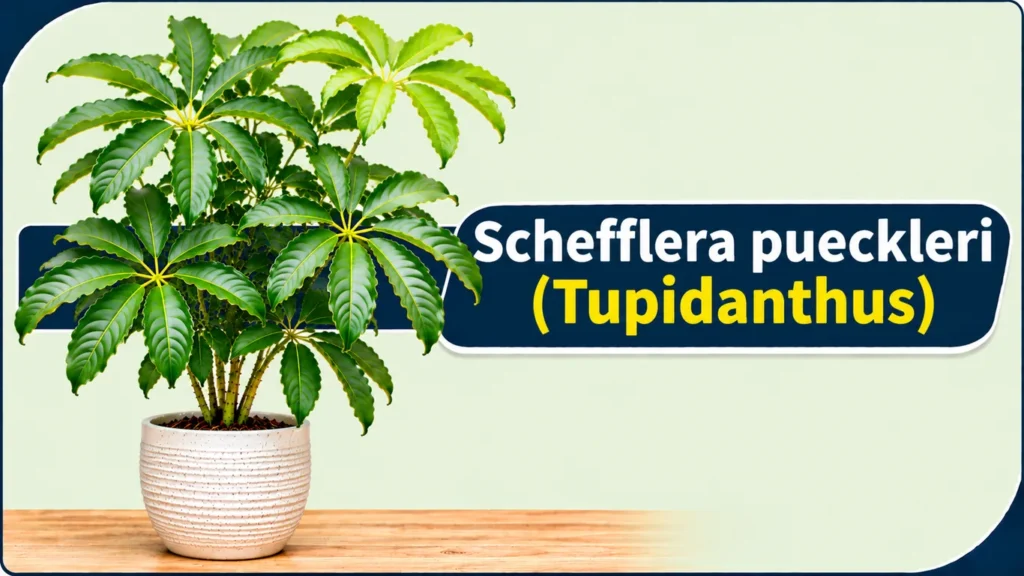
Schefflera pueckleri, commonly known as Tupidanthus or Mallet Flower, is a tropical evergreen tree admired for its large, glossy foliage and attractive upright growth. Native to tropical Asia, this species is closely related to the familiar Umbrella Tree. Its broad leaflets and sturdy woody stems create a bold tropical appearance. Although less common than Schefflera arboricola, it can be grown in spacious indoor environments with suitable lighting, warmth, and regular maintenance.
Identification
- Scientific Name: Schefflera pueckleri (also known as Heptapleurum pueckleri)
- Common Name: Tupidanthus, Mallet Flower
- Family: Araliaceae
- Plant Height: Approximately 4–8 feet indoors with pruning
- Leaf Color: Glossy dark green
- Leaf Shape: Palmately compound with broad, elongated leaflets
- Growth Habit: Upright evergreen shrub or small tree
- Appearance: Thick woody stems supporting large clusters of leathery green leaflets
Ideal Indoor Growing Conditions
Schefflera pueckleri prefers bright, indirect sunlight and warm indoor environments. Position the plant near an east-facing window or a few feet away from a bright south-facing window. Adequate lighting encourages strong stems and healthy foliage, while prolonged intense sunlight may damage leaves.
Maintain temperatures between 65°F and 85°F (18°C–29°C). Moderate humidity supports healthy growth, although established plants can tolerate normal household conditions. Use a loose, well-draining potting mixture containing organic matter, perlite, and composted bark. Choose a sturdy container that can support the plant’s large foliage and upright growth.
Watering and Maintenance Tips
Water Tupidanthus when the upper 1–2 inches of soil feel dry. Water thoroughly and allow excess moisture to drain completely. Prune long branches during the growing season to maintain a manageable shape. Apply diluted balanced fertilizer every four to six weeks during spring and summer.
Wipe dusty leaves with a damp cloth to improve their appearance. Regularly inspect the foliage for spider mites, scale insects, and mealybugs.
15. Schefflera stellata
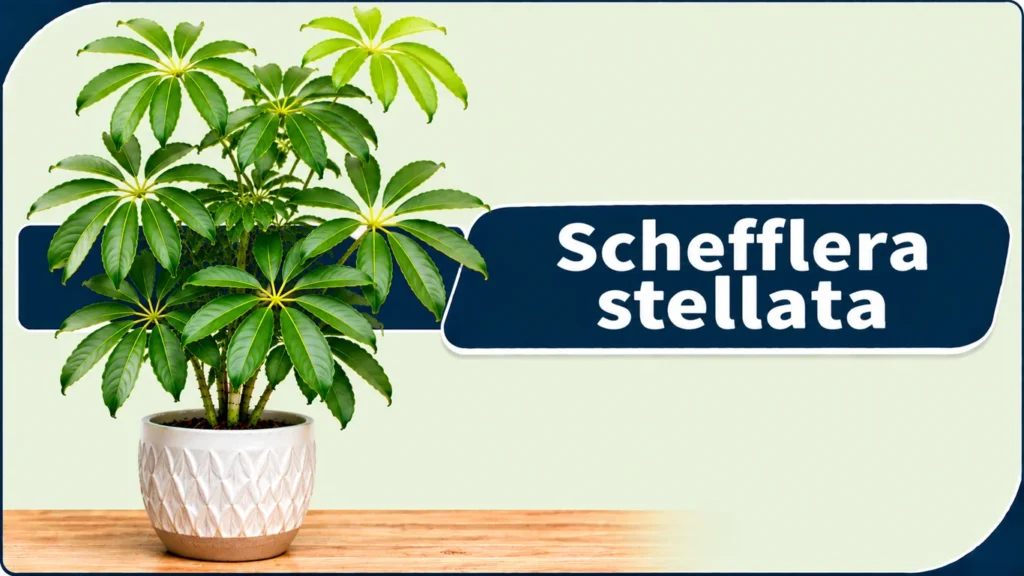
Schefflera stellata is a lesser-known tropical tree belonging to the Araliaceae family. It is associated with tropical regions of South and Southeast Asia and is primarily recognized through botanical records rather than common houseplant cultivation. Like other traditional Schefflera species, it has ornamental potential because of its foliage and woody growth habit. Although rarely available in nurseries, young specimens may interest experienced indoor gardeners who enjoy growing unusual tropical trees.
Identification
- Scientific Name: Schefflera stellata (also classified as Heptapleurum stellatum)
- Common Name: No widely established common name
- Family: Araliaceae
- Plant Height: Indoor height is not reliably documented
- Leaf Color: Green to dark green
- Leaf Shape: Palmately compound leaves
- Growth Habit: Tropical woody tree
- Appearance: Woody stems supporting clusters of green leaflets; detailed indoor characteristics are poorly documented
Ideal Indoor Growing Conditions
Schefflera stellata has limited documented history as an indoor ornamental plant. Bright, filtered sunlight may provide a reasonable starting point for young specimens. Position the container near a bright window where the plant receives consistent natural light without harsh afternoon exposure.
Warm temperatures around 65°F–85°F (18°C–29°C) may provide an appropriate experimental environment. A well-draining potting mixture containing organic matter, perlite, and fine bark can help maintain root aeration.Moderate to high humidity may support tropical foliage development. However, exact temperature, lighting, and humidity requirements for indoor cultivation have not been established.
Watering and Maintenance Tips
Water Schefflera stellata when the upper portion of the soil begins to dry. Avoid keeping the growing medium continuously saturated, as excess moisture may damage the roots. Remove damaged foliage and inspect stems regularly for pests. Apply diluted balanced fertilizer occasionally during active growth.
Light pruning may help maintain a manageable shape, but avoid aggressive trimming until the plant’s response is understood. Because this species is not an established indoor houseplant, careful observation is important for successful experimental cultivation.
FAQs
1. Which Schefflera tree is best for indoor growing?
Schefflera arboricola, commonly known as the Dwarf Umbrella Tree, is one of the best choices for indoor growing. It adapts well to household conditions, requires moderate watering, and tolerates different light levels. Schefflera actinophylla and Schefflera elegantissima are also attractive options for indoor spaces.
2. How often should I water indoor Schefflera trees?
Most commonly cultivated Schefflera trees need watering when the top 1–2 inches of soil feel dry. Watering frequency depends on temperature, humidity, sunlight, and pot size. Avoid keeping the soil constantly wet, as excessive moisture can cause root rot, yellowing leaves, and poor growth.
3. Do Schefflera trees need direct sunlight indoors?
Most indoor Schefflera trees prefer bright, indirect sunlight. Gentle morning sunlight can encourage healthy growth, but intense afternoon sunlight may scorch their leaves. Position the plant near a bright window with filtered light. Variegated varieties generally require brighter conditions to maintain their colorful foliage patterns.
4. How tall can Schefflera trees grow indoors?
Schefflera arboricola typically grows around 3–6 feet tall indoors, while Schefflera actinophylla may reach 6–10 feet or more under favorable conditions. Their mature height depends on the species, container size, lighting, and pruning. Regular trimming helps maintain a compact appearance and manageable indoor growth.
5. Can all 15 types of Schefflera trees grow indoors?
Not all 15 Schefflera species are proven to grow successfully indoors. Schefflera arboricola, Schefflera actinophylla, and False Aralia are established houseplants. Other species, including Schefflera taiwaniana and Schefflera delavayi, are better known as outdoor ornamentals, while several rare species have limited documented indoor cultivation requirements.