
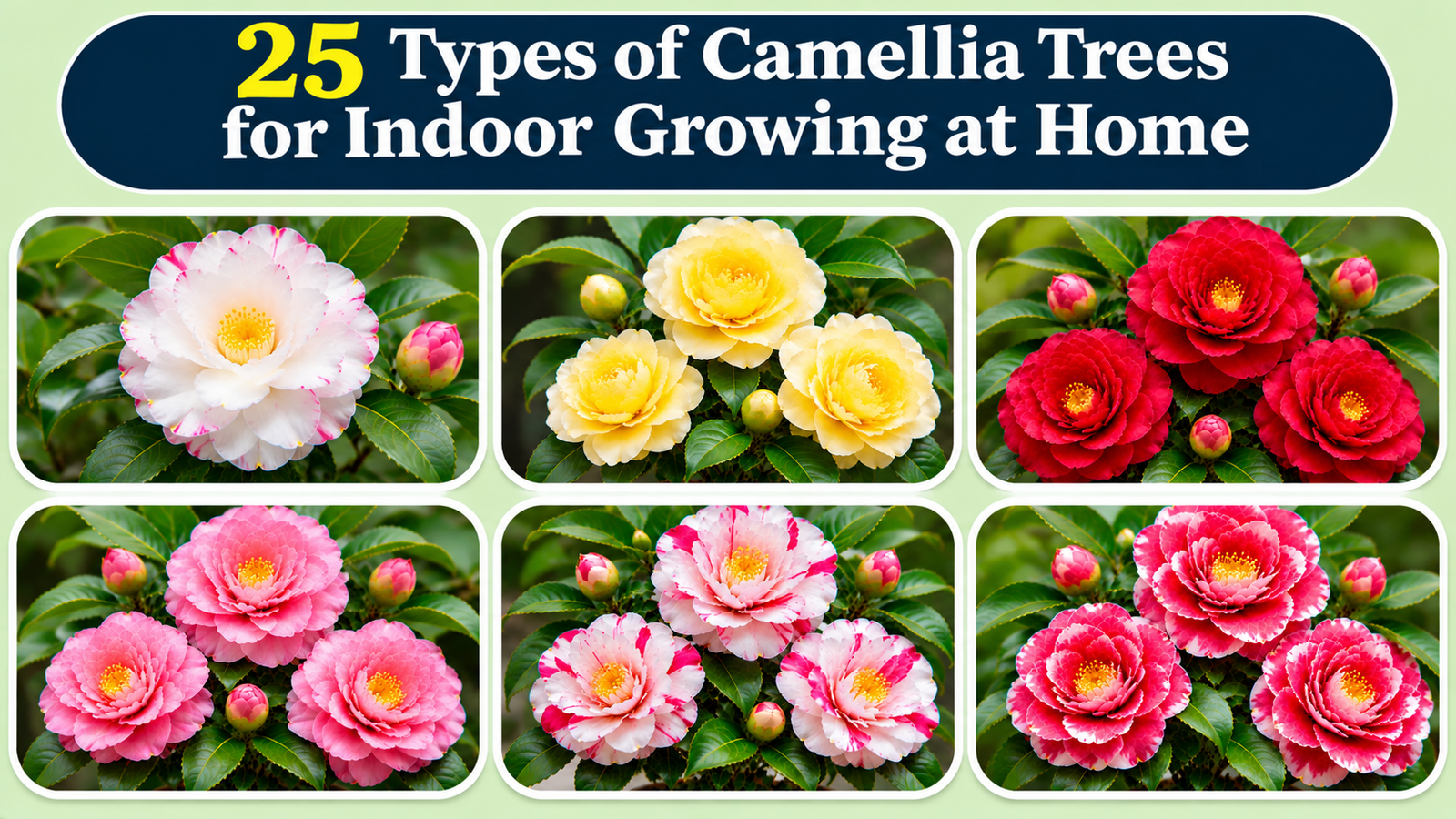
Camellia trees are beautiful evergreen flowering plants admired for their glossy green leaves, elegant blossoms, and attractive growth habits. Different types of Camellia trees produce stunning flowers in shades of white, pink, red, and cream, making them wonderful decorative plants for indoor spaces. From the bright red flowers of Yuletide Camellia to the delicate pink blooms of Debutante, these varieties offer unique colors and flower shapes. Whether you prefer compact flowering shrubs or larger tree-like specimens, these 25 beautiful Camellia varieties can be grown in containers with suitable lighting, acidic soil, and proper care.
Although commonly called Camellia trees, most ornamental varieties are naturally evergreen shrubs. They are not typical warm-room houseplants. For successful indoor growing, a bright, cool sunroom, enclosed balcony, or unheated conservatory is usually better than a heated living room. The Royal Horticultural Society confirms that camellias grow well in containers, provided their light, moisture, and acidic soil requirements are met.
1. Camellia Shishi Gashira

Camellia Shishi Gashira is a beautiful evergreen flowering shrub recognized for its vibrant rose-pink to reddish-pink flowers and glossy dark green foliage. Its attractive semi-double blooms feature layered petals surrounding delicate golden stamens, creating a striking floral display. Unlike larger Camellia varieties, Shishi Gashira develops a relatively compact, spreading growth habit that makes it particularly suitable for decorative containers. This variety is admired for its abundant autumn and winter flowering and can bring beautiful color to cool indoor spaces when provided with proper growing conditions.
Identification
- Scientific Name: Camellia sasanqua ‘Shishi Gashira’ (often classified under Camellia hiemalis)
- Common Name: Shishi Gashira Camellia
- Plant Type: Evergreen flowering shrub
- Height: Approximately 3–5 feet at maturity, depending on conditions
- Flower Color: Deep rose-pink to reddish-pink
- Flower Shape: Semi-double to rose-form double
- Leaf Color: Glossy dark green
- Light Requirements: Bright, filtered sunlight
- Indoor Suitability: Good for cool, bright container displays
Growing Conditions
Camellia Shishi Gashira thrives in bright, cool growing environments where it receives gentle morning sunlight and filtered afternoon light. Position the plant near an east-facing window or inside a cool sunroom. Adequate lighting supports flower bud development, while excessive heat may cause flowers to fade prematurely.
Grow this variety in an acidic, well-draining potting mixture with a pH around 5.0–6.5. Maintain cool temperatures, preferably around 45°F–65°F (7°C–18°C) during the flowering period. Provide moderate humidity and good airflow to support healthy foliage and prevent fungal problems.
Care and Maintenance
Water Camellia Shishi Gashira when the upper inch of soil begins to dry, keeping the potting mixture evenly moist without waterlogging. Use a container with drainage holes to prevent root damage.
Apply fertilizer formulated for acid-loving plants after flowering, following label instructions. Prune lightly after the blooming season to maintain its compact shape. Remove damaged leaves and faded flowers, and inspect the plant regularly for scale insects, aphids, and spider mites.
2. Camellia Yuletide
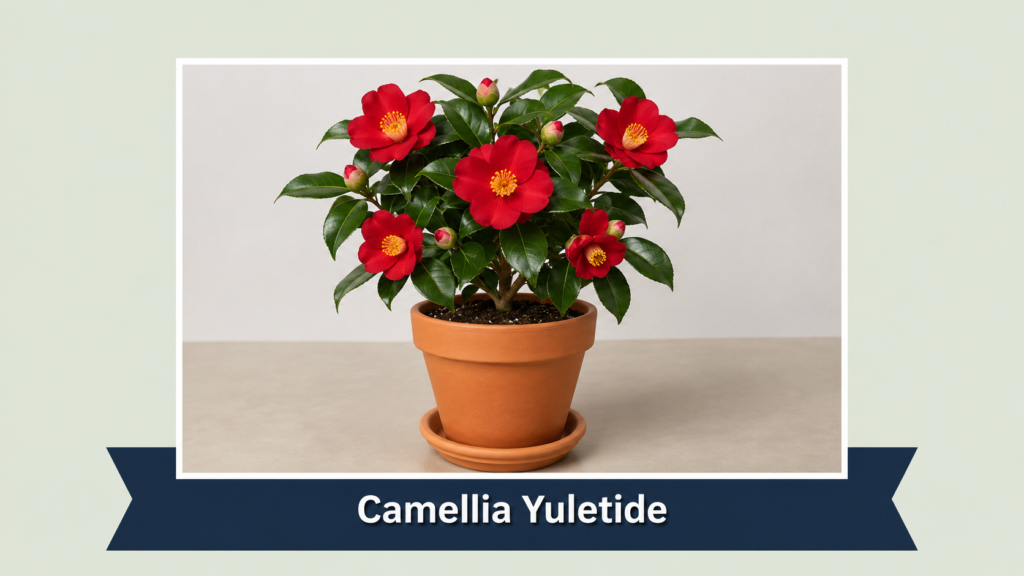
Camellia Yuletide is an attractive evergreen flowering shrub admired for its bright crimson-red flowers and prominent golden-yellow stamens. Its elegant single blooms create a beautiful contrast against glossy dark green foliage, giving the plant a festive appearance during autumn and winter. This variety is especially popular because of its relatively compact, upright growth habit and abundant seasonal flowers. With proper care, Camellia Yuletide can become a striking decorative plant in cool conservatories, bright enclosed balconies, and indoor container collections.
Identification
- Scientific Name: Camellia × vernalis ‘Yuletide’
- Common Name: Yuletide Camellia
- Plant Type: Evergreen flowering shrub
- Height: Approximately 4–6 feet at maturity
- Flower Color: Crimson-red
- Flower Shape: Single flowers with yellow stamens
- Leaf Color: Glossy dark green
- Light Requirements: Bright, filtered sunlight
- Indoor Suitability: Good for cool, bright indoor containers
Growing Conditions
Camellia Yuletide grows best in cool indoor environments with abundant natural light. Place the plant near a bright east-facing window or in a conservatory where it receives several hours of gentle sunlight. Its flowering performance improves when temperatures remain cool during bud development and blooming.
Plant this variety in acidic, well-draining potting soil containing composted pine bark and suitable drainage materials. Maintain temperatures around 45°F–65°F (7°C–18°C) during flowering. Moderate humidity and consistent ventilation help protect developing flower buds.
Care and Maintenance
Water Camellia Yuletide when the upper surface of the soil begins to feel slightly dry. Keep the root zone consistently moist, especially during active growth and bud formation. Avoid allowing excess water to accumulate in the container.
Feed with an acid-loving plant fertilizer after flowering and during early active growth, according to the product label. Prune lightly after blooming to preserve its upright appearance. Remove faded flowers and regularly check the foliage for scale insects, spider mites, and other common pests.
3. Camellia Bonanza
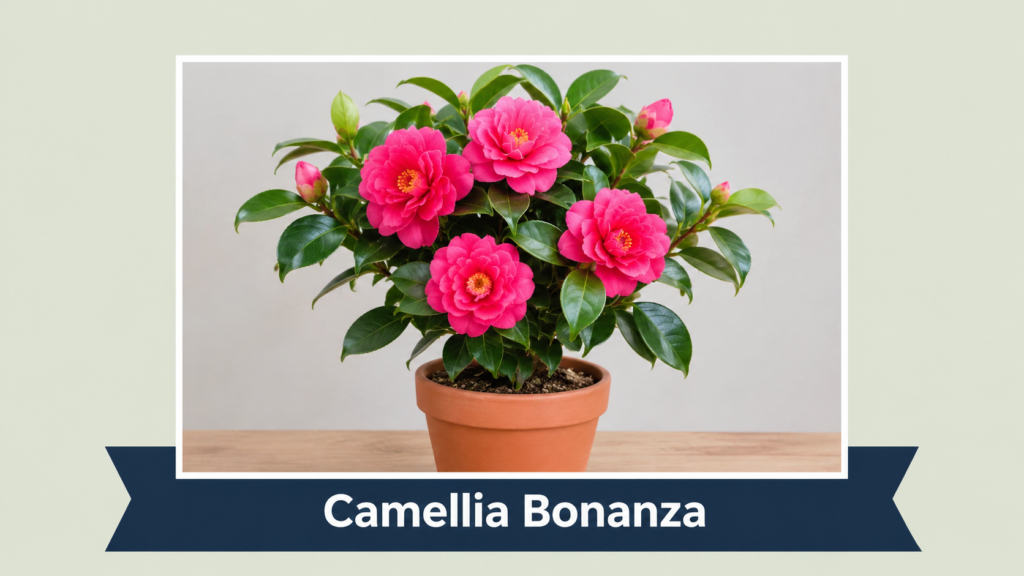
Camellia Bonanza is a beautiful evergreen shrub known for its vibrant red flowers and dense, attractive foliage. Its medium-sized blooms feature loosely layered petals that create a soft, peony-like appearance. This variety is admired for its abundant autumn flowering and relatively bushy growth habit. Although it naturally develops into a larger shrub over time, Camellia Bonanza can be maintained in containers through careful pruning. Its colorful flowers make it an appealing option for bright, cool indoor plant displays.
Identification
- Scientific Name: Camellia sasanqua ‘Bonanza’
- Common Name: Bonanza Camellia
- Plant Type: Evergreen flowering shrub
- Height: Commonly 4–6 feet or taller with maturity
- Flower Color: Rich red
- Flower Shape: Semi-double to peony-form flowers
- Leaf Color: Dark glossy green
- Light Requirements: Bright, filtered sunlight
- Indoor Suitability: Moderate; requires pruning and cool conditions
Growing Conditions
Camellia Bonanza thrives in bright environments with filtered sunlight and cool temperatures. Position the plant in a sunroom or near a large window where it receives sufficient natural light without prolonged exposure to intense afternoon heat.
Grow this variety in acidic, organic-rich potting soil with excellent drainage. Maintain temperatures around 45°F–65°F (7°C–18°C) during flowering, and protect the plant from hot, dry indoor air. Moderate humidity supports healthy leaves and helps prevent flower buds from drying prematurely.
Care and Maintenance
Water Camellia Bonanza when the upper layer of soil begins to dry, keeping the root zone evenly moist. Avoid both prolonged dryness and waterlogged soil, which may damage the roots and affect flowering.
Apply fertilizer for acid-loving shrubs after flowering and during spring growth. Remove faded blossoms and prune lightly after blooming to maintain a manageable size. Rotate the container occasionally for balanced development, and inspect the foliage regularly for aphids, scale insects, and leaf discoloration.
4. Camellia Sparkling Burgundy
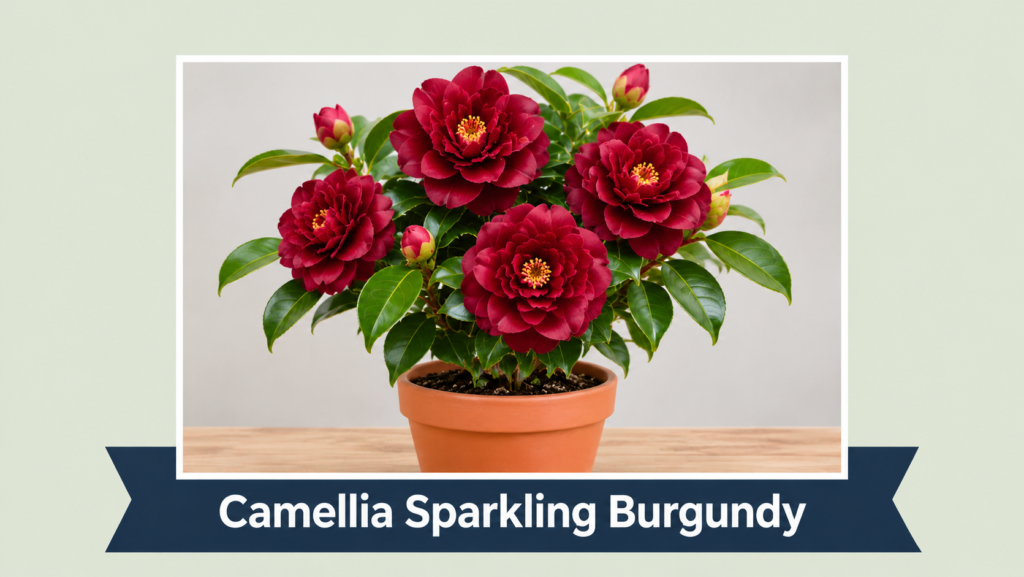
Camellia Sparkling Burgundy is an attractive evergreen flowering shrub recognized for its rich rose-pink flowers and elegant layered petals. Its beautiful peony-form blooms create a striking contrast against the plant’s glossy green leaves. This variety is valued for its colorful autumn flowers and naturally upright, somewhat compact growth habit. With suitable container care and regular pruning, Camellia Sparkling Burgundy can become an eye-catching addition to cool sunrooms, enclosed balconies, and indoor plant collections.
Identification
- Scientific Name: Camellia sasanqua ‘Sparkling Burgundy’
- Common Name: Sparkling Burgundy Camellia
- Plant Type: Evergreen flowering shrub
- Height: Approximately 4–6 feet or more under favorable conditions
- Flower Color: Deep rose-pink
- Flower Shape: Peony-form flowers
- Leaf Color: Glossy dark green
- Light Requirements: Bright, filtered sunlight
- Indoor Suitability: Moderate; suitable for larger containers
Growing Conditions
Camellia Sparkling Burgundy prefers bright, cool environments where it receives sufficient natural sunlight to encourage flowering. Position the container near an east-facing window or in a conservatory with filtered light. Avoid placing the plant near heating vents or frequently used heaters.
Use an acidic, loose, well-draining potting mixture containing organic matter and pine bark. Maintain temperatures around 45°F–65°F (7°C–18°C) during the flowering season. Moderate humidity helps prevent dry leaf edges, while good ventilation reduces fungal problems.
Care and Maintenance
Water Camellia Sparkling Burgundy when the top inch of soil begins to dry. Maintain consistent moisture throughout active growth, but ensure excess water drains freely from the container.
Feed the plant with an appropriate acid-loving fertilizer after flowering, following label directions. Remove faded flowers and lightly prune longer branches to maintain an attractive shape. Avoid heavy pruning during flower bud development because it can reduce the next flowering display. Inspect the foliage regularly for common indoor pests.
5. Camellia Cleopatra
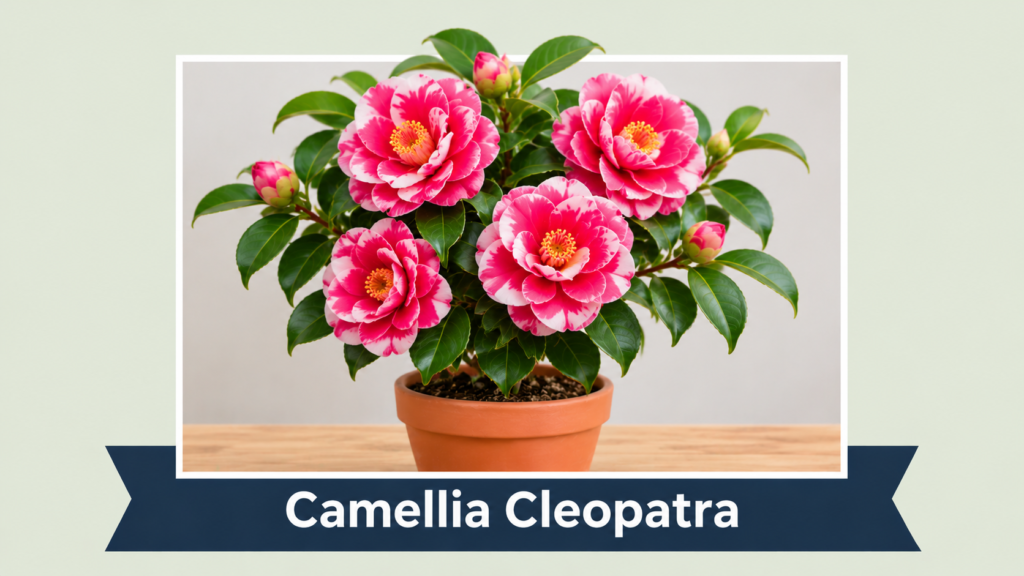
Camellia Cleopatra is a charming evergreen shrub admired for its beautiful rose-pink flowers and glossy green foliage. Its attractive semi-double blooms feature softly layered petals and delicate yellow stamens, creating an elegant floral display. This variety is especially popular because of its relatively compact, upright growth habit and colorful autumn flowering. Camellia Cleopatra can be maintained in decorative containers, making it a suitable option for gardeners who want seasonal flowers in bright, cool indoor growing spaces.
Identification
- Scientific Name: Camellia sasanqua ‘Cleopatra’
- Common Name: Cleopatra Camellia
- Plant Type: Evergreen flowering shrub
- Height: Approximately 4–6 feet at maturity
- Flower Color: Rose-pink to light pink
- Flower Shape: Semi-double flowers
- Leaf Color: Glossy dark green
- Light Requirements: Bright, filtered sunlight
- Indoor Suitability: Good with cool conditions and pruning
Growing Conditions
Camellia Cleopatra grows best in cool indoor environments where it receives abundant filtered sunlight. Position the plant near an east-facing window or in a bright conservatory. Sufficient light encourages healthy foliage and flower production, while excessive indoor heat may interfere with blooming.
Grow this variety in an acidic potting mixture containing pine bark, organic compost, and drainage materials. Maintain temperatures around 45°F–65°F (7°C–18°C) during flowering. Provide moderate humidity and ensure good airflow around the foliage.
Care and Maintenance
Water Camellia Cleopatra whenever the upper surface of the soil begins to dry. Keep the roots evenly moist, particularly during active growth and flower bud development. Use a container with drainage holes to prevent waterlogging.
Apply fertilizer for acid-loving plants after blooming and during early spring growth. Remove spent flowers and prune lightly to maintain its upright appearance. Rotate the container periodically and inspect leaves for scale insects, spider mites, and other common Camellia pests.
6. Camellia Jewel Box
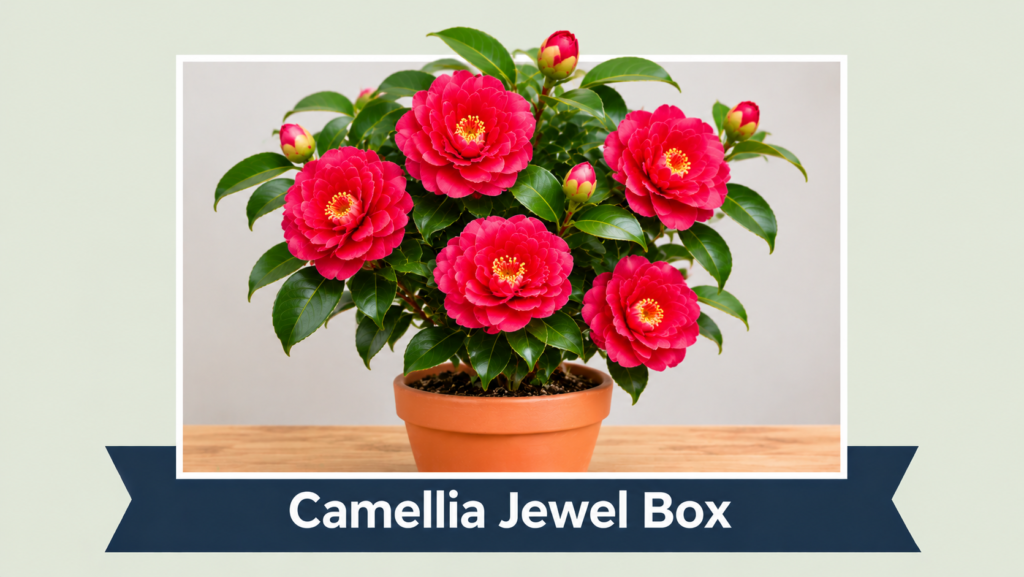
Camellia Jewel Box is a charming dwarf evergreen shrub recognized for its small white flowers and delicate green foliage. Unlike larger Camellia varieties, Jewel Box develops a naturally compact growth habit that makes it especially attractive for container gardening. Its miniature appearance allows gardeners to enjoy the elegance of Camellia flowers without requiring extensive growing space. This variety is particularly suitable for tabletop displays in cool sunrooms, sheltered patios, and bright conservatories.
Identification
- Scientific Name: Camellia ‘Jewel Box’
- Common Name: Jewel Box Camellia
- Plant Type: Dwarf evergreen flowering shrub
- Height: Slow-growing and compact; size depends on age
- Flower Color: White
- Flower Shape: Small ornamental flowers
- Leaf Color: Green
- Light Requirements: Bright, indirect sunlight
- Indoor Suitability: Very good for cool, bright container displays
Growing Conditions
Camellia Jewel Box thrives in cool environments with bright, filtered natural light. Place it near an east-facing window or in a bright sunroom protected from excessive indoor heat. Its smaller growth habit makes it easier to position where adequate natural light is available.
Use an acidic, well-draining potting mixture rich in organic matter. Maintain temperatures around 45°F–65°F (7°C–18°C) during flowering. Moderate humidity helps prevent leaf dryness and supports healthy growth.
Care and Maintenance
Water Camellia Jewel Box when the upper soil layer begins to dry, keeping the potting mixture lightly moist without becoming saturated. Small containers may dry out relatively quickly, so check soil moisture regularly.
Apply diluted fertilizer for acid-loving plants during spring growth, following label recommendations. Remove faded flowers and damaged leaves when necessary. Prune only lightly to preserve its naturally compact appearance, and inspect the foliage for spider mites and scale insects.
7. Camellia Paradise Little Liane
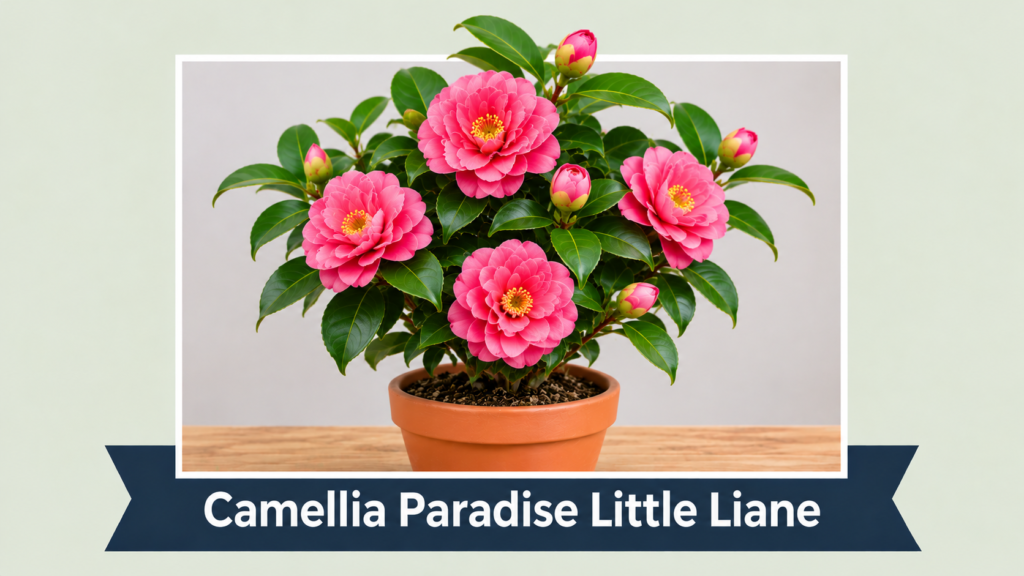
Camellia Paradise Little Liane is an attractive evergreen flowering shrub admired for its delicate white flowers and beautiful green foliage. Its relatively compact growth habit makes it a charming option for gardeners who prefer smaller Camellia varieties. The soft white blooms create an elegant contrast against the dark leaves, providing a refreshing appearance during the cooler flowering season. With suitable care, this variety can be maintained in decorative containers and enjoyed in bright indoor conservatories.
Identification
- Scientific Name: Camellia sasanqua ‘Paradise Little Liane’
- Common Name: Paradise Little Liane Camellia
- Plant Type: Evergreen flowering shrub
- Height: Compact to moderate growth, depending on maturity
- Flower Color: White
- Flower Shape: Small, delicate flowers
- Leaf Color: Glossy green
- Light Requirements: Bright, filtered sunlight
- Indoor Suitability: Good for cool, bright containers
Growing Conditions
Camellia Paradise Little Liane prefers bright environments with gentle morning sunlight and protection from intense afternoon heat. Position the plant near a well-lit window or in a cool conservatory. Consistent lighting supports healthy foliage and flower development.
Grow this variety in acidic, well-draining potting soil containing organic matter and pine bark. Maintain cool temperatures around 45°F–65°F (7°C–18°C) during flowering. Moderate humidity and adequate airflow encourage healthy growth.
Care and Maintenance
Water the plant when the upper inch of soil begins to dry, maintaining consistent moisture without waterlogging. Avoid allowing the entire root ball to become completely dry.
Feed with fertilizer formulated for acid-loving shrubs after flowering and during early growth. Remove faded blooms and prune lightly after the flowering season to maintain a tidy shape. Regularly inspect the leaves for scale insects, aphids, and other common pests.
8. Camellia Apple Blossom

Camellia Apple Blossom is a beautiful evergreen shrub recognized for its delicate white flowers with soft pink shading along the petal edges. Its elegant blooms resemble apple blossoms, giving the variety its distinctive name. The attractive flowers contrast beautifully with glossy green foliage, creating a charming appearance during the flowering season. With its moderate growth habit and ornamental flowers, Camellia Apple Blossom is an appealing choice for decorative containers in cool indoor growing spaces.
Identification
- Scientific Name: Camellia japonica ‘Apple Blossom’
- Common Name: Apple Blossom Camellia
- Plant Type: Evergreen flowering shrub
- Height: Approximately 5–8 feet at maturity outdoors
- Flower Color: White with soft pink edges
- Flower Shape: Single to semi-double flowers
- Leaf Color: Glossy dark green
- Light Requirements: Bright, indirect sunlight
- Indoor Suitability: Moderate; suitable for larger containers
Growing Conditions
Camellia Apple Blossom grows best in cool, bright environments with filtered natural sunlight. Place the plant near an east-facing window or in a sunroom with protection from strong afternoon light. Avoid prolonged exposure to hot, dry indoor air.
Use an acidic, organic-rich potting mixture with excellent drainage. Maintain temperatures around 45°F–65°F (7°C–18°C) during flowering. Moderate humidity helps preserve healthy foliage and prevents developing flower buds from drying prematurely.
Care and Maintenance
Water Camellia Apple Blossom when the upper soil layer begins to dry. Keep the root zone consistently moist but avoid leaving the potting mixture saturated.
Apply fertilizer formulated for acid-loving plants after flowering. Remove faded blossoms and prune lightly after blooming to control excessive growth. Rotate the container occasionally to encourage balanced foliage development, and regularly inspect leaves for scale insects and other common pests.
9. Camellia Cornish Spring
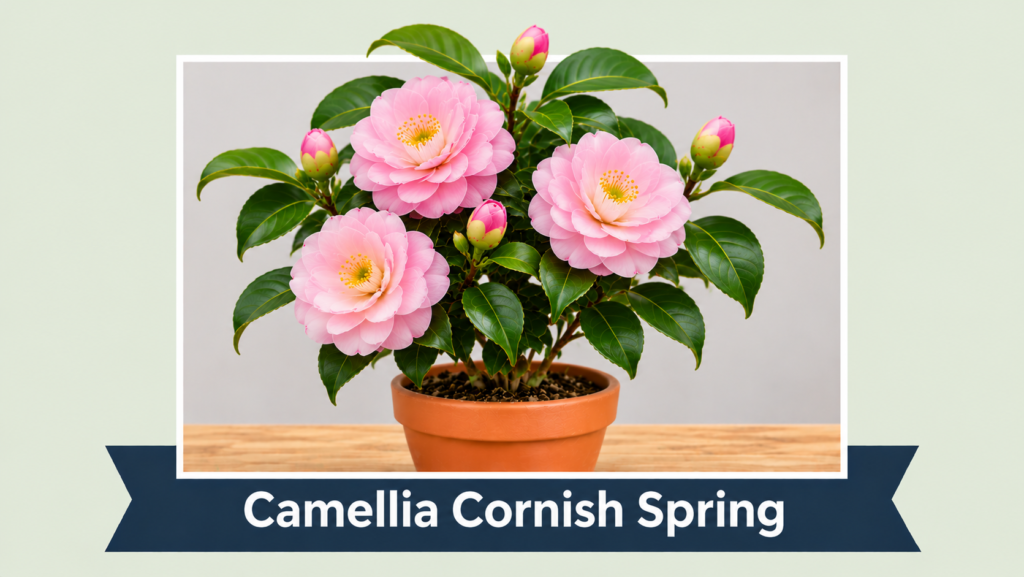
Camellia Cornish Spring is an elegant evergreen flowering shrub admired for its attractive pink blossoms and relatively graceful growth habit. Its delicate single flowers feature soft pink petals surrounding prominent yellow stamens, creating a beautiful spring display. Unlike Camellia varieties with heavily layered flowers, Cornish Spring offers a simple and natural floral appearance. This variety can be grown in spacious containers and makes a lovely addition to bright, cool indoor conservatories.
Identification
- Scientific Name: Camellia ‘Cornish Spring’ (C. cuspidata × C. japonica)
- Common Name: Cornish Spring Camellia
- Plant Type: Evergreen hybrid flowering shrub
- Height: Approximately 5–8 feet at maturity
- Flower Color: Soft pink
- Flower Shape: Small, single flowers
- Leaf Color: Glossy green
- Light Requirements: Bright, filtered sunlight
- Indoor Suitability: Moderate; best in a cool conservatory
Growing Conditions
Camellia Cornish Spring thrives in bright locations with filtered sunlight and cool temperatures. Position the container near a large window or inside a cool sunroom. Adequate light encourages healthy flower bud formation, while excessive indoor heat can shorten the flowering period.
Plant this hybrid in acidic, well-draining potting soil containing organic matter. Maintain temperatures around 45°F–65°F (7°C–18°C) during blooming. Moderate humidity and good ventilation support healthy foliage.
Care and Maintenance
Water Camellia Cornish Spring whenever the upper inch of soil begins to dry. Maintain even moisture while allowing excess water to drain freely from the container.
Feed the plant with fertilizer for acid-loving shrubs after flowering and during early spring growth. Prune lightly to maintain a compact form and remove damaged branches. Regularly inspect the plant for spider mites, scale insects, and signs of nutrient deficiency.
10. Camellia Spring Festival
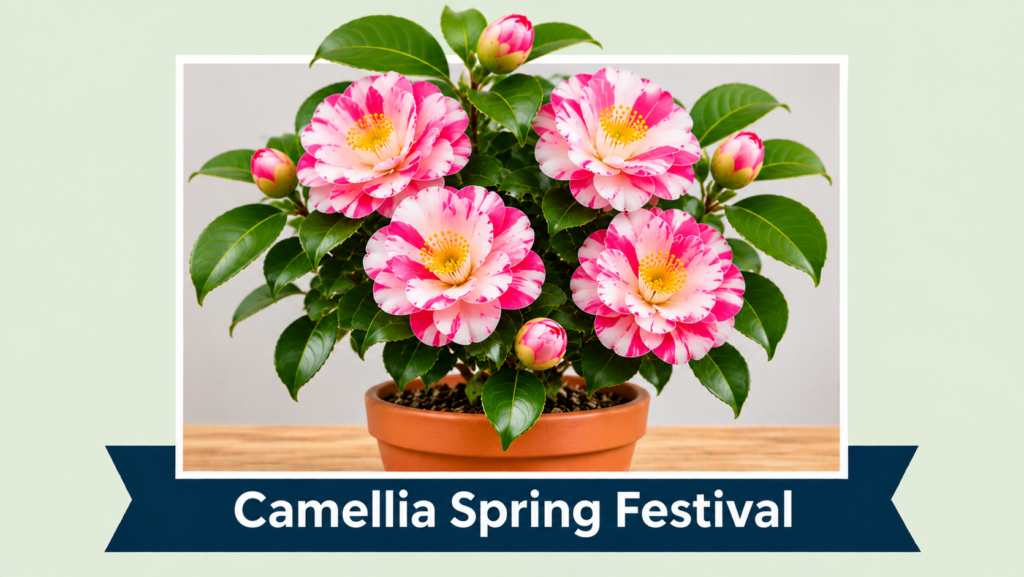
Camellia Spring Festival is a beautiful evergreen flowering shrub known for its abundant small pink flowers and attractive, narrow green foliage. Its delicate semi-double blooms appear in clusters, creating a colorful display during late winter and spring. This variety is admired for its elegant upright growth habit and ability to produce numerous flowers under favorable conditions. Camellia Spring Festival can be maintained in decorative containers and is particularly attractive for cool sunrooms and indoor flowering plant collections.
Identification
- Scientific Name: Camellia ‘Spring Festival’
- Common Name: Spring Festival Camellia
- Plant Type: Evergreen hybrid flowering shrub
- Height: Approximately 8–12 feet at maturity outdoors
- Flower Color: Soft rose-pink
- Flower Shape: Small, semi-double flowers
- Leaf Color: Dark green
- Light Requirements: Bright, indirect sunlight
- Indoor Suitability: Moderate; requires pruning over time
Growing Conditions
Camellia Spring Festival grows best in bright, cool locations where it receives plenty of filtered sunlight. Position the container near a large east-facing window or inside a conservatory. Gentle morning sunlight encourages flowering, while intense afternoon heat should be avoided.
Use an acidic, well-draining potting mixture enriched with organic matter. Maintain temperatures around 45°F–65°F (7°C–18°C) during flowering. Moderate humidity helps keep the foliage healthy and supports developing flower buds.
Care and Maintenance
Water Camellia Spring Festival when the upper soil layer begins to dry. Keep the root zone evenly moist without allowing excess water to remain around the roots.
Apply fertilizer for acid-loving plants after flowering, following label instructions. Prune lightly after blooming to control height and maintain an attractive shape. Remove dead or damaged branches and regularly inspect the foliage for common pests.
11. Camellia Tiny Princess
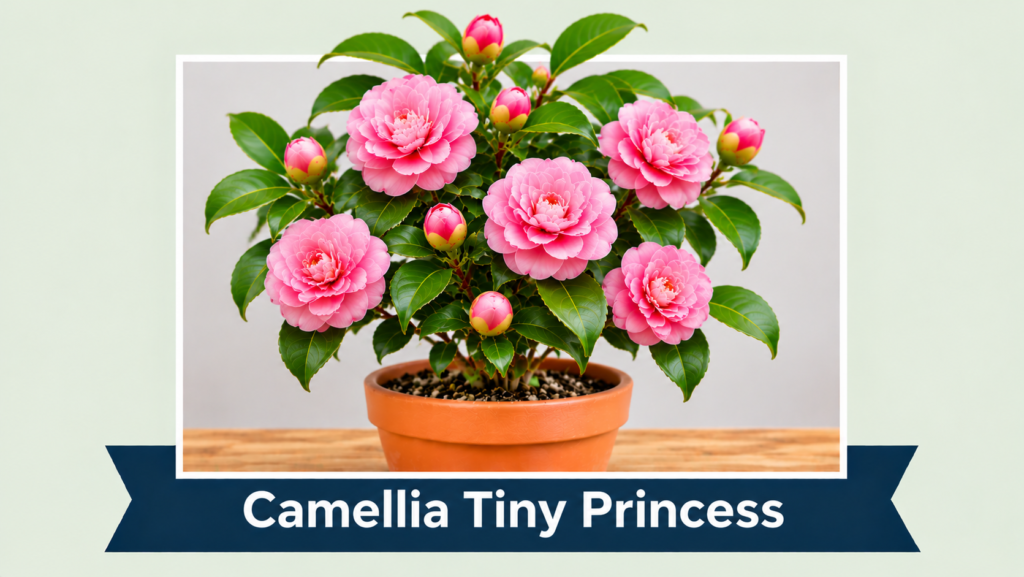
Camellia Tiny Princess is a charming evergreen flowering shrub recognized for its small, delicate pink flowers and attractive green foliage. Its beautiful blooms feature softly arranged petals that give the plant a graceful ornamental appearance. This hybrid variety is especially appealing to gardeners who prefer smaller flowers and fine-textured foliage rather than large, heavily layered blossoms. With regular pruning and suitable growing conditions, Camellia Tiny Princess can become a lovely decorative plant for cool indoor conservatories and container collections.
Identification
- Scientific Name: Camellia ‘Tiny Princess’
- Common Name: Tiny Princess Camellia
- Plant Type: Evergreen hybrid flowering shrub
- Height: Moderate shrub growth; can be managed in containers
- Flower Color: Soft pink
- Flower Shape: Small, delicate flowers
- Leaf Color: Glossy green
- Light Requirements: Bright, indirect sunlight
- Indoor Suitability: Good with suitable cool conditions
Growing Conditions
Camellia Tiny Princess thrives in cool environments with bright, filtered natural sunlight. Place the container near an east-facing window or in a bright conservatory. Consistent lighting supports healthy growth and encourages flower bud development.
Grow this variety in acidic, well-draining potting soil with organic matter and pine bark. Maintain temperatures around 45°F–65°F (7°C–18°C) during flowering. Moderate humidity and protection from hot indoor air are important for healthy foliage.
Care and Maintenance
Water Camellia Tiny Princess whenever the upper surface of the soil begins to dry. Keep the potting mixture evenly moist without allowing the roots to become waterlogged.
Apply fertilizer for acid-loving shrubs after flowering. Remove faded flowers and lightly prune excessive branches to maintain a balanced appearance. Inspect the foliage regularly for scale insects, spider mites, and other common Camellia pests.
12. Camellia Black Lace
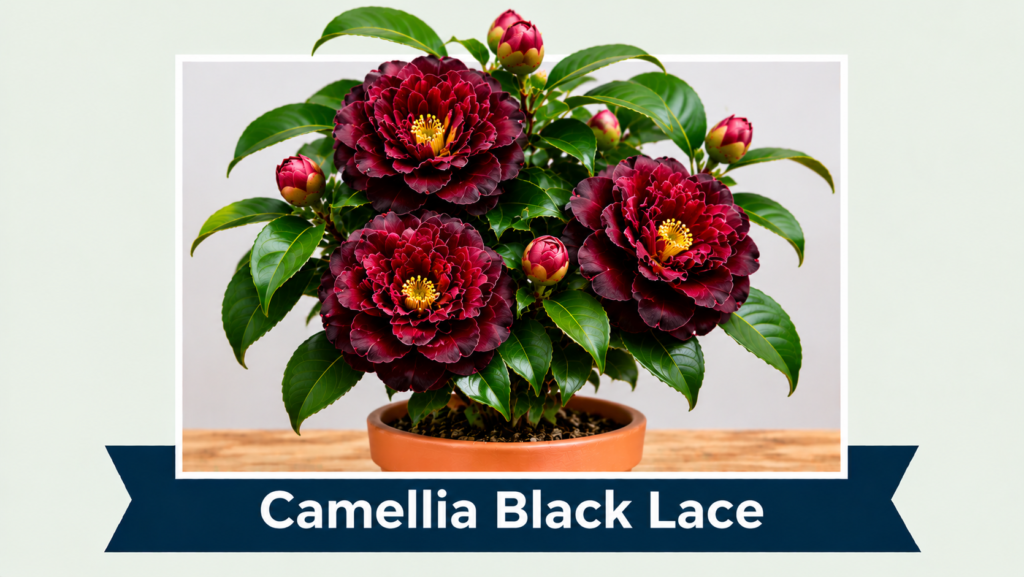
Camellia Black Lace is a striking evergreen flowering shrub admired for its rich, dark red flowers and glossy green foliage. Its densely layered petals form elegant, symmetrical blooms that create a dramatic contrast against the dark leaves. This variety is particularly attractive for gardeners who prefer deep flower colors and formal floral shapes. Its relatively moderate shrub size makes it more manageable than some larger Camellia cultivars, although cool conditions and careful pruning remain important for successful indoor container growing.
Identification
- Scientific Name: Camellia ‘Black Lace’
- Common Name: Black Lace Camellia
- Plant Type: Evergreen flowering shrub
- Height: Approximately 5–8 feet at maturity
- Flower Color: Deep crimson-red
- Flower Shape: Formal double flowers
- Leaf Color: Glossy dark green
- Light Requirements: Bright, filtered sunlight
- Indoor Suitability: Moderate; suitable for spacious containers
Growing Conditions
Camellia Black Lace grows best in cool indoor environments with abundant indirect sunlight. Position the container near a large window or in a bright sunroom. Protect its foliage from intense afternoon sunshine and dry heating systems.
Plant this variety in acidic, well-draining potting soil containing organic matter. Maintain temperatures around 45°F–65°F (7°C–18°C) during flowering. Moderate humidity and stable environmental conditions help prevent premature flower bud drop.
Care and Maintenance
Water Camellia Black Lace when the upper layer of soil begins to dry, keeping the root zone consistently moist. Avoid allowing water to remain in the container saucer.
Feed the plant with fertilizer formulated for acid-loving plants after flowering. Remove faded flowers and prune lightly to maintain its shape. Rotate the container periodically and regularly inspect the leaves for scale insects, aphids, and other pests.
13. Camellia Nuccio’s Gem
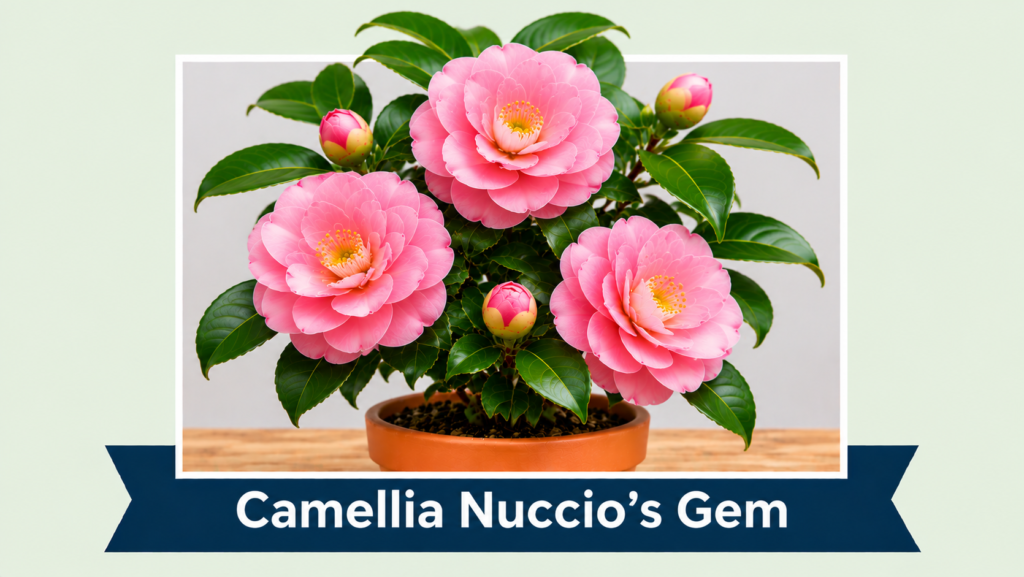
Camellia Nuccio’s Gem is a beautiful evergreen flowering shrub famous for its elegant pure white flowers and glossy dark green leaves. Its formal double blooms feature numerous neatly arranged petals that create an almost perfectly symmetrical floral appearance. This variety is particularly admired for its refined flowers and traditional Camellia beauty. Although Nuccio’s Gem naturally develops into a substantial shrub over time, it can be maintained in large containers and enjoyed in bright, cool indoor growing spaces.
Identification
- Scientific Name: Camellia japonica ‘Nuccio’s Gem’
- Common Name: Nuccio’s Gem Camellia
- Plant Type: Evergreen flowering shrub
- Height: Approximately 8–12 feet at maturity outdoors
- Flower Color: Pure white
- Flower Shape: Formal double flowers
- Leaf Color: Glossy dark green
- Light Requirements: Bright, indirect sunlight
- Indoor Suitability: Moderate; best in large cool conservatories
Growing Conditions
Camellia Nuccio’s Gem prefers bright, filtered sunlight and cool indoor temperatures. Place the plant near an east-facing window or in a conservatory protected from intense afternoon heat. Proper lighting is important for encouraging healthy growth and flowering.
Use an acidic, organic-rich potting mixture with good drainage. Maintain temperatures around 45°F–65°F (7°C–18°C) during the flowering season. Moderate humidity helps preserve the appearance of the delicate white flowers and glossy foliage.
Care and Maintenance
Water Camellia Nuccio’s Gem when the top inch of soil begins to dry. Maintain consistent moisture, especially during active growth and flower bud formation.
Apply fertilizer for acid-loving plants after flowering. Remove spent blooms to maintain a tidy appearance and reduce decaying petals around the plant. Prune lightly after the flowering season to control height, and inspect the foliage regularly for scale insects and signs of nutrient deficiency.
14. Camellia Debutante

Camellia Debutante is a stunning evergreen flowering shrub recognized for its delicate light pink flowers and elegant, rose-like appearance. Its beautiful peony-form blooms feature numerous softly layered petals that create a full, rounded shape. The attractive pink blossoms stand out against glossy dark green foliage, making this variety particularly popular among Camellia enthusiasts. With proper growing conditions, Camellia Debutante can become a beautiful ornamental specimen in large indoor containers and cool conservatories.
Identification
- Scientific Name: Camellia japonica ‘Debutante’
- Common Name: Debutante Camellia
- Plant Type: Evergreen flowering shrub
- Height: Approximately 6–10 feet at maturity
- Flower Color: Light pink
- Flower Shape: Full peony-form flowers
- Leaf Color: Glossy dark green
- Light Requirements: Bright, indirect sunlight
- Indoor Suitability: Moderate; requires ample light and space
Growing Conditions
Camellia Debutante thrives in bright locations with filtered sunlight and cool temperatures. Position the container near a large east-facing window or in a conservatory where it receives abundant natural light. Protect the plant from hot, dry indoor conditions.
Grow this variety in acidic, well-draining soil containing organic matter and composted pine bark. Maintain temperatures around 45°F–65°F (7°C–18°C) during flowering. Moderate humidity supports healthy foliage and helps prevent flower buds from drying.
Care and Maintenance
Water Camellia Debutante when the upper soil layer begins to dry. Keep the potting mixture consistently moist without leaving the roots saturated.
Feed with fertilizer for acid-loving flowering shrubs after blooming and during spring growth. Remove faded flowers and prune lightly after the main flowering period. Rotate the container occasionally for balanced growth, and inspect the plant for scale insects, aphids, and other common pests.
15. Camellia Kramer’s Supreme
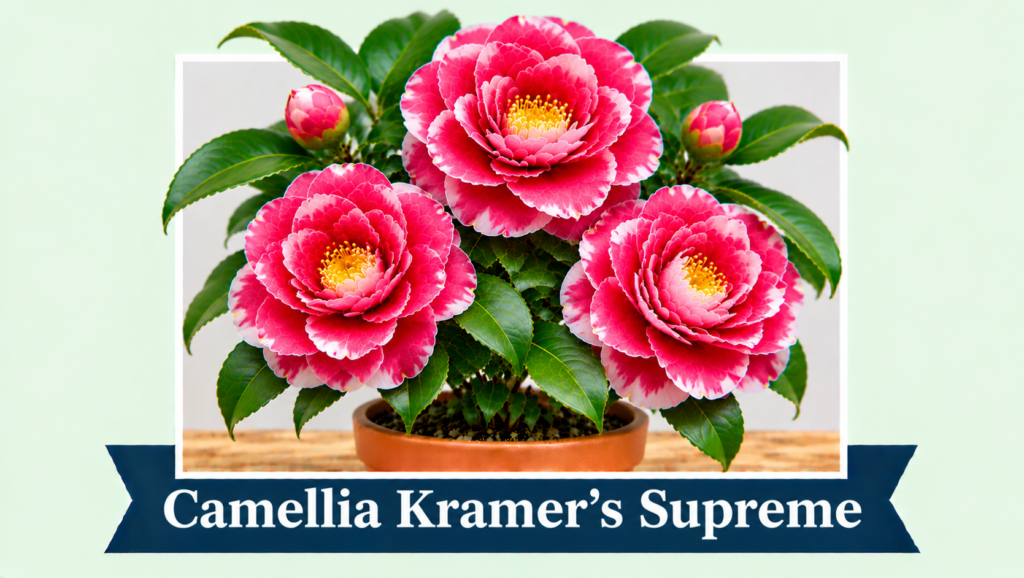
Camellia Kramer’s Supreme is a beautiful evergreen flowering shrub admired for its vibrant red flowers and glossy dark green foliage. Its large, richly colored blooms feature multiple layers of softly arranged petals, creating an attractive peony-like appearance. This variety is especially valued for its colorful flowers and pleasant fragrance, which is less common among many Camellia japonica cultivars. With proper care, Kramer’s Supreme can become an impressive flowering specimen for spacious indoor conservatories and container gardens.
Identification
- Scientific Name: Camellia japonica ‘Kramer’s Supreme’
- Common Name: Kramer’s Supreme Camellia
- Plant Type: Evergreen flowering shrub
- Height: Approximately 6–10 feet at maturity
- Flower Color: Rich red
- Flower Shape: Large, peony-form flowers
- Leaf Color: Glossy dark green
- Light Requirements: Bright, filtered sunlight
- Indoor Suitability: Moderate; best for large indoor spaces
Growing Conditions
Camellia Kramer’s Supreme grows best in cool indoor environments with bright, filtered sunlight. Place the container near a large window or in a bright conservatory. Adequate lighting encourages flowering, while high indoor temperatures may shorten the blooming period.
Use an acidic, well-draining potting mixture enriched with organic matter. Maintain temperatures around 45°F–65°F (7°C–18°C) during flowering. Provide moderate humidity and avoid placing the plant near heating vents.
Care and Maintenance
Water Camellia Kramer’s Supreme whenever the upper soil layer begins to dry, maintaining even moisture throughout active growth. Avoid waterlogging because poorly drained soil can damage the roots.
Apply fertilizer formulated for acid-loving plants after flowering. Remove faded blossoms and prune lightly to control its size. Inspect the foliage regularly for scale insects, spider mites, and signs of nutrient deficiencies.
16. Camellia Professor Sargent
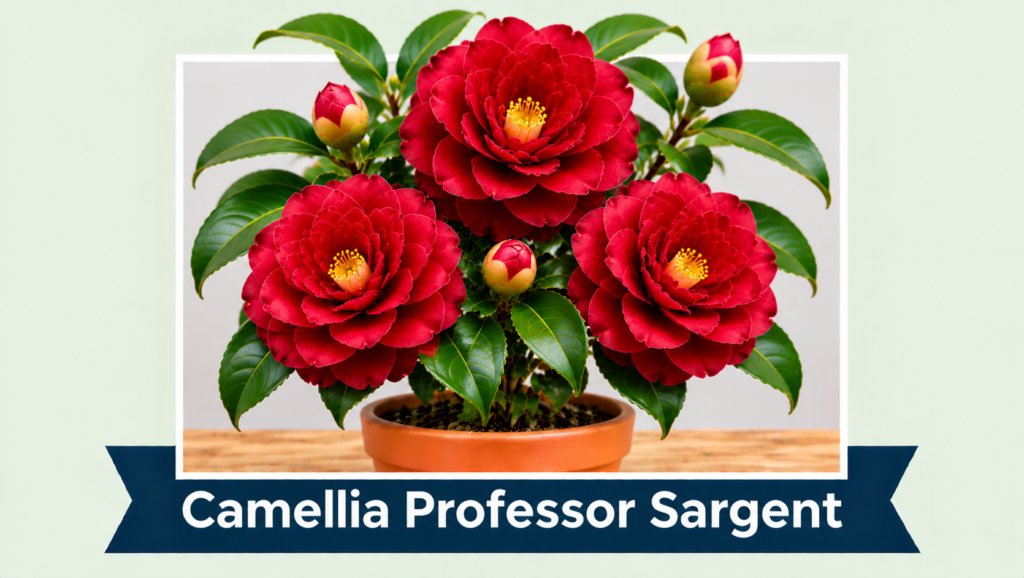
Camellia Professor Sargent is an attractive evergreen flowering shrub recognized for its deep red flowers and dense, glossy green foliage. Its beautiful blooms feature numerous layered petals that create a rich, full appearance. This variety is especially admired for its traditional Camellia flower shape and striking color. Although Professor Sargent can become a large shrub in outdoor landscapes, it can be maintained in spacious containers with regular pruning and suitable growing conditions.
Identification
- Scientific Name: Camellia japonica ‘Professor Sargent’
- Common Name: Professor Sargent Camellia
- Plant Type: Evergreen flowering shrub
- Height: Approximately 6–10 feet at maturity
- Flower Color: Deep crimson-red
- Flower Shape: Peony-form flowers
- Leaf Color: Glossy dark green
- Light Requirements: Bright, filtered sunlight
- Indoor Suitability: Moderate; requires a large, cool growing space
Growing Conditions
Camellia Professor Sargent thrives in cool indoor environments with abundant filtered sunlight. Place the plant near an east-facing window or in a bright conservatory. Sufficient light helps maintain healthy foliage and supports flower development.
Grow this variety in acidic, well-draining potting soil containing pine bark and organic matter. Maintain temperatures around 45°F–65°F (7°C–18°C) during flowering. Moderate humidity and good airflow help protect the plant from moisture-related problems.
Care and Maintenance
Water Camellia Professor Sargent when the upper inch of soil begins to dry, keeping the root zone evenly moist. Avoid prolonged dryness and standing water.
Apply fertilizer for acid-loving shrubs after flowering and during active growth. Prune after blooming to maintain a manageable size. Remove damaged leaves and faded flowers, and regularly inspect the plant for scale insects, aphids, and other common pests.
17. Camellia Alba Plena
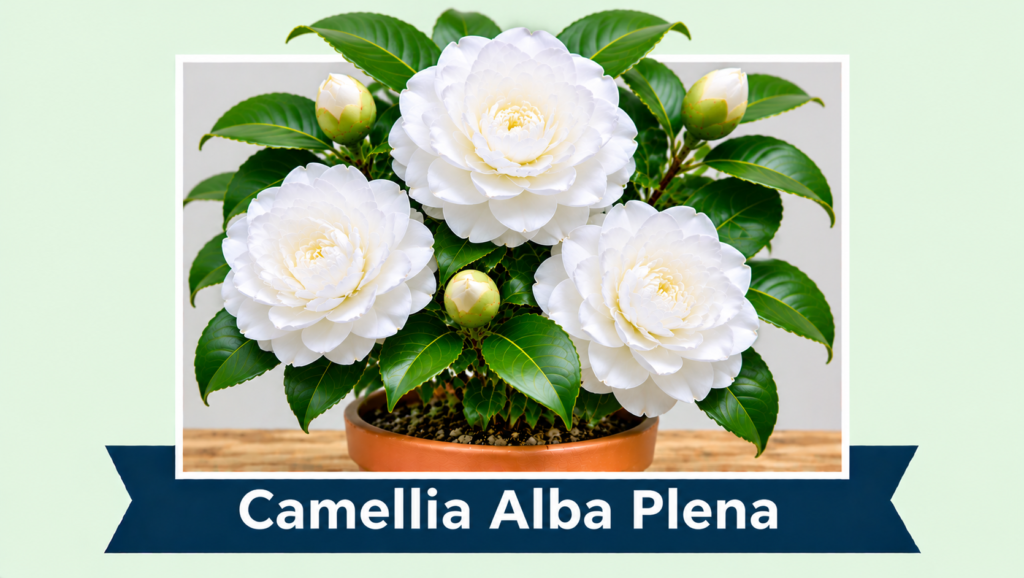
Camellia Alba Plena is an elegant evergreen flowering shrub admired for its beautiful pure white flowers and glossy dark green foliage. Its formal double blooms feature numerous perfectly arranged petals, creating a refined, symmetrical appearance. This historic Camellia variety is particularly popular among gardeners who appreciate traditional white flowering plants. Although Alba Plena naturally develops into a substantial shrub, it can be maintained in large decorative containers and enjoyed in bright, cool indoor conservatories.
Identification
- Scientific Name: Camellia japonica ‘Alba Plena’
- Common Name: Alba Plena Camellia
- Plant Type: Evergreen flowering shrub
- Height: Approximately 6–10 feet or more outdoors
- Flower Color: Pure white
- Flower Shape: Formal double flowers
- Leaf Color: Glossy dark green
- Light Requirements: Bright, indirect sunlight
- Indoor Suitability: Moderate; needs sufficient space
Growing Conditions
Camellia Alba Plena grows best in bright environments with filtered natural light and cool temperatures. Position the container near an east-facing window or in a conservatory where it receives adequate sunlight without excessive heat.
Use acidic, well-draining potting soil with a pH around 5.0–6.5. Maintain temperatures around 45°F–65°F (7°C–18°C) during flowering. Moderate humidity helps preserve attractive foliage and delicate white blooms.
Care and Maintenance
Water Camellia Alba Plena when the upper soil layer begins to dry, maintaining consistent moisture without waterlogging. Use a sturdy container with proper drainage.
Feed with fertilizer for acid-loving flowering plants after blooming. Remove faded flowers to maintain a clean appearance, particularly because white petals can become brown as they age. Prune lightly after flowering to control growth, and inspect the leaves for scale insects and other pests.
18. Camellia Pink Perfection
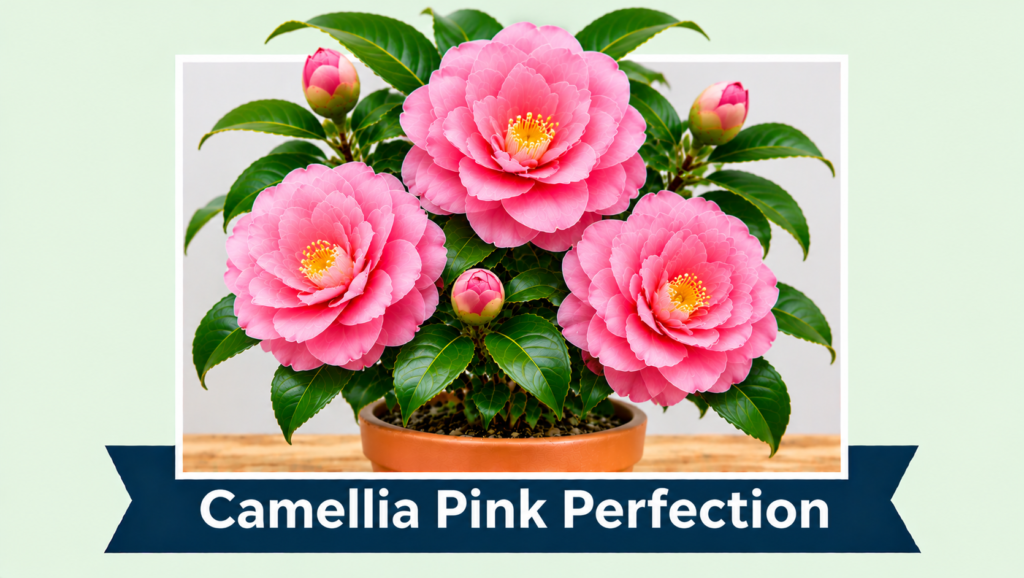
Camellia Pink Perfection is a beautiful evergreen flowering shrub recognized for its delicate shell-pink flowers and elegant, symmetrical appearance. Its formal double blooms feature numerous overlapping petals arranged in a nearly perfect circular pattern. The soft pink coloration contrasts beautifully with glossy dark green leaves, creating a graceful ornamental display. This classic Camellia variety is especially admired for its refined flowers and can be grown in spacious indoor containers when provided with cool temperatures and suitable care.
Identification
- Scientific Name: Camellia japonica ‘Pink Perfection’
- Common Name: Pink Perfection Camellia
- Plant Type: Evergreen flowering shrub
- Height: Approximately 6–10 feet or more at maturity
- Flower Color: Soft shell-pink
- Flower Shape: Formal double flowers
- Leaf Color: Glossy dark green
- Light Requirements: Bright, indirect sunlight
- Indoor Suitability: Moderate; suitable for cool conservatories
Growing Conditions
Camellia Pink Perfection thrives in bright, cool growing environments with plenty of filtered sunlight. Place the plant near a large east-facing window or in a conservatory protected from intense afternoon heat. Consistent lighting supports healthy flower bud development.
Grow this variety in acidic, well-draining potting soil enriched with organic matter. Maintain temperatures around 45°F–65°F (7°C–18°C) during flowering. Moderate humidity helps prevent premature flower bud drop.
Care and Maintenance
Water Camellia Pink Perfection when the upper inch of soil begins to feel dry, keeping the potting mixture evenly moist. Avoid allowing the roots to remain in saturated conditions.
Apply acid-loving plant fertilizer after flowering, following label directions. Remove spent blossoms and prune lightly to maintain a balanced shape. Rotate the container periodically and regularly inspect the foliage for scale insects, aphids, and nutrient-related yellowing.
19. Camellia Lady Vansittart

Camellia Lady Vansittart is a striking evergreen shrub admired for its beautiful white flowers decorated with irregular pink and red markings. Its colorful petals create a distinctive appearance, making individual blooms look slightly different from one another. Unlike Camellia varieties with uniformly colored flowers, Lady Vansittart offers attractive natural variations that add interest to indoor flowering displays. With its glossy dark green foliage and elegant blossoms, this variety can become a lovely specimen in spacious indoor containers.
Identification
- Scientific Name: Camellia japonica ‘Lady Vansittart’
- Common Name: Lady Vansittart Camellia
- Plant Type: Evergreen flowering shrub
- Height: Approximately 6–10 feet at maturity
- Flower Color: White with pink or red markings
- Flower Shape: Semi-double flowers
- Leaf Color: Glossy dark green
- Light Requirements: Bright, filtered sunlight
- Indoor Suitability: Moderate; best in a cool conservatory
Growing Conditions
Camellia Lady Vansittart prefers bright, filtered natural sunlight and cool growing conditions. Position the plant near an east-facing window or in a well-lit conservatory. Avoid excessive heat and direct afternoon sunlight, which may damage the delicate flowers.
Use acidic, organic-rich potting soil with excellent drainage. Maintain temperatures around 45°F–65°F (7°C–18°C) during flowering. Moderate humidity supports healthy foliage and helps prevent drying flower buds.
Care and Maintenance
Water Camellia Lady Vansittart when the top layer of soil begins to dry. Maintain consistent moisture without leaving the potting mixture saturated.
Feed with fertilizer formulated for acid-loving plants after flowering. Remove faded flowers and lightly prune excessive branches to maintain an attractive shape. Inspect the foliage regularly for scale insects, spider mites, and signs of nutrient deficiencies.
20. Camellia Brushfield’s Yellow
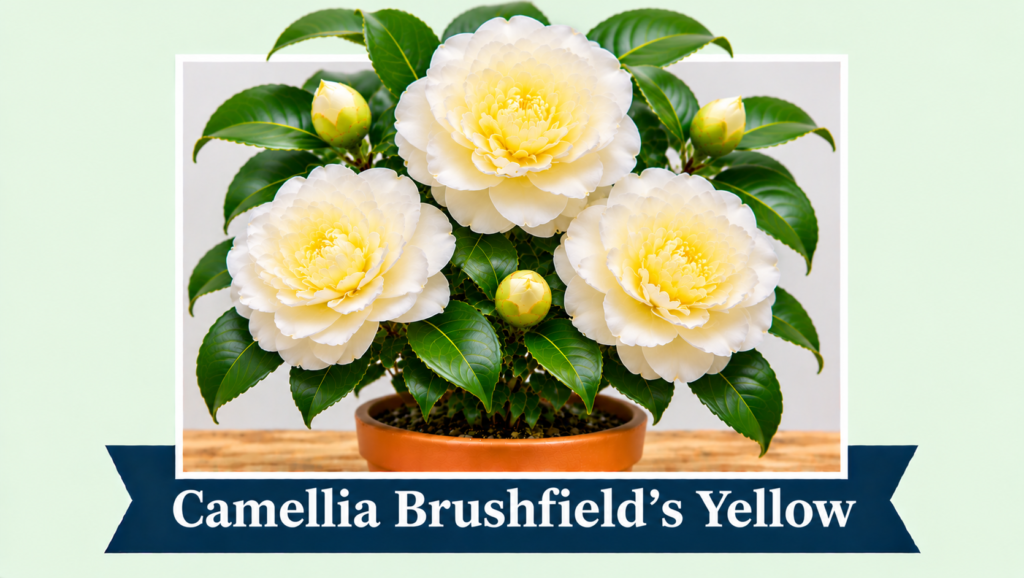
Camellia Brushfield’s Yellow is a beautiful evergreen flowering shrub admired for its unusual creamy-white flowers with soft yellow centers. Its attractive anemone-form blooms feature broad outer petals surrounding a cluster of smaller, pale yellow petaloids. This distinctive flower structure gives the variety an elegant appearance compared with traditional red or pink Camellias. With glossy dark green foliage and attractive seasonal flowers, Brushfield’s Yellow can become a wonderful ornamental specimen in cool indoor conservatories.
Identification
- Scientific Name: Camellia japonica ‘Brushfield’s Yellow’
- Common Name: Brushfield’s Yellow Camellia
- Plant Type: Evergreen flowering shrub
- Height: Approximately 6–10 feet at maturity
- Flower Color: Creamy-white with pale yellow centers
- Flower Shape: Anemone-form flowers
- Leaf Color: Glossy dark green
- Light Requirements: Bright, indirect sunlight
- Indoor Suitability: Moderate; suitable for large containers
Growing Conditions
Camellia Brushfield’s Yellow thrives in bright, cool environments with filtered natural sunlight. Place the container near a large east-facing window or in a conservatory where it receives adequate light without exposure to intense afternoon heat.
Grow this variety in acidic, well-draining potting soil enriched with organic matter and pine bark. Maintain temperatures around 45°F–65°F (7°C–18°C) during flowering. Moderate humidity encourages healthy foliage and helps preserve flower quality.
Care and Maintenance
Water Camellia Brushfield’s Yellow when the upper soil layer begins to dry. Keep the root zone evenly moist while allowing excess water to drain completely.
Apply fertilizer for acid-loving shrubs after the flowering season. Remove faded blooms and prune lightly to control height and encourage branching. Regularly inspect leaves for scale insects, aphids, and signs of nutrient deficiency.
21. Camellia Jury’s Yellow
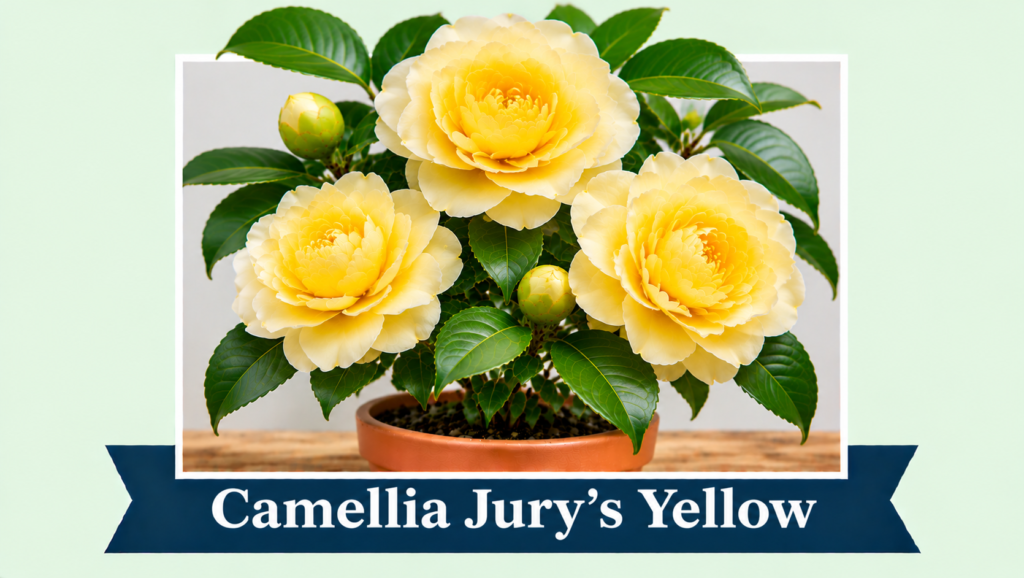
Camellia Jury’s Yellow is an elegant evergreen flowering shrub recognized for its distinctive creamy-white flowers with soft yellow centers. Its attractive blooms feature broad outer petals surrounding a dense cluster of pale yellow petaloids, creating a beautiful anemone-like appearance. This variety is especially admired for its unusual coloring, which differs from the traditional red and pink shades commonly associated with Camellias. With suitable care, Jury’s Yellow can become a striking decorative plant in spacious, cool indoor conservatories.
Identification
- Scientific Name: Camellia × williamsii ‘Jury’s Yellow’
- Common Name: Jury’s Yellow Camellia
- Plant Type: Evergreen hybrid flowering shrub
- Height: Approximately 8–13 feet at maturity outdoors
- Flower Color: Creamy-white with pale yellow centers
- Flower Shape: Anemone-form flowers
- Leaf Color: Glossy dark green
- Light Requirements: Bright, indirect sunlight
- Indoor Suitability: Moderate; requires spacious containers
Growing Conditions
Camellia Jury’s Yellow thrives in bright, cool environments where it receives filtered natural sunlight. Position the plant near an east-facing window or inside a conservatory with adequate airflow. Protect the developing flower buds from excessive indoor heat and sudden temperature changes.
Grow this variety in acidic, well-draining potting soil containing organic matter and pine bark. Maintain temperatures around 45°F–65°F (7°C–18°C) during flowering. Moderate humidity helps support healthy foliage and flower development.
Care and Maintenance
Water Camellia Jury’s Yellow when the upper layer of soil begins to dry, keeping the potting mixture evenly moist without becoming waterlogged. Avoid allowing the container to stand in water.
Apply fertilizer formulated for acid-loving plants after blooming. Remove faded blossoms regularly and prune lightly after flowering to maintain an attractive shape. Rotate the container occasionally and inspect the foliage for scale insects, aphids, and other common pests.
22. Camellia Debbie
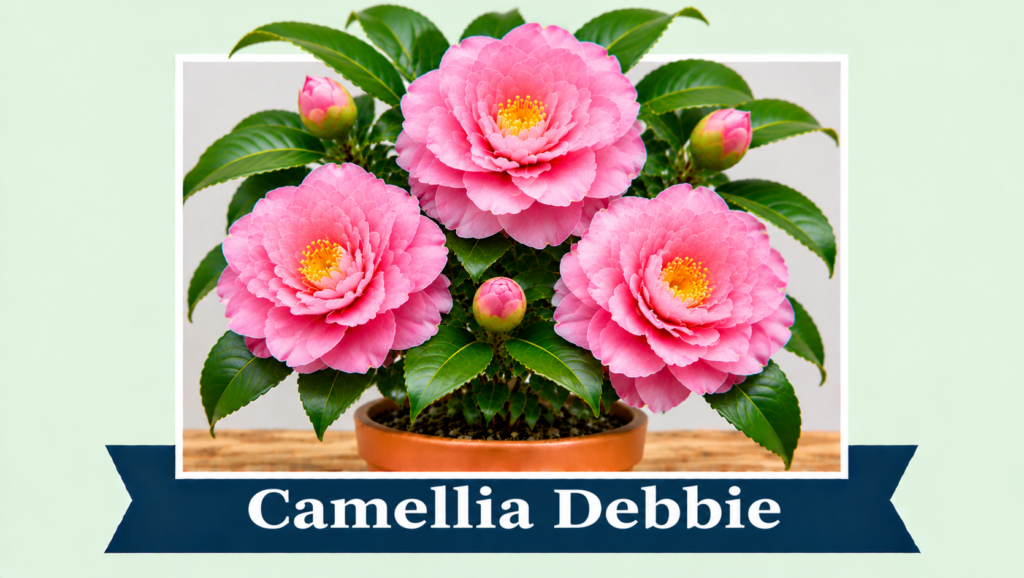
Camellia Debbie is a beautiful evergreen flowering shrub admired for its large, rose-pink flowers and glossy green foliage. Its attractive semi-double to peony-form blooms feature numerous softly layered petals that create an elegant, rounded appearance. This variety is particularly valued for its abundant flowering during late winter and spring. Although Debbie naturally develops into a substantial shrub, it can be grown in spacious containers and enjoyed as a beautiful ornamental plant in bright, cool indoor conservatories.
Identification
- Scientific Name: Camellia × williamsii ‘Debbie’
- Common Name: Debbie Camellia
- Plant Type: Evergreen hybrid flowering shrub
- Height: Approximately 8–13 feet at maturity outdoors
- Flower Color: Rose-pink
- Flower Shape: Semi-double to peony-form flowers
- Leaf Color: Glossy dark green
- Light Requirements: Bright, filtered sunlight
- Indoor Suitability: Moderate; best for large conservatories
Growing Conditions
Camellia Debbie grows best in cool indoor environments with bright, filtered sunlight. Position the plant near a large east-facing window or in a conservatory. Adequate natural light encourages healthy foliage and flower bud formation, while excessive heat may shorten the blooming period.
Use an acidic, well-draining potting mixture rich in organic matter. Maintain temperatures around 45°F–65°F (7°C–18°C) during flowering. Moderate humidity and good ventilation support healthy growth.
Care and Maintenance
Water Camellia Debbie whenever the upper soil layer begins to dry, maintaining consistent moisture without allowing the roots to become saturated. Check moisture regularly during flower bud development.
Feed with fertilizer for acid-loving plants after flowering, following label instructions. Remove faded blooms and prune lightly to maintain a manageable shape. Inspect the leaves regularly for scale insects, spider mites, and other pests.
23. Camellia Donation
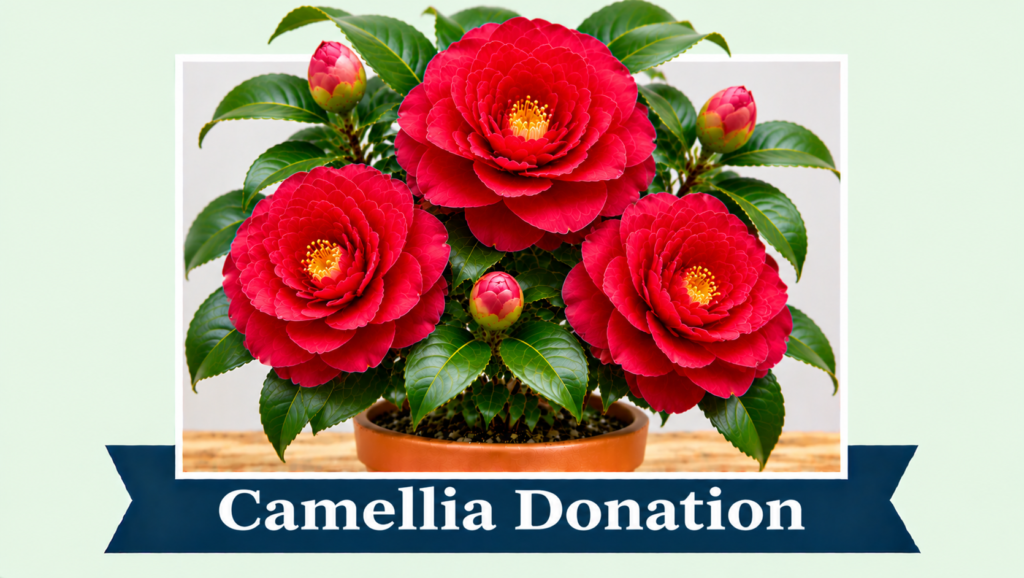
Camellia Donation is a stunning evergreen flowering shrub known for its large, semi-double pink flowers and attractive glossy foliage. Its beautiful blooms feature broad petals surrounding prominent golden-yellow stamens, creating an elegant floral display. This variety is especially admired for its abundant late winter and spring flowering. Although Donation naturally develops into a large shrub, it can be grown in substantial containers and enjoyed in spacious indoor conservatories with sufficient light and cool temperatures.
Identification
- Scientific Name: Camellia × williamsii ‘Donation’
- Common Name: Donation Camellia
- Plant Type: Evergreen hybrid flowering shrub
- Height: Approximately 13–26 feet at maturity outdoors
- Flower Color: Soft pink to rose-pink
- Flower Shape: Large semi-double flowers
- Leaf Color: Glossy dark green
- Light Requirements: Bright, indirect sunlight
- Indoor Suitability: Limited; best for very large conservatories
Growing Conditions
Camellia Donation prefers bright, cool environments where it receives plenty of filtered natural sunlight. Position the plant in a spacious conservatory near a large window. Its larger size requires sufficient light distribution and room for branch development.
Grow this hybrid in acidic, well-draining potting soil enriched with organic matter. Maintain temperatures around 45°F–65°F (7°C–18°C) during flowering. Moderate humidity helps prevent flower buds from drying prematurely.
Care and Maintenance
Water Camellia Donation when the upper soil layer begins to feel slightly dry. Maintain consistent moisture while ensuring excess water drains freely from the container.
Apply fertilizer formulated for acid-loving plants after flowering. Prune lightly after blooming to maintain a manageable shape, although this vigorous cultivar may eventually outgrow most indoor spaces. Remove damaged branches and regularly inspect the foliage for common pests.
24. Camellia Setsugekka

Camellia Setsugekka is a beautiful evergreen flowering shrub admired for its large, elegant white flowers and glossy green foliage. Its semi-double blooms feature softly ruffled petals surrounding bright golden-yellow stamens, creating a delicate appearance. This variety is particularly popular for its autumn and early winter flowering and its ability to tolerate relatively sunny growing conditions. With appropriate care, Camellia Setsugekka can become an impressive flowering plant in large indoor containers and bright conservatories.
Identification
- Scientific Name: Camellia sasanqua ‘Setsugekka’
- Common Name: Setsugekka Camellia
- Plant Type: Evergreen flowering shrub
- Height: Approximately 8–10 feet or more at maturity
- Flower Color: Pure white
- Flower Shape: Large, ruffled semi-double flowers
- Leaf Color: Glossy dark green
- Light Requirements: Bright, filtered sunlight
- Indoor Suitability: Moderate; needs space and pruning
Growing Conditions
Camellia Setsugekka thrives in bright environments with gentle morning sunlight and filtered afternoon light. Place the plant near a large window or inside a cool conservatory. Adequate sunlight encourages flowering, while intense indoor heat should be avoided.
Grow this variety in acidic, well-draining potting soil containing organic matter and pine bark. Maintain temperatures around 45°F–65°F (7°C–18°C) during flowering. Moderate humidity supports healthy leaves and developing flower buds.
Care and Maintenance
Water Camellia Setsugekka whenever the upper layer of soil begins to dry, keeping the root zone evenly moist. Avoid waterlogging and ensure the container has sufficient drainage.
Feed with fertilizer formulated for acid-loving flowering shrubs after blooming. Remove spent flowers and prune lightly to control height and encourage branching. Regularly inspect the foliage for scale insects, spider mites, and signs of nutrient deficiencies.
25. Camellia Kanjiro

Camellia Kanjiro is an attractive evergreen flowering shrub recognized for its vibrant rose-pink flowers and glossy dark green foliage. Its elegant semi-double blooms feature broad petals surrounding golden-yellow stamens, creating a beautiful contrast of colors. This variety is particularly admired for its abundant autumn and winter flowering and vigorous upright growth habit. Although Kanjiro naturally develops into a relatively large shrub, it can be maintained in spacious containers and enjoyed in bright, cool indoor conservatories.
Identification
- Scientific Name: Camellia × hiemalis ‘Kanjiro’ (also sold as Camellia sasanqua ‘Kanjiro’)
- Common Name: Kanjiro Camellia
- Plant Type: Evergreen flowering shrub
- Height: Approximately 8–10 feet at maturity
- Flower Color: Deep rose-pink
- Flower Shape: Semi-double flowers
- Leaf Color: Glossy dark green
- Light Requirements: Bright, filtered sunlight
- Indoor Suitability: Moderate; requires a spacious growing area
Growing Conditions
Camellia Kanjiro thrives in bright, cool environments where it receives abundant filtered natural sunlight. Position the plant near an east-facing window or in a bright conservatory. Good lighting encourages healthy foliage and colorful flower development.
Grow this variety in acidic, well-draining potting soil containing organic matter and pine bark. Maintain temperatures around 45°F–65°F (7°C–18°C) during flowering. Moderate humidity and good airflow help support healthy growth.
Care and Maintenance
Water Camellia Kanjiro when the upper inch of soil begins to dry, maintaining consistent moisture throughout active growth. Avoid prolonged dryness and excessive water accumulation around the roots.
Apply acid-loving plant fertilizer after flowering and during early spring growth, following label recommendations. Prune lightly after blooming to control excessive height and maintain an attractive shape. Inspect the leaves regularly for scale insects, aphids, and other common Camellia pests.
FAQs
1. Which Camellia Tree Is Best for Indoor Growing?
Camellia Jewel Box, Shishi Gashira, Yuletide, and Tiny Princess are among the more manageable varieties for container growing. Their relatively compact habits make them easier to maintain than larger cultivars. However, all Camellias need bright light, acidic soil, cool temperatures, and adequate humidity for successful indoor flowering.
2. How Often Should I Water Indoor Camellia Trees?
Water indoor Camellias when the upper inch of soil begins to dry. They prefer consistently moist but well-draining soil. Watering frequency depends on temperature, humidity, container size, and seasonal growth. Avoid allowing the roots to dry completely or remain in waterlogged conditions, particularly during flower bud development.
3. Do Camellia Trees Need Direct Sunlight?
Most Camellia varieties prefer bright, filtered sunlight rather than prolonged intense direct sunlight. Gentle morning sunshine is beneficial, while strong afternoon sun may damage foliage and flower buds. Sasanqua varieties generally tolerate more sunlight than Japonica varieties. Adequate natural light is essential for encouraging healthy flowering.
4. Can Camellia Trees Grow Indoors All Year?
Camellias can remain in indoor containers throughout the year when suitable environmental conditions are maintained. However, they generally perform poorly in warm, dry living rooms. A cool conservatory, bright sunroom, or temperature-controlled growing area is preferable, especially during winter flowering.
5. Why Are My Indoor Camellia Leaves Turning Yellow?
Indoor Camellia leaves may turn yellow because of overwatering, poor drainage, unsuitable soil acidity, nutrient deficiencies, or root damage. Yellow foliage with green veins can indicate iron chlorosis associated with alkaline soil. Check moisture levels, soil pH, and root health before adjusting watering or fertilization.