
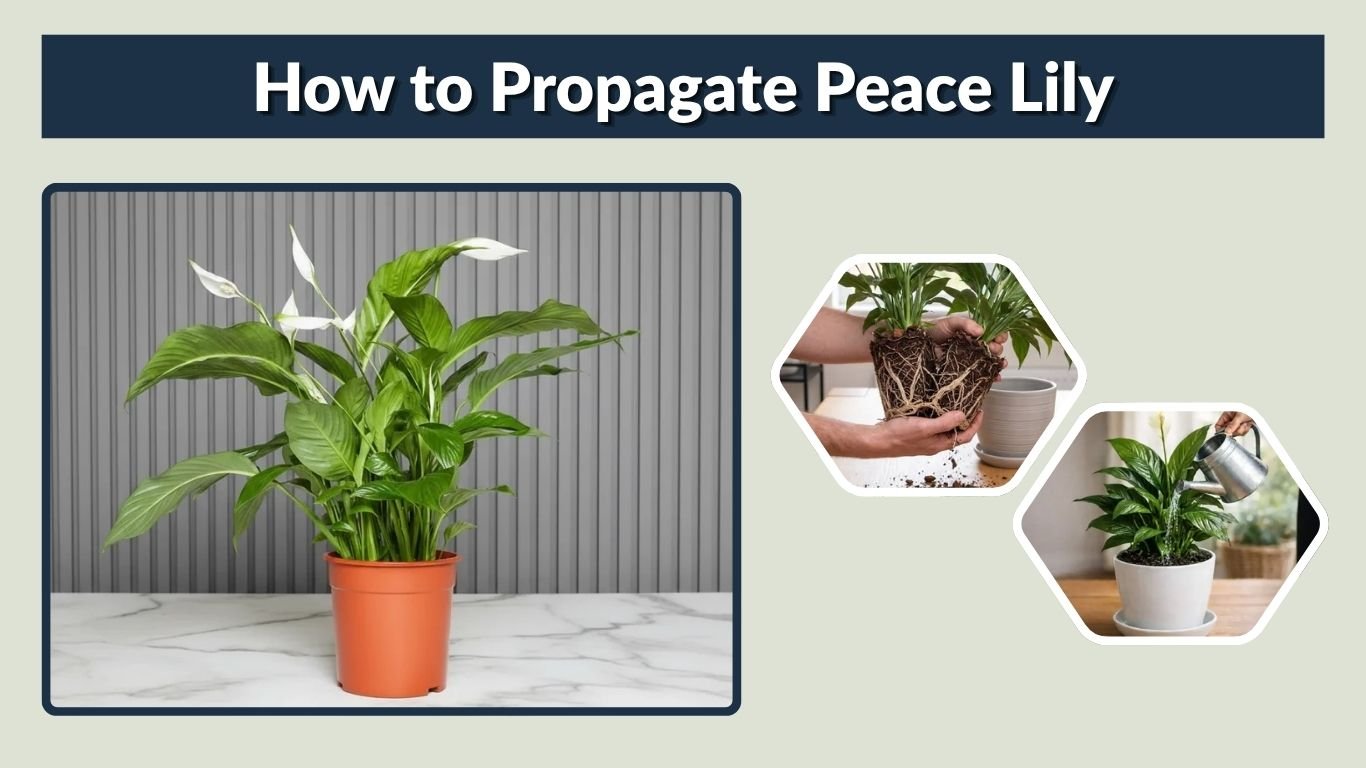
Learning how to propagate peace lily allows you to turn one established houseplant into several smaller plants. The most reliable method is division, which involves separating healthy clumps with their own roots and growing points. You can plant these divisions directly in soil or try growing a rooted section in water. However, detached leaves and flower stalks will not produce new peace lilies. This step-by-step guide explains when to divide your plant, how to handle its roots, and what care each new section needs.
Can You Propagate a Peace Lily?
Yes, an established peace lily can be propagated by separating its growing clumps. As the plant develops, it forms connected leaf clusters around its base. Suitable sections already have the structures needed to continue growing independently. For home gardeners, division is the recommended method; peace lilies are not normally propagated using ordinary leaf or stem cuttings.
Identify a Suitable Division
Look for a distinct cluster of leaves attached to a crown—the growing area where leaves and roots meet.
A good division has several healthy leaves and its own roots. Avoid taking a single leaf, an isolated root, or a tiny section with little supporting growth.
Choose the Right Time
Spring is a good time to propagate peace lilies, especially when repotting an overcrowded plant. The University of Florida recommends division in spring.
Healthy plants growing in stable indoor conditions can also be divided at other times. Avoid unnecessary division while the plant is severely stressed.
What You Need for Peace Lily Propagation
Prepare your workspace before removing the plant from its container. Having pots, tools, and potting mix ready makes the process easier and limits the time roots remain exposed. Choose containers that accommodate each division’s root system without leaving a large volume of unused soil. Every pot should have drainage holes.
Essential Supplies
- A healthy peace lily with several growing clumps.
- Small pots with drainage holes.
- Fresh, well-draining houseplant potting mix.
- A clean, sharp knife or pruning tool.
- Room-temperature water.
- Gloves and a tray for loose soil.
Wear gloves because peace lily sap can irritate skin. Keep plants and discarded pieces away from children and pets.
How to Propagate Peace Lily by Division
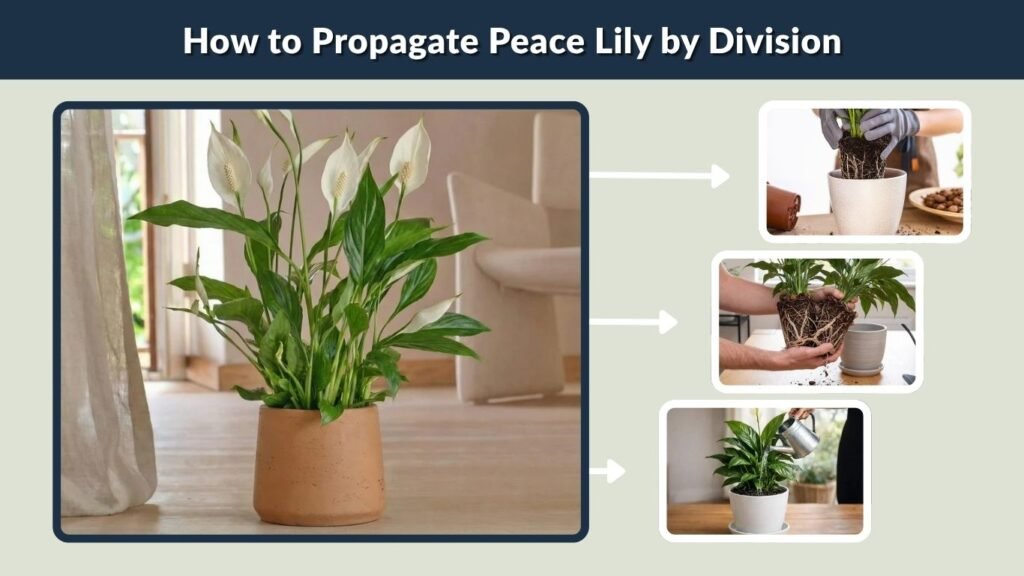
Division works by turning existing sections into independent plants. Handle the root ball gently and follow its natural separation points. You do not need to split every crown into an individual plant. Keeping several crowns together can produce a fuller division with a stronger root system and less disturbance.
Step 1: Slide the Plant Out
If the potting mix is extremely dry, lightly water it beforehand.
Support the plant near its base, tilt the container, and gently slide out the root ball. Squeeze a flexible pot to loosen it. Avoid pulling on the leaves.
Step 2: Examine the Root Ball
Brush away enough loose soil to reveal separate leaf clusters.
Use your fingers to loosen tangled roots gradually. Trace each cluster down to its crown and roots before deciding where to separate it.
Step 3: Separate Healthy Sections
Ease the clumps apart by hand when possible.
If they remain firmly connected, use a clean blade to divide the connecting area. Each section should retain plenty of roots and several strong leafy stems, as recommended by the Royal Horticultural Society.
Step 4: Replant Each Division
Place potting mix in a suitably sized container.
Set the division at its previous growing depth, arrange its roots, and fill the surrounding gaps. Firm gently so the plant stands upright. Avoid burying the crown deeply.
Step 5: Water and Drain
Water slowly until moisture reaches the root zone and excess water drains away.
Empty the saucer, then place the plant in bright, indirect light. Check its moisture regularly while it adjusts.
How to Propagate Peace Lily in Water
Growing a division in water still starts with a crown and roots. It does not involve rooting a detached leaf. The reference describes water growing as an intermediate stage before potting. You can experiment with this approach, although direct planting avoids an additional transition between growing conditions.
Set Up a Rooted Division
- Separate a healthy section with established roots.
- Rinse loose potting mix from the roots gently.
- Use a clean container that supports the plant upright.
- Keep the roots in water and the crown above the waterline.
- Position it away from direct sunlight.
- Refresh the water regularly and inspect root condition.
Transfer Into Potting Mix
A division that already has healthy roots can be planted without waiting for a particular root length.
Handle roots carefully during transfer and keep the mix lightly moist during adjustment. Long-term water growing requires suitable nutrients and oxygen around the roots; a jar of plain water is not a complete hydroponic system.
Can You Propagate Peace Lily From Leaves or Seeds?

The plant part you select determines whether propagation can succeed. A leaf may remain green after removal without becoming an independent plant. Seed growing is a different process that requires viable seed. For most people wanting another houseplant, a well-rooted division offers the clearest and most practical starting point.
Leaf Cuttings and Sections Without Roots
A detached peace lily leaf or leaf stalk is not a reliable propagation cutting. Choose a crown with roots instead.
A rootless crown may sometimes recover, but success is less dependable. Treat it as a rescue attempt rather than the preferred way to multiply a healthy plant.
Flowers and Seeds
A cut flower stalk will not grow into a new peace lily.
Seed propagation requires successful pollination and viable seeds. It takes longer than division, and seedlings may differ from the parent plant. Division is preferable when you want to preserve a particular variety.
Peace Lily Care After Propagation
Provide steady conditions while disturbed roots recover. Bright, indirect light supports growth without exposing the leaves to harsh sun. Keep the potting mix moist but never continuously saturated. Peace lilies benefit from good drainage and should not stand in a saucer of excess water, which can contribute to root rot.
Recovery Care Checklist
- Check moisture: Allow the surface to dry slightly before watering again.
- Protect foliage: Keep recovering plants out of direct sun.
- Avoid drafts: Choose a spot away from heating and cooling vents.
- Delay feeding: Wait for renewed growth before fertilizing lightly.
- Watch the crown: Investigate soft tissue or an unpleasant smell.
Troubleshooting Drooping and Yellow Leaves
Drooping can follow root disturbance, but it can also indicate dry or overly wet soil. Check the mix before adding more water.
Persistent yellowing, worsening wilt, or mushy roots warrants closer inspection. Correct poor drainage and remove clearly decaying tissue with a clean tool.
FAQs
A successful division already has roots and a growing point, so propagation does not begin from scratch. Establishment still takes time, and different sections recover at different speeds. Root condition, available light, and watering all influence the outcome. These answers address common concerns without promising a fixed recovery date.
1. How Long Does Peace Lily Propagation Take?
Division produces a separate plant immediately. Establishment and visible new growth may take several weeks or longer.
2. Do You Need Rooting Hormone?
Rooted divisions generally do not need rooting hormone because they already have a functioning root system.
3. Can You Propagate Giant Peace Lily?
Yes. Use division, retaining substantial roots and healthy foliage on each section.
4. Why Is My New Division Drooping?
Root disturbance or unsuitable moisture can cause drooping. Check the soil and drainage before watering again.
5. How Many Plants Can You Make From One Peace Lily?
The number depends on its healthy crowns and roots. Prioritize a few strong divisions over many weak pieces.