
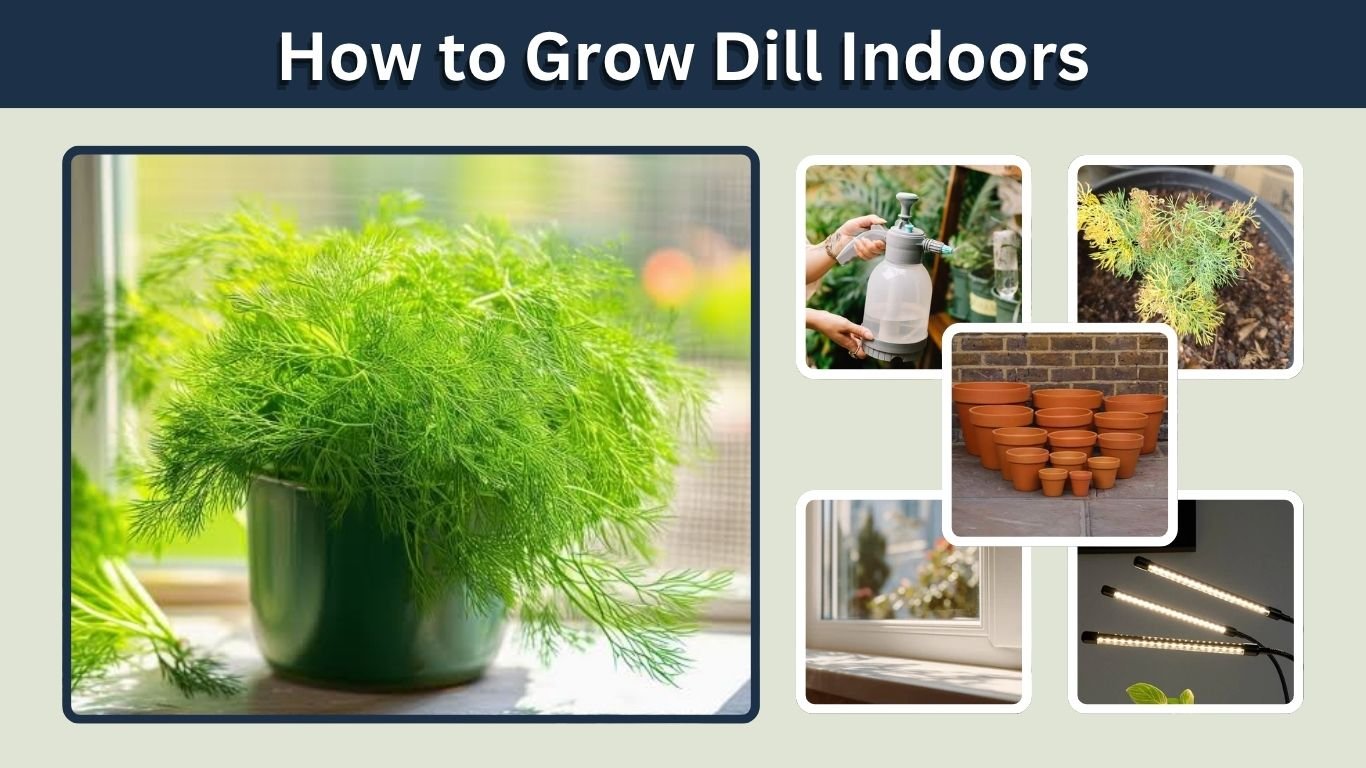
Growing dill indoors is a simple way to enjoy fresh, aromatic herbs without needing a garden. Dill grows quickly from seed and can thrive in a sunny indoor location when given enough light, well-draining soil, and consistent moisture. Whether you want fresh leaves for cooking or plan to grow dill indoors year-round, the right container and growing conditions make a big difference. This guide explains how to grow dill indoors from seed, care for the plant, prevent common problems, and harvest it successfully.
Can You Grow Dill Indoors?
Yes, you can grow dill indoors successfully if the plant receives enough light and has room for its roots to develop. Dill prefers bright conditions, moderate temperatures, and soil that drains well. Because it develops a long taproot, choosing the right container from the beginning is especially important. Indoor dill can be grown in kitchens, sunny windows, or under grow lights.
Is Dill Easy to Grow Indoors?
Dill is relatively easy to grow indoors because the seeds usually germinate quickly and the plant does not require complicated care.
The main challenge is providing enough light. Dill grown in dim rooms often becomes thin, weak, and stretched.
With a bright window or suitable grow light, healthy plants can produce plenty of fresh foliage for cooking.
Can Dill Grow Indoors Year-Round?
Dill can be grown indoors throughout the year if temperature and light remain suitable.
During spring and summer, a bright south-facing window may provide enough sunlight. In winter, natural daylight may be too weak or short, so supplemental grow lighting can help maintain steady growth.
Starting new plants every few weeks can also provide a continuous supply of tender leaves.
What You Need for Growing Dill Indoors
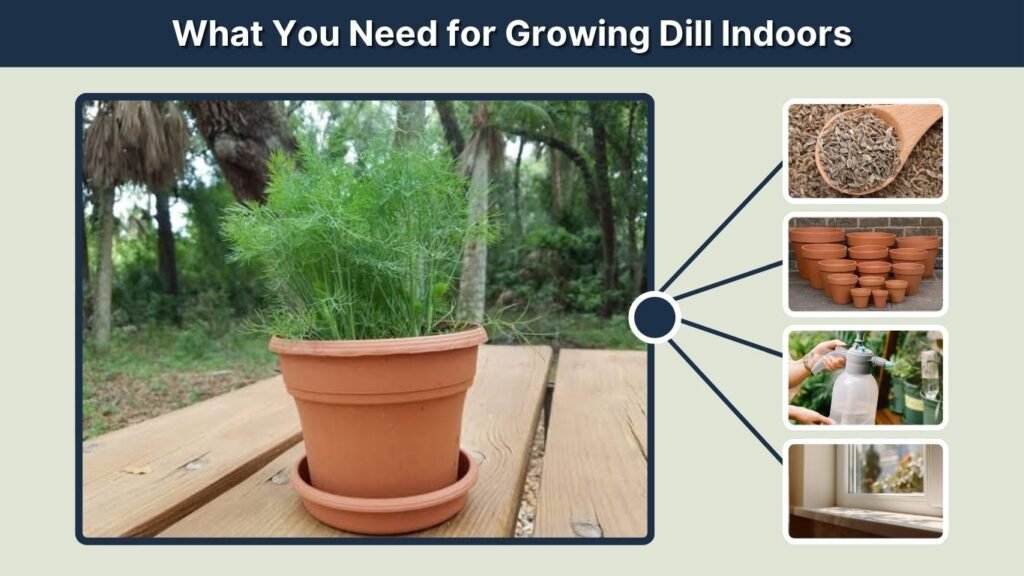
Growing dill indoors does not require much equipment, but choosing the correct supplies gives young plants a better start. Dill dislikes frequent transplanting because of its taproot, so it is usually best to sow seeds directly in the container where they will continue growing. A deep pot, loose soil, and good light are the most important requirements.
Basic Supplies
Prepare the following before planting:
- Dill seeds
- A pot at least 8–12 inches deep
- Drainage holes
- Quality potting mix
- Saucer or tray
- Watering can or spray bottle
- Sunny windowsill or grow light
Avoid using heavy garden soil indoors because it may compact easily and drain poorly.
Best Pot for Indoor Dill
A deep pot is better than a shallow container because dill develops a long central root.
Choose a container that is approximately 8 to 12 inches deep or deeper. Wider containers allow several plants to grow together, but seedlings should still have enough spacing for airflow.
Always make sure excess water can escape through drainage holes.
How to Grow Dill Indoors From Seed
Growing dill from seed indoors is usually easier than transplanting established plants. Dill roots can be sensitive to disturbance, and direct sowing reduces transplant stress. Seeds generally germinate best when kept evenly moist and warm. Once seedlings emerge, strong light becomes especially important to prevent thin or floppy growth.
Step 1: Fill the Container
Fill your pot with a loose, well-draining potting mix.
Leave a small gap between the soil surface and the rim so water does not overflow when you irrigate.
Lightly moisten the mix before planting.
Step 2: Sow Dill Seeds
Scatter dill seeds over the soil and cover them with approximately ¼ inch of potting mix.
For better spacing, place seeds about 1 to 2 inches apart initially.
Once seedlings become established, thin them so stronger plants have more room to grow.
Step 3: Keep the Soil Moist
Keep the soil consistently moist while the seeds germinate.
Do not allow the top layer to become completely dry, but avoid soaking the container. Water gently so seeds are not displaced.
Dill seeds commonly begin sprouting in about 7 to 14 days, although conditions can affect germination time.
Step 4: Provide Strong Light
Move seedlings into bright light immediately after they emerge.
A sunny window that provides about six or more hours of direct light is ideal. If natural light is limited, place the plants under a grow light.
Rotate the container regularly so growth remains more even.
Best Conditions for Growing Dill Indoors

Healthy indoor dill depends heavily on light, temperature, water, and airflow. The plant grows best when conditions are bright but not excessively hot. Indoor environments can sometimes be too dry, shaded, or stagnant, so small adjustments to placement and watering can significantly improve plant quality.
Light Requirements
Dill needs plenty of light to remain compact and productive.
Aim for at least six hours of strong sunlight daily when using a window. A south-facing window is often the most useful location.
When using artificial lighting, keep the grow light positioned according to the manufacturer’s recommendations to avoid weak or scorched growth.
Temperature
Dill generally prefers moderate temperatures.
Indoor conditions around 60°F to 75°F usually support healthy growth. Excessive heat can encourage faster flowering, while very cold conditions can slow development.
Keep plants away from heating vents, fireplaces, and strong cold drafts.
Watering
Indoor dill prefers soil that stays lightly and consistently moist.
Water when the upper surface begins to feel slightly dry. Water thoroughly until excess moisture drains from the bottom, then empty standing water from the saucer.
Repeated overwatering can cause root problems.
Growing Dill in Pots Indoors
Growing dill in pots indoors allows you to control soil, moisture, and placement more easily. Containers are especially useful for apartments and kitchens where outdoor gardening space is unavailable. Because dill grows upward rather than spreading widely, it can fit into relatively small areas as long as the pot is deep enough.
Give Plants Enough Space
Crowded plants compete for water, light, and nutrients.
Thin seedlings once they have started developing true leaves. Depending on the container size, leaving roughly 4 to 6 inches between plants can improve airflow and reduce competition.
Instead of pulling unwanted seedlings, snip them at soil level to avoid disturbing nearby roots.
Avoid Frequent Repotting
Dill generally performs better when planted directly into its final container.
Its taproot does not like repeated disturbance. Starting in a sufficiently deep pot prevents the need for unnecessary transplanting later.
If transplanting is unavoidable, move the root ball carefully without breaking it apart.
How to Care for Indoor Dill
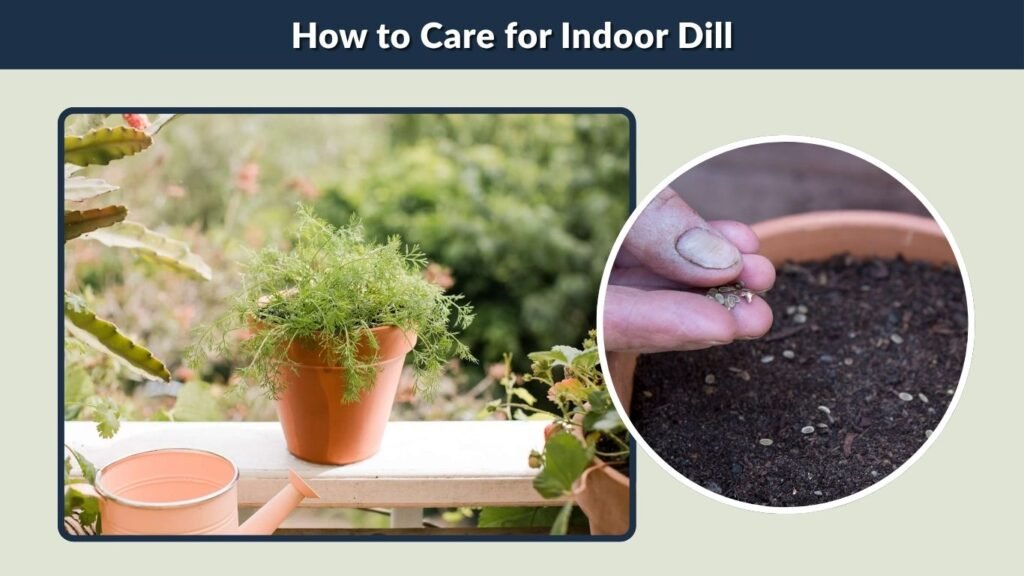
Indoor dill requires relatively little maintenance once established, but steady conditions produce the best foliage. Keep the plant well lit, water it before the soil becomes excessively dry, and provide enough airflow around the leaves. Regular harvesting can encourage useful leafy growth before the plant begins focusing on flowers and seed production.
Fertilizing Dill
Dill usually does not require heavy feeding.
If the potting mix already contains nutrients, additional fertilizer may not be necessary for several weeks. When growth appears pale or slow, a diluted balanced liquid fertilizer can be applied occasionally.
Avoid excessive nitrogen because it may cause weak, overly soft growth.
Prevent Leggy Growth
Long, thin stems are usually a sign that the plant needs more light.
Move the container closer to a brighter window or increase grow-light exposure. Rotating the pot every few days can also prevent the stems from leaning heavily in one direction.
Improve Air Circulation
Good airflow helps leaves dry more quickly and can reduce disease problems.
Do not pack too many dill plants into one container. Leave space around the pot and avoid placing it in constantly damp, poorly ventilated corners.
Growing Dill Indoors in Winter
Growing dill indoors in winter is possible, but shorter days can slow growth. A sunny window may still work in bright climates, while darker locations usually need supplemental lighting. Indoor winter growing also requires attention to heating systems, which can dry the soil faster and expose plants to warm air.
Use Supplemental Lighting
A grow light can provide more predictable conditions during winter.
Place it above the dill and provide enough daily light to maintain steady growth. Artificial lighting is especially useful when windows receive only a few hours of weak winter sun.
Keep Plants Away From Heating Vents
Warm air from heating systems can dry leaves and soil rapidly.
Move dill away from radiators, fireplaces, and heating vents. A bright location with stable temperatures usually produces stronger plants.
Common Indoor Dill Problems
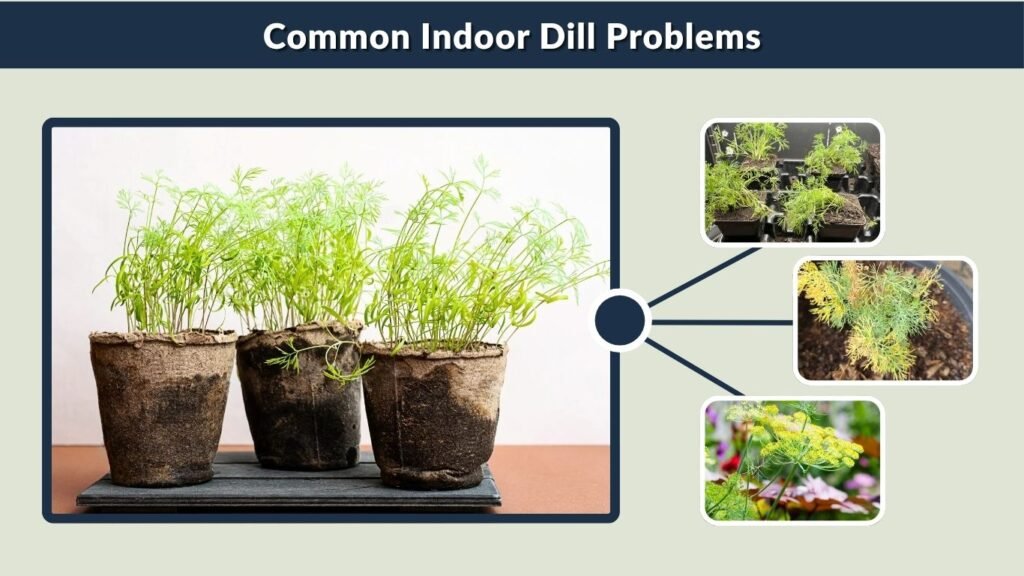
Most problems with indoor dill are related to poor light, incorrect watering, overcrowding, or excessive heat. Checking the growing conditions first can often reveal the cause. Correcting problems early is easier than trying to revive a severely weakened plant.
Common Problems to Watch For
- Leggy stems: Usually caused by insufficient light.
- Yellow leaves: May result from overwatering or poor drainage.
- Wilting: Can occur when soil becomes too dry.
- Slow growth: Often related to low light or cool temperatures.
- Early flowering: Frequently triggered by heat or plant maturity.
- Weak seedlings: Can result from crowding or inadequate light.
Healthy roots, bright light, and proper moisture prevent many of these issues.
How to Harvest Indoor Dill
Dill leaves can be harvested once the plant is established and has produced enough foliage to continue growing. Harvesting young leaves provides the freshest flavor, while allowing some plants to mature gives you the option of collecting flowers or seeds later.
Harvesting Dill Leaves
Use clean scissors to cut individual leaves or small stems.
Start with outer growth and avoid removing too much of the plant at once. Leaving plenty of foliage allows it to continue photosynthesizing and producing new growth.
Fresh dill is usually most flavorful when used soon after harvesting.
Encourage a Longer Harvest
Regularly harvesting leaves can delay the point when you need to replace the plant.
However, dill naturally completes its life cycle and eventually flowers. For a continuous indoor supply, sow a new batch every three to four weeks.
Succession planting is often more effective than trying to keep one dill plant producing indefinitely.
FAQs
Can I grow dill indoors?
Yes. Dill can grow indoors successfully when it receives strong light, well-draining soil, consistent moisture, and a sufficiently deep container.
How long does dill take to grow indoors?
Dill seeds often germinate within about 7 to 14 days. You can usually begin light harvesting once plants are established and have developed enough healthy foliage.
Can you grow dill indoors in winter?
Yes. Dill can grow indoors during winter, but supplemental grow lighting may be needed because natural daylight is often shorter and weaker.
How deep should a pot be for dill?
A container around 8 to 12 inches deep or deeper is a good choice because dill develops a taproot. Proper drainage holes are also essential.
Can dill grow indoors all year round?
Yes, you can grow dill indoors year-round by maintaining adequate light, moderate temperatures, proper watering, and successive seed sowings every few weeks.