

Growing sage indoors is an excellent way to enjoy fresh, aromatic herbs throughout the year without needing an outdoor garden. Sage is a hardy perennial herb known for its flavorful leaves, attractive foliage, and relatively simple care requirements. Whether you want to grow sage from seeds, cuttings, or established plants, providing adequate sunlight, well-draining soil, and proper watering is essential. This guide explains how to grow sage indoors successfully, including container selection, planting techniques, winter care, harvesting, and solutions to common growing problems.
Can You Grow Sage Indoors?
Yes, sage can grow indoors when provided with sufficient sunlight, proper drainage, and suitable growing conditions. Common sage (Salvia officinalis) is particularly suitable for indoor herb gardening because it adapts well to containers. Although sage naturally prefers sunny outdoor environments, a bright windowsill or supplemental grow light can support healthy growth and provide fresh leaves for cooking throughout the year.
Benefits of Growing Sage Indoors
- Fresh herbs year-round: Harvest flavorful leaves without depending entirely on outdoor growing seasons.
- Space-saving gardening: Grow sage in pots on sunny windowsills, shelves, or indoor plant stands.
- Easy access: Keep fresh sage conveniently available for cooking and seasoning.
- Attractive foliage: Enjoy aromatic, gray-green leaves that complement indoor herb arrangements.
- Weather protection: Protect container plants from heavy rain, frost, and extreme outdoor temperatures.
How to Grow Sage Indoors Step by Step
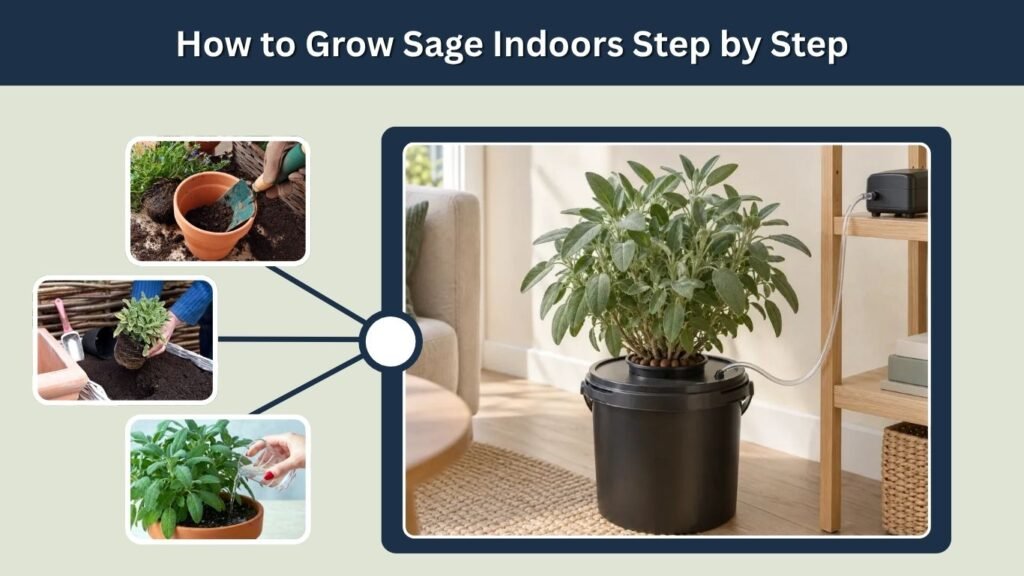
Learning how to grow sage indoors begins with selecting a suitable plant and preparing the right growing environment. Sage prefers strong sunlight, good air circulation, and soil that drains efficiently. Starting with a healthy nursery plant is generally easier than growing from seeds. Following a few essential planting steps can help establish strong roots and encourage steady leaf production.
Step-by-Step Indoor Sage Planting Guide
- Choose a sage variety: Select common culinary sage or a compact variety suitable for containers.
- Prepare a container: Use a pot with drainage holes to prevent excess water from collecting.
- Add potting mix: Fill the container with well-draining potting soil amended with horticultural grit or perlite.
- Plant the sage: Position the plant at approximately the same depth as its original container.
- Water carefully: Water after planting and allow excess moisture to drain completely.
- Provide sunlight: Place the container near a bright south-facing window or beneath a suitable grow light.
- Monitor growth: Check soil moisture regularly and remove damaged leaves when necessary.
Growing Sage From Seed Indoors
Starting sage from seed is an affordable way to establish an indoor herb garden. However, sage seedlings develop more slowly than many common kitchen herbs, so patience is necessary. Successful germination depends on suitable temperatures, consistent moisture, and a light seed-starting medium. Once seedlings become established, they can be transplanted into larger containers for continued indoor growth.
How to Grow Sage From Seeds Indoors
Fill a seed tray with moist, well-draining seed-starting mix. Sow sage seeds near the surface and cover them with a thin layer of compost.
Keep the growing medium lightly moist and place the tray in a warm location. Germination often occurs within approximately two weeks, although timing varies.
Once seedlings develop several true leaves, transplant them carefully into individual pots. Provide strong light to encourage compact, healthy growth.
Growing Sage in Pots Indoors
Container selection plays an important role in maintaining healthy indoor sage plants. Sage develops a branching root system and prefers soil that does not remain constantly wet. Choosing a suitable pot helps prevent waterlogging while providing enough space for continued growth. Container materials, drainage holes, and potting mix all influence how successfully sage adapts to indoor conditions.
What Size Pot Is Best for Indoor Sage?
A young sage plant can begin in a container approximately 6–8 inches wide. As the roots develop, move it into a larger pot when necessary.
For a mature plant, a container around 12 inches wide and deep provides useful growing space. Terracotta pots are particularly helpful because their porous surfaces encourage moisture evaporation.
Indoor Sage Light and Temperature Requirements

Sage naturally grows in sunny environments and requires abundant light to produce healthy, aromatic foliage. Indoor plants receiving insufficient sunlight may develop weak stems and reduced leaf growth. Temperature stability and appropriate ventilation also influence plant health. Understanding these conditions helps gardeners choose suitable growing locations and maintain productive sage plants throughout different seasons.
How Much Sunlight Does Indoor Sage Need?
Sage generally benefits from at least six hours of direct sunlight daily. A bright south-facing window is often the best indoor location in the Northern Hemisphere.
If natural sunlight is inadequate, use a full-spectrum grow light for approximately 12–14 hours daily, adjusting the duration according to plant growth and light intensity.
Ideal Temperature for Indoor Sage
Common sage generally grows comfortably at typical indoor temperatures around 60–75°F (16–24°C).
Protect plants from excessive heating, cold drafts, and abrupt temperature changes. Good airflow helps reduce excessive moisture around the foliage.
How to Water and Fertilize Indoor Sage
Proper watering is one of the most important aspects of growing sage indoors. Although established sage tolerates relatively dry conditions, container plants still need moisture to maintain healthy roots. Excessive watering can cause root rot, while prolonged dryness may weaken young plants. Balanced watering and occasional light fertilization help support steady growth without encouraging excessive soft foliage.
Best Watering Practices for Sage
- Check soil moisture: Water when the upper inch of potting mix feels dry.
- Water thoroughly: Allow water to flow through the drainage holes.
- Avoid standing water: Empty saucers after watering to prevent waterlogged roots.
- Adjust seasonally: Reduce watering frequency when growth slows during winter.
- Observe the foliage: Yellowing leaves and consistently damp soil may indicate overwatering.
Fertilizing Sage Plants Indoors
Apply a diluted, balanced liquid fertilizer approximately every four to six weeks during active growth if the plant needs additional nutrients.
Avoid excessive fertilization because sage generally performs well in moderately fertile soil.
Growing Sage Indoors in Winter
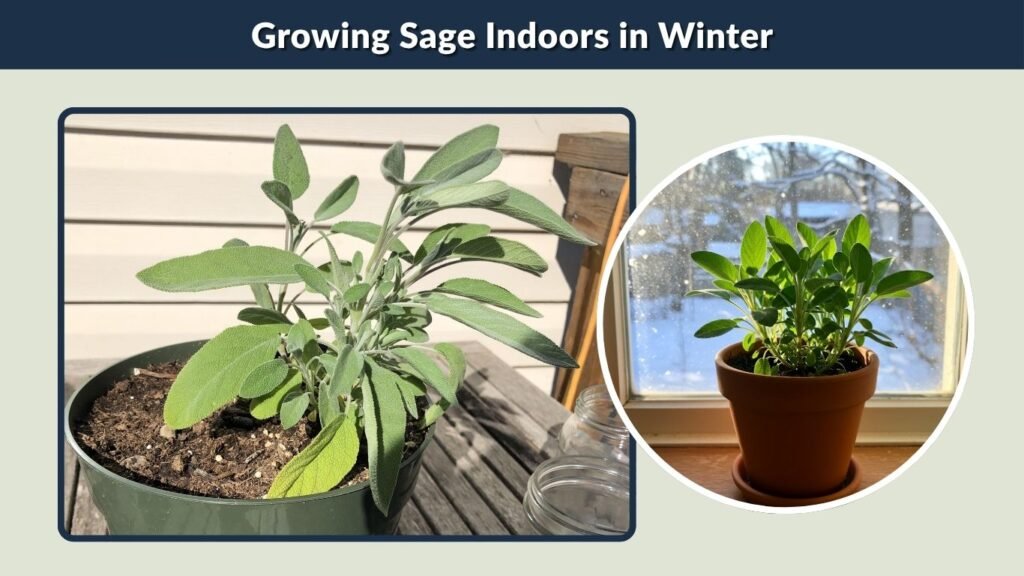
Winter can make indoor sage cultivation challenging because shorter days reduce available sunlight and slow plant growth. Heating systems may also create dry indoor conditions, while cold windows can expose plants to temperature fluctuations. Adjusting lighting, watering, and plant placement helps maintain healthier sage throughout winter, especially in regions experiencing extended cold weather and limited daylight.
How to Keep Sage Healthy During Winter
Position sage near the brightest available window and consider supplemental lighting when daylight is insufficient.
Allow the potting mix to dry slightly between waterings and avoid unnecessary fertilization during slow growth.
Keep foliage away from cold glass and direct heating vents. Continue harvesting lightly if the plant remains actively growing.
Can You Grow White Sage and Pineapple Sage Indoors?
Several plants share the common name sage, but their growing requirements can differ significantly. Common culinary sage, white sage, pineapple sage, and clary sage belong to the genus Salvia, yet they vary in size, growth habits, and preferred conditions. Understanding these differences helps gardeners choose appropriate varieties for indoor cultivation and avoid treating every sage plant identically.
Growing White Sage Indoors
White sage (Salvia apiana) requires intense sunlight, excellent drainage, and relatively dry growing conditions.
It can be challenging to maintain indoors without strong supplemental lighting. Choose nursery-propagated plants or legally sourced seeds rather than wild-collected specimens.
Growing Pineapple Sage Indoors
Pineapple sage (Salvia elegans) produces fragrant leaves with a distinctive fruity aroma.
It prefers bright light and generally needs more moisture than common culinary sage. Because it can become relatively large, regular pruning and sufficient container space are important.
Common Problems When Growing Sage Indoors
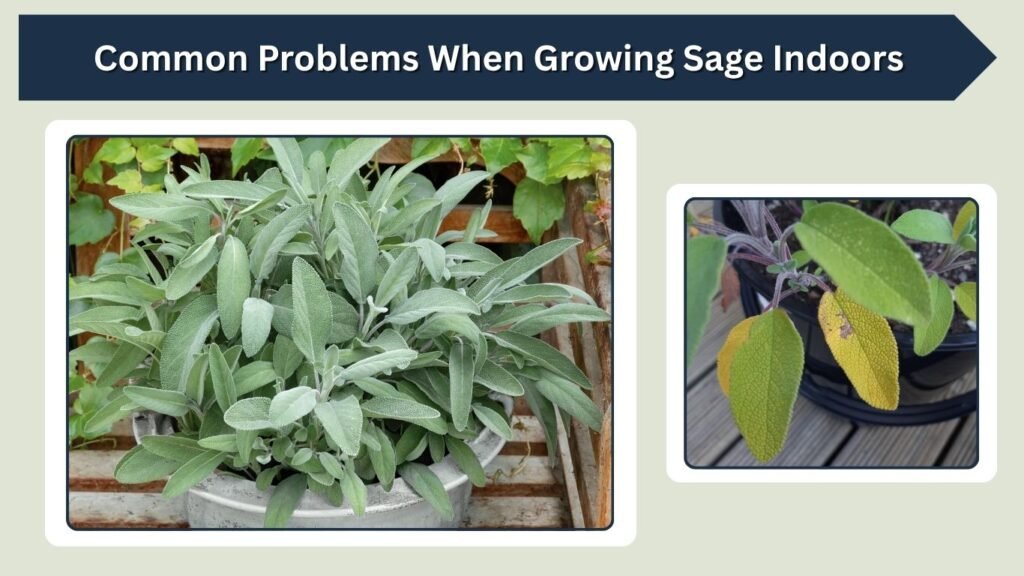
Indoor sage plants sometimes develop yellow leaves, weak stems, or slow growth despite receiving regular attention. These problems commonly result from unsuitable lighting, excessive watering, poor drainage, or environmental stress. Identifying the underlying cause early helps prevent further damage. Regular observation of leaves, stems, and soil conditions can make indoor sage care considerably easier.
Why Is My Indoor Sage Not Growing?
Insufficient sunlight is a common reason for slow or weak growth. Move the plant to a brighter location or introduce supplemental lighting.
Consistently wet soil can also restrict root development. Check drainage and allow the potting mix to dry appropriately between waterings.
Why Are Sage Leaves Turning Yellow?
Yellow leaves may indicate overwatering, inadequate drainage, or insufficient light.
Inspect the roots and soil moisture before changing your watering routine. If necessary, repot the plant using a fresh, well-draining growing medium.
How to Harvest Sage Grown Indoors
Harvesting sage encourages branching and provides fresh leaves for cooking. However, removing excessive foliage can slow growth, particularly when indoor light levels are limited. Established sage plants tolerate regular, moderate harvesting, while young seedlings should develop sufficient foliage before pruning. Using clean tools and selecting healthy stems helps maintain a compact and productive indoor herb plant.
Harvesting and Pruning Indoor Sage
Use clean scissors to remove individual leaves or trim young stem tips above a leaf node.
Avoid removing more than one-third of the healthy foliage at once. Harvest more conservatively during winter or whenever plant growth is slow.
Fresh sage leaves can be used immediately or dried and stored in airtight containers.
FAQs
1. Is Sage Easy to Grow Indoors?
Yes, common sage is relatively easy to grow indoors with strong sunlight, well-draining soil, and careful watering. Low-light environments make cultivation more challenging.
2. Can Sage Grow Indoors Without Direct Sunlight?
Sage generally struggles in low light. However, a suitable full-spectrum grow light can provide enough supplemental illumination for healthy indoor growth.
3. How Long Does Sage Take to Grow From Seed Indoors?
Sage seeds often germinate in approximately two weeks. Developing a substantial plant suitable for regular harvesting takes considerably longer, potentially several months or more.
4. Can You Grow Sage Indoors All Year Round?
Yes, sage can remain indoors throughout the year when adequate lighting, suitable temperatures, and appropriate watering are maintained.
5. Can You Grow Sage Indoors for Smudging?
Sage can be grown indoors and its leaves harvested and dried for personal use. White sage requires especially strong light and excellent drainage. Burning dried herbs indoors creates smoke and particulates, so consider ventilation and respiratory sensitivities.