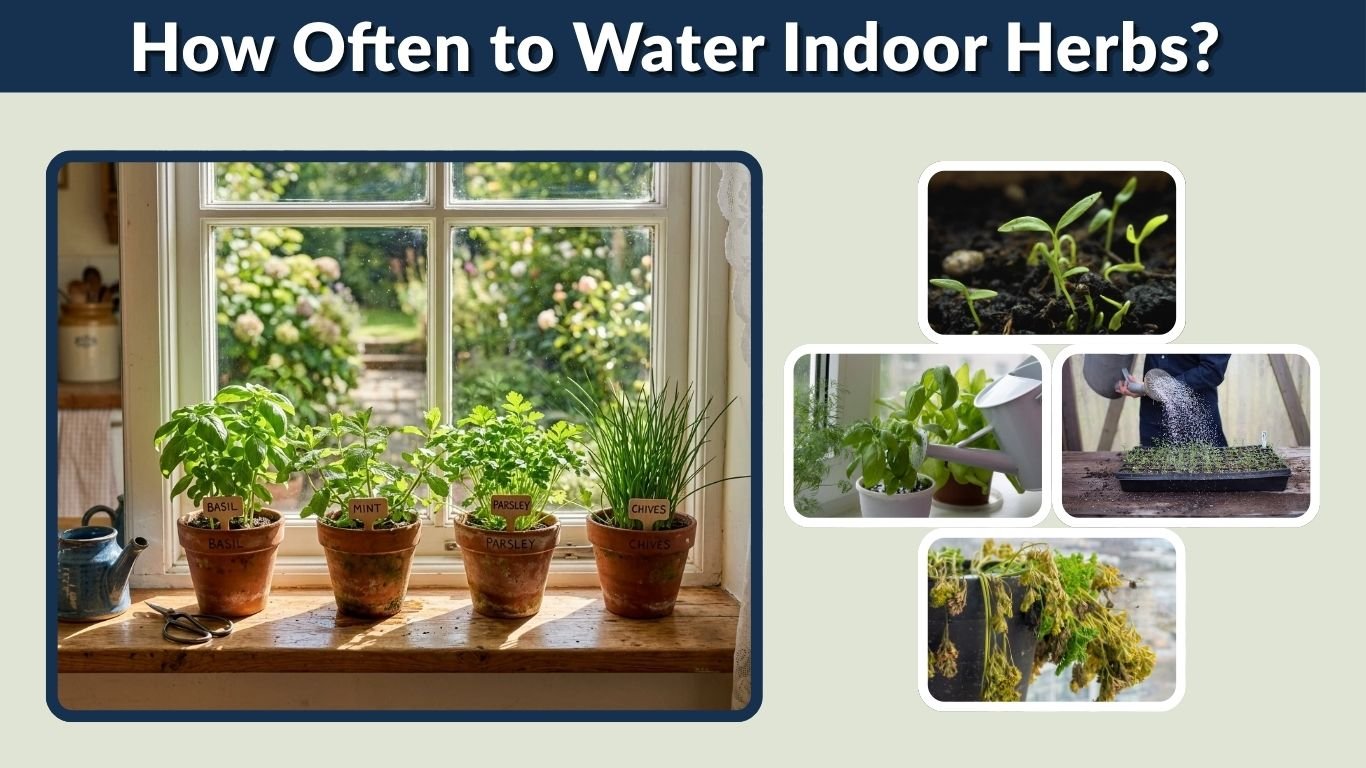
Knowing how often to water indoor herbs is essential for keeping your plants healthy, productive, and full of flavor. Most indoor herbs need watering when the upper layer of potting soil begins to dry, but the exact frequency depends on the herb, container size, temperature, and sunlight. Basil and mint generally prefer more moisture, while rosemary and thyme tolerate drier conditions. Watering too frequently can damage roots, while insufficient moisture may cause wilting and slow growth. This guide explains indoor herb watering schedules, proper techniques, and common mistakes to avoid.
How Often Should You Water Indoor Herbs?
Most indoor herbs benefit from regular moisture checks rather than a fixed watering schedule. Under typical indoor conditions, some potted herbs may need watering every few days, while drought-tolerant varieties can go longer. However, temperature, light exposure, pot size, and soil composition make exact schedules unreliable. Checking the soil before watering is the best way to determine whether your plants need additional moisture.
General Indoor Herb Watering Schedule
| Indoor Herb | When to Water | Moisture Preference |
|---|---|---|
| Basil | Top 1 inch feels dry | Evenly moist |
| Mint | Surface begins drying | Consistently moist |
| Parsley | Top 1 inch feels dry | Moderately moist |
| Chives | Top 1 inch feels dry | Moderately moist |
| Cilantro | Upper soil begins drying | Evenly moist |
| Rosemary | Upper 1–2 inches dry | Drier between waterings |
| Thyme | Upper 1–2 inches dry | Relatively dry |
| Oregano | Upper 1–2 inches dry | Relatively dry |
These are practical starting points, not fixed schedules. Always consider moisture deeper in the pot, particularly with larger containers.
Should You Water Indoor Herbs Every Day?
Most established indoor herbs do not require daily watering.
Daily watering may keep the soil excessively wet, especially during winter. However, tiny seedling containers and plants growing under strong lights may dry more quickly.
How Often to Water Different Indoor Herbs
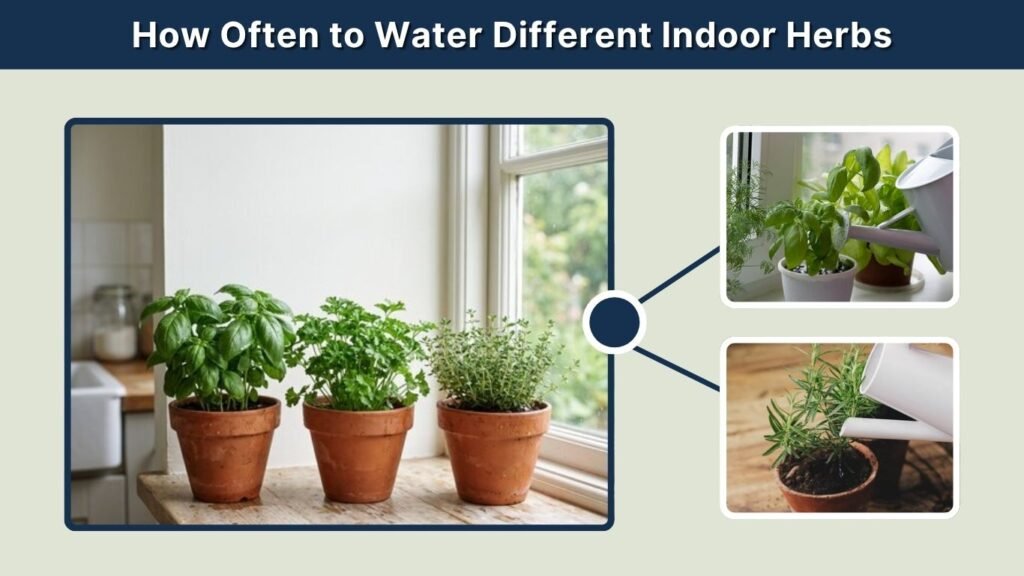
Not every herb requires the same soil moisture. Some leafy varieties grow best when their roots receive consistent moisture, while Mediterranean herbs naturally tolerate periods of relatively dry soil. Grouping plants according to their watering preferences makes indoor gardening easier. Understanding individual requirements also helps prevent overwatering herbs that prefer well-drained growing conditions.
Watering Basil and Mint Indoors
Basil prefers evenly moist potting mix without waterlogged roots.
Check the upper inch of soil regularly and water when it begins to dry.
Mint generally prefers more consistent moisture. Avoid allowing its entire root ball to dry completely, particularly when the plant is growing actively.
Watering Rosemary, Thyme, and Oregano
Rosemary, thyme, and oregano prefer well-draining soil and generally tolerate drier conditions than basil or mint.
Allow the upper soil to dry between waterings. Never leave their containers standing in water for extended periods, as saturated conditions can encourage root problems.
How Much Water Do Indoor Herbs Need?
The amount of water required depends on container dimensions, root development, soil type, and growing conditions. A small herb in a four-inch pot needs less total water than a mature plant in a large container. However, measuring the same quantity every time is usually less effective than watering thoroughly when the soil actually needs moisture.
Proper Watering Techniques
- Check soil first: Test moisture before adding water.
- Water slowly: Pour water evenly around the soil surface.
- Moisten the root zone: Continue until a little water drains from the bottom.
- Empty saucers: Remove collected water after drainage finishes.
- Avoid waterlogging: Never leave roots sitting in standing water.
- Use room-temperature water: Avoid sudden temperature extremes.
Is Bottom Watering Good for Herbs?
Bottom watering can help container soil absorb moisture evenly.
Place the pot in shallow water briefly, allowing moisture to move upward through drainage holes. Remove the pot once sufficiently moist and let it drain thoroughly.
How to Tell When Indoor Herbs Need Water
Identifying soil moisture is more reliable than following an automatic calendar schedule. Soil may appear dry on the surface while remaining wet around deeper roots. Similarly, small containers exposed to warm indoor air can dry unexpectedly quickly. Combining touch, container weight, and observation helps you make better watering decisions.
Easy Ways to Check Soil Moisture
- Finger test: Insert your finger about one inch into the potting mix.
- Pot weight: Compare the weight of a freshly watered pot with a dry one.
- Wooden stick: Insert a clean stick to check for damp soil deeper down.
- Plant appearance: Notice wilting or changes in leaf firmness.
- Drainage inspection: Check whether excess water remains in saucers.
Does Drooping Always Mean Herbs Need Water?
No. Drooping leaves can indicate either insufficient moisture or waterlogged roots.
Check the soil before watering. If the soil is already wet, adding more water may worsen the problem.
Signs of Overwatering Indoor Herbs
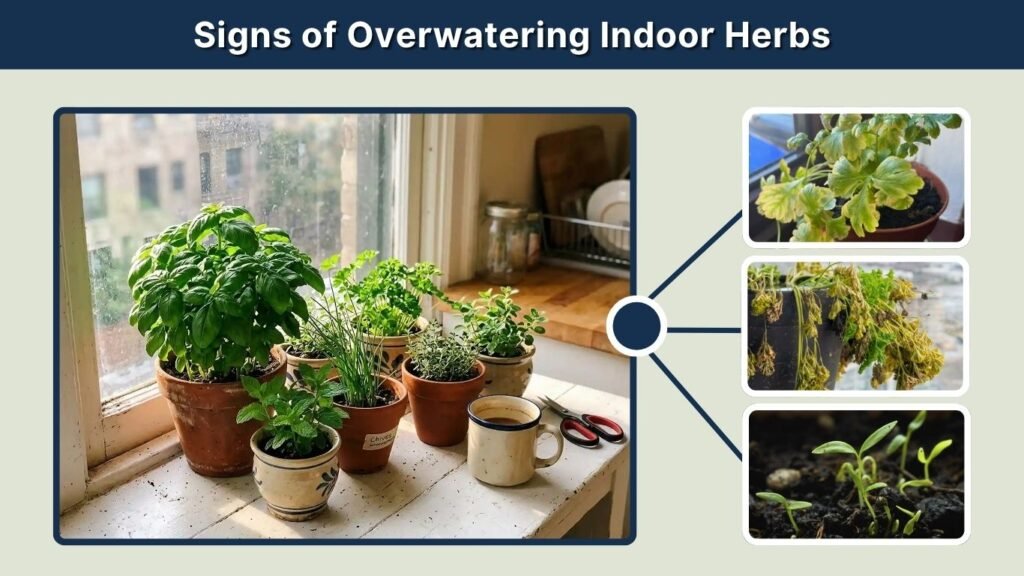
Overwatering is a common cause of unhealthy indoor herbs. When potting soil remains saturated, roots may receive insufficient oxygen, leading to weak growth and potentially root rot. Plants can appear wilted even though they have plenty of water. Understanding the warning signs allows you to correct watering problems before permanent damage occurs.
Common Signs of Overwatering
- Yellow leaves: Particularly when combined with persistently wet soil.
- Drooping stems: Wilting despite adequate moisture.
- Soft or mushy roots: Possible indication of root decay.
- Slow growth: Roots may struggle in poorly aerated soil.
- Mold on soil: Can indicate prolonged surface moisture.
- Unpleasant odor: May suggest decomposing organic matter or damaged roots.
How to Save an Overwatered Herb
Stop watering until the soil has dried sufficiently and ensure drainage holes are unobstructed.
If roots are rotting or the potting mix remains soggy, repotting into fresh, well-draining mix may be necessary. Remove severely damaged roots carefully and improve growing conditions.
Signs of Underwatering Indoor Herbs
Underwatering occurs when roots cannot access enough moisture to support healthy growth. Indoor herbs may dry quickly during hot weather, under grow lights, or in small containers. Persistent dryness can cause leaves to wilt, develop brown edges, or fall prematurely. Fortunately, many herbs recover when the problem is identified before serious root damage occurs.
How to Recognize Underwatering
Underwatered herbs may develop limp leaves, dry potting soil, and unusually lightweight containers.
Some plants also develop crispy leaf edges or premature leaf drop. Mediterranean herbs tolerate drying better than many leafy herbs, but prolonged severe drought can still damage them.
How to Rehydrate Dry Herbs
Water slowly until the root zone becomes evenly moist.
If the potting mix has become water-repellent, bottom watering may help restore moisture. Allow excess water to drain before returning the plant to its usual position.
How Often to Water Herb Seeds Indoors
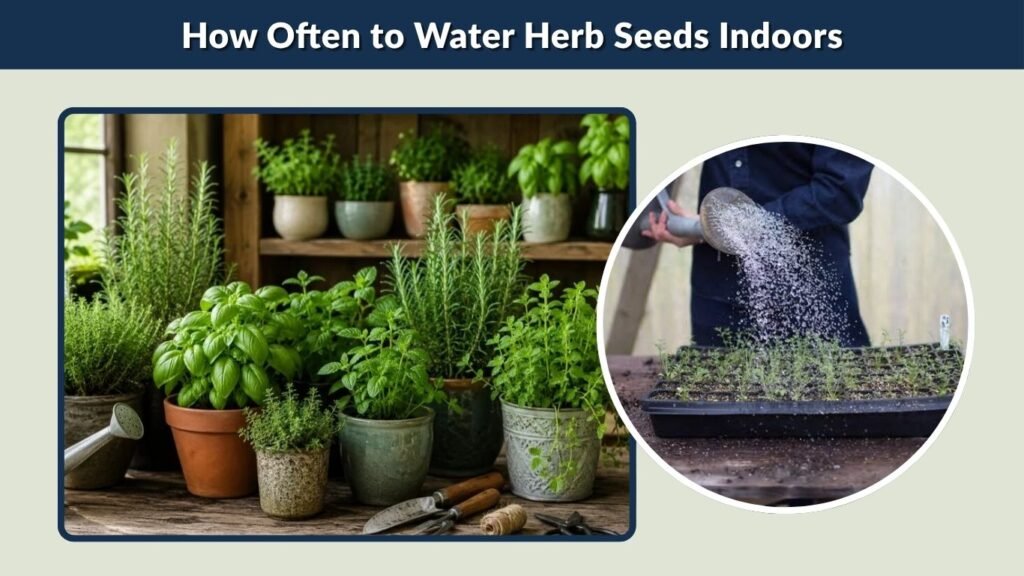
Herb seeds and young seedlings require different watering techniques from mature plants. Their developing roots occupy a relatively shallow portion of the container, making them more vulnerable to drying. However, excessive moisture can encourage fungal diseases such as damping-off. Maintaining lightly moist, well-aerated seed-starting mix helps support successful germination and early development.
Watering Herb Seeds Before Germination
Keep the seed-starting mixture consistently moist but never saturated.
A gentle spray or careful bottom watering can prevent seeds from being displaced. Check small containers frequently, particularly when using heating mats or bright grow lights.
Watering Young Herb Seedlings
Once seedlings develop roots and true leaves, gradually adjust watering to suit their growing conditions.
Avoid keeping the soil continuously saturated. Provide adequate light and air circulation to support strong growth.
Does Indoor Herb Watering Change With the Seasons?
Seasonal conditions affect indoor herb watering even when plants remain inside throughout the year. Winter often brings shorter daylight hours and slower plant growth, while summer may increase water loss through warmer temperatures and stronger sunlight. Indoor heating and air conditioning also influence humidity and evaporation. Watering routines should change according to actual plant needs.
Watering Indoor Herbs During Summer
Herbs growing near bright windows may dry faster during warmer months.
Inspect soil regularly and water as needed. Small containers and actively growing plants may require more frequent attention.
Watering Indoor Herbs During Winter
Many herbs grow more slowly during winter and consequently use less water.
Reduce watering frequency when soil remains moist longer. However, monitor plants near heating vents because dry indoor air can increase moisture loss.
FAQs
1. How Often Should I Water My Indoor Herb Garden?
Check soil moisture regularly and water each plant according to its needs. Many herbs require watering every few days under active growing conditions, but fixed schedules are unreliable.
2. How Often Should I Water Basil Indoors?
Water basil when the upper inch of soil begins to dry. Keep the potting mix evenly moist without allowing water to accumulate around the roots.
3. Can Indoor Herbs Recover From Overwatering?
Sometimes. Recovery depends on the extent of root damage. Improve drainage, allow excessive moisture to dissipate, and repot if the roots or growing medium have deteriorated.
4. Is Tap Water Safe for Indoor Herbs?
Tap water is generally suitable for many indoor herbs. However, unusually high mineral or salt concentrations may affect sensitive plants over time.
5. Should I Mist My Indoor Herbs Every Day?
Daily misting is usually unnecessary and does not replace proper root watering. Good soil moisture, suitable humidity, and air circulation are more important for healthy growth.