
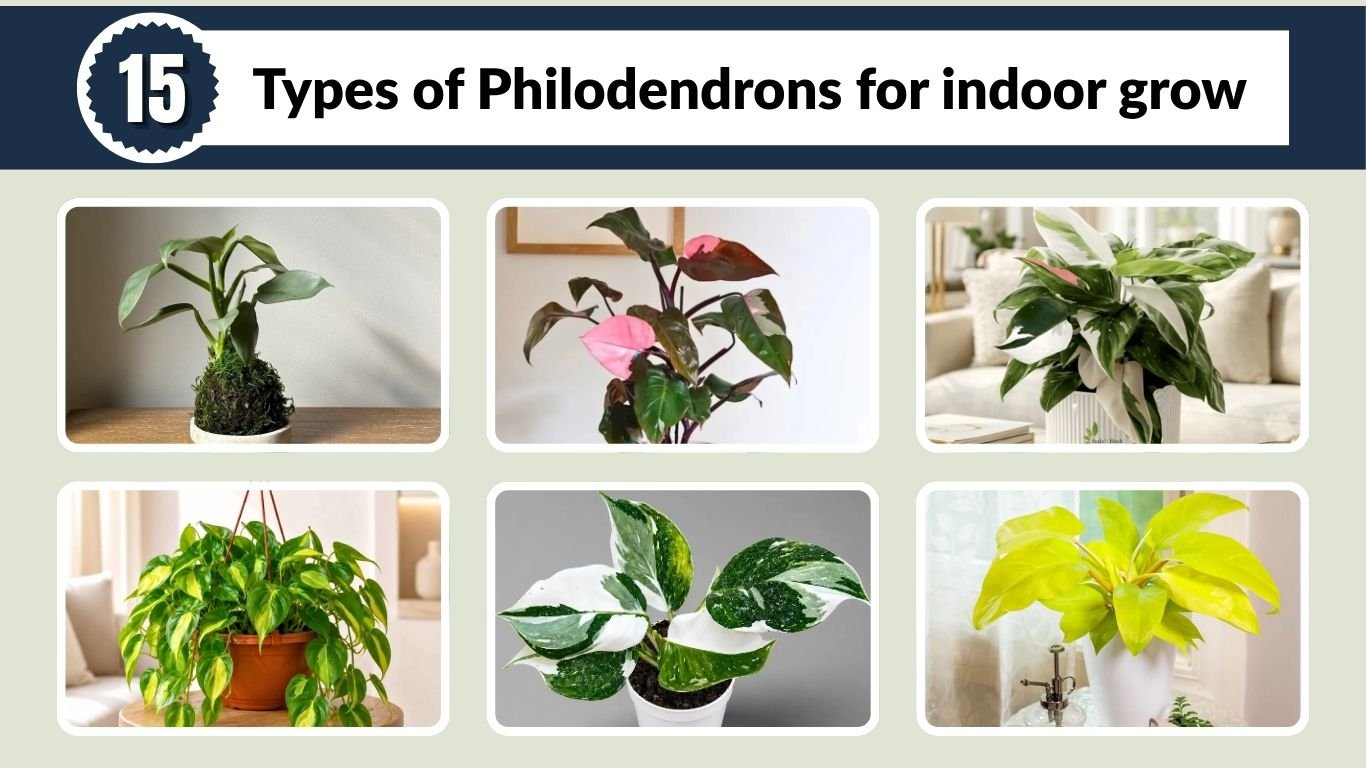
Philodendrons are among the most beautiful and versatile houseplants, loved for their attractive foliage, unique leaf shapes, and easy indoor care. From the colorful Pink Princess to the elegant Heartleaf Philodendron, these tropical plants can transform any indoor space into a refreshing green retreat. Some varieties feature trailing vines, while others display bold, upright growth and stunning variegated leaves. In this guide, explore 15 types of Philodendrons with pictures, identification features, growing requirements, and essential care tips to help you choose the perfect variety for your home.
1. Heartleaf Philodendron
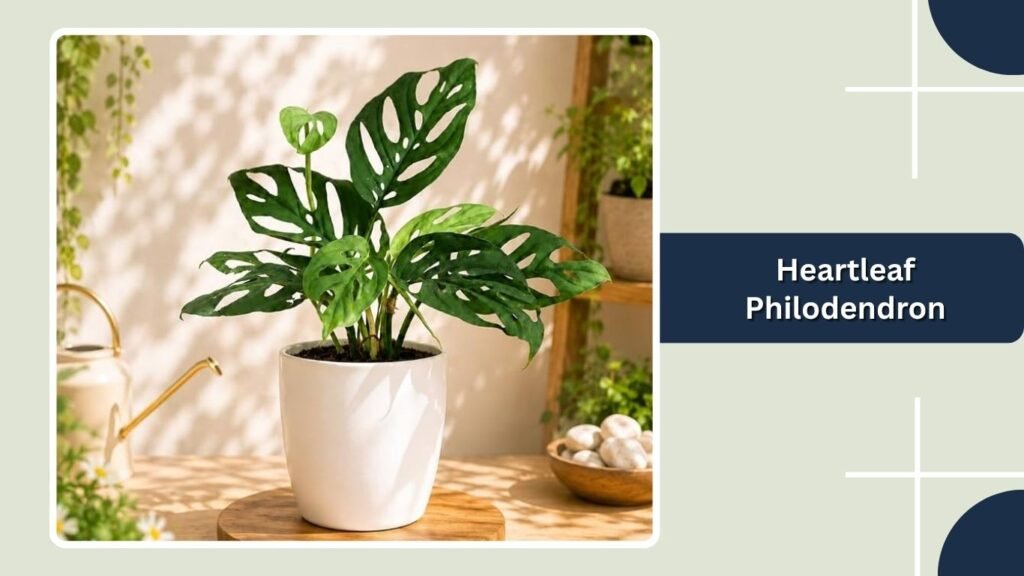
The Heartleaf Philodendron (Philodendron hederaceum) is a popular indoor plant known for its beautiful heart-shaped leaves and trailing vines. Native to tropical regions of the Americas, this evergreen climbing plant adapts well to indoor environments. Its low-maintenance nature makes it an excellent choice for beginners, while its attractive green foliage adds a refreshing tropical appearance to shelves, hanging baskets, and living spaces.
Identification
- Scientific Name: Philodendron hederaceum
- Common Name: Heartleaf Philodendron
- Leaf Shape: Heart-shaped with pointed tips
- Leaf Color: Deep green, sometimes bronze when emerging
- Plant Type: Evergreen climbing or trailing vine
- Growth Habit: Fast-growing vines with aerial roots
- Mature Size: Vines commonly reach 3–10 feet indoors
Light and Water Requirements
Heartleaf Philodendrons grow best in bright, indirect sunlight but can tolerate lower-light conditions. Avoid prolonged direct sunlight because it can scorch their delicate leaves. Water the plant when the top 1–2 inches of soil feel dry. Use well-draining potting soil to prevent excess moisture and root rot.
Growth and Indoor Placement
This philodendron thrives in warm indoor temperatures between 65°F and 85°F. Moderate humidity supports healthy foliage, although it can adapt to average household conditions. Its trailing vines look beautiful in hanging baskets or on elevated shelves. You can also train the plant to climb a moss pole for larger foliage and an attractive vertical display.
Maintenance and Propagation
Regular pruning encourages fuller growth and prevents vines from becoming excessively long. Remove damaged or yellowing leaves to maintain its appearance. Heartleaf Philodendrons are easily propagated using stem cuttings containing at least one node. Place cuttings in water or moist potting mix until roots develop. Keep this plant away from pets and children because its tissues contain irritating calcium oxalate crystals.
2. Brasil Philodendron
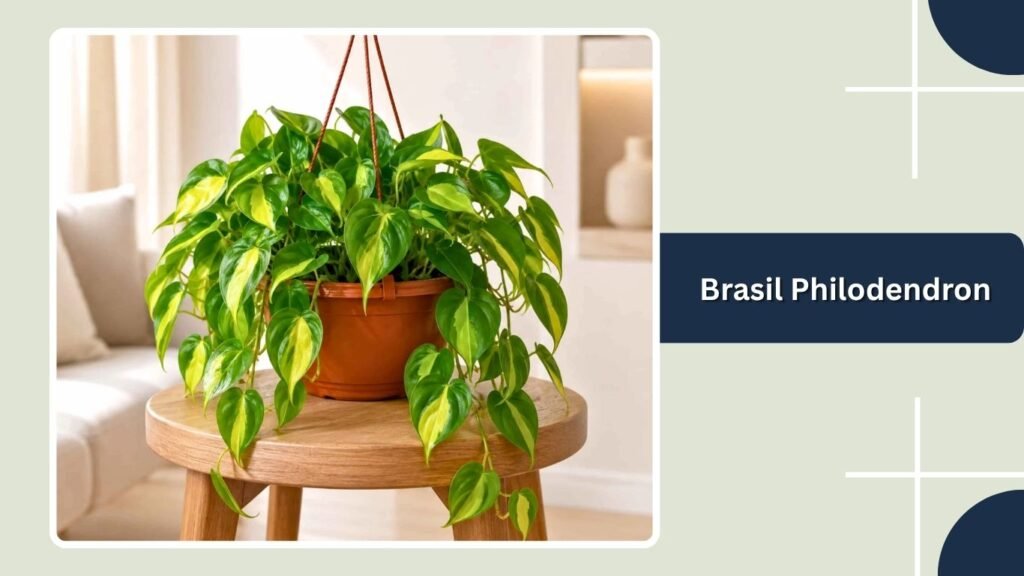
The Brasil Philodendron (Philodendron hederaceum ‘Brasil’) is an attractive tropical houseplant featuring heart-shaped leaves with beautiful green and yellow variegation. Its colorful foliage and trailing growth make it a popular choice for indoor decoration. This fast-growing philodendron is relatively easy to maintain and looks wonderful in hanging baskets, decorative containers, or climbing arrangements.
Identification
- Scientific Name: Philodendron hederaceum ‘Brasil’
- Common Name: Brasil Philodendron
- Leaf Shape: Heart-shaped with pointed tips
- Leaf Color: Dark green with lime-green or yellow streaks
- Plant Type: Evergreen tropical climbing vine
- Growth Habit: Trailing or climbing with aerial roots
- Mature Size: Vines can grow several feet long indoors
Light and Water Requirements
Brasil Philodendrons prefer bright, indirect sunlight to maintain their colorful leaf patterns. Although they tolerate moderate light, darker conditions may produce less vigorous growth. Water when the upper 1–2 inches of soil become dry. A well-draining potting mixture prevents waterlogging and encourages healthy root development.
Growth and Indoor Placement
This plant thrives in temperatures between 65°F and 85°F with moderate humidity. Its cascading vines make it ideal for hanging baskets, wall shelves, or elevated planters. Providing a moss pole allows the plant to climb naturally and develop larger foliage over time.
Maintenance and Propagation
Regular pruning encourages bushier growth and controls the length of its vines. Remove damaged leaves and occasionally rotate the container for balanced growth. Propagation is simple using stem cuttings with healthy nodes. Place cuttings in water or moist soil until roots develop.
3. Lemon Lime Philodendron
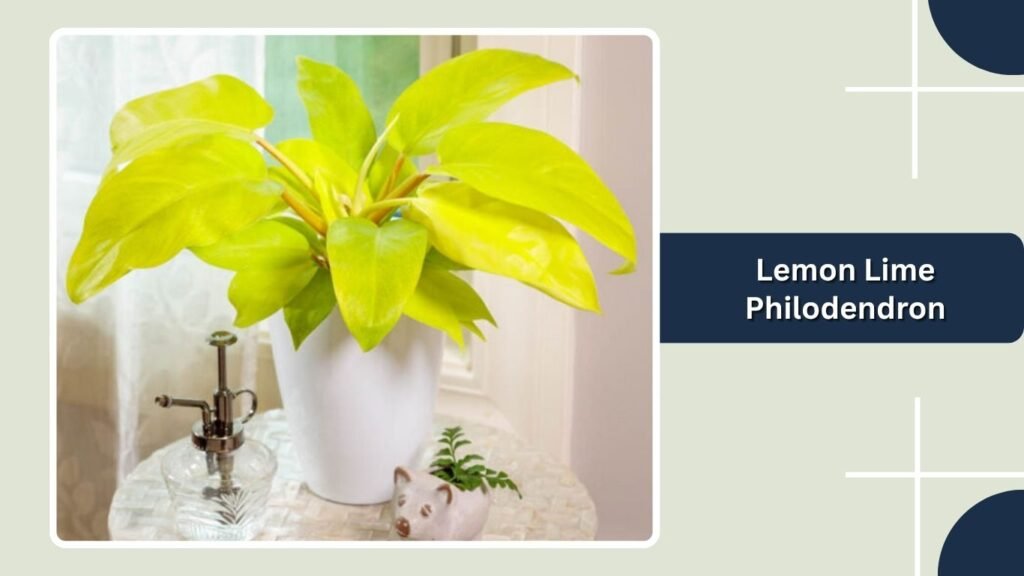
The Lemon Lime Philodendron (Philodendron hederaceum ‘Lemon Lime’) is a vibrant indoor plant recognized for its bright chartreuse and yellow-green foliage. Its glowing heart-shaped leaves create a cheerful appearance that complements modern indoor spaces. With its adaptable growth habits and relatively simple care requirements, this tropical vine is particularly suitable for beginners looking to introduce colorful greenery into their homes.
Identification
- Scientific Name: Philodendron hederaceum ‘Lemon Lime’
- Common Name: Lemon Lime Philodendron
- Leaf Shape: Heart-shaped with elongated pointed tips
- Leaf Color: Bright yellow-green to lime green
- Plant Type: Evergreen tropical vine
- Growth Habit: Climbing or trailing
- Mature Size: Vines commonly grow several feet indoors
Light and Water Requirements
Lemon Lime Philodendrons grow best in bright, indirect light, which supports their vibrant foliage. They can survive in lower-light areas but may grow more slowly. Water when the top 1–2 inches of soil feel dry. Use a loose, well-draining potting mix to maintain healthy roots.
Growth and Indoor Placement
This philodendron prefers warm temperatures between 65°F and 85°F and moderate humidity. Its colorful trailing vines look particularly attractive on bookshelves, hanging planters, and plant stands. A climbing support can also encourage larger leaves and create an impressive vertical display.
Maintenance and Propagation
Prune leggy vines to encourage a fuller appearance and remove yellowing or damaged foliage when necessary. During spring and summer, apply a diluted balanced fertilizer occasionally to support healthy growth. Stem cuttings containing nodes root readily in water or moist potting soil.
4. Velvet Leaf Philodendron

The Velvet Leaf Philodendron (Philodendron hederaceum ‘Micans’) is a beautiful tropical houseplant admired for its soft, velvety foliage and rich coloration. Its heart-shaped leaves display shades of deep green, bronze, and reddish purple depending on their maturity and lighting. This elegant trailing plant adds texture and warmth to indoor spaces, making it especially appealing for shelves and hanging arrangements.
Identification
- Scientific Name: Philodendron hederaceum ‘Micans’
- Common Name: Velvet Leaf Philodendron
- Leaf Shape: Heart-shaped with pointed ends
- Leaf Color: Deep green or bronze with reddish-purple undersides
- Leaf Texture: Soft, velvety surface
- Plant Type: Evergreen climbing vine
- Growth Habit: Trailing or climbing with aerial roots
Light and Water Requirements
Velvet Leaf Philodendrons prefer bright, indirect sunlight, although they tolerate moderate lighting. Strong direct sunlight can damage their delicate foliage. Water when the upper inch or two of soil becomes dry. A chunky, well-draining potting mixture helps maintain suitable moisture without suffocating the roots.
Growth and Indoor Placement
This plant grows comfortably in temperatures between 65°F and 85°F. Moderate to high humidity encourages attractive foliage and steady growth. Its cascading vines make it suitable for hanging baskets and elevated shelves, while a moss pole supports climbing growth and potentially larger leaves.
Maintenance and Propagation
Trim lengthy stems occasionally to maintain a compact, bushy appearance. Clean the leaves gently using a soft, dry brush when dust accumulates. Propagate through stem cuttings containing at least one healthy node. Cuttings can develop roots in water, sphagnum moss, or moist potting mix.
5. Pink Princess Philodendron
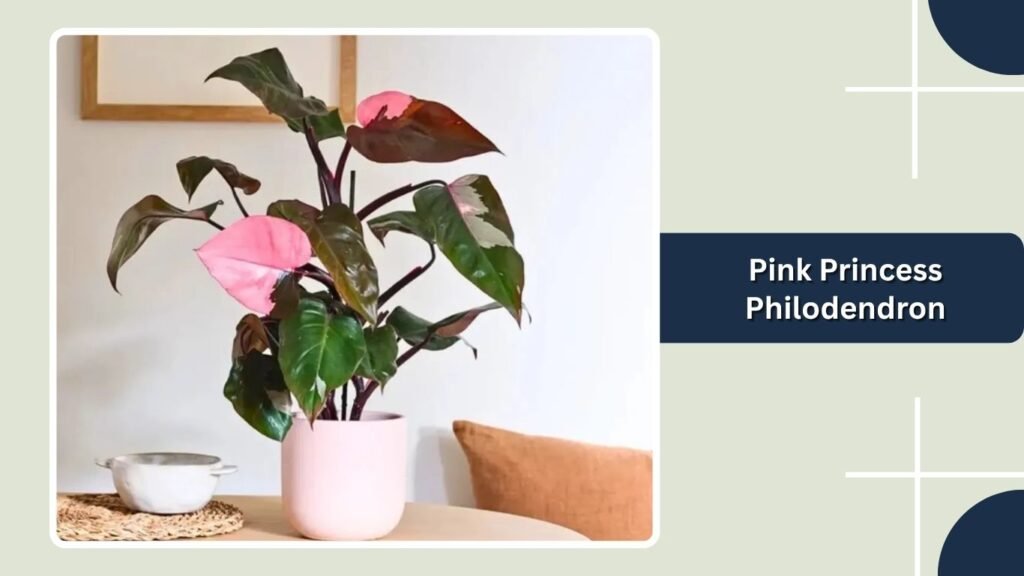
The Pink Princess Philodendron (Philodendron erubescens ‘Pink Princess’) is a striking indoor plant famous for its dramatic pink and dark green variegated foliage. Each leaf develops a unique combination of colors, making the plant highly decorative. Its climbing growth habit and unusual appearance make it a favorite among houseplant enthusiasts seeking a distinctive tropical addition to their indoor collections.
Identification
- Scientific Name: Philodendron erubescens ‘Pink Princess’
- Common Name: Pink Princess Philodendron
- Leaf Shape: Elongated heart-shaped leaves
- Leaf Color: Dark green or burgundy with pink patches
- Stem Color: Dark reddish purple or burgundy
- Plant Type: Variegated tropical climbing plant
- Growth Habit: Upright climbing with aerial roots
Light and Water Requirements
Pink Princess Philodendrons require bright, indirect sunlight for healthy growth and to support their colorful foliage. Insufficient light may contribute to weak growth, while intense direct sunlight can burn the leaves. Water when the top 1–2 inches of potting mix become dry. Well-draining soil helps protect the roots from excessive moisture.
Growth and Indoor Placement
This philodendron grows best in warm temperatures between 65°F and 85°F with moderate to high humidity. A moss pole or trellis encourages upright climbing growth. Position the plant near a bright window with filtered sunlight, allowing enough space for its colorful foliage to develop.
Maintenance and Propagation
Remove damaged leaves and provide occasional balanced fertilizer during the growing season. Pink variegation varies naturally between leaves and cannot be guaranteed through lighting alone. Propagate using stem cuttings with healthy nodes, preferably from sections showing desirable variegation. Avoid overwatering and monitor for common pests such as spider mites and mealybugs.
6. White Princess Philodendron
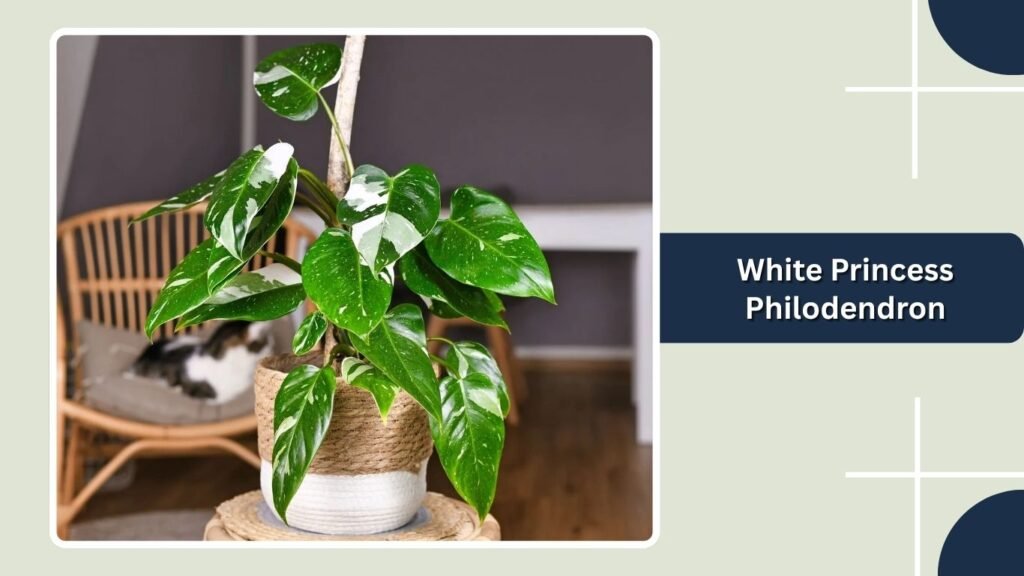
The White Princess Philodendron (Philodendron ‘White Princess’) is an elegant tropical houseplant admired for its glossy green leaves decorated with striking white variegation. Some plants also develop subtle pink markings on their foliage and stems. Its graceful appearance and climbing growth habit make it a beautiful addition to indoor plant collections, especially in spaces featuring bright, filtered natural light.
Identification
- Scientific Name: Philodendron ‘White Princess’
- Common Name: White Princess Philodendron
- Leaf Shape: Narrow oval to elongated heart-shaped
- Leaf Color: Deep green with white or cream variegation
- Stem Color: Green with pink or white markings
- Plant Type: Evergreen variegated tropical plant
- Growth Habit: Upright climbing with aerial roots
Light and Water Requirements
White Princess Philodendrons prefer bright, indirect sunlight to support healthy growth and attractive variegation. Direct afternoon sunlight can scorch their white leaf sections. Water when the upper 1–2 inches of soil are dry. A well-draining mixture containing potting soil, orchid bark, and perlite provides suitable growing conditions.
Growth and Indoor Placement
This plant thrives in warm indoor temperatures between 65°F and 85°F. Moderate to high humidity supports healthy leaf development, particularly during dry seasons. Its climbing stems benefit from a moss pole or trellis, making it an attractive option for bright living rooms, bedrooms, and indoor plant displays.
Maintenance and Propagation
Regularly inspect the foliage for damaged leaves, pests, or changes in growth. Use a diluted balanced fertilizer during active growth and avoid excessive feeding. Propagate using stem cuttings with healthy nodes. Because white variegation can vary between new leaves, choose cuttings from stems displaying the desired color pattern.
7. White Knight Philodendron
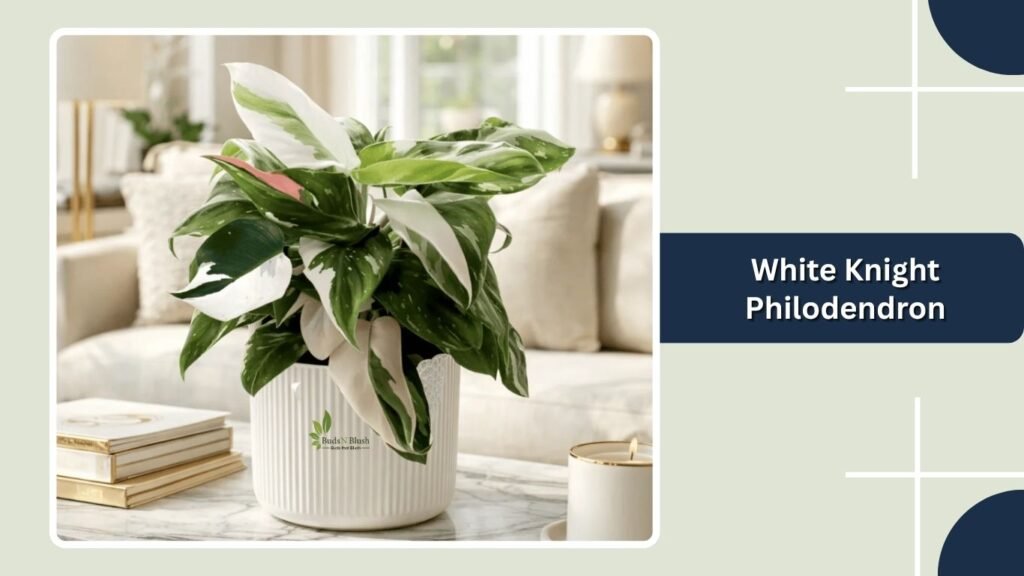
The White Knight Philodendron (Philodendron ‘White Knight’) is a stunning tropical houseplant recognized for its dramatic green and white variegated leaves. Its deep burgundy stems create a beautiful contrast against the colorful foliage. This climbing philodendron is particularly attractive in indoor plant collections and makes an elegant decorative addition to living rooms, offices, and other bright indoor spaces.
Identification
- Scientific Name: Philodendron ‘White Knight’
- Common Name: White Knight Philodendron
- Leaf Shape: Oval to elongated with pointed tips
- Leaf Color: Deep green with irregular white or cream patches
- Stem Color: Dark burgundy or reddish purple
- Plant Type: Evergreen tropical climbing plant
- Growth Habit: Upright climbing with aerial roots
Light and Water Requirements
White Knight Philodendrons prefer bright, indirect sunlight to support healthy foliage and maintain attractive variegation. Excessive direct sunlight can scorch the white portions of their leaves. Water when the upper 1–2 inches of soil become dry. A loose, well-draining potting mixture containing orchid bark and perlite helps prevent root rot.
Growth and Indoor Placement
This philodendron grows best in temperatures between 65°F and 85°F with moderate to high humidity. Its climbing stems benefit from a moss pole or trellis, encouraging larger leaves and stronger growth. Position the plant near a bright window with filtered sunlight.
Maintenance and Propagation
Regularly remove damaged leaves and inspect the foliage for common houseplant pests. Apply diluted balanced fertilizer occasionally during active growth. Propagate using stem cuttings containing at least one healthy node. Select cuttings with desirable variegation and provide warm, humid conditions while roots develop.
8. White Wizard Philodendron

The White Wizard Philodendron (Philodendron ‘White Wizard’) is an eye-catching indoor plant valued for its glossy green leaves featuring striking white variegation. Unlike the White Knight, this variety typically develops green stems with white markings rather than dark burgundy stems. Its climbing growth habit and impressive foliage make it an excellent choice for tropical-themed indoor arrangements and decorative plant collections.
Identification
- Scientific Name: Philodendron ‘White Wizard’
- Common Name: White Wizard Philodendron
- Leaf Shape: Broad oval to heart-shaped leaves
- Leaf Color: Dark green with irregular white or cream patches
- Stem Color: Green with occasional white streaks
- Plant Type: Evergreen variegated tropical plant
- Growth Habit: Climbing with aerial roots
Light and Water Requirements
White Wizard Philodendrons grow best in bright, indirect light, which supports healthy foliage development. Strong direct sunlight can burn the delicate white leaf sections. Water when the top 1–2 inches of soil feel dry. Use a well-draining potting mix that retains some moisture without becoming waterlogged.
Growth and Indoor Placement
This tropical plant prefers warm temperatures between 65°F and 85°F. Moderate to high humidity encourages healthy leaf development. Providing a moss pole supports natural climbing and may encourage larger foliage. Place the plant in a bright living room, bedroom, or indoor plant display with filtered sunlight.
Maintenance and Propagation
Remove yellowing or damaged leaves as necessary and gently wipe dust from the foliage. Feed occasionally with diluted houseplant fertilizer during spring and summer. Propagation works best through stem cuttings containing healthy nodes. White variegation can vary between leaves, so select suitable stem sections when propagating.
9. Birkin Philodendron
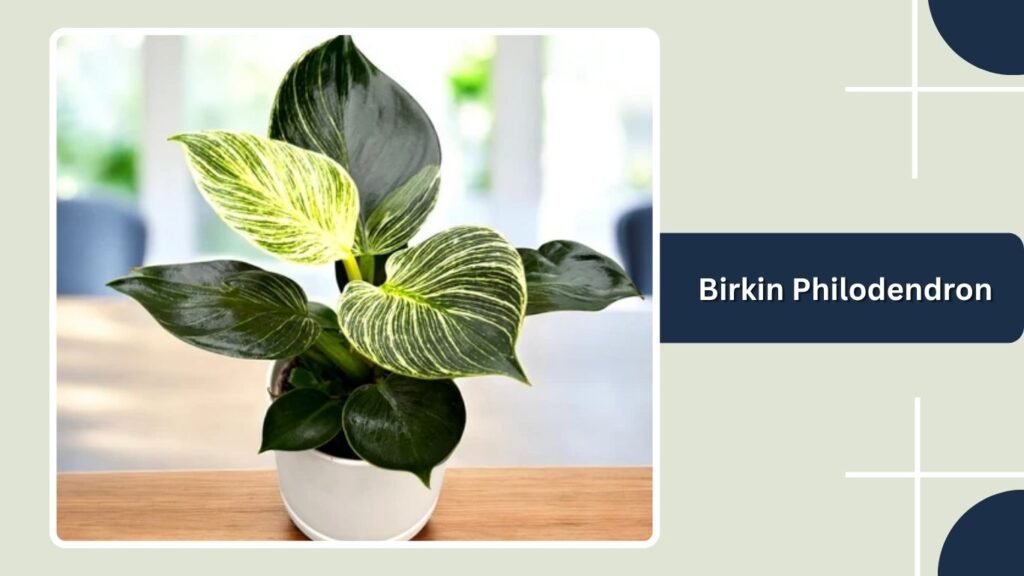
The Birkin Philodendron (Philodendron ‘Birkin’) is a distinctive indoor plant admired for its glossy dark green leaves decorated with delicate creamy-white pinstripes. Unlike climbing philodendrons, this variety develops a compact, upright growth habit. Its attractive leaf patterns and manageable size make it particularly suitable for desks, tabletops, bookshelves, and small indoor spaces.
Identification
- Scientific Name: Philodendron ‘Birkin’
- Common Name: Birkin Philodendron
- Leaf Shape: Broad oval leaves with pointed tips
- Leaf Color: Dark green with creamy-white pinstripes
- Leaf Texture: Smooth, glossy, and slightly leathery
- Plant Type: Evergreen tropical houseplant
- Growth Habit: Compact, upright, and self-supporting
- Mature Size: Approximately 2–3 feet tall indoors
Light and Water Requirements
Birkin Philodendrons prefer medium to bright, indirect sunlight. Adequate lighting supports healthy leaf development, although the striped patterns may vary naturally. Avoid intense afternoon sunlight, which can damage the foliage. Water when the top 1–2 inches of potting mix become dry, ensuring excess water drains completely.
Growth and Indoor Placement
This compact philodendron thrives in temperatures between 65°F and 85°F with moderate humidity. Its upright shape makes it an attractive choice for tabletops, plant stands, and office environments. Unlike trailing varieties, it generally does not require a moss pole or climbing support.
Maintenance and Propagation
Remove damaged or aging leaves to maintain its appearance. Apply a balanced houseplant fertilizer sparingly during the growing season. Birkin Philodendrons occasionally produce leaves with reddish markings or reduced pinstriping because their variegation can be unstable. Propagation is possible by separating rooted offshoots or through suitable stem sections with nodes, although its compact growth makes propagation more challenging than with trailing varieties.
10. Prince of Orange Philodendron
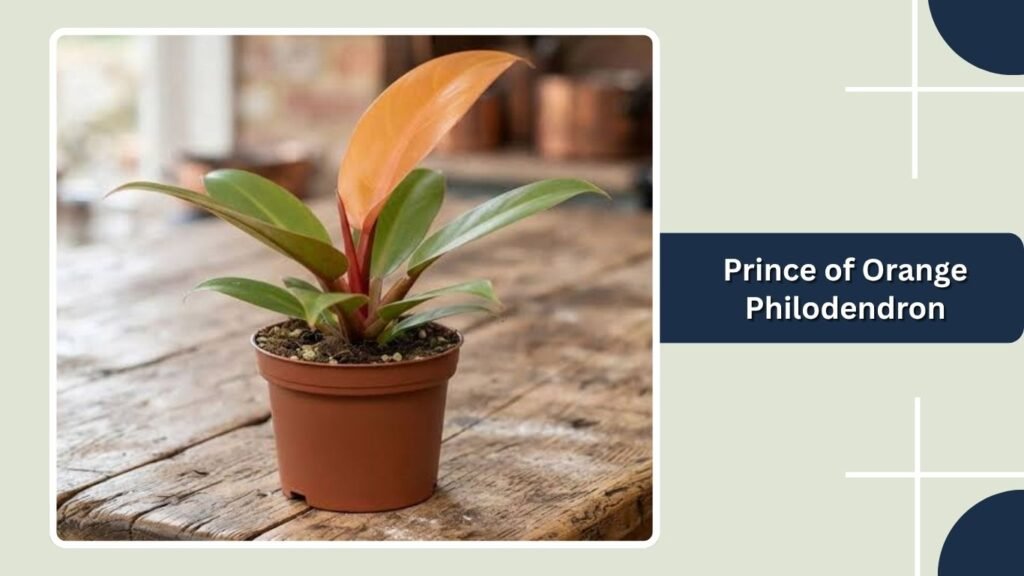
The Prince of Orange Philodendron (Philodendron ‘Prince of Orange’) is a colorful tropical houseplant famous for its brilliant orange new leaves. As the foliage matures, its color gradually changes through copper and yellow-green shades before becoming green. Its compact, upright growth habit and constantly changing leaf colors make it a beautiful addition to indoor spaces.
Identification
- Scientific Name: Philodendron ‘Prince of Orange’
- Common Name: Prince of Orange Philodendron
- Leaf Shape: Broad, elongated oval leaves
- Leaf Color: Orange or copper when young, gradually turning green
- Leaf Texture: Smooth, glossy, and leathery
- Plant Type: Evergreen tropical houseplant
- Growth Habit: Upright and self-heading
- Mature Size: Commonly 2–3 feet tall indoors
Light and Water Requirements
Prince of Orange Philodendrons thrive in bright, indirect sunlight, which supports vigorous growth and colorful new foliage. Avoid prolonged exposure to harsh direct sunlight. Water when the upper 1–2 inches of soil become dry. A well-draining potting mixture containing perlite and orchid bark provides suitable root conditions.
Growth and Indoor Placement
This variety grows comfortably in temperatures between 65°F and 85°F. Moderate to high humidity helps promote healthy leaf development. Because it develops a compact, self-supporting form, it works beautifully in decorative floor planters, tabletop containers, and bright indoor corners.
Maintenance and Propagation
Remove old or damaged leaves and occasionally rotate the pot to encourage balanced growth. Feed with diluted balanced fertilizer during spring and summer. Unlike climbing philodendrons, Prince of Orange is not easily propagated through ordinary vine cuttings. Propagation generally requires suitable stem tissue or rooted offsets when available. Keep the foliage clean to display its vibrant colors.
11. Moonlight Philodendron

The Moonlight Philodendron (Philodendron ‘Moonlight’) is an attractive tropical houseplant celebrated for its luminous lime-green and yellow-green foliage. New leaves often emerge in brilliant chartreuse shades before gradually developing deeper green tones. Its compact, upright growth habit and bright coloration make it an excellent ornamental plant for indoor gardens, offices, and modern living spaces.
Identification
- Scientific Name: Philodendron ‘Moonlight’
- Common Name: Moonlight Philodendron
- Leaf Shape: Broad, elongated oval leaves with pointed tips
- Leaf Color: Bright lime green or yellow-green, deepening with maturity
- Leaf Texture: Smooth, glossy, and slightly leathery
- Plant Type: Evergreen tropical houseplant
- Growth Habit: Compact, upright, and self-heading
- Mature Size: Commonly around 2–3 feet tall indoors
Light and Water Requirements
Moonlight Philodendrons prefer bright, indirect sunlight to maintain healthy growth and vibrant leaf coloration. Although they tolerate moderate lighting, insufficient light may slow their development. Water when the top 1–2 inches of soil feel dry. A well-draining potting mixture helps prevent excess moisture around the roots.
Growth and Indoor Placement
This philodendron thrives in temperatures between 65°F and 85°F with moderate humidity. Its upright growth habit makes it suitable for decorative containers, tabletop displays, and indoor plant arrangements. Place it near an east-facing window or another location receiving bright, filtered sunlight.
Maintenance and Propagation
Regularly remove damaged leaves and clean the foliage with a soft, damp cloth. Apply diluted balanced fertilizer occasionally during the active growing season. Moonlight Philodendrons generally maintain a compact structure without extensive pruning. Propagation is possible through suitable stem sections or rooted offsets when available, but it is less straightforward than propagating climbing philodendrons.
12. Rojo Congo Philodendron
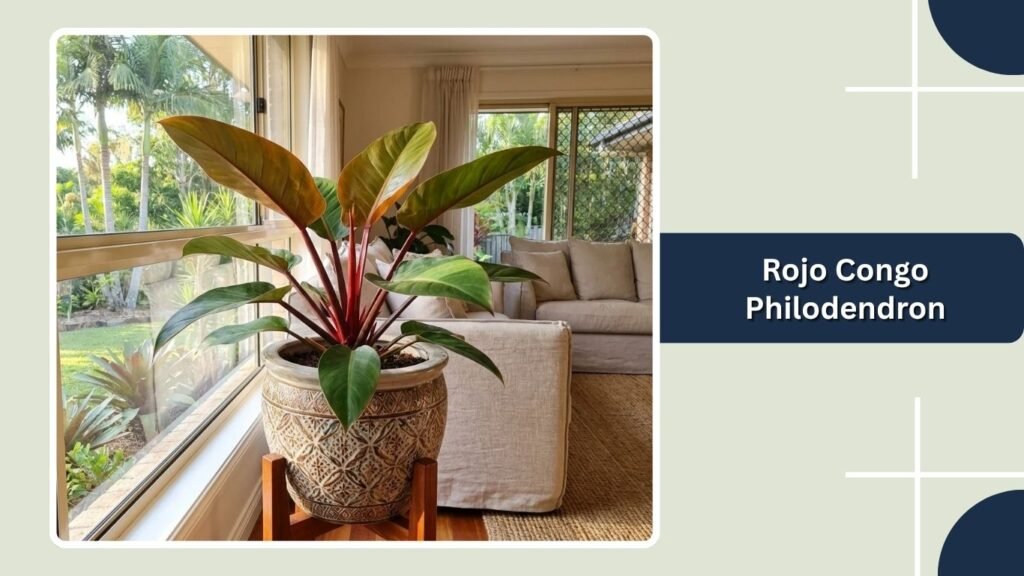
The Rojo Congo Philodendron (Philodendron ‘Rojo Congo’) is an impressive tropical houseplant known for its glossy green foliage, reddish stems, and copper-red new leaves. Unlike trailing varieties, this philodendron develops a strong, upright growth habit. Its bold foliage and attractive coloring make it a beautiful choice for indoor decoration, particularly in living rooms, offices, and spacious indoor plant collections.
Identification
- Scientific Name: Philodendron ‘Rojo Congo’
- Common Name: Rojo Congo Philodendron
- Leaf Shape: Broad, elongated oval with pointed tips
- Leaf Color: Copper-red when young, gradually turning dark green
- Stem Color: Deep red or burgundy
- Leaf Texture: Smooth, glossy, and leathery
- Plant Type: Evergreen tropical houseplant
- Growth Habit: Upright and self-heading
Light and Water Requirements
Rojo Congo Philodendrons grow best in bright, indirect sunlight but can tolerate moderate lighting conditions. Avoid prolonged exposure to intense direct sunlight, which may scorch the leaves. Water when the upper 1–2 inches of soil feel dry. Use a loose, well-draining potting mixture to prevent excess moisture around the roots.
Growth and Indoor Placement
This philodendron thrives in temperatures between 65°F and 85°F with moderate humidity. Its broad leaves and upright structure make it suitable for decorative floor planters and spacious indoor corners. Position the plant near a window that receives filtered sunlight, providing enough room for its foliage to spread naturally.
Maintenance and Propagation
Remove damaged or yellowing leaves to maintain an attractive appearance. Occasionally wipe the foliage with a damp cloth to remove dust. Apply diluted balanced fertilizer during active growth. Propagation is possible through suitable stem divisions or rooted offsets, although this self-heading variety is more challenging to propagate than climbing philodendrons.
13. Black Cardinal Philodendron
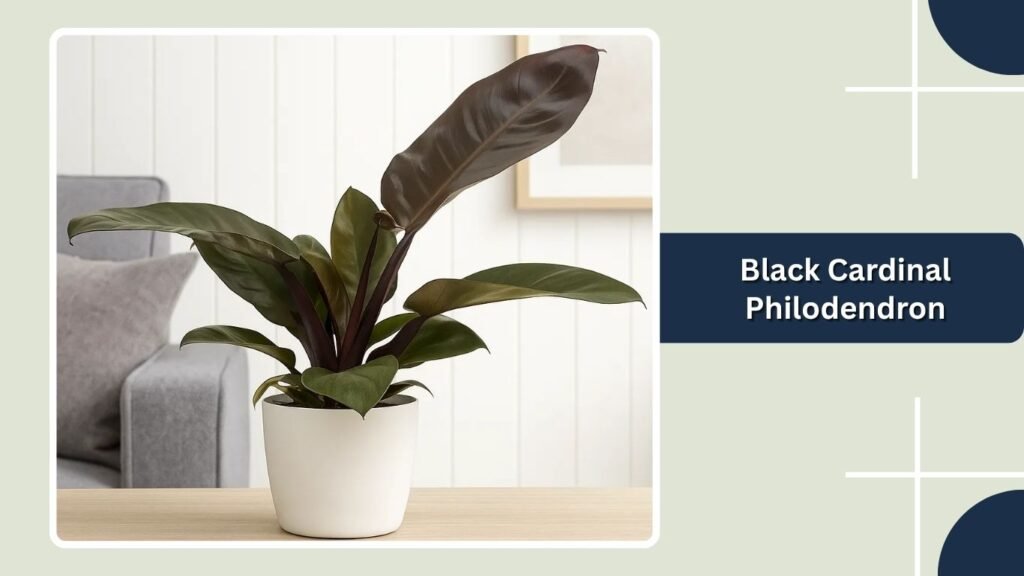
The Black Cardinal Philodendron (Philodendron ‘Black Cardinal’) is a dramatic indoor houseplant admired for its exceptionally dark foliage. New leaves often emerge in reddish-bronze shades before developing deep burgundy, brown, or nearly black coloring. Its compact, upright growth habit and glossy leaves make it an excellent ornamental plant for modern interiors and tropical houseplant collections.
Identification
- Scientific Name: Philodendron ‘Black Cardinal’
- Common Name: Black Cardinal Philodendron
- Leaf Shape: Broad oval with pointed tips
- Leaf Color: Reddish bronze when young, becoming dark burgundy or nearly black
- Leaf Texture: Thick, smooth, and glossy
- Stem Color: Dark reddish purple
- Plant Type: Evergreen tropical houseplant
- Growth Habit: Upright, compact, and self-heading
- Mature Size: Commonly around 2–3 feet tall indoors
Light and Water Requirements
Black Cardinal Philodendrons prefer medium to bright, indirect sunlight. Sufficient lighting encourages healthy growth and supports the plant’s naturally rich foliage colors. Excessive direct sunlight can damage the leaves. Water when the top 1–2 inches of potting mix become dry, ensuring the container drains properly.
Growth and Indoor Placement
This variety thrives in warm indoor temperatures between 65°F and 85°F. Moderate humidity is generally suitable, although slightly higher humidity can encourage healthy leaf development. Its compact, upright form makes it an attractive option for plant stands, side tables, and decorative floor containers.
Maintenance and Propagation
Regularly clean the glossy leaves to remove dust and improve their appearance. Remove aging or damaged foliage when necessary. Apply balanced fertilizer sparingly during spring and summer. Propagation is usually performed using suitable stem sections or rooted offsets when available. Avoid excessive watering, as consistently saturated soil can damage the roots.
14. Silver Sword Philodendron

The Silver Sword Philodendron (Philodendron hastatum) is an elegant tropical climbing plant recognized for its metallic silver-blue foliage. Its distinctive leaves resemble elongated sword blades, creating an attractive contrast with traditional green houseplants. Native to Brazil, this philodendron develops climbing vines that benefit from vertical support, making it an excellent choice for indoor plant enthusiasts seeking unusual foliage.
Identification
- Scientific Name: Philodendron hastatum
- Common Name: Silver Sword Philodendron
- Leaf Shape: Elongated, sword-shaped or arrow-shaped
- Leaf Color: Silvery blue-green with a metallic appearance
- Leaf Texture: Smooth and slightly glossy
- Plant Type: Evergreen tropical climbing vine
- Growth Habit: Upright climbing with aerial roots
- Mature Size: Can reach several feet tall indoors with support
Light and Water Requirements
Silver Sword Philodendrons thrive in bright, indirect sunlight, which promotes healthy growth and attractive foliage. Avoid harsh afternoon sunlight because it can scorch their leaves. Water when the upper 1–2 inches of soil become dry. A chunky, well-draining potting mix containing bark and perlite allows moisture to drain while maintaining root aeration.
Growth and Indoor Placement
This climbing philodendron prefers temperatures between 65°F and 85°F with moderate to high humidity. A moss pole or trellis provides essential climbing support for developing larger, more mature leaves. Position it near a bright window with filtered sunlight to highlight its beautiful metallic foliage.
Maintenance and Propagation
Prune excessively long stems to maintain the plant’s shape and encourage balanced growth. Remove damaged leaves and feed occasionally during spring and summer. Silver Sword Philodendrons propagate readily through stem cuttings containing at least one healthy node. Root the cuttings in water or moist potting mix before transferring them to a permanent container.
15. Gloriosum Philodendron
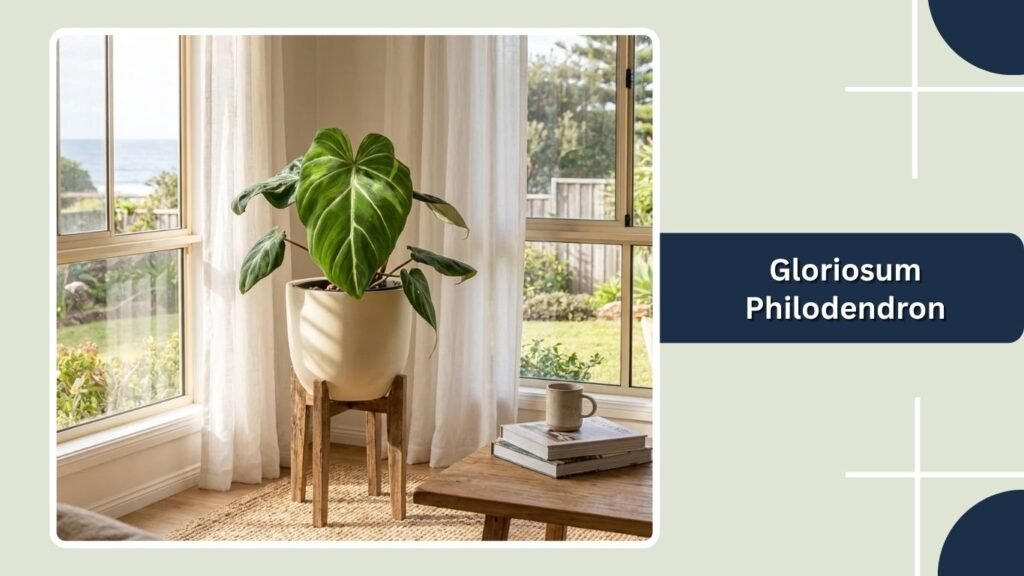
The Gloriosum Philodendron (Philodendron gloriosum) is a beautiful tropical houseplant admired for its oversized, velvety heart-shaped leaves and prominent pale veins. Unlike most climbing philodendrons, this species grows horizontally along the soil surface. Its dramatic foliage and unique creeping growth habit make it especially appealing to indoor plant collectors and enthusiasts seeking an elegant tropical display.
Identification
- Scientific Name: Philodendron gloriosum
- Common Name: Gloriosum Philodendron
- Leaf Shape: Large, broad, heart-shaped leaves
- Leaf Color: Deep green with prominent pale white or silvery veins
- Leaf Texture: Soft and velvety
- Plant Type: Evergreen tropical perennial
- Growth Habit: Horizontal creeping or crawling
- Mature Size: Individual mature leaves may exceed 2 feet under favorable conditions
Light and Water Requirements
Gloriosum Philodendrons grow best in bright, indirect sunlight, although they tolerate moderate lighting. Intense direct sunlight can damage their delicate velvet-like foliage. Water when the upper inch or two of soil begins to dry. Use an airy potting mixture containing orchid bark, perlite, and moisture-retaining organic material.
Growth and Indoor Placement
This philodendron thrives in temperatures between 65°F and 85°F with moderate to high humidity. Unlike climbing varieties, it benefits from a wide, elongated planter that accommodates its horizontally growing stem. Place it in a bright indoor location with filtered sunlight and adequate space for its large leaves.
Maintenance and Propagation
Remove damaged foliage carefully and avoid excessive handling of the velvety leaves. Apply diluted balanced fertilizer during active growth to support leaf development. Propagation is possible through rhizome or stem sections containing healthy nodes. Keep the growing stem close to the soil surface rather than burying it deeply, as improper planting can encourage rot.
FAQs
1. Which Philodendron is best for beginners?
The Heartleaf Philodendron is one of the best varieties for beginners because it tolerates moderate lighting, adapts to typical indoor humidity, and requires minimal maintenance. Brasil, Lemon Lime, and Moonlight Philodendrons are also good options for indoor growing.
2. Do Philodendrons need direct sunlight?
Most indoor Philodendrons prefer bright, indirect sunlight rather than prolonged direct exposure. Strong afternoon sunlight can scorch their leaves, especially variegated varieties. Some types tolerate lower light, but their growth may slow significantly.
3. How often should I water indoor Philodendrons?
Most Philodendrons need watering when the upper 1–2 inches of soil feel dry. The actual frequency depends on temperature, humidity, pot size, and lighting conditions. Always check soil moisture before watering and avoid leaving the roots in standing water.
4. Are Philodendrons toxic to cats and dogs?
Yes. Philodendrons contain insoluble calcium oxalate crystals that can cause mouth irritation, drooling, vomiting, and difficulty swallowing when chewed or swallowed. Keep these plants away from pets and young children. Contact a veterinarian if your pet eats any part of the plant.
5. Can Philodendrons grow indoors without a moss pole?
Yes. Many Philodendrons grow successfully without climbing supports. Heartleaf and Brasil Philodendrons can trail from hanging baskets, while Birkin and Moonlight varieties grow upright naturally. However, climbing types such as Silver Sword benefit from moss poles, while Gloriosum prefers a wide planter for horizontal growth.