
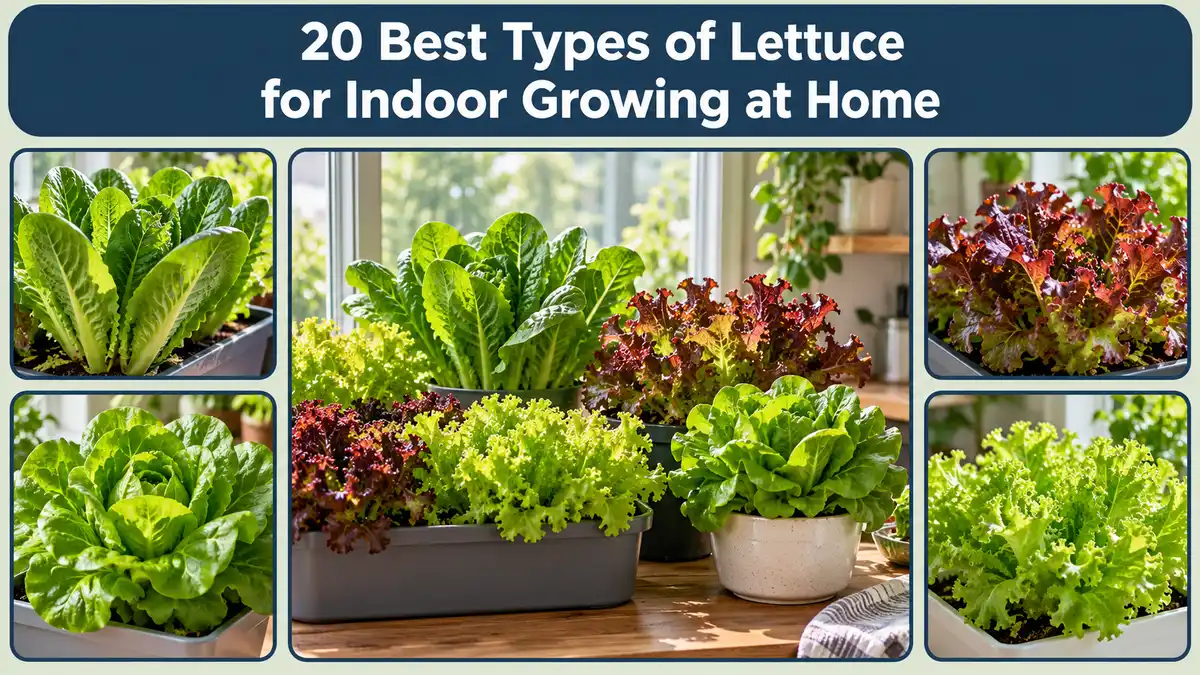
Growing lettuce indoors is an easy and rewarding way to enjoy fresh, healthy greens throughout the year. From Butterhead and Romaine to Oakleaf and Looseleaf varieties, there are many types of lettuce suitable for indoor growing. These leafy vegetables grow well in containers, hydroponic systems, and under artificial grow lights. Whether you have a small windowsill or a dedicated indoor garden, these 20 lettuce varieties offer delicious flavors, attractive foliage, and convenient harvesting options.
1. Butterhead Lettuce

Butterhead Lettuce is one of the best lettuce varieties for indoor growing, known for its soft, tender leaves and mild, buttery flavor. This popular leafy vegetable forms loose, rounded heads and grows well in containers, indoor gardens, and hydroponic systems. Its compact size, relatively quick growth, and delicious taste make it an excellent choice for beginners who want to harvest fresh lettuce at home.
Identification and Characteristics
- Scientific Name: Lactuca sativa (Butterhead Group)
- Plant Type: Annual leafy vegetable
- Leaf Color: Light green to deep green
- Leaf Shape: Broad, rounded, soft, slightly cupped leaves
- Mature Height: 6–12 inches
- Growth Habit: Compact, loose-headed growth
- Harvest Time: Approximately 45–60 days from sowing
- Special Feature: Tender leaves with a mild, buttery texture
Ideal Indoor Growing Conditions
Butterhead Lettuce thrives in cool temperatures between 60–70°F and prefers bright, consistent lighting. Place it near a sunny window or provide 12–16 hours of artificial grow light daily. Use nutrient-rich, well-draining potting soil and a container with drainage holes. Maintain adequate airflow and avoid excessive heat, which can cause premature bolting and bitter leaves.
Watering and Maintenance Tips
Keep the soil consistently moist but never waterlogged. Water gently around the base of the plant to prevent damage to its delicate leaves. Remove yellowing or damaged foliage regularly to maintain healthy growth. Apply diluted liquid fertilizer occasionally during active growth. Harvest the outer leaves as needed or cut the entire head when mature for fresh, homegrown lettuce.
2. Romaine Lettuce
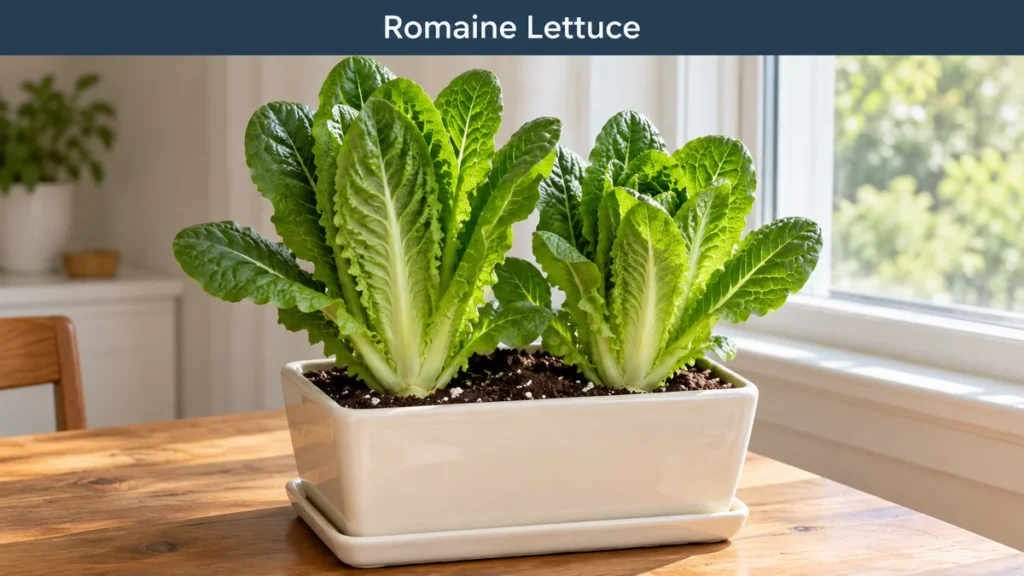
Romaine Lettuce is a popular leafy vegetable known for its crisp texture, elongated leaves, and refreshing flavor. This nutritious lettuce variety grows well indoors when provided with sufficient light and cool temperatures. Its upright growth habit makes it suitable for containers, hydroponic systems, and indoor vegetable gardens. Romaine Lettuce is an excellent choice for fresh salads, sandwiches, and homemade wraps.
Identification and Characteristics
- Scientific Name: Lactuca sativa (Romaine Group)
- Plant Type: Annual leafy vegetable
- Leaf Color: Light green to dark green
- Leaf Shape: Long, upright leaves with thick central ribs
- Mature Height: 8–12 inches
- Growth Habit: Upright, elongated head formation
- Harvest Time: Approximately 60–75 days from sowing
- Special Feature: Crisp leaves with a crunchy texture
Ideal Indoor Growing Conditions
Romaine Lettuce grows best in cool temperatures between 60–70°F. Place containers near a bright window or provide 12–16 hours of artificial grow lighting daily. Use nutrient-rich, well-draining potting soil and containers at least 6–8 inches deep. Maintain good airflow and avoid excessive heat, which can encourage bolting and reduce leaf quality.
Watering and Maintenance Tips
Keep the soil consistently moist without allowing it to become waterlogged. Water around the base of the plant to protect the leaves from excessive moisture. Apply diluted liquid fertilizer occasionally to support healthy growth. Remove yellowing leaves and harvest outer leaves when they reach a usable size. For a full harvest, cut the mature head near its base.
3. Looseleaf Lettuce
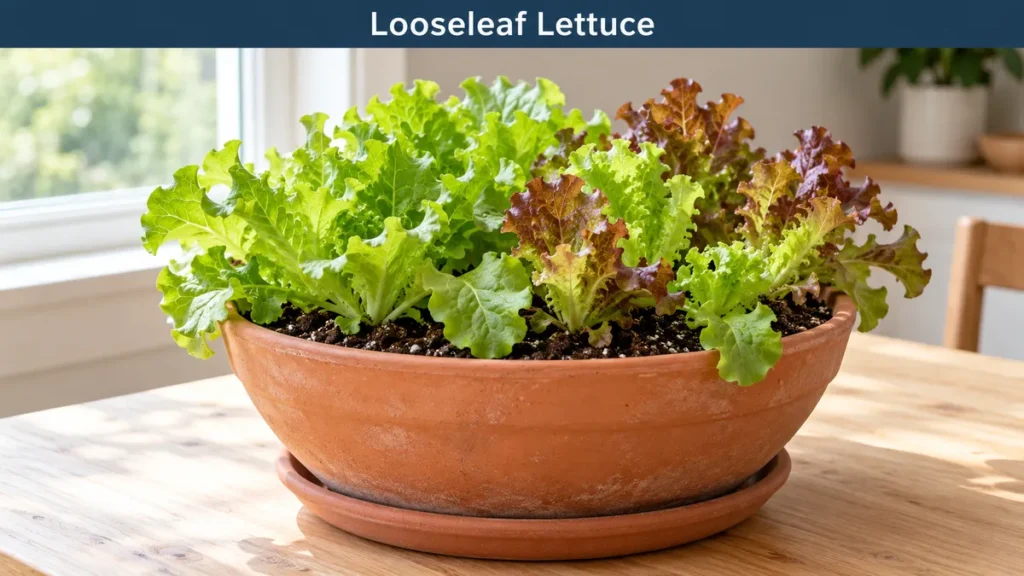
Looseleaf Lettuce is one of the easiest lettuce types to grow indoors because of its fast growth and continuous harvesting potential. Unlike heading varieties, it produces loose clusters of tender leaves that can be picked individually. Its compact growth, colorful foliage, and adaptability to containers make it ideal for beginners and small indoor gardens.
Identification and Characteristics
- Scientific Name: Lactuca sativa (Leaf Group)
- Plant Type: Annual leafy vegetable
- Leaf Color: Green, red, or reddish-purple
- Leaf Shape: Soft, broad, smooth, or ruffled leaves
- Mature Height: 6–10 inches
- Growth Habit: Loose, open clusters of leaves
- Harvest Time: Approximately 30–50 days from sowing
- Special Feature: Supports repeated harvesting of outer leaves
Ideal Indoor Growing Conditions
Looseleaf Lettuce thrives in temperatures between 60–70°F and grows successfully under bright artificial lighting. Provide 12–16 hours of light daily using full-spectrum LED grow lights. Use lightweight, nutrient-rich potting soil and containers with adequate drainage. This lettuce variety grows well in shallow planters, making it especially suitable for windowsills and compact indoor gardening spaces.
Watering and Maintenance Tips
Maintain consistently moist soil to encourage tender leaf development. Water gently when the soil surface begins to feel dry, avoiding excessive moisture around the roots. Feed occasionally with diluted balanced fertilizer. Harvest mature outer leaves while allowing the central growing point to develop new foliage. Remove damaged leaves to maintain plant health.
4. Red Leaf Lettuce
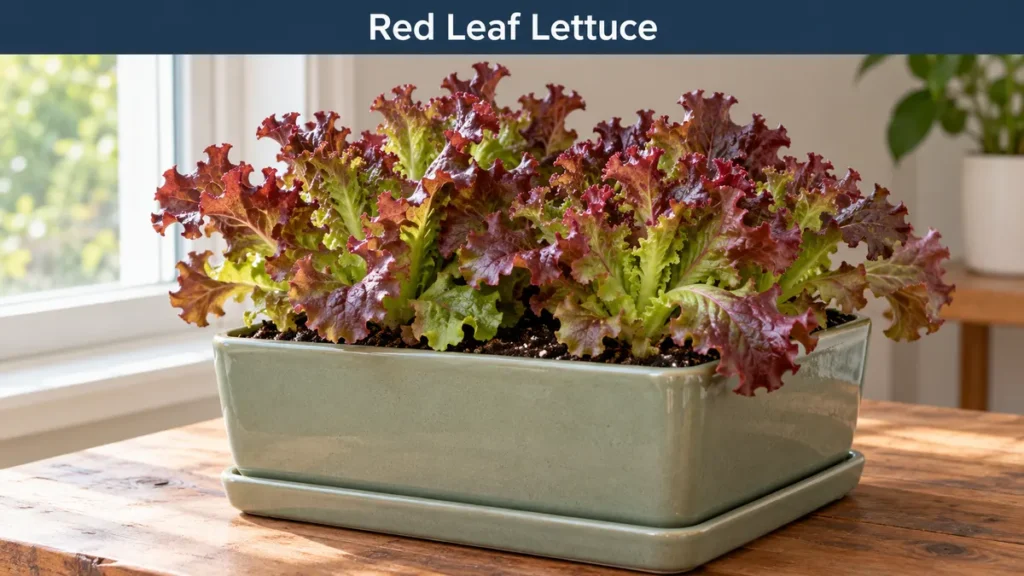
Red Leaf Lettuce is an attractive leafy vegetable recognized for its reddish-purple foliage and mild, slightly sweet flavor. Its colorful leaves make it a beautiful addition to indoor vegetable gardens while providing fresh ingredients for salads and sandwiches. This fast-growing lettuce variety performs well in containers and hydroponic systems when supplied with appropriate lighting and consistent moisture.
Identification and Characteristics
- Scientific Name: Lactuca sativa (Leaf Group)
- Plant Type: Annual leafy vegetable
- Leaf Color: Red, burgundy, and green
- Leaf Shape: Broad, tender, slightly ruffled leaves
- Mature Height: 6–12 inches
- Growth Habit: Loose, open leaf formation
- Harvest Time: Approximately 30–50 days from sowing
- Special Feature: Colorful foliage containing red anthocyanin pigments
Ideal Indoor Growing Conditions
Red Leaf Lettuce grows best in cool temperatures between 60–70°F. Provide 12–16 hours of bright artificial lighting daily to encourage healthy growth and vibrant leaf coloration. Use well-draining, nutrient-rich potting soil and containers with drainage holes. Adequate airflow helps reduce fungal problems, while consistent lighting supports stronger leaf development.
Watering and Maintenance Tips
Keep the soil evenly moist but avoid standing water around the roots. Water carefully near the base to prevent unnecessary leaf wetness. Apply diluted liquid fertilizer occasionally during active growth. Harvest outer leaves when they become large enough to use, leaving the center intact for continued production. Remove yellowing or damaged leaves regularly.
5. Green Leaf Lettuce
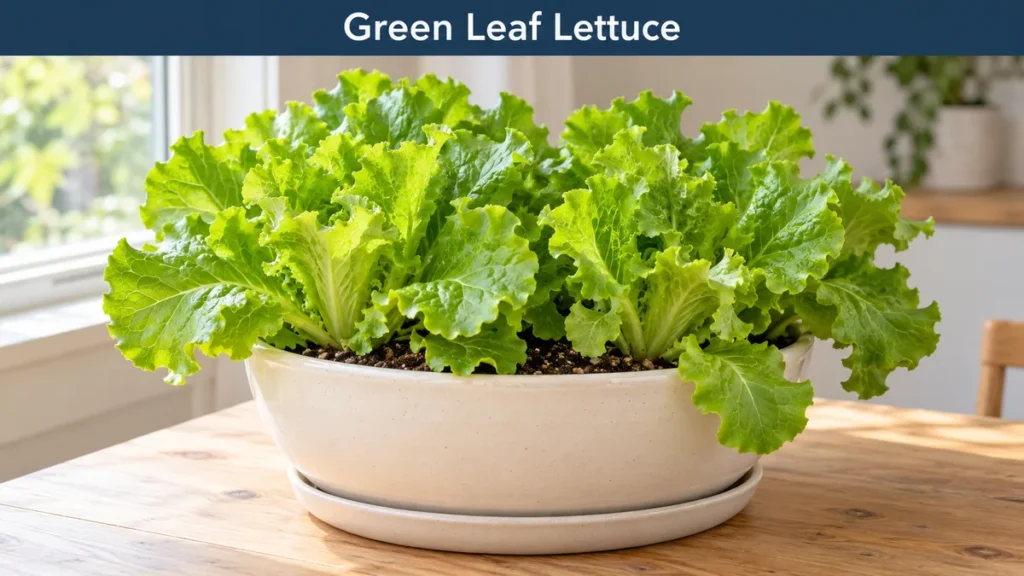
Green Leaf Lettuce is a versatile leafy vegetable valued for its tender texture, mild flavor, and easy-growing nature. This popular lettuce type produces loose clusters of bright green leaves rather than tightly packed heads. Its quick growth and ability to provide repeated harvests make it an excellent choice for indoor containers, kitchen gardens, and hydroponic setups.
Identification and Characteristics
- Scientific Name: Lactuca sativa (Leaf Group)
- Plant Type: Annual leafy vegetable
- Leaf Color: Bright green to medium green
- Leaf Shape: Broad, soft, slightly curled leaves
- Mature Height: 6–12 inches
- Growth Habit: Loose, spreading leaf clusters
- Harvest Time: Approximately 30–50 days from sowing
- Special Feature: Tender foliage suitable for repeated harvesting
Ideal Indoor Growing Conditions
Green Leaf Lettuce thrives in temperatures between 60–70°F and requires consistent bright lighting. Position containers near a sunny window or provide 12–16 hours of full-spectrum LED grow lighting daily. Use fertile, well-draining potting soil and containers at least 6 inches deep. Maintain proper spacing between plants to improve airflow and prevent overcrowding.
Watering and Maintenance Tips
Water Green Leaf Lettuce regularly to keep the soil consistently moist without becoming soggy. Check soil moisture frequently, especially when growing under artificial lighting. Apply diluted balanced fertilizer occasionally to encourage fresh leaf production. Harvest the outer leaves once they reach a suitable size, allowing younger central leaves to continue growing.
6. Oakleaf Lettuce
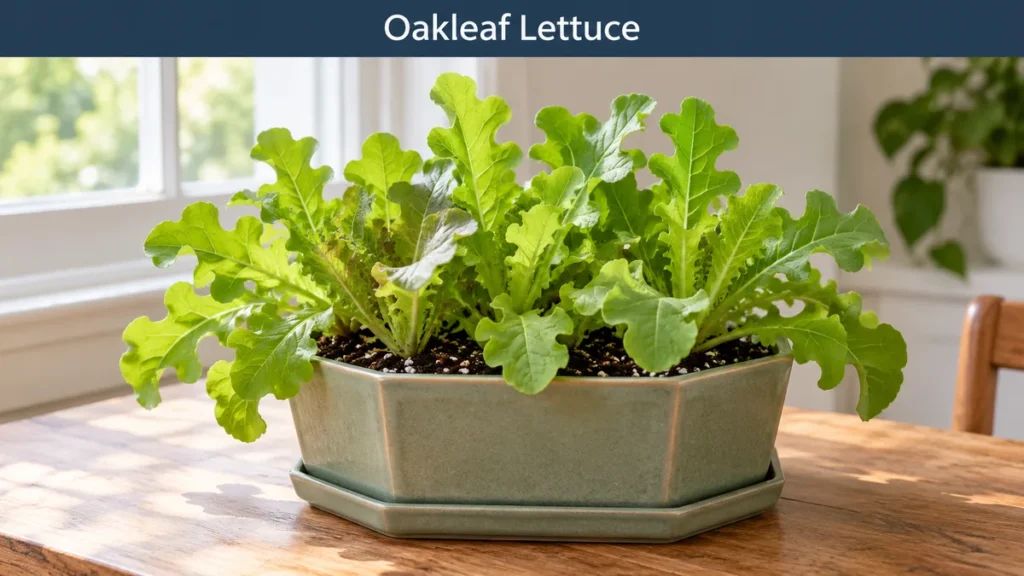
Oakleaf Lettuce is a distinctive leafy vegetable known for its deeply lobed leaves that resemble the shape of oak tree foliage. This tender lettuce variety has a mild, slightly sweet flavor and grows well in indoor containers. Its attractive appearance, compact growth habit, and quick harvesting potential make it a wonderful addition to home vegetable gardens.
Identification and Characteristics
- Scientific Name: Lactuca sativa (Leaf Group)
- Plant Type: Annual leafy vegetable
- Leaf Color: Light green, dark green, or reddish shades
- Leaf Shape: Deeply lobed, oak-shaped leaves
- Mature Height: 6–10 inches
- Growth Habit: Loose, compact rosette formation
- Harvest Time: Approximately 40–55 days from sowing
- Special Feature: Distinctive oak-shaped leaves with tender texture
Ideal Indoor Growing Conditions
Oakleaf Lettuce grows best in cool temperatures between 60–70°F. Place it near a bright window or provide 12–16 hours of artificial grow lighting daily. Use nutrient-rich, well-draining potting soil and containers with drainage holes. Maintain adequate spacing to encourage airflow and healthy foliage. Avoid excessive heat because high temperatures can cause bitter leaves and early bolting.
Watering and Maintenance Tips
Keep the soil evenly moist throughout the growing period. Water gently around the base to prevent unnecessary moisture accumulation on the foliage. Apply diluted liquid fertilizer occasionally to encourage healthy leaf production. Harvest mature outer leaves regularly while allowing the center to continue growing. Remove damaged foliage and monitor for common indoor pests.
7. Red Oakleaf Lettuce

Red Oakleaf Lettuce is an attractive leafy vegetable known for its deeply lobed, reddish-purple leaves and tender texture. This colorful lettuce variety adds visual appeal to indoor gardens while providing fresh ingredients for salads and sandwiches. Its compact growth, mild flavor, and ability to produce repeated harvests make it an excellent choice for indoor containers and hydroponic systems.
Identification and Characteristics
- Scientific Name: Lactuca sativa (Leaf Group)
- Plant Type: Annual leafy vegetable
- Leaf Color: Reddish-purple, burgundy, and green
- Leaf Shape: Deeply lobed, oak-shaped leaves
- Mature Height: 6–10 inches
- Growth Habit: Loose, compact rosette
- Harvest Time: Approximately 40–55 days from sowing
- Special Feature: Colorful foliage with tender, mildly sweet leaves
Ideal Indoor Growing Conditions
Red Oakleaf Lettuce grows best in cool temperatures between 60–70°F. Provide 12–16 hours of bright artificial lighting daily to maintain healthy growth and attractive leaf coloration. Use nutrient-rich, well-draining potting soil and containers with drainage holes. Maintain adequate spacing between plants to encourage airflow and prevent overcrowding.
Watering and Maintenance Tips
Keep the soil consistently moist without allowing excess water to accumulate around the roots. Water gently near the base to protect delicate foliage. Apply diluted liquid fertilizer occasionally during active growth. Harvest mature outer leaves while allowing younger central leaves to continue developing. Remove yellowing foliage regularly to maintain plant health.
8. Bibb Lettuce
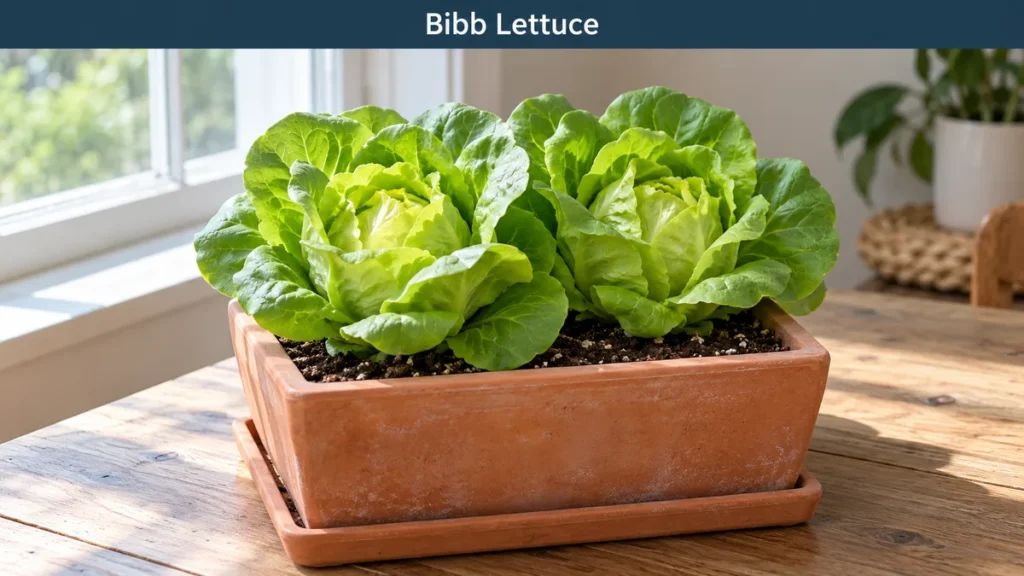
Bibb Lettuce is a popular butterhead variety valued for its soft, delicate leaves and mild, buttery flavor. This compact lettuce forms small, loosely arranged heads, making it particularly suitable for indoor containers and limited gardening spaces. Its tender texture and attractive appearance make it an excellent choice for fresh salads, sandwiches, and homemade lettuce wraps.
Identification and Characteristics
- Scientific Name: Lactuca sativa (Butterhead Group)
- Plant Type: Annual leafy vegetable
- Leaf Color: Light green to medium green
- Leaf Shape: Soft, rounded, slightly cupped leaves
- Mature Height: 6–10 inches
- Growth Habit: Compact, loosely formed heads
- Harvest Time: Approximately 45–60 days from sowing
- Special Feature: Tender leaves with a buttery texture
Ideal Indoor Growing Conditions
Bibb Lettuce thrives in cool temperatures between 60–70°F and requires consistent lighting for healthy leaf development. Place containers near a bright window or provide 12–16 hours of artificial grow lighting daily. Use fertile, well-draining potting soil and containers at least 6 inches deep. Maintain good airflow and avoid excessive heat, which can encourage premature bolting.
Watering and Maintenance Tips
Water Bibb Lettuce regularly to maintain evenly moist soil without creating soggy conditions. Check moisture levels frequently because its tender leaves can wilt during prolonged dryness. Apply diluted balanced fertilizer occasionally to encourage healthy growth. Harvest individual outer leaves when needed or cut the entire head once it reaches maturity. Remove damaged leaves to maintain freshness.
9. Boston Lettuce
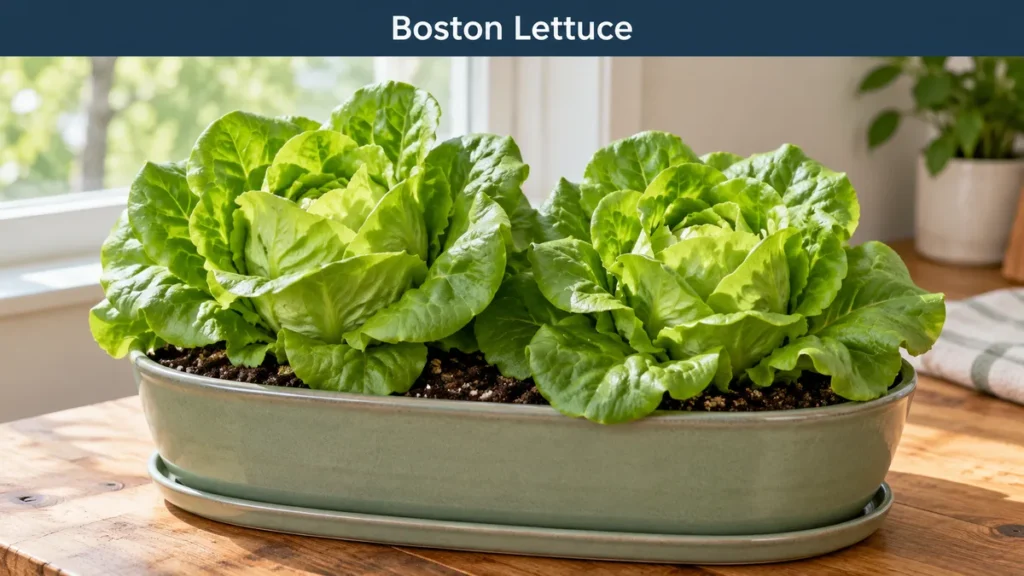
Boston Lettuce is a tender butterhead variety recognized for its broad, soft leaves and loosely formed rounded heads. Known for its mild, slightly sweet flavor, this lettuce is commonly used in fresh salads, wraps, and sandwiches. Its attractive foliage, manageable size, and relatively simple growing requirements make it a good option for indoor gardening.
Identification and Characteristics
- Scientific Name: Lactuca sativa (Butterhead Group)
- Plant Type: Annual leafy vegetable
- Leaf Color: Pale green to medium green
- Leaf Shape: Broad, rounded, smooth, slightly cupped leaves
- Mature Height: 6–12 inches
- Growth Habit: Loose, rounded head formation
- Harvest Time: Approximately 50–65 days from sowing
- Special Feature: Large, tender leaves with a delicate buttery flavor
Ideal Indoor Growing Conditions
Boston Lettuce grows best in temperatures between 60–70°F and prefers bright, consistent lighting. Provide 12–16 hours of artificial grow light daily or place it near a sufficiently bright window. Use nutrient-rich, well-draining potting soil and containers with adequate drainage. Allow enough room between plants for their broad leaves to spread naturally.
Watering and Maintenance Tips
Maintain consistently moist soil to support tender leaf development. Avoid overwatering because waterlogged conditions can damage the roots. Apply diluted liquid fertilizer occasionally during active growth. Remove yellowing leaves and inspect the plants regularly for pests. Harvest the entire head when mature or carefully pick outer leaves for smaller, ongoing harvests.
10. Buttercrunch Lettuce
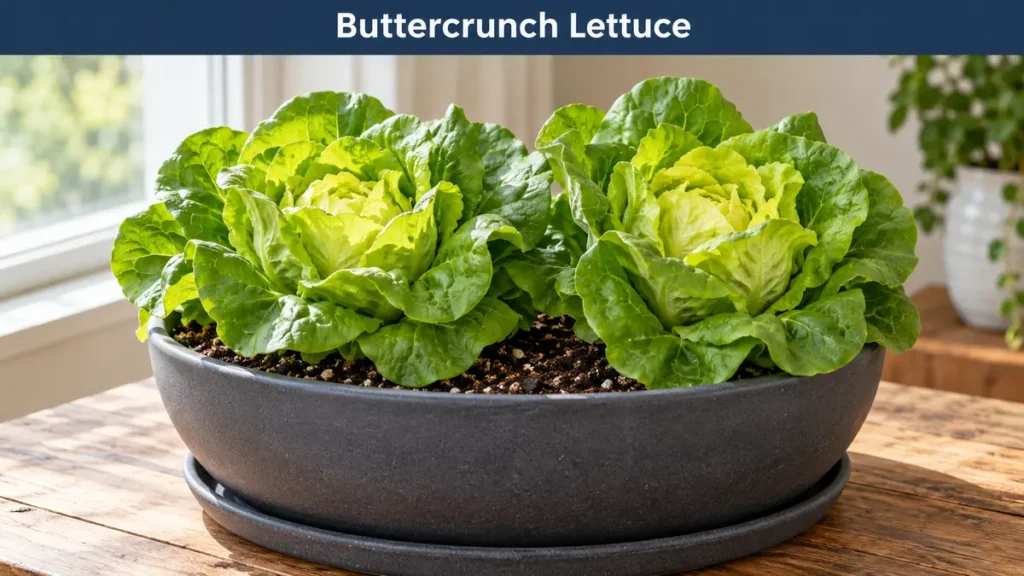
Buttercrunch Lettuce is a popular butterhead variety appreciated for its crisp inner leaves, tender outer foliage, and mild, sweet flavor. This compact lettuce grows well in indoor containers and hydroponic gardens, making it suitable for gardeners with limited space. Its relatively quick growth and attractive green leaves make it an excellent addition to home vegetable gardens.
Identification and Characteristics
- Scientific Name: Lactuca sativa ‘Buttercrunch’
- Plant Type: Annual leafy vegetable
- Leaf Color: Bright green to dark green
- Leaf Shape: Broad, rounded leaves with slightly crinkled edges
- Mature Height: 6–10 inches
- Growth Habit: Compact, loosely formed heads
- Harvest Time: Approximately 45–60 days from sowing
- Special Feature: Crisp inner leaves with tender, buttery outer foliage
Ideal Indoor Growing Conditions
Buttercrunch Lettuce thrives in temperatures between 60–70°F and requires bright lighting for healthy development. Place it near a sunny window or provide 12–16 hours of artificial grow lighting daily. Use fertile, well-draining potting soil and containers with drainage holes. Maintain proper spacing between plants to encourage airflow and allow the heads to develop fully.
Watering and Maintenance Tips
Keep the soil consistently moist but avoid excessive watering. Water around the base of the plant to reduce unnecessary moisture on the leaves. Apply diluted balanced fertilizer occasionally to support steady growth. Harvest outer leaves as needed or collect the entire head once it reaches maturity. Remove damaged foliage and monitor soil moisture regularly.
11. Little Gem Lettuce
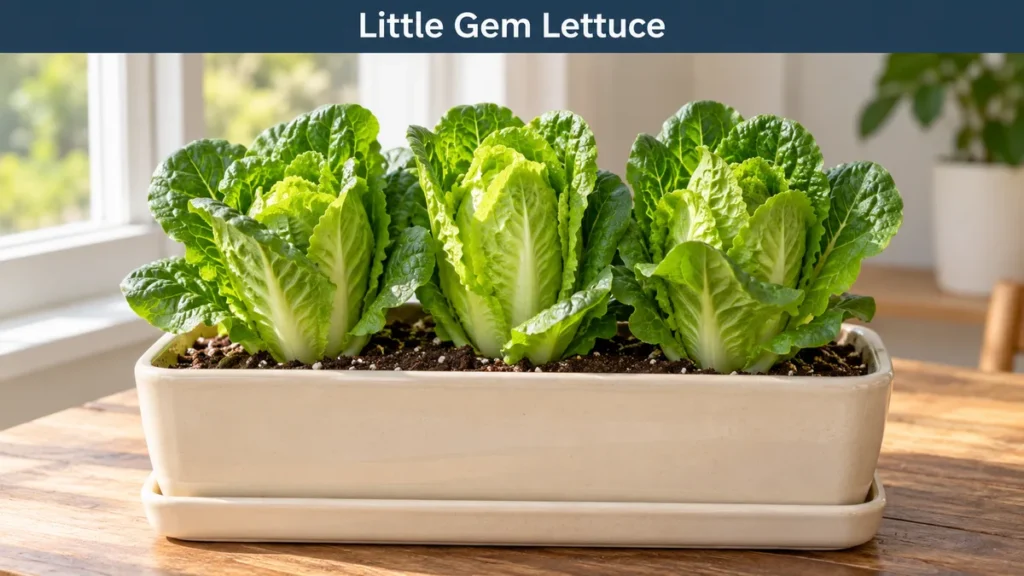
Little Gem Lettuce is a compact romaine-type lettuce known for its small, upright heads and crisp, sweet leaves. This miniature variety is particularly suitable for indoor growing because it requires less space than many traditional romaine types. Its crunchy texture, attractive appearance, and quick harvesting potential make it a favorite for small containers and indoor vegetable gardens.
Identification and Characteristics
- Scientific Name: Lactuca sativa (Romaine Group)
- Plant Type: Annual leafy vegetable
- Leaf Color: Bright green with pale green inner leaves
- Leaf Shape: Small, elongated leaves with firm central ribs
- Mature Height: 5–8 inches
- Growth Habit: Compact, upright head formation
- Harvest Time: Approximately 45–60 days from sowing
- Special Feature: Miniature romaine heads with crisp, sweet leaves
Ideal Indoor Growing Conditions
Little Gem Lettuce grows best in cool temperatures between 60–70°F. Provide 12–16 hours of bright artificial lighting daily to encourage compact, healthy growth. Use nutrient-rich, well-draining potting soil and containers at least 6 inches deep. Its small size makes it suitable for indoor shelves, countertop growing systems, and hydroponic gardens.
Watering and Maintenance Tips
Water Little Gem Lettuce regularly to keep the soil evenly moist without becoming waterlogged. Check moisture levels frequently, especially when growing under artificial lights. Apply diluted liquid fertilizer occasionally to support leaf production. Harvest mature heads near the base or remove a few outer leaves when needed. Maintain good airflow and remove damaged foliage to encourage healthy growth.
12. Lollo Rosso Lettuce
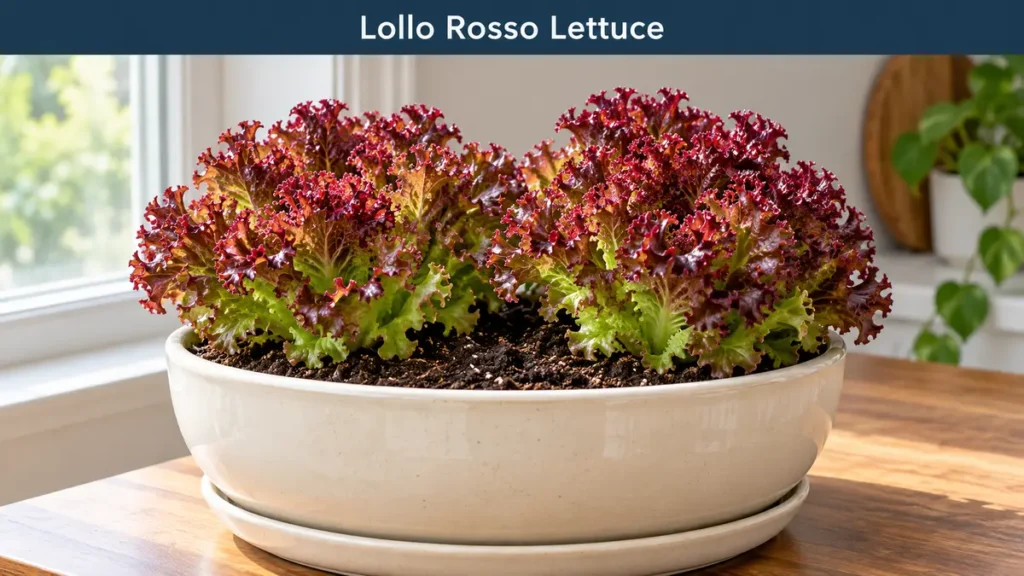
Lollo Rosso Lettuce is an attractive leafy vegetable known for its deeply curled, reddish-purple leaves and decorative appearance. This Italian lettuce variety adds vibrant color and texture to salads while offering a mild, slightly bitter flavor. Its compact growth, attractive foliage, and ability to produce repeated harvests make it an excellent choice for indoor containers and hydroponic growing systems.
Identification and Characteristics
- Scientific Name: Lactuca sativa ‘Lollo Rosso’
- Plant Type: Annual leafy vegetable
- Leaf Color: Deep red, burgundy, and green
- Leaf Shape: Deeply curled, frilly leaves
- Mature Height: 6–10 inches
- Growth Habit: Compact, loose rosette formation
- Harvest Time: Approximately 45–60 days from sowing
- Special Feature: Decorative reddish-purple foliage with curly edges
Ideal Indoor Growing Conditions
Lollo Rosso Lettuce grows best in cool temperatures between 60–70°F. Provide 12–16 hours of bright artificial lighting daily to encourage healthy growth and vibrant red coloration. Use fertile, well-draining potting soil and containers with drainage holes. Maintain proper spacing between plants to improve airflow and allow the curly leaves to develop naturally.
Watering and Maintenance Tips
Keep the soil consistently moist without allowing it to become waterlogged. Water gently around the base to protect the delicate foliage. Apply diluted liquid fertilizer occasionally during active growth. Harvest outer leaves when they reach a usable size, leaving the center intact for continued production. Remove damaged or yellowing leaves regularly.
13. Lollo Bionda Lettuce
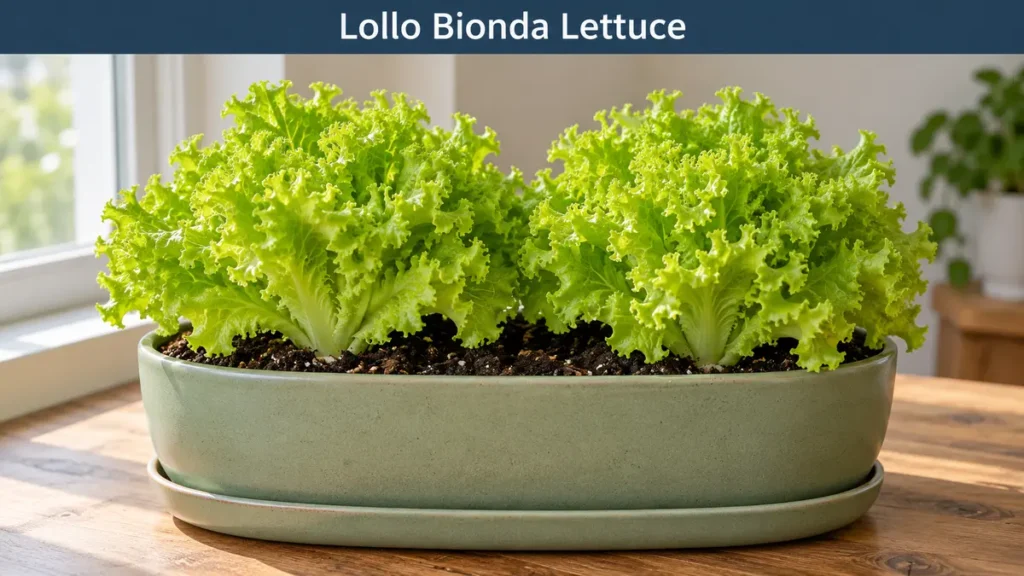
Lollo Bionda Lettuce is a beautiful green lettuce variety recognized for its tightly curled leaves and fresh, mild flavor. Originating from Italy, this decorative leafy vegetable is commonly used in salads, sandwiches, and garnishes. Its compact size, attractive foliage, and relatively simple care requirements make it an excellent option for indoor vegetable gardens and small containers.
Identification and Characteristics
- Scientific Name: Lactuca sativa ‘Lollo Bionda’
- Plant Type: Annual leafy vegetable
- Leaf Color: Bright green to light green
- Leaf Shape: Deeply curled, finely ruffled leaves
- Mature Height: 6–10 inches
- Growth Habit: Compact, loose leaf clusters
- Harvest Time: Approximately 45–60 days from sowing
- Special Feature: Attractive curly green foliage with tender texture
Ideal Indoor Growing Conditions
Lollo Bionda Lettuce thrives in temperatures between 60–70°F and requires consistent lighting for healthy leaf development. Position containers near a bright window or provide 12–16 hours of full-spectrum LED grow lighting daily. Use nutrient-rich, well-draining potting soil and containers at least 6 inches deep. Maintain adequate airflow and avoid excessive heat, which can cause premature bolting.
Watering and Maintenance Tips
Water Lollo Bionda Lettuce regularly to maintain evenly moist soil. Avoid overwatering because saturated roots can cause poor growth and fungal problems. Apply diluted balanced fertilizer occasionally to encourage fresh leaf production. Harvest mature outer leaves while allowing younger central leaves to continue growing. Remove damaged foliage and monitor the plants regularly for common indoor pests.
14. Salad Bowl Lettuce
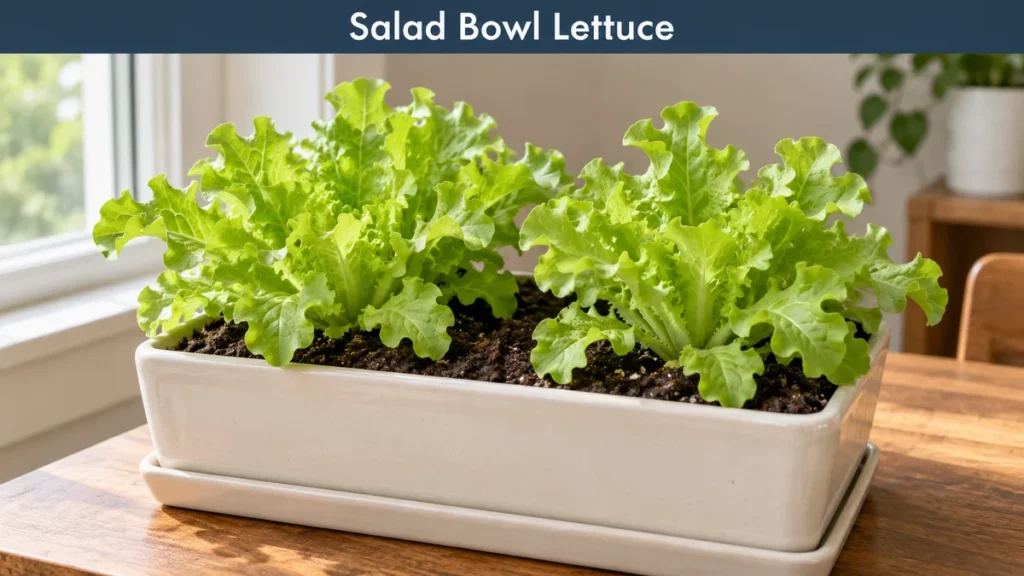
Salad Bowl Lettuce is a popular looseleaf variety known for its tender, deeply lobed leaves and mild, slightly sweet flavor. This fast-growing lettuce is particularly suitable for indoor gardening because it produces abundant foliage without forming a tight head. Its compact growth habit and continuous harvesting potential make it ideal for containers, hydroponic systems, and small kitchen gardens.
Identification and Characteristics
- Scientific Name: Lactuca sativa ‘Salad Bowl’
- Plant Type: Annual leafy vegetable
- Leaf Color: Bright green to medium green
- Leaf Shape: Deeply lobed, oak-shaped leaves
- Mature Height: 6–10 inches
- Growth Habit: Loose, spreading rosette formation
- Harvest Time: Approximately 40–50 days from sowing
- Special Feature: Tender foliage suitable for repeated harvesting
Ideal Indoor Growing Conditions
Salad Bowl Lettuce grows best in cool temperatures between 60–70°F. Provide 12–16 hours of bright artificial lighting daily to encourage healthy leaf development. Use fertile, well-draining potting soil and containers with proper drainage. This variety grows well in compact indoor gardening spaces, including windowsills and countertop growing systems. Maintain good airflow and avoid excessive heat.
Watering and Maintenance Tips
Keep the soil consistently moist throughout the growing period. Water gently when the upper soil surface begins to dry, avoiding excessive moisture around the roots. Apply diluted liquid fertilizer occasionally to support continuous leaf production. Harvest outer leaves when they reach a usable size, allowing the central growing point to produce fresh foliage. Remove yellowing leaves regularly.
15. Red Salad Bowl Lettuce
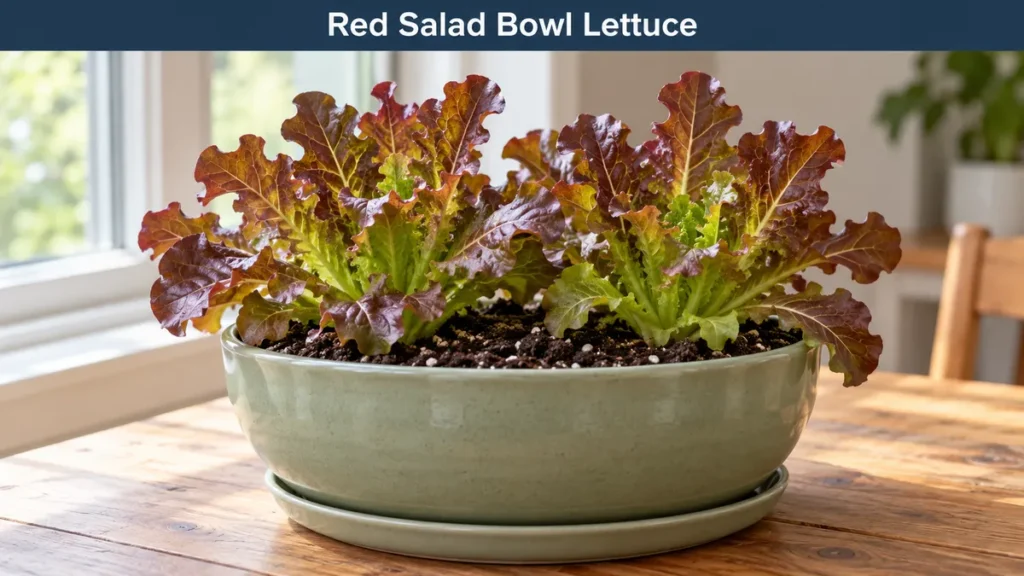
Red Salad Bowl Lettuce is an attractive looseleaf variety admired for its deeply lobed, reddish-bronze leaves and delicate texture. This colorful vegetable adds visual appeal to indoor gardens while providing tender leaves for salads and sandwiches. Its relatively fast growth, compact size, and ability to produce repeated harvests make it a wonderful choice for indoor vegetable gardening.
Identification and Characteristics
- Scientific Name: Lactuca sativa ‘Red Salad Bowl’
- Plant Type: Annual leafy vegetable
- Leaf Color: Reddish-bronze, burgundy, and green
- Leaf Shape: Deeply lobed, oak-shaped leaves
- Mature Height: 6–10 inches
- Growth Habit: Loose, spreading rosette
- Harvest Time: Approximately 40–55 days from sowing
- Special Feature: Colorful red foliage with a tender, mild flavor
Ideal Indoor Growing Conditions
Red Salad Bowl Lettuce thrives in temperatures between 60–70°F and requires bright, consistent lighting. Provide 12–16 hours of artificial growth lighting daily to encourage healthy growth and stronger reddish coloration. Use nutrient-rich, well-draining soil and containers with drainage holes. Maintain sufficient spacing between plants to improve airflow and support healthy leaf development.
Watering and Maintenance Tips
Water Red Salad Bowl Lettuce regularly to keep the soil evenly moist without becoming soggy. Check soil moisture frequently because inconsistent watering can affect leaf quality. Apply diluted balanced fertilizer occasionally during active growth. Harvest mature outer leaves while leaving the central growth intact for continued production. Remove damaged foliage and inspect the plants occasionally for pests.
16. Black Seeded Simpson Lettuce

Black Seeded Simpson Lettuce is a classic looseleaf variety known for its bright green, tender leaves and rapid growth. This popular lettuce is particularly suitable for beginners because it grows easily in containers and provides an early harvest. Its mild flavor, attractive ruffled foliage, and ability to produce repeated harvests make it an excellent choice for indoor vegetable gardens.
Identification and Characteristics
- Scientific Name: Lactuca sativa ‘Black Seeded Simpson’
- Plant Type: Annual leafy vegetable
- Leaf Color: Light green to bright green
- Leaf Shape: Broad, tender, crinkled leaves
- Mature Height: 6–12 inches
- Growth Habit: Loose, upright leaf clusters
- Harvest Time: Approximately 40–50 days from sowing
- Special Feature: Fast growth and distinctive dark-colored seeds
Ideal Indoor Growing Conditions
Black Seeded Simpson Lettuce grows best in cool temperatures between 60–70°F. Place containers near a bright window or provide 12–16 hours of artificial grow lighting daily. Use fertile, well-draining potting soil and containers at least 6 inches deep. Maintain adequate airflow and avoid excessive indoor heat, which can encourage early bolting and affect leaf flavor.
Watering and Maintenance Tips
Maintain consistently moist soil to encourage tender, healthy leaves. Water gently around the base of the plant and avoid allowing the soil to dry completely. Apply diluted liquid fertilizer occasionally to support continued growth. Harvest outer leaves when they become large enough to use, leaving the central growing point undamaged. Remove yellowing or damaged foliage regularly to maintain plant health.
17. Grand Rapids Lettuce
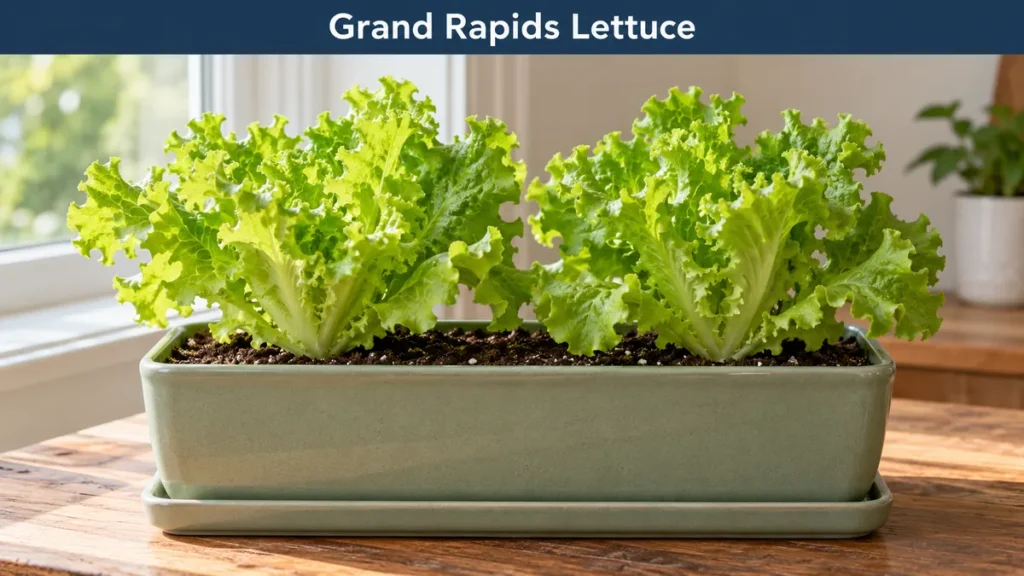
Grand Rapids Lettuce is a popular looseleaf variety known for its bright green, curly leaves and tender texture. This fast-growing lettuce is particularly suitable for indoor gardening because it produces abundant foliage without forming a compact head. Its mild flavor, attractive appearance, and relatively easy maintenance make it an excellent choice for beginners growing fresh vegetables in containers or hydroponic systems.
Identification and Characteristics
- Scientific Name: Lactuca sativa ‘Grand Rapids’
- Plant Type: Annual leafy vegetable
- Leaf Color: Bright green to light green
- Leaf Shape: Broad, curled, frilly leaves
- Mature Height: 6–12 inches
- Growth Habit: Loose, upright leaf clusters
- Harvest Time: Approximately 45–55 days from sowing
- Special Feature: Fast-growing, tender foliage suitable for repeated harvesting
Ideal Indoor Growing Conditions
Grand Rapids Lettuce thrives in cool temperatures between 60–70°F and requires consistent lighting for healthy growth. Place containers near a bright window or provide 12–16 hours of artificial grow lighting daily. Use nutrient-rich, well-draining potting soil and containers at least 6 inches deep. Maintain proper spacing between plants to encourage airflow and prevent overcrowding.
Watering and Maintenance Tips
Keep the soil consistently moist without allowing it to become waterlogged. Water gently around the base whenever the soil surface begins to dry. Apply diluted liquid fertilizer occasionally to encourage healthy leaf development. Harvest mature outer leaves regularly while allowing the center to continue producing new foliage. Remove yellowing or damaged leaves to maintain plant health.
18. Tom Thumb Lettuce

Tom Thumb Lettuce is a miniature butterhead variety recognized for its small, rounded heads and soft, tender leaves. This compact lettuce is especially suitable for indoor growing because it requires minimal space and develops attractive, tightly arranged foliage. Its mild, buttery flavor and manageable size make it a wonderful choice for windowsill gardens, small containers, and indoor vegetable growing systems.
Identification and Characteristics
- Scientific Name: Lactuca sativa ‘Tom Thumb’
- Plant Type: Annual leafy vegetable
- Leaf Color: Light green to medium green
- Leaf Shape: Small, rounded, tender leaves
- Mature Height: 4–6 inches
- Growth Habit: Compact, rounded butterhead formation
- Harvest Time: Approximately 45–60 days from sowing
- Special Feature: Miniature lettuce heads ideal for limited growing spaces
Ideal Indoor Growing Conditions
Tom Thumb Lettuce grows best in cool temperatures between 60–70°F. Provide 12–16 hours of bright artificial lighting daily or place it near a sufficiently sunny window. Use nutrient-rich, well-draining potting soil and containers at least 6 inches deep. Its compact growth makes it ideal for countertop gardens and small indoor planters. Avoid excessive heat to prevent premature bolting.
Watering and Maintenance Tips
Water Tom Thumb Lettuce regularly to maintain evenly moist soil. Avoid excessive watering because saturated soil can damage the roots. Apply diluted balanced fertilizer occasionally during active growth. Harvest the entire miniature head once it reaches maturity, or carefully remove a few outer leaves when needed. Maintain adequate airflow and remove damaged foliage to encourage healthy development.
19. Deer Tongue Lettuce
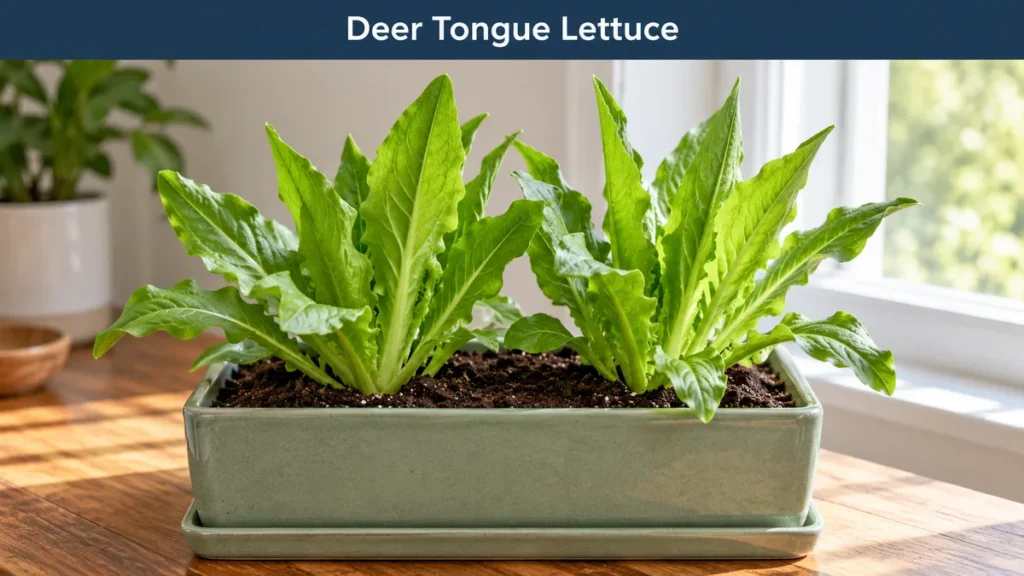
Deer Tongue Lettuce is a distinctive heirloom lettuce variety known for its narrow, pointed leaves and crisp, tender texture. Its unusual leaf shape resembles a deer’s tongue, giving the plant its common name. This attractive lettuce grows well in indoor containers and provides fresh, flavorful leaves for salads, sandwiches, and other homemade dishes.
Identification and Characteristics
- Scientific Name: Lactuca sativa ‘Deer Tongue’
- Plant Type: Annual leafy vegetable
- Leaf Color: Medium green to dark green
- Leaf Shape: Narrow, elongated, pointed leaves
- Mature Height: 6–10 inches
- Growth Habit: Upright, loose rosette formation
- Harvest Time: Approximately 45–55 days from sowing
- Special Feature: Distinctive pointed leaves with a crisp texture
Ideal Indoor Growing Conditions
Deer Tongue Lettuce thrives in temperatures between 60–70°F and requires bright lighting for healthy growth. Place containers near a sunny window or provide 12–16 hours of artificial grow lighting daily. Use fertile, well-draining potting soil and containers with adequate drainage. Maintain proper spacing between plants to encourage airflow and support healthy leaf development.
Watering and Maintenance Tips
Keep the soil consistently moist throughout the growing period. Water gently around the base of the plant to prevent unnecessary leaf wetness. Apply diluted liquid fertilizer occasionally to encourage healthy foliage. Harvest mature outer leaves while allowing younger central leaves to continue developing. Remove yellowing leaves regularly and maintain cool growing conditions to preserve the lettuce’s mild flavor.
20. Tango Lettuce
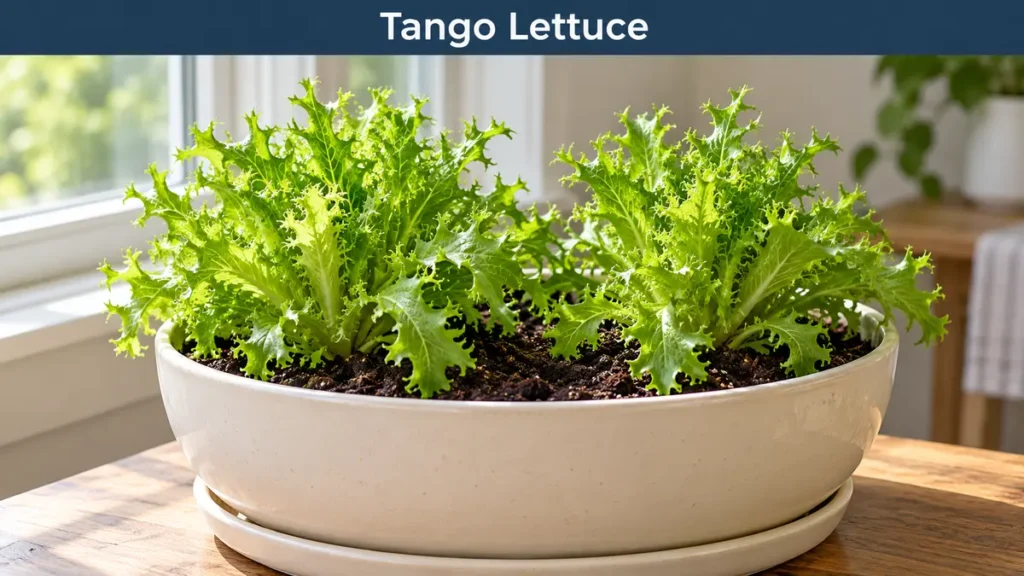
Tango Lettuce is an attractive looseleaf variety admired for its deeply curled, bright green leaves and crisp texture. This fast-growing lettuce is popular for fresh salads because of its decorative appearance and mild, refreshing flavor. Its compact growth habit, attractive foliage, and ability to produce repeated harvests make it an excellent option for indoor containers and hydroponic gardens.
Identification and Characteristics
- Scientific Name: Lactuca sativa ‘Tango’
- Plant Type: Annual leafy vegetable
- Leaf Color: Bright green to deep green
- Leaf Shape: Narrow, deeply curled, finely frilled leaves
- Mature Height: 6–10 inches
- Growth Habit: Loose, upright clusters of curly foliage
- Harvest Time: Approximately 45–55 days from sowing
- Special Feature: Finely curled leaves with a crisp texture
Ideal Indoor Growing Conditions
Tango Lettuce grows best in cool temperatures between 60–70°F and requires bright, consistent lighting. Provide 12–16 hours of full-spectrum LED grow lighting daily to encourage compact, healthy foliage. Use nutrient-rich, well-draining potting soil and containers with drainage holes. Maintain adequate spacing between plants to promote airflow and prevent overcrowding. Avoid excessive heat because it can encourage early bolting.
Watering and Maintenance Tips
Water Tango Lettuce regularly to keep the soil evenly moist without becoming soggy. Check moisture levels frequently, especially when growing under artificial lighting. Apply diluted balanced fertilizer occasionally during active growth. Harvest outer leaves once they reach a usable size, leaving the central growing point intact for continued production. Remove yellowing or damaged leaves to maintain healthy growth.
FAQs
1. What Types of Lettuce Are Best for Indoor Growing?
Looseleaf Lettuce, Butterhead Lettuce, Little Gem Lettuce, Black Seeded Simpson, and Tom Thumb Lettuce are excellent choices for indoor growing. These varieties are relatively compact, grow well in containers, and produce tender leaves. Looseleaf varieties are particularly suitable for beginners because they allow repeated harvesting without removing the entire plant.
2. Which Lettuce Varieties Grow Fastest Indoors?
Looseleaf Lettuce, Black Seeded Simpson, Green Leaf Lettuce, and Salad Bowl Lettuce are among the fastest-growing indoor varieties. Their young leaves can often be harvested within 25–35 days under favorable conditions. Full-sized plants generally require approximately 40–55 days, depending on the variety, lighting, and temperature.
3. Can You Grow Different Types of Lettuce Together Indoors?
Yes, different lettuce varieties can grow together in the same indoor container if they have sufficient space, light, and nutrients. Compact varieties such as Tom Thumb, Little Gem, and Butterhead Lettuce are suitable companions. However, larger Romaine varieties may require additional spacing to prevent overcrowding and competition for resources.
4. Which Lettuce Types Are Best for Small Indoor Containers?
Tom Thumb Lettuce, Little Gem Lettuce, Bibb Lettuce, and Oakleaf Lettuce are excellent choices for small indoor containers. Their compact growth habits make them suitable for windowsills, shelves, and countertop growing systems. Choose containers with drainage holes and sufficient depth to support healthy root development.
5. Can Indoor Lettuce Plants Produce Multiple Harvests?
Yes, many indoor lettuce varieties can produce multiple harvests when grown under suitable conditions. Looseleaf varieties such as Salad Bowl, Red Oakleaf, Tango, and Black Seeded Simpson are particularly suitable. Harvest mature outer leaves while leaving the central growing point undamaged. With proper watering, lighting, and nutrients, the plants can continue producing fresh leaves until they begin to bolt or decline.