
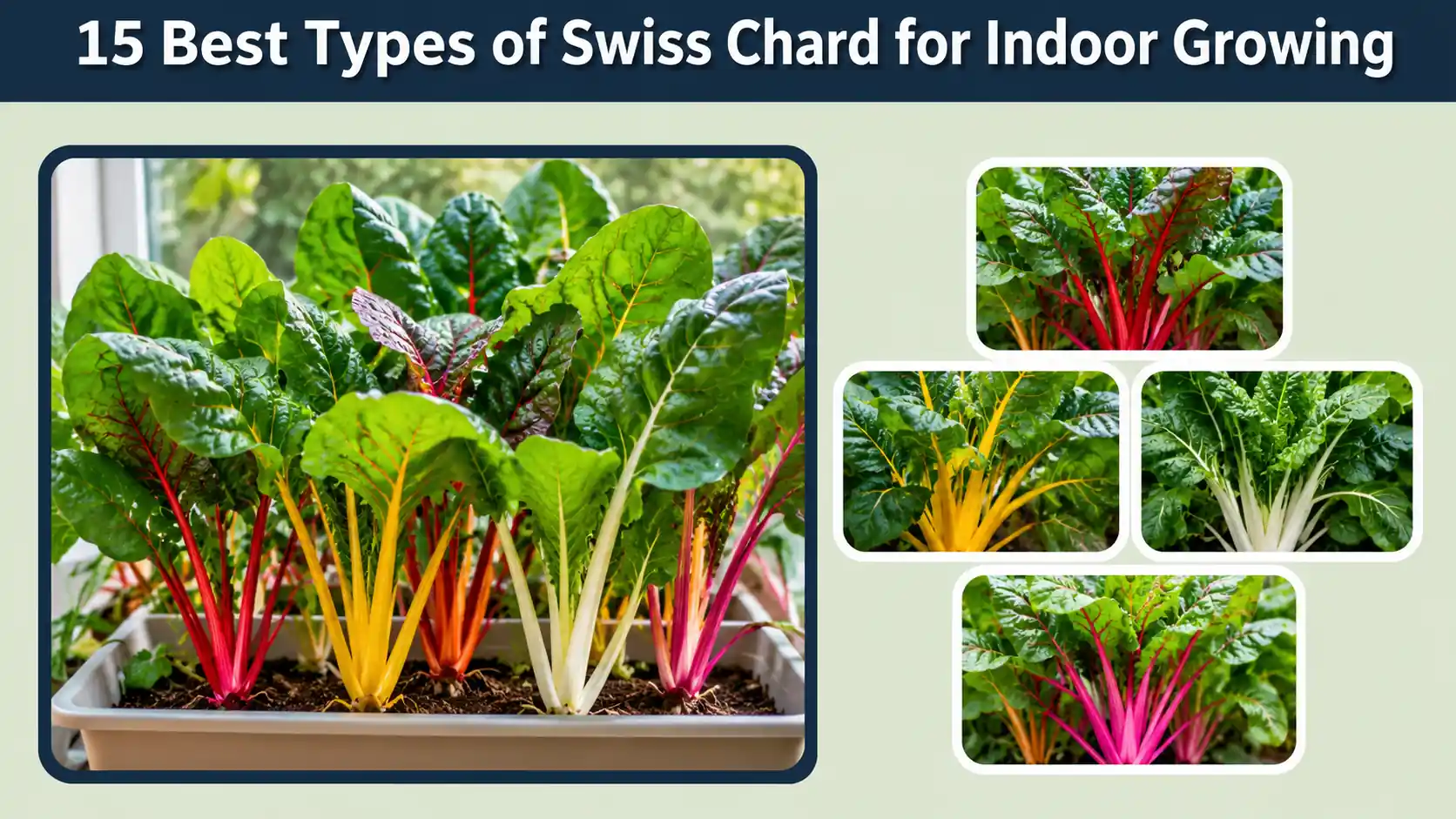
Growing Swiss chard indoors is an excellent way to enjoy fresh, nutritious leafy greens throughout the year. With colorful stems, attractive foliage, and easy maintenance, Swiss chard is perfect for indoor vegetable gardens. From compact varieties to vibrant rainbow-colored selections, there are many options to explore. In this guide, we’ll introduce 15 types of Swiss chard for indoor growing, including their identification, ideal growing conditions, and maintenance tips.
1. Bright Lights Swiss Chard
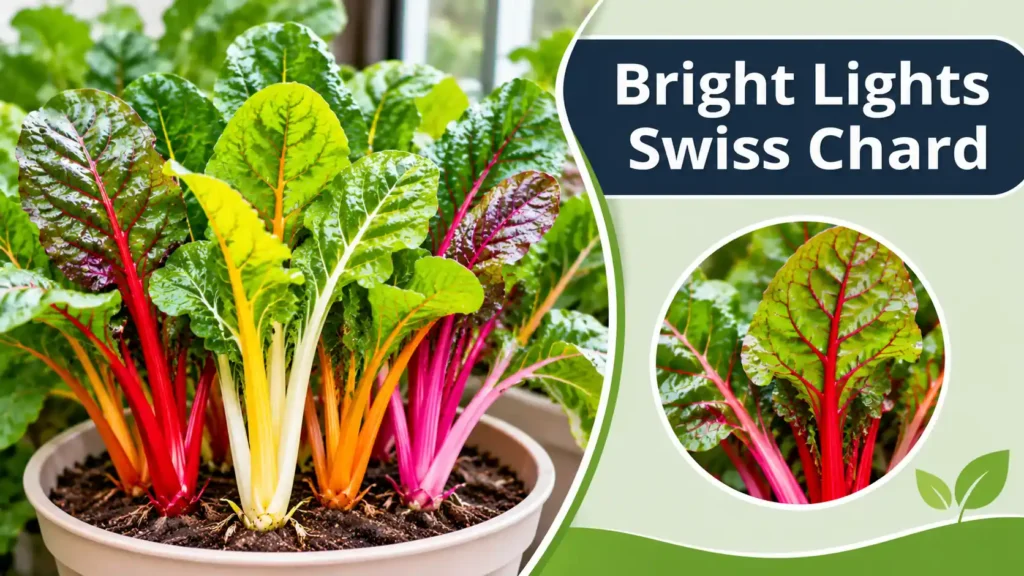
Bright Lights Swiss Chard is one of the most colorful and attractive varieties for indoor growing. It produces vibrant stems in shades of red, yellow, orange, pink, and white, along with broad green or bronze-tinted leaves. This variety is popular among indoor gardeners because of its ornamental appearance, nutritious foliage, and productive growth. Its tender young leaves are excellent for salads, smoothies, soups, and sautéed dishes. With proper lighting and regular harvesting, Bright Lights Swiss Chard can provide fresh greens throughout the year.
Identification
Bright Lights Swiss Chard is easily recognized by its multicolored stems and large, slightly crinkled leaves. Its vibrant appearance makes it both an edible vegetable and a decorative indoor plant.
- Leaf Color: Bright green to bronze-green.
- Stem Color: Red, yellow, orange, pink, and white.
- Leaf Shape: Broad, oval, and slightly crinkled.
- Plant Height: Approximately 18–24 inches.
- Flavor: Mild, earthy, and slightly sweet.
- Growth Habit: Upright with colorful, spreading foliage.
Ideal Indoor Growing Conditions
Bright Lights Swiss Chard grows best at temperatures between 60°F and 75°F (16°C–24°C). Provide approximately 12–14 hours of effective LED grow lighting daily to encourage healthy leaf development.
Choose a container at least 10–12 inches deep with proper drainage holes. Use nutrient-rich, well-draining potting mix with a soil pH between 6.0 and 7.0. Allow enough space for its broad leaves to develop.
Watering and Maintenance
Water Bright Lights Swiss Chard whenever the top inch of soil begins to dry. Maintain consistent moisture without allowing the roots to become waterlogged.
Apply diluted balanced liquid fertilizer every two to three weeks if additional nutrients are needed. Remove damaged or yellowing leaves regularly. Harvest mature outer leaves while preserving the central growing point to encourage continuous leaf production indoors.
2. Fordhook Giant Swiss Chard

Fordhook Giant Swiss Chard is a productive and nutritious variety known for its large, dark green leaves and thick white stems. This traditional Swiss chard variety is popular among home gardeners because of its vigorous growth, tender foliage, and excellent flavor. Although it develops relatively large leaves, Fordhook Giant Swiss Chard can grow successfully indoors when provided with spacious containers and adequate lighting. Its nutritious leaves and stems are suitable for soups, salads, stir-fries, and sautéed vegetable dishes.
Identification
Fordhook Giant Swiss Chard is recognized by its broad, heavily crinkled leaves and prominent white stems. Its large foliage and upright growth habit make it easy to distinguish from smaller Swiss chard varieties.
- Leaf Color: Deep dark green.
- Stem Color: Bright white.
- Leaf Shape: Large, broad, and heavily crinkled.
- Plant Height: Approximately 20–28 inches.
- Flavor: Mild, earthy, and slightly sweet.
- Growth Habit: Upright, vigorous, and spreading.
Ideal Indoor Growing Conditions
Fordhook Giant Swiss Chard grows best at temperatures between 60°F and 75°F (16°C–24°C). Provide approximately 12–14 hours of effective LED grow lighting daily to encourage strong leaf development.
Choose a container at least 12 inches deep with adequate drainage holes. Use nutrient-rich, well-draining potting mix with a soil pH between 6.0 and 7.0. Allow sufficient space for its large leaves to expand without overcrowding.
Watering and Maintenance
Water Fordhook Giant Swiss Chard when the upper inch of soil begins to dry. Maintain even moisture while avoiding saturated conditions that may damage the roots.
Apply diluted balanced liquid fertilizer every two to three weeks if needed. Remove yellowing or damaged leaves regularly. Harvest mature outer leaves first while preserving the central growing point for continued production.
3. Ruby Red Swiss Chard
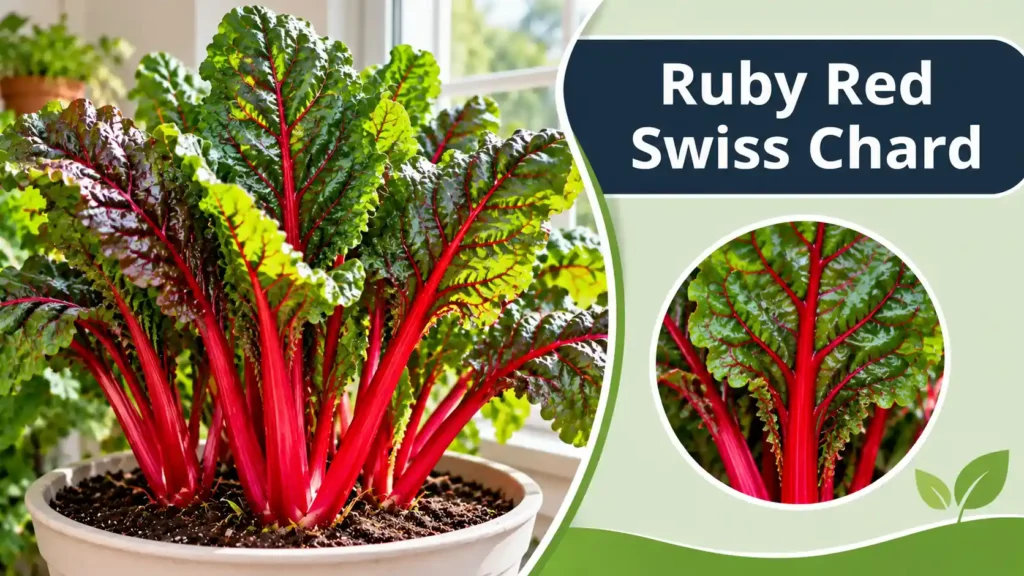
Ruby Red Swiss Chard is an attractive leafy vegetable known for its brilliant red stems, colorful veins, and deep green foliage. This variety is an excellent choice for indoor gardeners who want to grow nutritious vegetables while adding vibrant colors to their growing spaces. Its tender young leaves have a mildly earthy flavor, making them suitable for fresh salads, smoothies, and cooked dishes. With adequate lighting and consistent care, Ruby Red Swiss Chard can provide repeated harvests throughout its growing period.
Identification
Ruby Red Swiss Chard is easily identified by its bright red stems and prominent red veins running through the leaves. Its colorful appearance makes it a decorative addition to indoor vegetable gardens.
- Leaf Color: Dark green with reddish veins.
- Stem Color: Bright ruby red.
- Leaf Shape: Broad, oval, and slightly crinkled.
- Plant Height: Approximately 18–24 inches.
- Flavor: Mild, earthy, and slightly sweet.
- Growth Habit: Upright with spreading foliage.
Ideal Indoor Growing Conditions
Ruby Red Swiss Chard prefers temperatures between 60°F and 75°F (16°C–24°C). Provide approximately 12–14 hours of adequate artificial lighting daily to maintain healthy foliage and vibrant stem coloration.
Choose a container at least 10–12 inches deep with proper drainage holes. Use fertile, well-draining potting mix enriched with organic matter. Maintain soil pH between 6.0 and 7.0 and provide sufficient airflow around the plant.
Watering and Maintenance
Water Ruby Red Swiss Chard whenever the top inch of soil feels dry. Keep the growing medium consistently moist without allowing excess water to accumulate around the roots.
Feed with diluted balanced liquid fertilizer every two to three weeks when additional nutrients are needed. Remove aging leaves and inspect regularly for common indoor pests. Harvest outer leaves while leaving the central growing point intact to encourage continuous growth.
4. Rainbow Swiss Chard
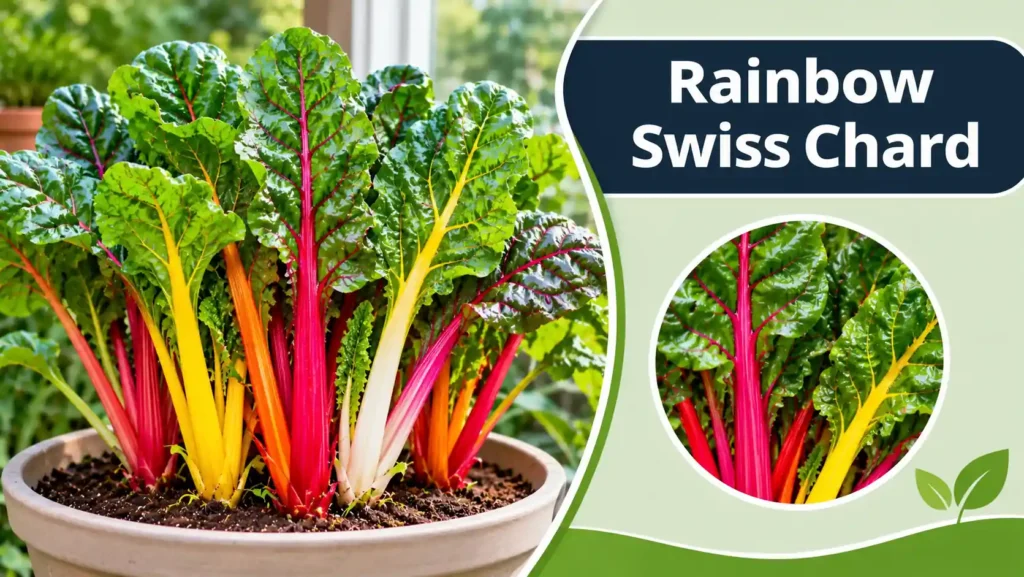
Rainbow Swiss Chard is a colorful and productive leafy vegetable that is particularly attractive for indoor gardening. It produces stems in multiple colors, including red, yellow, orange, pink, and white, along with broad green leaves. Rainbow Swiss Chard is usually sold as a mixture of colorful Swiss chard varieties rather than a single uniform cultivar. Its attractive foliage, nutritious leaves, and relatively easy maintenance make it suitable for indoor containers and growing shelves.
Identification
Rainbow Swiss Chard is recognized by its multicolored stems and large, slightly wrinkled leaves. Individual plants display different stem colors, creating an attractive collection when grown together.
- Leaf Color: Medium to dark green, sometimes bronze-tinted.
- Stem Color: Red, yellow, orange, pink, and white.
- Leaf Shape: Broad, oval, and slightly crinkled.
- Plant Height: Approximately 18–24 inches.
- Flavor: Mild, earthy, and slightly sweet.
- Growth Habit: Upright with broad, spreading leaves.
Ideal Indoor Growing Conditions
Rainbow Swiss Chard grows best between 60°F and 75°F (16°C–24°C). Provide approximately 12–14 hours of effective LED grow lighting daily to support healthy leaf production.
Grow individual plants in containers at least 10–12 inches deep with proper drainage. Use nutrient-rich, well-draining potting mix with a soil pH between 6.0 and 7.0. Leave adequate spacing between plants to prevent overcrowding and allow good airflow.
Watering and Maintenance
Water Rainbow Swiss Chard when the upper inch of soil becomes dry. Maintain consistent moisture to encourage tender leaves and steady development.
Apply diluted balanced liquid fertilizer every two to three weeks if needed. Remove damaged or yellowing leaves and regularly inspect the plants for pests. Harvest mature outer leaves while preserving the central growing point, allowing new leaves to develop for repeated indoor harvests.
5. Lucullus Swiss Chard

Lucullus Swiss Chard is a traditional leafy vegetable known for its tender, light green leaves and broad white stems. This variety is particularly suitable for indoor gardening because of its productive growth and relatively mild flavor. Its slightly crinkled leaves develop quickly under favorable conditions, providing nutritious greens for salads, soups, and sautéed dishes. Lucullus Swiss Chard is also valued for its ability to produce repeated harvests, making it a practical choice for gardeners who want fresh vegetables throughout the year.
Identification
Lucullus Swiss Chard is recognized by its pale green foliage, prominent white stems, and broad, slightly wrinkled leaves. Its attractive appearance makes it suitable for indoor vegetable containers.
- Leaf Color: Light to medium green.
- Stem Color: White to pale green.
- Leaf Shape: Broad, slightly crinkled, and gently wavy.
- Plant Height: Approximately 18–24 inches.
- Flavor: Mild, tender, and slightly sweet.
- Growth Habit: Upright, vigorous, and spreading.
Ideal Indoor Growing Conditions
Lucullus Swiss Chard grows best at temperatures between 60°F and 75°F (16°C–24°C). Provide approximately 12–14 hours of effective LED grow lighting daily to support healthy leaf production.
Choose a container at least 10–12 inches deep with adequate drainage holes. Use nutrient-rich, well-draining potting mix with a soil pH between 6.0 and 7.0. Allow enough room for its broad foliage to develop without overcrowding.
Watering and Maintenance
Water Lucullus Swiss Chard whenever the top inch of soil begins to dry. Keep the growing medium consistently moist without allowing water to accumulate around the roots.
Apply diluted balanced liquid fertilizer every two to three weeks if additional nutrients are needed. Remove damaged or yellowing leaves regularly. Harvest mature outer leaves while preserving the central growing point to encourage continuous indoor production.
6. Rhubarb Swiss Chard
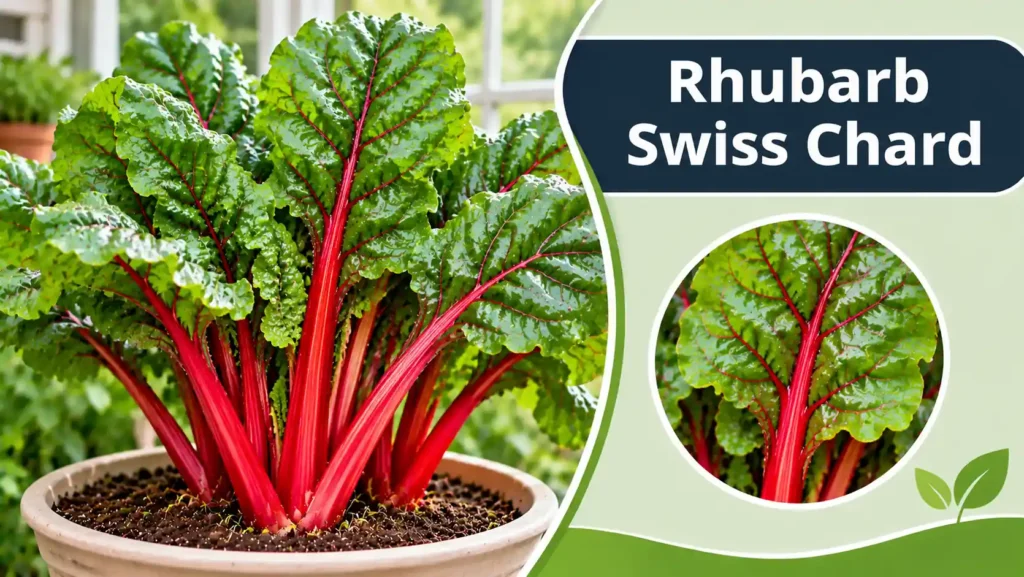
Rhubarb Swiss Chard is an attractive and nutritious variety recognized for its bright red stems and deep green leaves with reddish veins. Despite its name, this variety is not true rhubarb but a type of Swiss chard. Its colorful appearance makes it an excellent choice for indoor gardeners who want both edible greens and ornamental foliage. Rhubarb Swiss Chard produces tender young leaves with a mildly earthy flavor, making them suitable for salads, soups, smoothies, and cooked vegetable dishes.
Identification
Rhubarb Swiss Chard is easily recognized by its vivid red stalks and dark green foliage. Its prominent reddish veins create an attractive contrast against the leaf surfaces.
- Leaf Color: Deep green with red veins.
- Stem Color: Bright crimson red.
- Leaf Shape: Broad, oval, and slightly crinkled.
- Plant Height: Approximately 18–24 inches.
- Flavor: Earthy, mildly sweet, and slightly bitter.
- Growth Habit: Upright with broad, spreading foliage.
Ideal Indoor Growing Conditions
Rhubarb Swiss Chard prefers temperatures between 60°F and 75°F (16°C–24°C). Provide approximately 12–14 hours of adequate artificial lighting daily to support vigorous growth and colorful stems.
Select a container at least 10–12 inches deep with proper drainage holes. Fill it with fertile, well-draining potting mix enriched with organic matter. Maintain soil pH between 6.0 and 7.0 and ensure sufficient airflow around the foliage.
Watering and Maintenance
Water Rhubarb Swiss Chard when the upper inch of soil feels dry. Maintain even moisture to encourage tender leaves and prevent unnecessary plant stress.
Feed with diluted balanced liquid fertilizer every two to three weeks when needed. Remove aging foliage and regularly inspect the leaves for aphids or other pests. Harvest mature outer leaves first, leaving younger central leaves intact for repeated harvesting.
7. Golden Swiss Chard
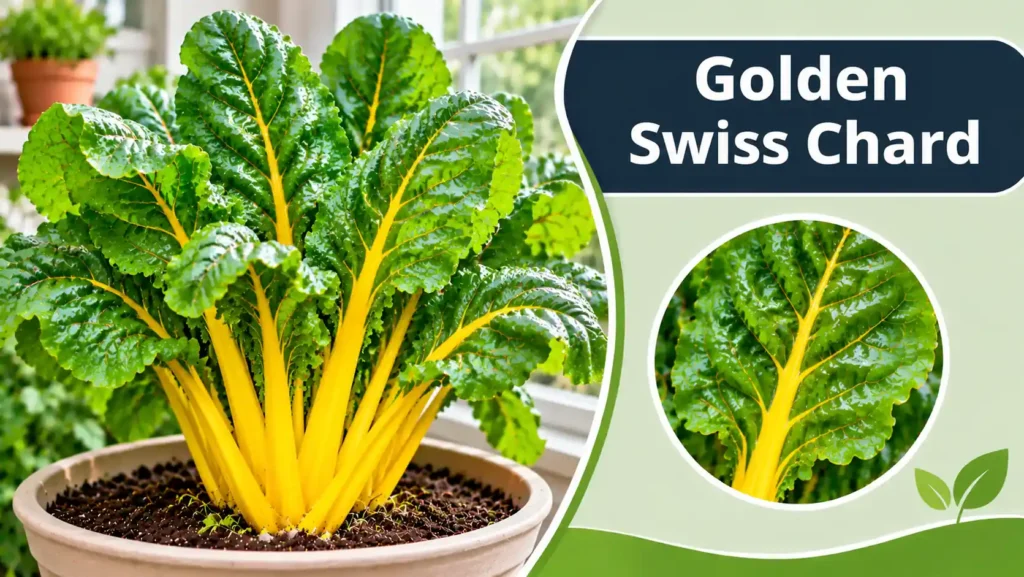
Golden Swiss Chard is a beautiful leafy vegetable known for its bright yellow stems and vibrant green foliage. This variety adds an attractive splash of color to indoor vegetable gardens while providing nutritious, edible leaves. Its tender texture and mild, earthy flavor make it suitable for salads, soups, stir-fries, and sautéed dishes. Golden Swiss Chard grows successfully in containers when provided with adequate lighting, fertile soil, and regular watering. Its colorful stems make it especially appealing for gardeners who want to combine decorative plants with food production.
Identification
Golden Swiss Chard is distinguished by its striking yellow stalks and broad green leaves. Its colorful appearance makes it easy to identify among traditional white-stemmed varieties.
- Leaf Color: Bright to dark green.
- Stem Color: Golden yellow.
- Leaf Shape: Broad, oval, and slightly crinkled.
- Plant Height: Approximately 18–24 inches.
- Flavor: Mild, earthy, and slightly sweet.
- Growth Habit: Upright with spreading foliage.
Ideal Indoor Growing Conditions
Golden Swiss Chard grows best between 60°F and 75°F (16°C–24°C). Provide approximately 12–14 hours of effective LED grow lighting daily to encourage strong foliage development.
Choose a container at least 10–12 inches deep with sufficient drainage holes. Use nutrient-rich, well-draining potting mix with a soil pH between 6.0 and 7.0. Position the container where leaves receive consistent lighting and adequate airflow.
Watering and Maintenance
Water Golden Swiss Chard whenever the top inch of soil becomes dry. Keep the potting mix consistently moist while avoiding waterlogged conditions that may damage the roots.
Apply diluted balanced liquid fertilizer every two to three weeks if needed. Remove damaged or yellowing leaves and inspect regularly for pests. Harvest larger outer leaves while preserving the central growing point to encourage continued production of fresh indoor-grown Swiss chard.
8. Orange Fantasia Swiss Chard
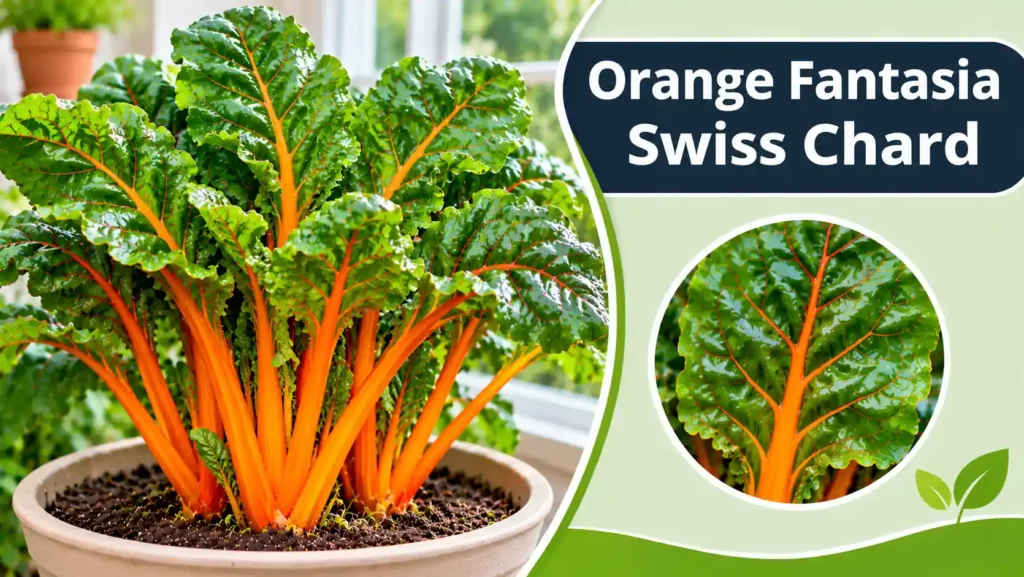
Orange Fantasia Swiss Chard is an attractive and nutritious variety known for its vibrant orange stems and broad green leaves. This colorful vegetable is an excellent choice for indoor gardeners who want to combine edible greens with decorative foliage. Its tender young leaves have a mild, earthy flavor, making them suitable for salads, smoothies, soups, and sautéed dishes. With proper lighting and consistent care, Orange Fantasia Swiss Chard can produce fresh leaves throughout its growing period.
Identification
Orange Fantasia Swiss Chard is easily recognized by its bright orange stems and attractive green foliage. Its colorful appearance adds visual interest to indoor vegetable gardens.
- Leaf Color: Bright to dark green.
- Stem Color: Vibrant orange.
- Leaf Shape: Broad, oval, and slightly crinkled.
- Plant Height: Approximately 18–24 inches.
- Flavor: Mild, earthy, and slightly sweet.
- Growth Habit: Upright with broad, spreading foliage.
Ideal Indoor Growing Conditions
Orange Fantasia Swiss Chard grows best at temperatures between 60°F and 75°F (16°C–24°C). Provide approximately 12–14 hours of effective LED grow lighting daily to support healthy leaf development.
Choose a container at least 10–12 inches deep with proper drainage holes. Use nutrient-rich, well-draining potting mix with a soil pH between 6.0 and 7.0. Maintain adequate airflow around the plant.
Watering and Maintenance
Water Orange Fantasia Swiss Chard whenever the top inch of soil begins to dry. Keep the growing medium consistently moist without allowing the roots to become waterlogged.
Apply diluted balanced liquid fertilizer every two to three weeks if needed. Remove damaged or yellowing foliage regularly. Harvest mature outer leaves while preserving the central growing point to encourage continued indoor production.
9. Peppermint Swiss Chard
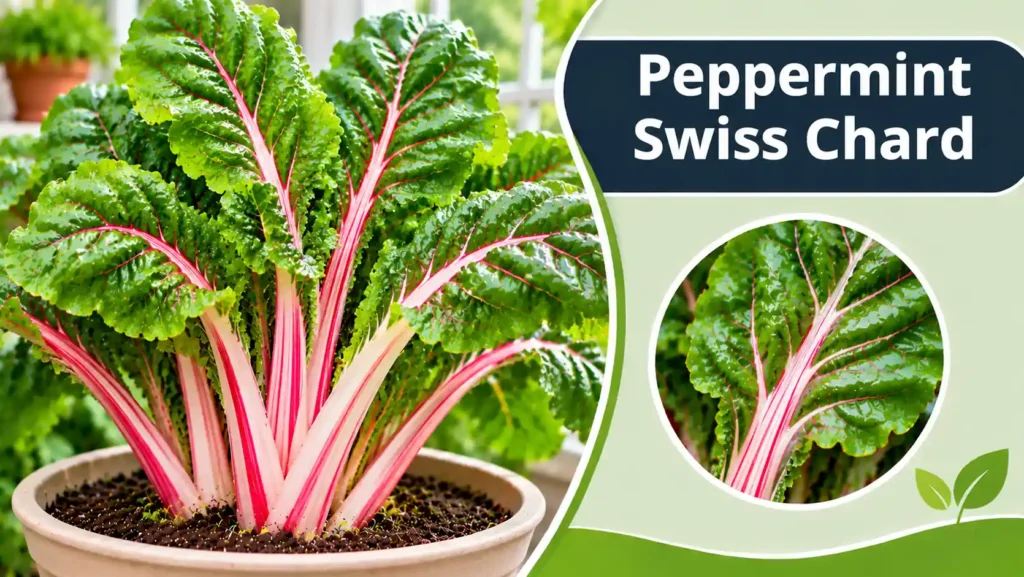
Peppermint Swiss Chard is a distinctive and colorful variety recognized for its unusual pink-and-white striped stems and attractive green leaves. Its unique appearance makes it particularly appealing for indoor container gardening and decorative vegetable displays. Unlike many traditional Swiss chard varieties, Peppermint Swiss Chard features eye-catching stalks that resemble peppermint candy. Its tender young leaves offer a mild, earthy flavor suitable for salads, soups, and cooked vegetable dishes.
Identification
Peppermint Swiss Chard is easily identified by its striped stems and broad green foliage. Its unusual coloration distinguishes it from other colorful Swiss chard varieties.
- Leaf Color: Medium to dark green.
- Stem Color: White with bright pink or reddish stripes.
- Leaf Shape: Broad, oval, and slightly wrinkled.
- Plant Height: Approximately 18–24 inches.
- Flavor: Mild, earthy, and slightly sweet.
- Growth Habit: Upright with spreading foliage.
Ideal Indoor Growing Conditions
Peppermint Swiss Chard prefers temperatures between 60°F and 75°F (16°C–24°C). Provide approximately 12–14 hours of effective artificial lighting daily to encourage vigorous leaf development.
Select a container at least 10–12 inches deep with adequate drainage holes. Fill it with fertile, well-draining potting mix enriched with organic matter. Maintain soil pH between 6.0 and 7.0 and provide sufficient room for mature leaves to expand.
Watering and Maintenance
Water Peppermint Swiss Chard whenever the upper inch of soil becomes dry. Maintain even soil moisture to encourage tender leaves and healthy growth.
Feed with diluted balanced liquid fertilizer every two to three weeks when additional nutrients are necessary. Remove yellowing foliage and inspect regularly for pests. Harvest larger outer leaves first while leaving the central growing point intact for repeated harvesting.
10. Barese Swiss Chard
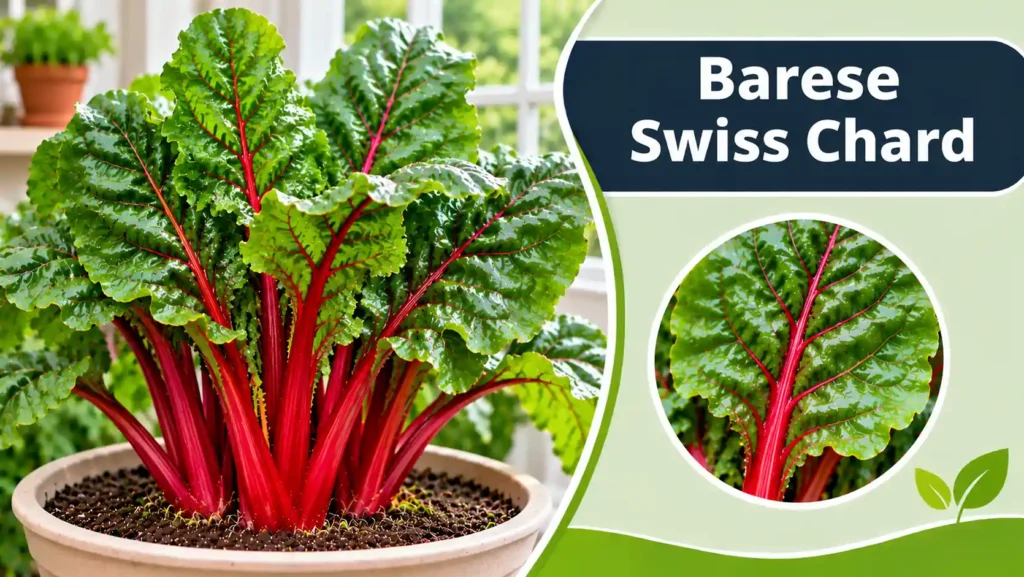
Barese Swiss Chard is a compact, fast-growing variety that is particularly suitable for indoor container gardening. It produces tender green leaves with smooth white stems and a relatively mild flavor. Compared with larger Swiss chard varieties, Barese develops a more manageable growth habit, making it ideal for kitchen gardens, indoor growing shelves, and limited spaces. Its leaves can be harvested young for salads or allowed to mature for soups, stir-fries, and sautéed dishes.
Identification
Barese Swiss Chard is recognized by its compact structure, smooth green leaves, and pale white stems. Its smaller size makes it an excellent option for indoor vegetable production.
- Leaf Color: Bright to medium green.
- Stem Color: White to pale green.
- Leaf Shape: Broad, smooth to slightly crinkled.
- Plant Height: Approximately 8–12 inches when harvested young.
- Flavor: Mild, tender, and slightly sweet.
- Growth Habit: Compact, upright, and fast-growing.
Ideal Indoor Growing Conditions
Barese Swiss Chard grows best between 60°F and 75°F (16°C–24°C). Provide approximately 12–14 hours of effective LED grow lighting daily to encourage strong, healthy foliage.
Choose a container at least 8–10 inches deep with sufficient drainage holes. Use fertile, well-draining potting mix with a soil pH between 6.0 and 7.0. Its compact growth habit makes it suitable for smaller indoor growing areas.
Watering and Maintenance
Water Barese Swiss Chard whenever the top inch of potting mix feels dry. Maintain consistent soil moisture without allowing excess water to accumulate around the roots.
Apply diluted balanced liquid fertilizer every two to three weeks if needed. Remove damaged or aging leaves and monitor for common indoor pests. Harvest tender outer leaves regularly while protecting the central growing point to encourage continued production of fresh Swiss chard.
11. Magenta Sunset Swiss Chard
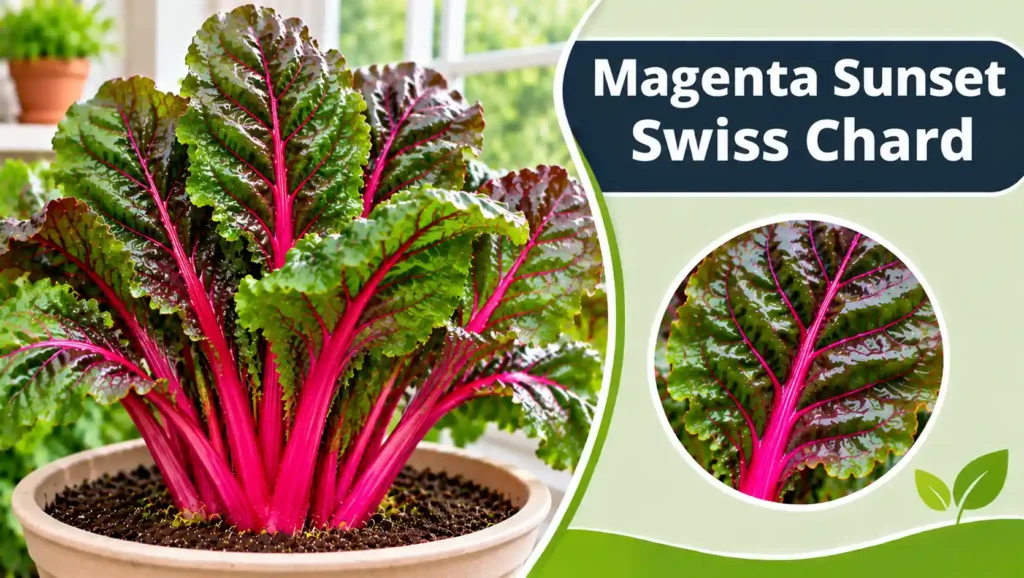
Magenta Sunset Swiss Chard is an attractive and colorful variety known for its vibrant magenta stems and broad green leaves. This variety is an excellent choice for indoor gardeners who want to grow nutritious vegetables while adding decorative color to their growing spaces. Its tender leaves have a mild, earthy flavor that makes them suitable for salads, smoothies, soups, and sautéed dishes. With adequate lighting and consistent maintenance, Magenta Sunset Swiss Chard can produce fresh greens throughout its growing period.
Identification
Magenta Sunset Swiss Chard is easily recognized by its bright pink-magenta stems and attractive green foliage. Its colorful stalks create a striking contrast with the leaves.
- Leaf Color: Medium to dark green.
- Stem Color: Bright magenta to deep pink.
- Leaf Shape: Broad, oval, and slightly crinkled.
- Plant Height: Approximately 18–24 inches.
- Flavor: Mild, earthy, and slightly sweet.
- Growth Habit: Upright with broad, spreading foliage.
Ideal Indoor Growing Conditions
Magenta Sunset Swiss Chard grows best at temperatures between 60°F and 75°F (16°C–24°C). Provide approximately 12–14 hours of effective LED grow lighting daily to support healthy leaf development and vibrant stem coloration.
Choose a container at least 10–12 inches deep with adequate drainage holes. Use nutrient-rich, well-draining potting mix with a soil pH between 6.0 and 7.0. Maintain good airflow around the foliage to encourage healthy growth.
Watering and Maintenance
Water Magenta Sunset Swiss Chard whenever the top inch of soil begins to dry. Keep the growing medium consistently moist without allowing excess water to accumulate around the roots.
Apply diluted balanced liquid fertilizer every two to three weeks if additional nutrients are needed. Remove damaged or yellowing leaves regularly and inspect for common indoor pests. Harvest mature outer leaves while preserving the central growing point to encourage continuous leaf production.
12. Canary Yellow Swiss Chard
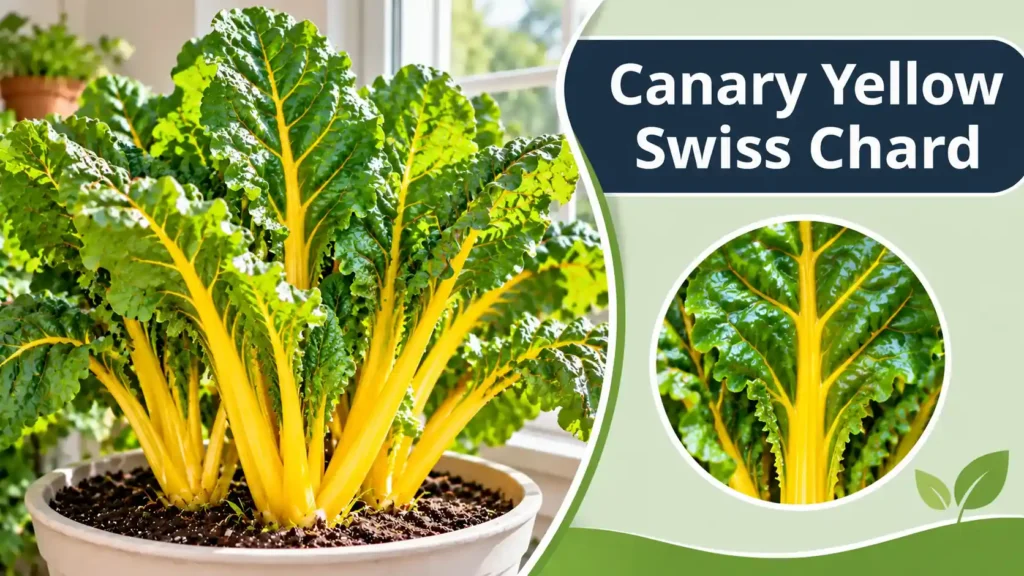
Canary Yellow Swiss Chard is a beautiful leafy vegetable recognized for its bright golden-yellow stems and vibrant green foliage. This colorful variety adds ornamental appeal to indoor vegetable gardens while providing nutritious, edible leaves. Its tender young foliage has a mild, slightly earthy flavor that works well in salads, soups, stir-fries, and cooked vegetable dishes. Canary Yellow Swiss Chard grows successfully indoors when provided with suitable lighting, consistent moisture, and nutrient-rich soil.
Identification
Canary Yellow Swiss Chard is distinguished by its brilliant yellow stalks and broad green leaves. Its colorful appearance makes it an attractive choice for indoor containers.
- Leaf Color: Bright to medium green.
- Stem Color: Golden yellow to bright canary yellow.
- Leaf Shape: Broad, oval, and slightly wrinkled.
- Plant Height: Approximately 18–24 inches.
- Flavor: Mild, earthy, and slightly sweet.
- Growth Habit: Upright with spreading foliage.
Ideal Indoor Growing Conditions
Canary Yellow Swiss Chard prefers temperatures between 60°F and 75°F (16°C–24°C). Provide approximately 12–14 hours of adequate artificial lighting daily to encourage strong leaf development.
Select a container at least 10–12 inches deep with proper drainage holes. Fill it with fertile, well-draining potting mix enriched with organic matter. Maintain a soil pH between 6.0 and 7.0 and allow sufficient space for the broad leaves to expand.
Watering and Maintenance
Water Canary Yellow Swiss Chard whenever the upper inch of soil feels dry. Maintain consistent moisture to encourage tender foliage and prevent plant stress.
Feed with diluted balanced liquid fertilizer every two to three weeks if necessary. Remove aging or damaged leaves and check regularly for aphids or other pests. Harvest mature outer leaves first while leaving younger central leaves intact for repeated harvesting.
13. White Silver Swiss Chard
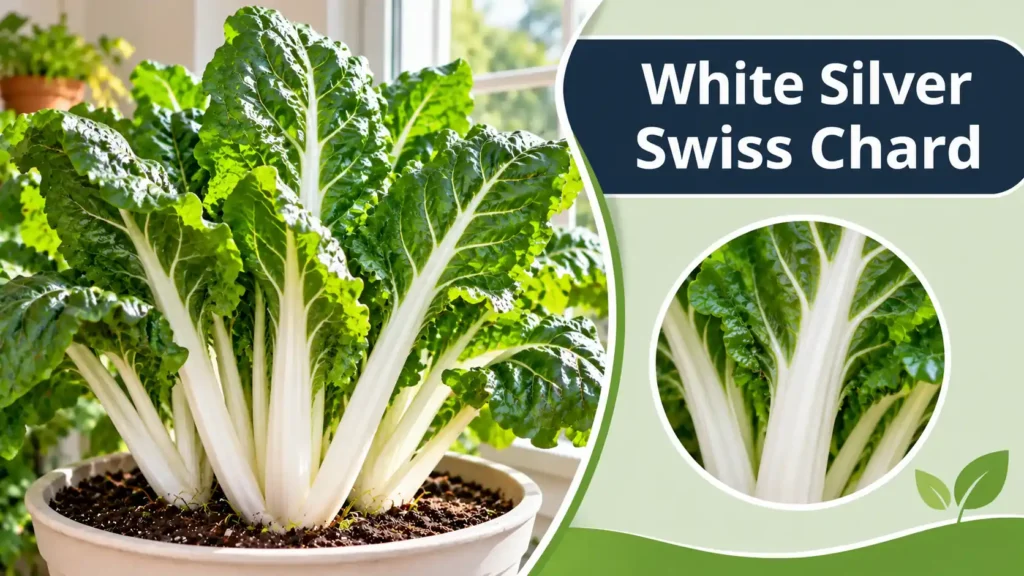
White Silver Swiss Chard is a traditional leafy vegetable known for its broad green leaves and thick, bright white stems. This variety is valued for its vigorous growth, productive foliage, and versatility in cooking. Its tender young leaves can be used in salads, while mature leaves and fleshy stalks are excellent for soups, stir-fries, and sautéed dishes. White Silver Swiss Chard can grow successfully indoors when provided with adequate container space, strong lighting, and regular maintenance.
Identification
White Silver Swiss Chard is recognized by its thick white stalks and large, slightly crinkled green leaves. Its prominent pale stems distinguish it from colorful red- and yellow-stemmed varieties.
- Leaf Color: Medium to dark green.
- Stem Color: Bright white to silvery white.
- Leaf Shape: Broad, oval, and slightly crinkled.
- Plant Height: Approximately 18–24 inches.
- Flavor: Mild, earthy, and slightly sweet.
- Growth Habit: Upright, vigorous, and spreading.
Ideal Indoor Growing Conditions
White Silver Swiss Chard grows best between 60°F and 75°F (16°C–24°C). Provide approximately 12–14 hours of effective LED grow lighting daily to support healthy foliage development.
Choose a container at least 12 inches deep with sufficient drainage holes. Use nutrient-rich, well-draining potting mix with a soil pH between 6.0 and 7.0. Provide adequate spacing and airflow to accommodate its broad leaves.
Watering and Maintenance
Water White Silver Swiss Chard when the top inch of potting mix becomes dry. Keep the soil evenly moist while avoiding waterlogged conditions that can damage the roots.
Apply diluted balanced liquid fertilizer every two to three weeks when additional nutrients are required. Remove yellowing or damaged foliage and inspect regularly for common indoor pests. Harvest larger outer leaves while protecting the central growing point to encourage continued production of fresh Swiss chard.
14. Pink Passion Swiss Chard
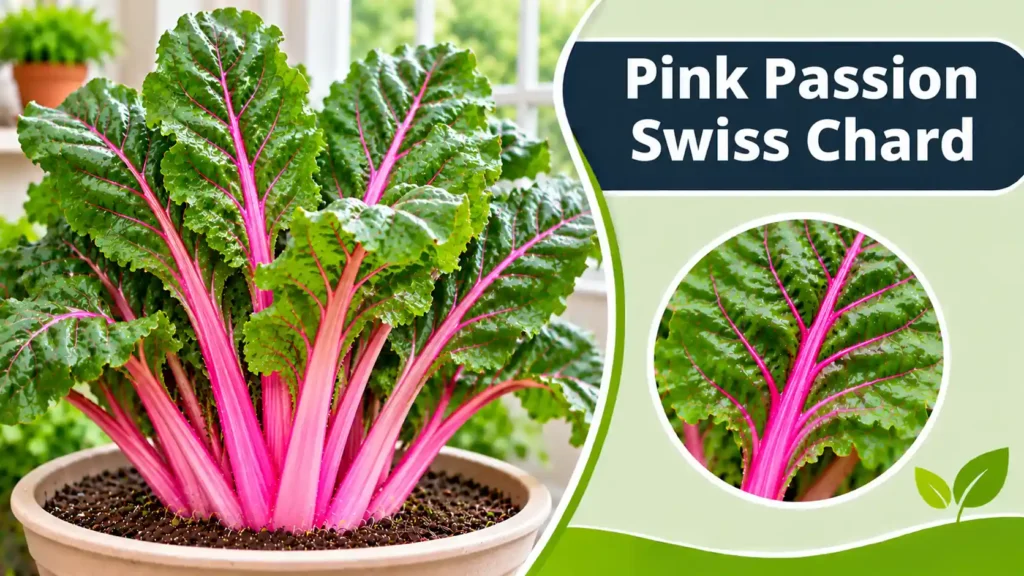
Pink Passion Swiss Chard is a colorful and nutritious leafy vegetable known for its beautiful pink stems and vibrant green foliage. This variety is an excellent choice for indoor gardeners who want to grow fresh vegetables while adding decorative color to their growing spaces. Its tender young leaves have a mild, earthy flavor that works well in salads, smoothies, soups, and sautéed dishes. With proper lighting and regular maintenance, Pink Passion Swiss Chard can produce fresh leaves over an extended growing period.
Identification
Pink Passion Swiss Chard is recognized by its attractive pink stalks and broad green leaves. Its colorful appearance makes it suitable for both edible and ornamental indoor gardening.
- Leaf Color: Bright to dark green.
- Stem Color: Vibrant pink to rosy pink.
- Leaf Shape: Broad, oval, and slightly crinkled.
- Plant Height: Approximately 18–24 inches.
- Flavor: Mild, earthy, and slightly sweet.
- Growth Habit: Upright with spreading foliage.
Ideal Indoor Growing Conditions
Pink Passion Swiss Chard grows best at temperatures between 60°F and 75°F (16°C–24°C). Provide approximately 12–14 hours of effective LED grow lighting daily to encourage healthy foliage development.
Choose a container at least 10–12 inches deep with adequate drainage holes. Use nutrient-rich, well-draining potting mix with a soil pH between 6.0 and 7.0. Maintain good airflow around the leaves to support healthy growth.
Watering and Maintenance
Water Pink Passion Swiss Chard whenever the top inch of soil begins to dry. Keep the growing medium consistently moist without allowing excess water to accumulate around the roots.
Apply diluted balanced liquid fertilizer every two to three weeks if additional nutrients are needed. Remove damaged or yellowing leaves regularly and inspect for common indoor pests. Harvest mature outer leaves while preserving the central growing point to encourage continued production.
15. Celebration Swiss Chard
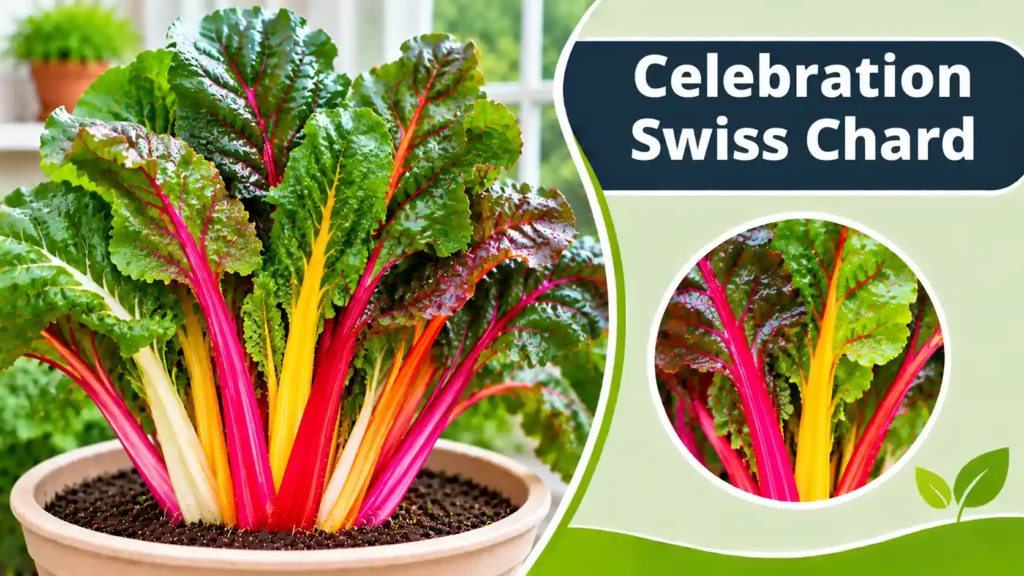
Celebration Swiss Chard is an attractive, colorful Swiss chard selection valued for its vibrant stems and nutritious green leaves. It features a mixture of bright stalk colors, making it a decorative addition to indoor vegetable gardens. Its tender young leaves have a mild, earthy flavor and can be used in salads, smoothies, soups, and cooked dishes. With sufficient lighting, fertile soil, and regular harvesting, Celebration Swiss Chard can provide a steady supply of fresh greens throughout its growing period.
Identification
Celebration Swiss Chard is recognized by its colorful stalks and broad, slightly textured leaves. Individual plants may display different stem colors, creating an attractive combination when grown together.
- Leaf Color: Bright green to deep green.
- Stem Color: Red, pink, orange, yellow, and white.
- Leaf Shape: Broad, oval, and slightly crinkled.
- Plant Height: Approximately 18–24 inches.
- Flavor: Mild, earthy, and slightly sweet.
- Growth Habit: Upright with colorful, spreading foliage.
Ideal Indoor Growing Conditions
Celebration Swiss Chard prefers temperatures between 60°F and 75°F (16°C–24°C). Provide approximately 12–14 hours of effective artificial lighting daily to encourage strong leaf development.
Select a container at least 10–12 inches deep with proper drainage holes. Fill it with nutrient-rich, well-draining potting mix and maintain a soil pH between 6.0 and 7.0. Allow sufficient space for its mature foliage to expand.
Watering and Maintenance
Water Celebration Swiss Chard when the upper inch of soil feels dry. Maintain consistent moisture while avoiding saturated growing conditions that may damage the roots.
Feed with diluted balanced liquid fertilizer every two to three weeks if necessary. Remove aging or damaged leaves and inspect regularly for aphids and other pests. Harvest mature outer leaves first while leaving the central growing point intact to encourage repeated indoor harvests.
FAQs
1. What Is the Best Type of Swiss Chard to Grow Indoors?
Barese, Bright Lights, and Ruby Red Swiss Chard are excellent choices for indoor growing. Barese is particularly suitable for small containers because of its compact growth habit. Bright Lights and Ruby Red offer colorful stems, nutritious leaves, and repeated harvests when provided with adequate lighting and care.
2. Can Swiss Chard Grow Indoors Year-Round?
Yes, Swiss chard can grow indoors year-round with suitable growing conditions. Maintain temperatures between 60°F and 75°F (16°C–24°C), provide 12–14 hours of adequate grow lighting daily, and water consistently. Regular harvesting encourages new leaves, allowing healthy plants to produce fresh greens over several months.
3. How Long Does Swiss Chard Take to Grow Indoors?
Swiss chard generally takes 25–35 days to produce harvestable baby leaves and approximately 50–65 days to develop mature foliage. Growth rates depend on the variety, lighting, temperature, and nutrients. Harvesting the outer leaves regularly allows the plant to continue producing new growth.
4. How Much Light Does Indoor Swiss Chard Need?
Indoor Swiss chard grows best with approximately 6–8 hours of direct sunlight or 12–14 hours under suitable LED grow lights daily. Adequate lighting encourages strong stems, healthy foliage, and consistent growth. Insufficient light may cause weak, elongated plants and reduced leaf production.
5. Can You Grow Swiss Chard Indoors in Small Pots?
Yes, Swiss chard can grow in small pots, especially compact varieties such as Barese. Choose containers at least 8–10 inches deep with drainage holes. Larger varieties generally perform better in 10–12-inch-deep containers. Use nutrient-rich potting mix, provide sufficient lighting, and harvest outer leaves regularly to manage plant size.