
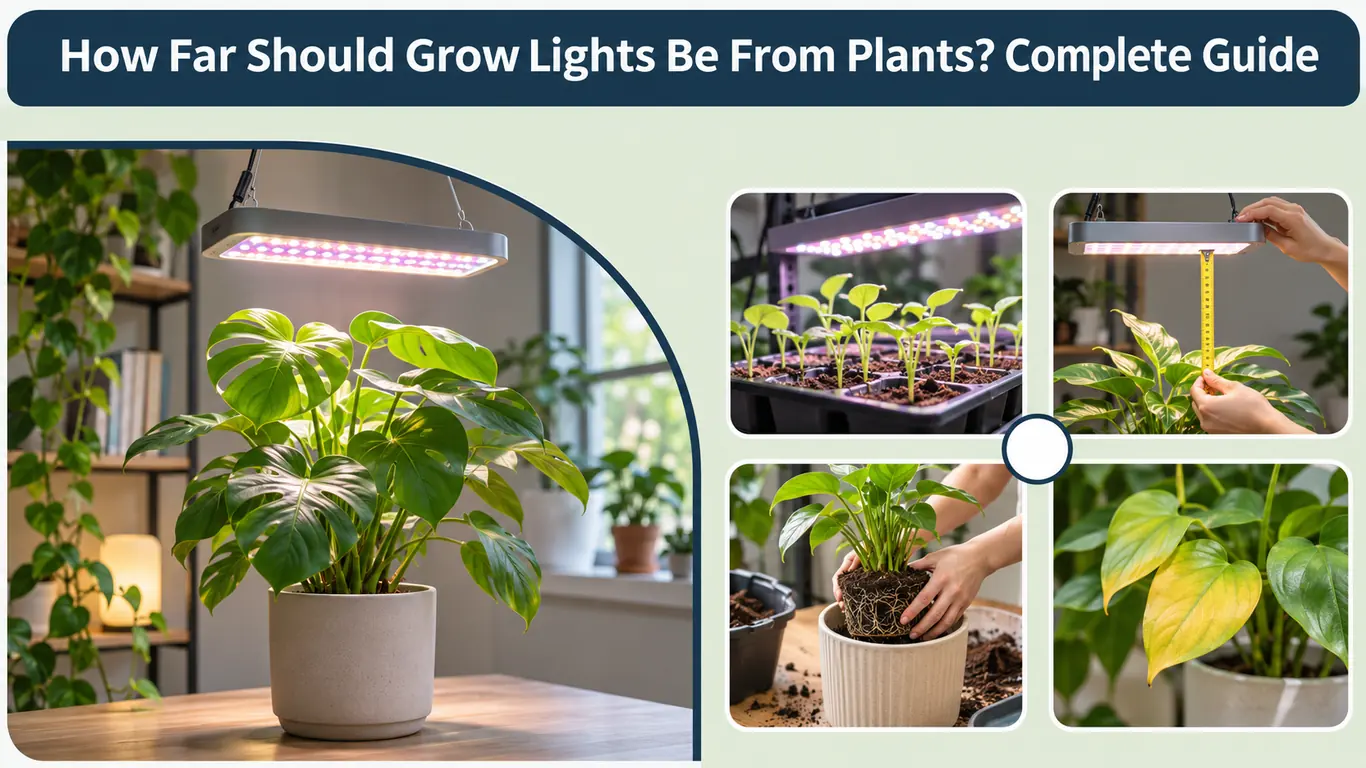
Grow lights help indoor plants grow by providing the light they need for photosynthesis, especially in rooms with limited sunlight. However, incorrect light placement can cause weak growth, yellow leaves, or damaged foliage. So, how far should grow lights be from plants for healthy development? The ideal distance depends on the light type, intensity, plant species, and growth stage. Understanding proper grow light positioning helps you provide balanced illumination, prevent light stress, and support stronger roots, healthier leaves, and consistent indoor plant growth throughout the year.
How Far Should Grow Lights Be From Plants?
The ideal distance between grow lights and plants depends on the fixture’s brightness and the amount of light each plant requires. Many indoor growing setups use lights positioned approximately 6–24 inches above the foliage, but powerful LED fixtures may need considerably more space. Always measure from the light to the top of the plant rather than the pot or soil.
Recommended Grow Light Distance Chart
| Grow Light Type | Suggested Starting Distance |
| Low-output LED grow light bars | 4–12 inches |
| Standard LED grow lights | 12–24 inches |
| High-intensity LED grow lights | 18–36 inches or more |
| Fluorescent T5 or T8 lights | 2–8 inches |
| Compact fluorescent lights (CFL) | 6–12 inches |
| HID grow lights (HPS/MH) | 18–36 inches or more |
These are approximate starting ranges rather than universal requirements. The manufacturer’s recommended hanging height and PPFD measurements should determine the final placement, especially for powerful fixtures. University extension guidance also emphasizes that light intensity changes substantially with distance.
How Far Should Different Types of Grow Lights Be From Plants?

Different grow lights produce varying amounts of light and heat, which directly influence their placement above indoor plants. Fluorescent fixtures generally work best close to foliage, while high-intensity systems often require greater separation. Understanding these differences helps prevent overheating, uneven light distribution, and insufficient illumination. The correct height should always reflect the actual output of your lighting equipment.
1. LED Grow Light Distance
LED grow lights are popular because they are energy-efficient, long-lasting, and available in different intensities. Low-output LED strips may work just a few inches above plants, while powerful LED panels may require 18–36 inches or more.
For ordinary houseplants, 12–24 inches is a reasonable initial distance for many medium-output fixtures. Check the manufacturer’s PPFD chart because two LED lights with similar wattage can deliver very different amounts of usable light.
2. Fluorescent Grow Light Distance
Fluorescent lights are commonly used for seedlings, herbs, and small indoor plants. Many fluorescent tubes work well approximately 2–6 inches above the plant canopy because their intensity is relatively low.
These fixtures generally produce less concentrated light than powerful LED panels. However, you should still monitor temperature, maintain ventilation, and raise the fixture as plants grow taller.
3. HID Grow Light Distance
High-intensity discharge lights, including high-pressure sodium and metal halide fixtures, are frequently used in larger indoor growing systems. They can produce substantial heat, making adequate separation and ventilation particularly important.
Some HID installations require 18–36 inches or more between the lamp and foliage. The safe distance depends on wattage, reflector design, cooling equipment, and manufacturer specifications.
How Far Should Grow Lights Be From Plants at Different Growth Stages?
Plants require different amounts of light during germination, seedling development, vegetative growth, and flowering. Young seedlings are sensitive to excessive light intensity, while established plants can often tolerate higher illumination. However, the appropriate distance depends on fixture output rather than plant age alone. Adjusting grow light height as plants develop helps maintain healthy, balanced growth.
1. Seedlings and Young Plants
Seedlings need sufficient light to develop compact stems and healthy leaves. Many fluorescent seed-starting fixtures work well 4–6 inches above seedlings, while some LED fixtures are positioned approximately 8–12 inches away.
University extension recommendations vary with the type of light being used. Always start with a suitable intensity and increase exposure gradually to avoid damaging delicate young leaves.
2. Vegetative Growth Stage
During vegetative growth, plants develop stems, branches, and leaves. Medium-output LED lights may initially be placed 12–24 inches above the canopy, depending on the species and fixture intensity.
Monitor the foliage regularly for stretching, discoloration, or unusually compact growth. These changes can help indicate whether the light should be moved closer or farther away.
3. Flowering and Fruiting Stage
Flowering and fruiting plants generally require more light than shade-tolerant foliage plants. Adequate illumination supports flower development, fruit production, and healthy plant structure.
Higher-intensity grow lights may deliver suitable illumination at 12–24 inches or farther away. Rather than automatically lowering the fixture, use its PPFD chart to determine whether your plants receive appropriate light levels.
How to Tell if Grow Lights Are Too Close or Too Far Away

Incorrect grow light placement can affect plant appearance, development, and overall health. Excessive light intensity may damage foliage, while insufficient illumination often produces stretched stems and slow growth. Recognizing these symptoms allows you to adjust the fixture before serious problems develop. However, similar symptoms can also result from watering mistakes, nutrient deficiencies, and temperature stress.
Signs Grow Lights Are Too Close
When grow lights are too close, plants may experience excessive light intensity or heat stress. Common warning signs include:
- Bleached leaves: Upper foliage develops unusually pale or whitish patches.
- Brown leaf edges: Leaves may develop dry, damaged margins.
- Curling foliage: Leaves curl upward or downward during stress.
- Stunted growth: Excessive intensity can reduce healthy leaf expansion.
- Excessive warmth: Leaves near the fixture become uncomfortably hot.
If these symptoms appear, raise the light slightly or reduce its brightness. Check environmental conditions before assuming that lighting is the only problem.
Signs Grow Lights Are Too Far Away
Plants receiving insufficient light often show noticeable changes in their growth pattern. Common symptoms include:
- Leggy stems: Plants stretch toward the light source.
- Small leaves: New foliage may develop smaller than expected.
- Slow growth: Limited light reduces photosynthetic energy production.
- Weak stems: Seedlings become thin and struggle to remain upright.
- Poor flowering: Light-demanding plants produce fewer flowers.
If the fixture is too far away, gradually lower it while checking the plant’s response. Increasing the daily lighting period may also help when total light exposure is insufficient.
How to Measure the Correct Grow Light Distance
Finding the correct height involves more than measuring inches between a lamp and a plant. Light intensity, coverage area, and operating hours all affect the amount of energy plants receive. Measurements such as photosynthetic photon flux density (PPFD) and daily light integral (DLI) offer a more reliable approach to grow light placement than distance alone.
Understanding PPFD and DLI
PPFD measures the amount of photosynthetically useful light reaching a surface each second. DLI measures the total quantity of that light received over an entire day.
A grow light can provide the same daily light quantity through different combinations of intensity and duration. For example, a PPFD of 200 µmol/m²/s over 14 hours produces a DLI of approximately 10.1 mol/m²/day.
Using a PAR Light Meter
A PAR meter measures photosynthetically useful light at the plant canopy. Place the sensor at leaf height and take readings from several positions across the growing area.
Compare the measurements with the light requirements of your plant species. This approach helps identify bright and dim spots and supports more accurate fixture adjustments.
Best Practices for Positioning Grow Lights Indoors
Proper grow light placement requires consistent monitoring rather than a one-time adjustment. Plants naturally increase in height, changing the distance between foliage and the fixture. Light spread, daily operating hours, and surrounding temperatures can also influence growing conditions. Following a few practical guidelines helps maintain suitable illumination while reducing the risk of unnecessary stress.
Tips for Proper Grow Light Placement
- Use adjustable hangers: Raise or lower fixtures as plants grow.
- Measure from the canopy: Check distance from the highest leaves.
- Follow manufacturer instructions: Use recommended heights and PPFD charts.
- Check plant growth weekly: Look for stretching, bleaching, or curling.
- Maintain even coverage: Position lights to illuminate the entire plant area.
- Provide a dark period: Use a timer to maintain a consistent day-night cycle.
For many indoor plants, an initial lighting schedule of approximately 12–16 hours daily can be useful, depending on species, growth stage, and available natural light. Avoid assuming that longer lighting periods always produce healthier plants.
Common Mistakes When Positioning Grow Lights
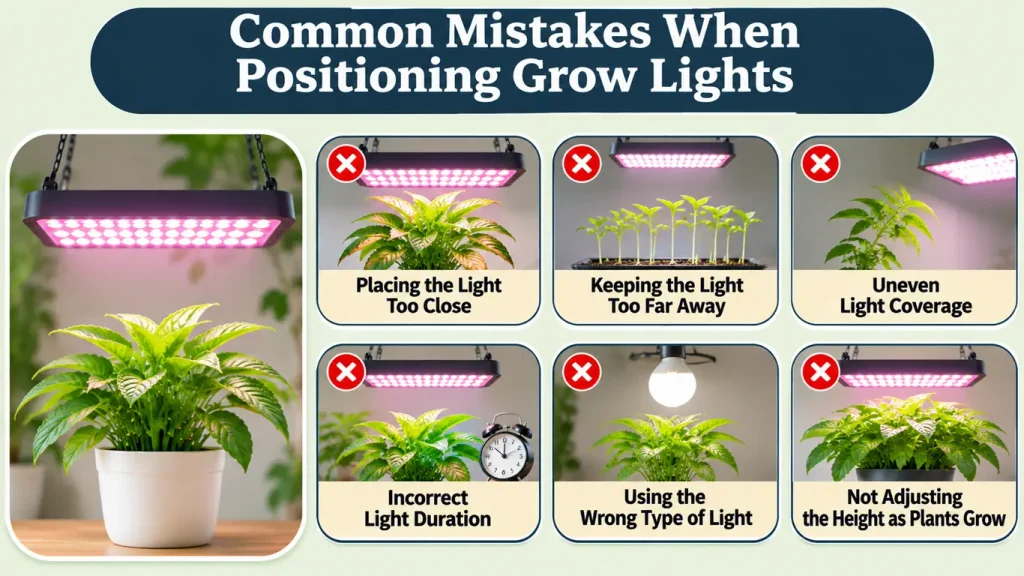
Even experienced indoor gardeners can make lighting mistakes that interfere with healthy plant development. The most frequent problems involve incorrect fixture height, inconsistent light schedules, and inadequate coverage. Some growers also confuse electrical wattage with actual light intensity. Understanding these issues helps create a more effective lighting environment for houseplants, herbs, vegetables, and indoor seedlings.
Keeping Lights at a Fixed Height
A fixed grow light position becomes less effective as plants grow taller. The distance between the fixture and canopy gradually decreases, potentially exposing upper leaves to excessive intensity.
Adjustable shelving or hanging systems make it easier to maintain suitable separation. Inspect fast-growing plants regularly and reposition the fixture whenever necessary.
Relying Only on Wattage
Electrical wattage indicates how much power a light consumes, not exactly how much usable illumination reaches plants. Two 100-watt fixtures can provide different light coverage and intensity.
Choose lighting equipment based on PPFD measurements, efficiency, and growing-area coverage. These specifications provide more useful information than wattage alone.
Ignoring Light Distribution
A grow light may provide sufficient intensity directly underneath its center while leaving surrounding plants poorly illuminated. This uneven coverage can cause inconsistent development.
Arrange plants according to their lighting needs and fixture coverage area. Raising a light can improve coverage in some setups, although it may also reduce intensity at canopy level.
FAQs
1. How far should LED grow lights be from indoor plants?
Many medium-output LED grow lights can initially be positioned approximately 12–24 inches above indoor plants. However, small LED strips may need closer placement, while powerful panels may need greater separation. Always follow manufacturer recommendations and observe plant growth.
2. Can grow lights be too close to plants?
Yes, grow lights positioned too close can expose plants to excessive light intensity or heat. Possible symptoms include bleached foliage, curled leaves, and brown edges. Raising the fixture or reducing brightness can help prevent further damage.
3. How far should grow lights be from seedlings?
Fluorescent grow lights are often placed approximately 4–6 inches above seedlings, while some LED fixtures work around 8–12 inches away. The correct height depends on the fixture’s intensity. Monitor seedlings and adjust the light as they grow.
4. How many hours should grow lights stay on each day?
Many houseplants benefit from approximately 12–16 hours of supplemental lighting daily, depending on species and natural sunlight exposure. Some seedlings may need 14–18 hours. Use a timer to maintain consistency and provide an appropriate dark period.
5. Should I move grow lights higher as plants grow?
Yes, grow lights generally need repositioning as plants increase in height. Maintaining a suitable distance from the canopy helps prevent excessive intensity while preserving adequate coverage. Check the fixture regularly and adjust its height according to plant growth and lighting requirements.