

Ficus trees are popular indoor plants known for their attractive foliage, interesting shapes, and ability to bring a tropical feel into any home. From the elegant Weeping Fig to the colorful Rubber Plant and compact Ginseng Ficus, there are many varieties to explore. Whether you prefer large statement trees or smaller decorative plants, these 25 types of Ficus trees will help you discover beautiful options for growing and decorating your indoor space.
1. Weeping Fig (Ficus benjamina)

The Weeping Fig is one of the most popular Ficus trees for indoor growing because of its graceful branches, glossy green leaves, and attractive tree-like appearance. It can grow into a beautiful indoor statement plant when provided with proper light, watering, and regular care. Its elegant foliage makes it suitable for living rooms, offices, and bright indoor spaces.
Identification
- Common Name: Weeping Fig
- Scientific Name: Ficus benjamina
- Plant Height: 3–10 feet indoors
- Leaf Shape: Small, oval, pointed leaves
- Leaf Color: Glossy green or variegated
- Growth Habit: Upright trunk with drooping branches
- Lifespan: Several decades with proper care
Ideal Indoor Growing Conditions
Weeping Fig grows best in bright, indirect sunlight. Place it near an east-facing or filtered south-facing window where it receives plenty of natural light without harsh direct afternoon sun. It prefers temperatures between 65°F and 85°F and moderate humidity.
Use well-draining potting soil and a container with drainage holes. Avoid frequently moving the plant because sudden environmental changes can cause leaf drop.
Watering & Maintenance Tips
Water when the top 1–2 inches of soil become dry. Avoid overwatering because constantly wet soil can cause root rot. During the growing season, feed it with a balanced liquid houseplant fertilizer every four weeks. Prune occasionally to maintain its shape and remove yellow or damaged leaves.
2. Fiddle-Leaf Fig (Ficus lyrata)
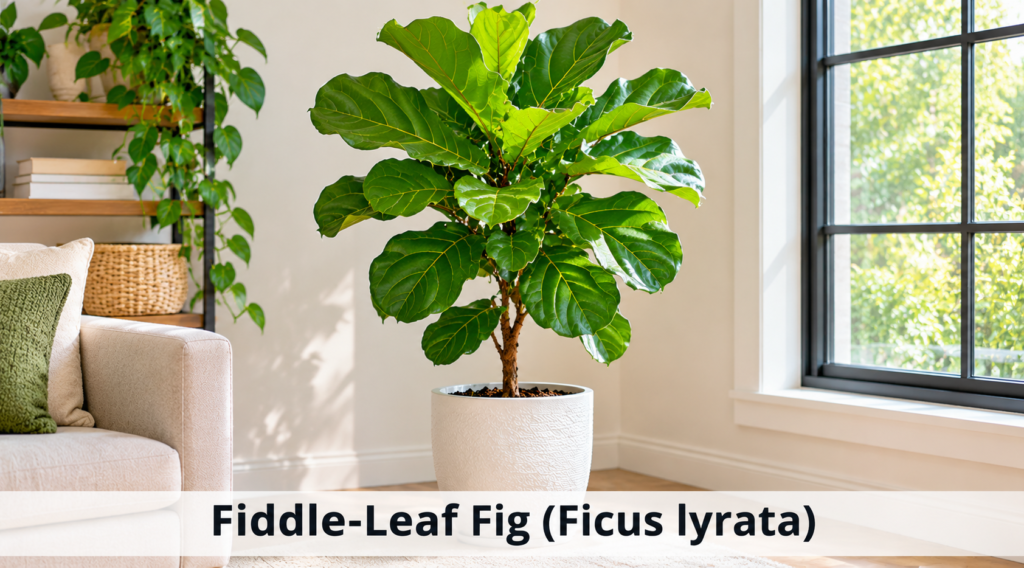
The Fiddle-Leaf Fig is a popular indoor Ficus tree known for its enormous, violin-shaped leaves and bold appearance. Its large, dark green foliage creates a tropical atmosphere and makes it an attractive choice for living rooms, bedrooms, and office spaces. With proper care, this plant can grow into an impressive indoor tree.
Identification
- Common Name: Fiddle-Leaf Fig
- Scientific Name: Ficus lyrata
- Plant Height: 3–10 feet indoors
- Leaf Shape: Large, violin-shaped leaves
- Leaf Color: Deep green with prominent veins
- Growth Habit: Upright, tree-like growth
- Lifespan: Many years with proper care
Ideal Indoor Growing Conditions
Fiddle-Leaf Fig prefers bright, indirect sunlight and a warm indoor environment. Place it near a large window where it receives plenty of filtered natural light. It grows best in temperatures between 65°F and 85°F with moderate to high humidity. Use well-draining potting soil that allows excess water to escape easily. Avoid placing it near cold drafts or heating vents.
Watering & Maintenance Tips
Water when the top 2 inches of soil become dry. Avoid allowing water to collect around the roots because excessive moisture can cause root rot. Wipe the large leaves regularly to remove dust and maintain their healthy appearance. Rotate the pot occasionally to encourage balanced growth. Feed with a balanced liquid fertilizer during spring and summer.
3. Rubber Plant (Ficus elastica)

The Rubber Plant is a beautiful indoor Ficus tree recognized for its thick stems, broad leaves, and glossy foliage. It is relatively easy to maintain compared with some other Ficus varieties, making it suitable for beginners and experienced houseplant growers. Its attractive appearance and upright growth make it an excellent choice for indoor decoration.
Identification
- Common Name: Rubber Plant
- Scientific Name: Ficus elastica
- Plant Height: 3–10 feet indoors
- Leaf Shape: Large, oval-shaped leaves
- Leaf Color: Dark green and glossy
- Growth Habit: Upright with a strong central stem
- Lifespan: Several decades with proper care
Ideal Indoor Growing Conditions
Rubber Plants grow well in bright, indirect sunlight but can tolerate some lower-light conditions. A location near an east-facing window is often suitable. They prefer temperatures between 65°F and 85°F and moderate humidity. Plant them in a well-draining potting mix containing organic matter and materials such as perlite. Choose a sturdy container with drainage holes to prevent waterlogging.
Watering & Maintenance Tips
Water the plant when the upper 1–2 inches of soil feel dry. Reduce watering during winter when growth naturally slows. Clean the broad leaves with a damp cloth to remove dust and improve their appearance. Prune unwanted branches to control its height and encourage fuller growth. Wear gloves when pruning because its milky sap can irritate the skin.
4. Burgundy Rubber Plant (Ficus elastica ‘Burgundy’)

The Burgundy Rubber Plant is a striking Ficus variety admired for its deep burgundy, almost black foliage. Its dark leaves create a beautiful contrast against lighter indoor furniture and walls. This evergreen tropical plant grows upright and can become an attractive focal point in living rooms, offices, and other bright indoor spaces.
Identification
- Common Name: Burgundy Rubber Plant
- Scientific Name: Ficus elastica ‘Burgundy’
- Plant Height: 3–10 feet indoors
- Leaf Shape: Large, thick, oval-shaped leaves
- Leaf Color: Deep burgundy, dark green, and reddish tones
- Growth Habit: Upright and bushy
- Lifespan: Many years with suitable care
Ideal Indoor Growing Conditions
Burgundy Rubber Plants prefer bright, indirect light to maintain their rich foliage color. They can tolerate moderate light, but insufficient lighting may slow their growth. Keep the plant in a warm room with temperatures between 65°F and 85°F. A well-draining indoor potting mix is essential for healthy root development. Avoid exposing it to sudden temperature changes or cold drafts.
Watering & Maintenance Tips
Water when the top 1–2 inches of soil become dry. Make sure the pot drains properly and never allow the roots to sit in standing water. Wipe the leaves occasionally with a soft, damp cloth to keep them clean and glossy. Remove damaged leaves and prune excessive growth when necessary. Apply balanced houseplant fertilizer during spring and summer.
5. Tineke Rubber Plant (Ficus elastica ‘Tineke’)
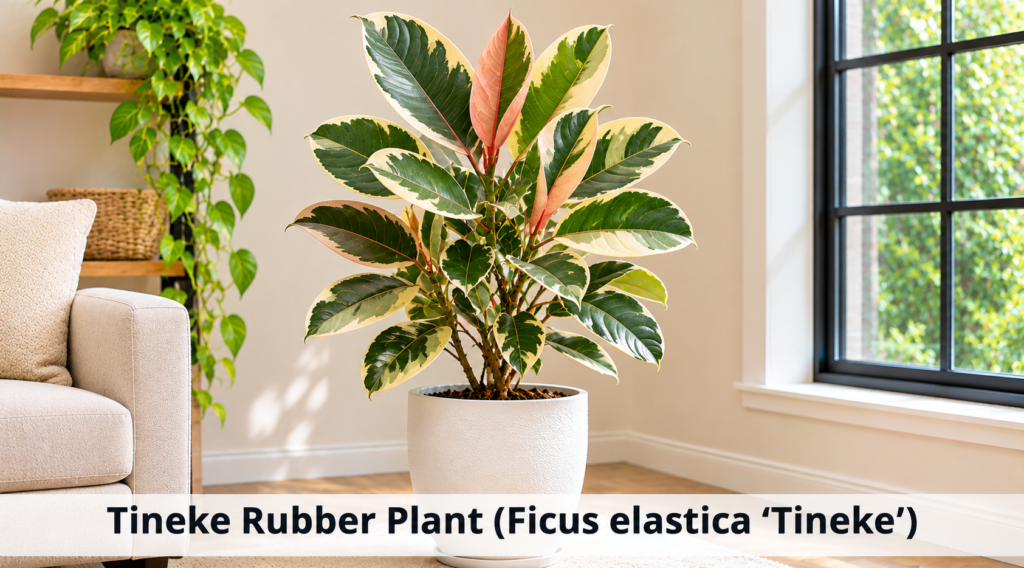
The Tineke Rubber Plant is a decorative Ficus variety known for its beautiful cream, green, and pink variegated leaves. Each leaf features a unique combination of colors, making the plant especially attractive for indoor decoration. Its upright growth and colorful foliage make it a popular choice for plant collections, bedrooms, and living rooms.
Identification
- Common Name: Tineke Rubber Plant
- Scientific Name: Ficus elastica ‘Tineke’
- Plant Height: 3–8 feet indoors
- Leaf Shape: Broad, oval-shaped leaves
- Leaf Color: Cream, green, and pink
- Growth Habit: Upright with a woody stem
- Lifespan: Several years to decades with proper care
Ideal Indoor Growing Conditions
Tineke Rubber Plants need bright, indirect sunlight to maintain their attractive variegated foliage. Place the plant near a bright window while protecting it from intense afternoon sunlight. It grows best in temperatures between 65°F and 85°F. Use a loose, well-draining potting mixture that retains some moisture without becoming waterlogged. Moderate humidity helps support healthy leaf development.
Watering & Maintenance Tips
Water when the top 1–2 inches of soil feel dry. Avoid excessive watering, especially during colder months. Rotate the pot occasionally so all sides receive balanced light. Remove yellow or damaged leaves and clean the foliage with a soft cloth. Feed the plant with diluted balanced fertilizer during the active growing season to support healthy development.
6. Ruby Rubber Plant (Ficus elastica ‘Ruby’)

The Ruby Rubber Plant is a colorful indoor Ficus variety recognized for its attractive pink, red, cream, and green variegated leaves. Its vibrant foliage makes it stand out among traditional green rubber plants. This tropical evergreen plant grows upright and works beautifully as a decorative feature in homes, apartments, and offices.
Identification
- Common Name: Ruby Rubber Plant
- Scientific Name: Ficus elastica ‘Ruby’
- Plant Height: 3–8 feet indoors
- Leaf Shape: Large, broad, oval-shaped leaves
- Leaf Color: Pink, red, cream, and green
- Growth Habit: Upright and branching
- Lifespan: Many years with proper indoor care
Ideal Indoor Growing Conditions
Ruby Rubber Plants require bright, indirect sunlight to maintain their colorful variegation. Insufficient light can reduce the intensity of their pink and cream patterns. Place the plant near an east-facing or bright filtered window. Maintain temperatures between 65°F and 85°F and provide moderate humidity. Use a well-draining potting mixture and a container with drainage holes.
Watering & Maintenance Tips
Water when the upper 1–2 inches of soil become dry. Allow excess water to drain completely before returning the plant to its decorative position. Clean the leaves regularly to remove dust and maintain their colorful appearance. Prune damaged or unwanted branches to encourage a balanced shape. Apply diluted liquid fertilizer during spring and summer, reducing feeding during winter.
7. Abidjan Rubber Plant (Ficus elastica ‘Abidjan’)

The Abidjan Rubber Plant is an attractive indoor Ficus variety known for its large, thick leaves with deep green and burgundy tones. Its glossy foliage and upright growth make it a beautiful addition to modern homes, offices, and indoor plant collections. It is relatively easy to care for and can grow into an impressive tropical tree when provided with suitable indoor conditions.
Identification
- Common Name: Abidjan Rubber Plant
- Scientific Name: Ficus elastica ‘Abidjan’
- Plant Height: 3–10 feet indoors
- Leaf Shape: Large, broad, oval-shaped leaves
- Leaf Color: Dark green with burgundy and reddish undertones
- Growth Habit: Upright with a strong central stem
- Lifespan: Many years with proper care
Ideal Indoor Growing Conditions
Abidjan Rubber Plants grow best in bright, indirect sunlight. They can tolerate moderate light, but brighter conditions help maintain their rich leaf colors. Keep the plant in a warm location with temperatures between 65°F and 85°F. Use well-draining potting soil containing organic matter and perlite. Avoid placing it near cold windows or air-conditioning vents.
Watering & Maintenance Tips
Water when the top 1–2 inches of soil become dry. Avoid keeping the soil constantly wet because excessive moisture can damage the roots. Wipe the leaves occasionally with a damp cloth to remove dust. Prune damaged branches and rotate the container to encourage balanced growth. Apply balanced liquid fertilizer during spring and summer.
8. Robusta Rubber Plant (Ficus elastica ‘Robusta’)
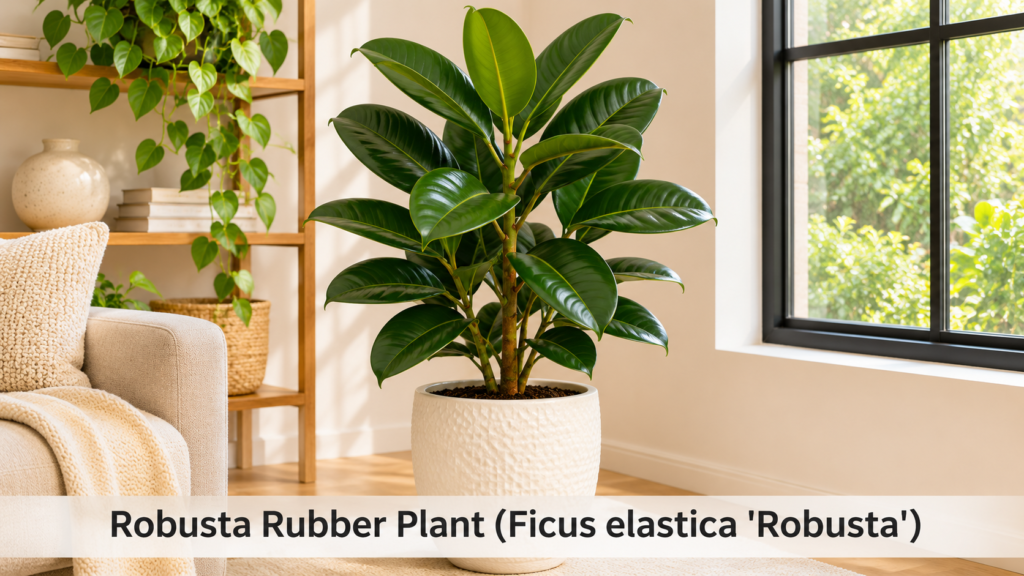
The Robusta Rubber Plant is a popular indoor Ficus variety valued for its large, thick, dark green leaves and strong upright growth. It is a classic choice for people who want a bold tropical-looking tree without complicated maintenance. Its attractive foliage and ability to adapt to indoor environments make it suitable for living rooms, offices, and spacious bedrooms.
Identification
- Common Name: Robusta Rubber Plant
- Scientific Name: Ficus elastica ‘Robusta’
- Plant Height: 3–10 feet indoors
- Leaf Shape: Large, thick, oval-shaped leaves
- Leaf Color: Deep, glossy green
- Growth Habit: Upright and tree-like
- Lifespan: Several decades with proper care
Ideal Indoor Growing Conditions
Robusta Rubber Plants prefer bright, indirect sunlight but can also tolerate moderate indoor lighting. Place the plant near a bright window where it receives filtered sunlight throughout the day. Maintain temperatures between 65°F and 85°F. A well-draining potting mixture with good aeration supports healthy root development. Choose a container with drainage holes and avoid exposing the plant to cold drafts.
Watering & Maintenance Tips
Water the plant when the upper 1–2 inches of soil feel dry. Reduce watering during winter because the plant grows more slowly during this period. Clean its large leaves regularly to prevent dust accumulation. Remove yellow or damaged foliage and prune branches when necessary. Feed with a balanced houseplant fertilizer during the active growing season.
9. Decora Rubber Plant (Ficus elastica ‘Decora’)
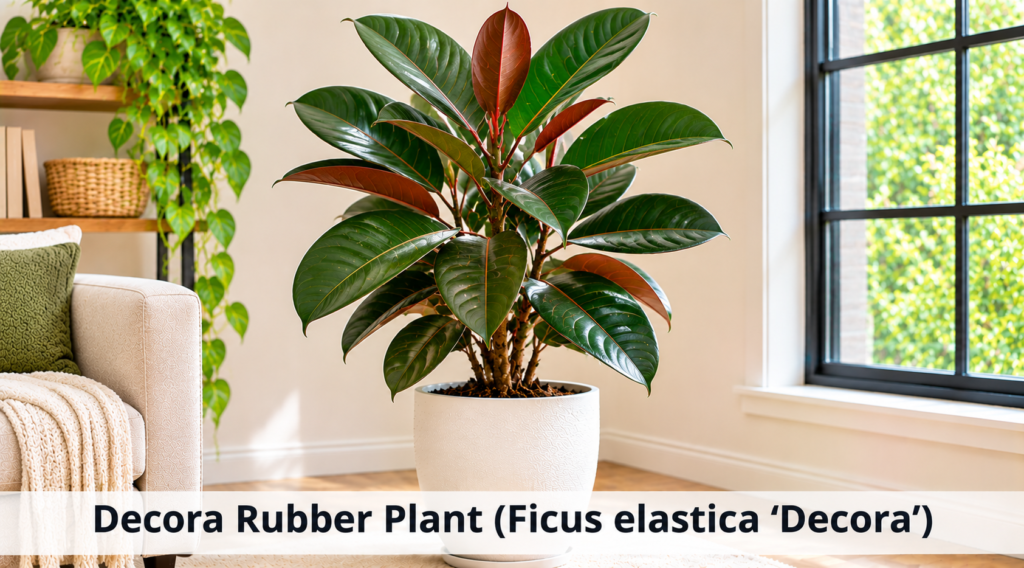
The Decora Rubber Plant is a decorative Ficus variety recognized for its broad, leathery leaves and attractive dark green foliage. Some plants display reddish tones along their leaf midribs and new growth. Its full appearance and strong stems make it an excellent indoor tree for decorating living rooms, offices, and other bright spaces. It is also relatively manageable for beginner plant owners.
Identification
- Common Name: Decora Rubber Plant
- Scientific Name: Ficus elastica ‘Decora’
- Plant Height: 3–10 feet indoors
- Leaf Shape: Broad, thick, oval-shaped leaves
- Leaf Color: Dark green with reddish midribs
- Growth Habit: Upright with a sturdy trunk
- Lifespan: Many years with proper maintenance
Ideal Indoor Growing Conditions
Decora Rubber Plants thrive in bright, indirect light. They can survive in moderate lighting, but consistent brightness encourages healthier foliage and stronger growth. Keep the plant in a warm indoor environment with temperatures between 65°F and 85°F. Use a loose, well-draining potting mixture that allows excess water to escape. Moderate humidity is generally suitable for healthy growth.
Watering & Maintenance Tips
Water when the top 1–2 inches of soil become dry. Avoid overwatering and empty any excess water from the drainage tray. Clean the broad leaves with a soft, damp cloth to maintain their glossy appearance. Prune unwanted branches to control the plant’s shape and encourage new growth. Apply balanced liquid fertilizer during spring and summer.
10. Alii Fig (Ficus maclellandii)

The Alii Fig is an elegant indoor Ficus tree known for its long, narrow leaves and graceful, drooping branches. Unlike rubber plants with broad foliage, this variety has slender leaves that create a soft, tropical appearance. It is an attractive option for homes and offices where a tall, leafy indoor tree is desired. With consistent care, it can develop into a beautiful decorative plant.
Identification
- Common Name: Alii Fig
- Scientific Name: Ficus maclellandii
- Plant Height: 4–10 feet indoors
- Leaf Shape: Long, narrow, lance-shaped leaves
- Leaf Color: Medium to dark green
- Growth Habit: Upright trunk with arching branches
- Lifespan: Many years with suitable care
Ideal Indoor Growing Conditions
Alii Fig prefers bright, indirect sunlight and can tolerate some moderate lighting. Place it near a window where it receives filtered natural light. It grows best in temperatures between 65°F and 85°F with moderate humidity. Use well-draining indoor potting soil that retains some moisture without becoming soggy. Avoid frequently changing its location because sudden environmental changes may cause leaf drop.
Watering & Maintenance Tips
Water when the top 1–2 inches of soil feel dry. Keep the moisture level consistent and avoid leaving the roots in standing water. Prune occasionally to maintain its natural tree shape and remove damaged leaves. Rotate the pot periodically so the branches grow evenly. Feed with diluted balanced fertilizer during the growing season.
11. Audrey Fig (Ficus benghalensis)
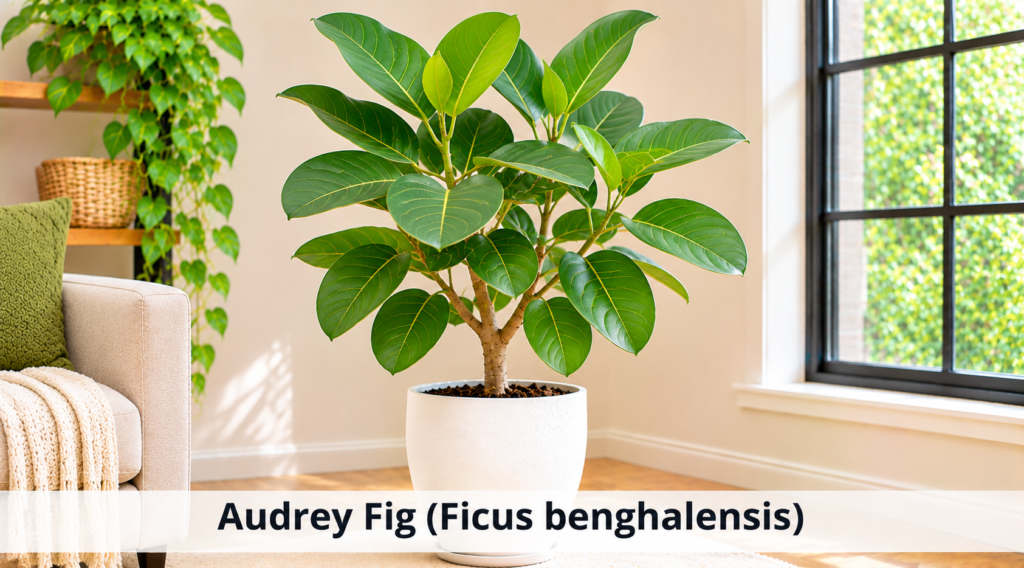
The Audrey Fig is a beautiful indoor tree admired for its large, oval-shaped green leaves, pale veins, and attractive light-colored trunk. It is closely related to the famous banyan tree and can develop a striking tree-like appearance indoors. Compared with some other Ficus varieties, its foliage has a slightly velvety texture. It makes an excellent decorative plant for spacious rooms with plenty of natural light.
Identification
- Common Name: Audrey Fig
- Scientific Name: Ficus benghalensis
- Plant Height: 3–10 feet indoors
- Leaf Shape: Broad, oval-shaped leaves
- Leaf Color: Medium green with prominent pale veins
- Growth Habit: Upright with a woody trunk
- Lifespan: Many years with proper indoor care
Ideal Indoor Growing Conditions
Audrey Fig grows best in bright, indirect sunlight and can tolerate some gentle morning sun. Place it near a sunny window where it receives several hours of natural light. Maintain temperatures between 65°F and 85°F and provide moderate humidity. Use well-draining potting soil in a container with drainage holes. Avoid keeping it in dark corners because insufficient light can weaken its growth.
Watering & Maintenance Tips
Water when the upper 1–2 inches of soil become dry. Allow excess water to drain completely and avoid keeping the soil continuously wet. Wipe the leaves gently to remove dust and maintain their healthy appearance. Prune unwanted branches to control its shape and size. Feed with balanced liquid fertilizer during spring and summer, reducing feeding during the colder months.
12. Ginseng Ficus (Ficus microcarpa)

The Ginseng Ficus is a popular indoor Ficus tree recognized for its thick, exposed roots and small, glossy green leaves. Its unusual trunk resembles the shape of a ginseng root, giving the plant a distinctive appearance. It is commonly grown as a bonsai tree because it responds well to pruning and shaping. Its compact size makes it suitable for desks, shelves, offices, and small indoor spaces.
Identification
- Common Name: Ginseng Ficus
- Scientific Name: Ficus microcarpa
- Plant Height: 1–3 feet indoors
- Leaf Shape: Small, oval-shaped leaves
- Leaf Color: Glossy dark green
- Growth Habit: Compact tree with thick exposed roots
- Lifespan: Several decades with proper care
Ideal Indoor Growing Conditions
Ginseng Ficus grows best in bright, indirect sunlight. Place it near a sunny window where it receives plenty of natural light. Maintain temperatures between 65°F and 85°F with moderate humidity. Use well-draining bonsai soil to prevent water from accumulating around the roots. Avoid exposing the plant to cold drafts or sudden temperature changes.
Watering & Maintenance Tips
Water when the upper layer of soil begins to dry. Avoid overwatering because its roots can develop rot in constantly wet soil. Prune regularly to maintain its compact bonsai shape. Clean the leaves occasionally and apply diluted bonsai fertilizer during the growing season.
13. Green Island Ficus (Ficus microcarpa ‘Green Island’)

Green Island Ficus is a compact, evergreen Ficus variety admired for its dense growth and small, rounded green leaves. Unlike many larger indoor Ficus trees, it naturally develops a bushy appearance and can be maintained as a small decorative tree. It is also popular for bonsai cultivation and indoor landscaping. Its attractive foliage makes it suitable for bright living rooms, offices, and plant collections.
Identification
- Common Name: Green Island Ficus
- Scientific Name: Ficus microcarpa ‘Green Island’
- Plant Height: 1–6 feet indoors
- Leaf Shape: Small, thick, rounded to oval leaves
- Leaf Color: Deep, glossy green
- Growth Habit: Dense, compact, and bushy
- Lifespan: Many years with suitable care
Ideal Indoor Growing Conditions
Green Island Ficus prefers bright, indirect sunlight and can tolerate some direct morning sunlight. Place it near a well-lit window to encourage dense foliage. It grows well in temperatures between 65°F and 85°F. Use a well-draining potting mixture with good airflow around the roots. Moderate humidity supports healthy leaf development.
Watering & Maintenance Tips
Water when the upper layer of soil begins to dry. Avoid keeping the roots constantly wet, as this can cause root problems. Trim the branches occasionally to maintain its rounded shape and encourage fuller growth. Remove damaged leaves and provide balanced fertilizer during spring and summer.
14. Chinese Banyan (Ficus microcarpa)

The Chinese Banyan is a tropical evergreen tree commonly grown indoors as a decorative houseplant and bonsai specimen. It is known for its dense canopy, smooth grayish trunk, and small, glossy green leaves. Under suitable conditions, it can develop a beautiful miniature tree appearance. Its adaptability and attractive branching structure make it a popular choice for indoor plant enthusiasts.
Identification
- Common Name: Chinese Banyan
- Scientific Name: Ficus microcarpa
- Plant Height: 2–10 feet indoors
- Leaf Shape: Small, oval-shaped leaves
- Leaf Color: Glossy green
- Growth Habit: Dense, branching, evergreen tree
- Lifespan: Several decades with proper care
Ideal Indoor Growing Conditions
Chinese Banyan grows best in bright, indirect sunlight. It can tolerate some direct morning light but should be protected from intense afternoon sunshine. Maintain temperatures between 65°F and 85°F. Use fertile, well-draining potting soil that allows good airflow around the roots. A bright indoor location helps maintain healthy foliage and encourages steady growth.
Watering & Maintenance Tips
Water when the top inch of soil becomes dry. Adjust watering according to temperature, humidity, and seasonal growth. Prune regularly to control its size and maintain an attractive canopy. Remove dry or damaged leaves and rotate the pot occasionally for balanced growth. Apply a diluted balanced fertilizer during the active growing season.
15. Indian Laurel Fig (Ficus microcarpa)

The Indian Laurel Fig is an attractive evergreen Ficus tree valued for its dense foliage, smooth gray trunk, and glossy green leaves. It is widely grown as an ornamental tree and can also be maintained indoors in a container with regular pruning. Its naturally rounded canopy gives it an elegant appearance, making it suitable for spacious living rooms, offices, and indoor plant collections.
Identification
- Common Name: Indian Laurel Fig
- Scientific Name: Ficus microcarpa
- Plant Height: 4–10 feet indoors
- Leaf Shape: Oval to elliptical leaves
- Leaf Color: Dark, glossy green
- Growth Habit: Upright tree with dense branching
- Lifespan: Many decades with suitable care
Ideal Indoor Growing Conditions
Indian Laurel Fig prefers bright, indirect sunlight and a warm indoor environment. Place it near a large window where it receives consistent natural light. It grows best at temperatures between 65°F and 85°F. Choose a spacious container with drainage holes and use a well-draining potting mixture. Avoid sudden changes in temperature and lighting because they can cause leaf drop.
Watering & Maintenance Tips
Water when the top 1–2 inches of soil become dry. Avoid excessive watering and make sure the container drains properly. Trim the branches to maintain its desired height and shape. Wipe the leaves occasionally to remove dust and improve their appearance. Feed with balanced liquid fertilizer during spring and summer.
16. Sacred Fig (Ficus religiosa)
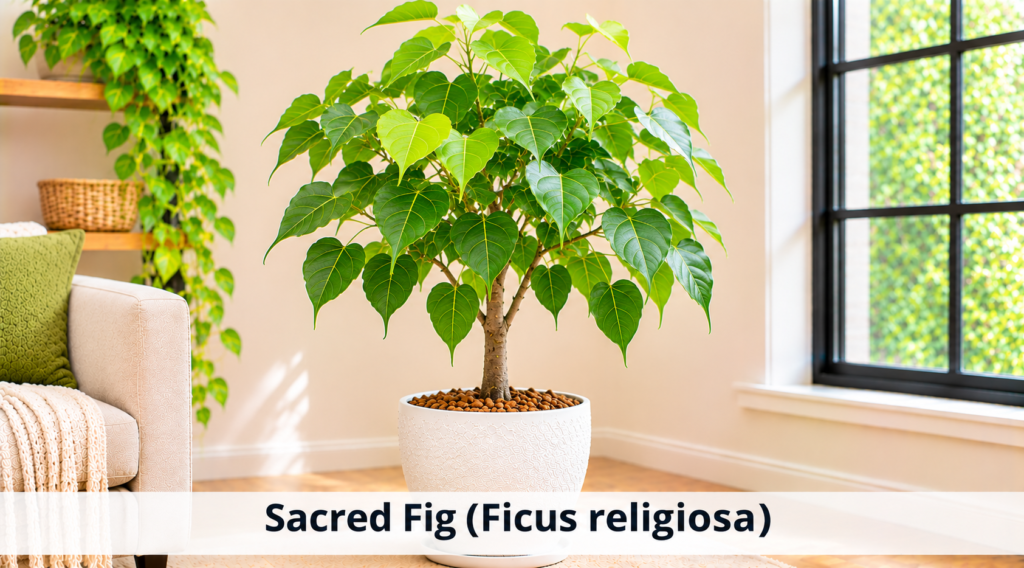
The Sacred Fig is a distinctive evergreen or semi-deciduous tree known for its heart-shaped leaves with long, pointed tips. It is also called the Bodhi Tree and is recognized for its cultural and historical significance. Although it naturally grows into a large outdoor tree, young Sacred Fig plants can be grown indoors in containers with sufficient sunlight and regular pruning. Its unusual foliage makes it an interesting addition to indoor plant collections.
Identification
- Common Name: Sacred Fig
- Scientific Name: Ficus religiosa
- Plant Height: 3–8 feet indoors with pruning
- Leaf Shape: Heart-shaped leaves with elongated tips
- Leaf Color: Bright to deep green
- Growth Habit: Upright, woody tree
- Lifespan: Many decades under suitable conditions
Ideal Indoor Growing Conditions
Sacred Fig requires plenty of bright light to grow successfully indoors. Place it near a sunny window where it can receive several hours of natural sunlight. It prefers warm temperatures between 70°F and 85°F. Use fertile, well-draining soil and a container with drainage holes. Regular access to bright light is especially important for maintaining healthy leaves and strong growth.
Watering & Maintenance Tips
Water when the upper 1–2 inches of soil become dry. Keep the soil lightly moist during active growth without allowing water to accumulate around the roots. Prune regularly to control its size and remove unwanted branches. Clean the leaves occasionally and apply balanced fertilizer during spring and summer.
17. Bengal Fig (Ficus benghalensis)

The Bengal Fig is a tropical evergreen tree famous for its enormous canopy, thick branches, and aerial roots. It is also commonly known as the Banyan Tree. Although it naturally grows into a massive outdoor tree, young plants can be grown indoors in containers with regular pruning. Its broad green leaves and attractive trunk make it an interesting choice for spacious indoor environments.
Identification
- Common Name: Bengal Fig
- Scientific Name: Ficus benghalensis
- Plant Height: 3–10 feet indoors
- Leaf Shape: Large, oval-shaped leaves
- Leaf Color: Glossy green
- Growth Habit: Upright tree with spreading branches
- Lifespan: Several decades or longer
Ideal Indoor Growing Conditions
Bengal Fig grows best in bright, indirect sunlight and warm indoor conditions. Place it near a large window where it receives plenty of natural light. Maintain temperatures between 65°F and 85°F with moderate humidity. Use fertile, well-draining potting soil and a sturdy container with drainage holes. Regular pruning helps control its size and maintain an attractive indoor shape.
Watering & Maintenance Tips
Water when the top 1–2 inches of soil become dry. Avoid overwatering because constantly wet soil can damage the roots. Clean the leaves regularly to remove dust and improve their appearance. Prune excessive branches to maintain a manageable shape and apply balanced fertilizer during spring and summer.
18. Narrow-Leaf Fig (Ficus binnendijkii)

The Narrow-Leaf Fig is an elegant indoor Ficus tree recognized for its long, slender leaves and graceful, arching branches. Its narrow foliage creates a soft, tropical appearance that works beautifully in living rooms, offices, and other indoor spaces. It is closely associated with the Alii Fig, and the two names are sometimes used interchangeably in the houseplant trade.
Identification
- Common Name: Narrow-Leaf Fig
- Scientific Name: Ficus binnendijkii
- Plant Height: 4–10 feet indoors
- Leaf Shape: Long, narrow, lance-shaped leaves
- Leaf Color: Deep green
- Growth Habit: Upright trunk with arching branches
- Lifespan: Many years with proper care
Ideal Indoor Growing Conditions
Narrow-Leaf Fig prefers bright, indirect sunlight but can tolerate moderate indoor lighting. Place it near a bright window where it receives consistent natural light. It grows well in temperatures between 65°F and 85°F. Use a well-draining potting mixture containing organic matter and perlite. Avoid cold drafts and sudden changes in its growing environment.
Watering & Maintenance Tips
Water when the upper 1–2 inches of soil become dry. Maintain consistent moisture without allowing the roots to sit in standing water. Remove yellow or damaged leaves and prune unwanted branches to maintain its shape. Rotate the container occasionally for balanced growth. Apply diluted balanced fertilizer during spring and summer.
19. Triangular Fig (Ficus triangularis)
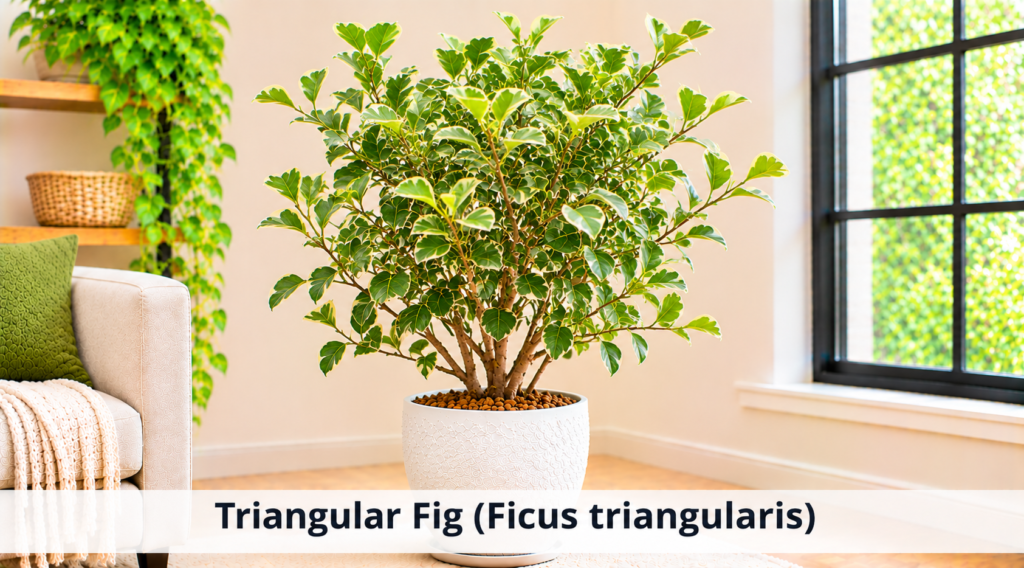
The Triangular Fig is a distinctive tropical Ficus variety known for its unusual triangular-shaped leaves. Its attractive foliage, compact growth, and branching structure make it a beautiful indoor decorative tree. Some varieties also feature cream-colored leaf margins, adding extra visual interest. It can be grown in containers and maintained as a small indoor tree with regular care and appropriate lighting.
Identification
- Common Name: Triangular Fig
- Scientific Name: Ficus triangularis
- Plant Height: 2–6 feet indoors
- Leaf Shape: Small, triangular-shaped leaves
- Leaf Color: Green or green with cream-colored margins
- Growth Habit: Upright, branching, and bushy
- Lifespan: Many years with suitable care
Ideal Indoor Growing Conditions
Triangular Fig grows best in bright, indirect sunlight. Variegated varieties generally need plenty of filtered light to maintain their attractive leaf patterns. Keep the plant in temperatures between 65°F and 85°F. Use a well-draining potting mix and a container with drainage holes. Moderate humidity and a stable indoor environment encourage healthy foliage and steady growth.
Watering & Maintenance Tips
Water when the top inch of soil becomes dry. Avoid excessive watering because soggy soil can lead to root rot. Prune occasionally to maintain its compact shape and encourage branching. Remove damaged leaves and rotate the pot to ensure even light exposure. Feed with diluted balanced fertilizer during the active growing season.
20. Oak Leaf Fig (Ficus montana)

The Oak Leaf Fig is an interesting Ficus variety recognized for its distinctive foliage, which resembles the shape of oak leaves. Its unusual leaf structure gives it a different appearance from traditional rubber plants and weeping figs. It can be grown as a compact ornamental plant indoors, making it an attractive option for collectors who enjoy unusual tropical foliage.
Identification
- Common Name: Oak Leaf Fig
- Scientific Name: Ficus montana
- Plant Height: 1–4 feet indoors
- Leaf Shape: Broad, lobed leaves resembling oak foliage
- Leaf Color: Green
- Growth Habit: Compact, branching growth
- Lifespan: Several years with suitable care
Ideal Indoor Growing Conditions
Oak Leaf Fig prefers bright, indirect sunlight and a warm growing environment. Place it near a well-lit window where it receives filtered natural light. Maintain temperatures between 65°F and 85°F and provide moderate humidity. Use a loose, well-draining potting mixture that retains some moisture without becoming waterlogged. Avoid exposing the plant to cold drafts.
Watering & Maintenance Tips
Water when the upper layer of soil begins to dry. Avoid keeping the potting mixture constantly wet because excessive moisture can damage its roots. Remove dead leaves and trim unwanted branches to maintain an attractive shape. Clean the foliage occasionally and provide diluted balanced fertilizer during spring and summer.
21. Mistletoe Fig (Ficus deltoidea)

The Mistletoe Fig is a compact tropical Ficus tree known for its small, rounded or oval-shaped leaves and distinctive berry-like fruits. Its dense foliage and manageable size make it an excellent choice for indoor container growing. Unlike many larger Ficus trees, it can remain relatively compact with occasional pruning. Its attractive appearance makes it suitable for bright living rooms, offices, and indoor plant collections.
Identification
- Common Name: Mistletoe Fig
- Scientific Name: Ficus deltoidea
- Plant Height: 2–6 feet indoors
- Leaf Shape: Small, rounded to oval-shaped leaves
- Leaf Color: Green with lighter undersides
- Growth Habit: Compact, bushy, and branching
- Lifespan: Many years with proper care
Ideal Indoor Growing Conditions
Mistletoe Fig grows well in bright, indirect sunlight and warm indoor conditions. Place it near a sunny window where it receives plenty of filtered light. It prefers temperatures between 65°F and 85°F with moderate humidity. Use well-draining potting soil and a container with drainage holes. Consistent lighting and stable temperatures help maintain healthy foliage.
Watering & Maintenance Tips
Water when the top inch of soil becomes dry. Avoid overwatering and allow excess moisture to drain from the container. Prune occasionally to maintain its compact shape and remove damaged branches. Clean the leaves gently to remove accumulated dust. Apply diluted balanced fertilizer during spring and summer to support healthy growth.
22. Natal Fig (Ficus natalensis)

The Natal Fig is a tropical evergreen tree native to parts of Africa. It is known for its attractive green foliage, spreading branches, and strong woody trunk. Although it naturally grows outdoors in warm climates, young Natal Fig plants can be grown indoors in containers with proper pruning and sufficient sunlight. Its attractive appearance also makes it suitable for bonsai cultivation and decorative indoor plant collections.
Identification
- Common Name: Natal Fig
- Scientific Name: Ficus natalensis
- Plant Height: 3–8 feet indoors with pruning
- Leaf Shape: Oval to elliptical leaves
- Leaf Color: Medium to dark green
- Growth Habit: Upright tree with spreading branches
- Lifespan: Many years with suitable care
Ideal Indoor Growing Conditions
Natal Fig prefers bright, indirect sunlight and warm temperatures. Place it near a sunny window where it receives plenty of filtered natural light. Maintain temperatures between 65°F and 85°F with moderate humidity. Use fertile, well-draining potting soil and a container with drainage holes. Regular pruning helps control its size and encourages attractive branching.
Watering & Maintenance Tips
Water when the top 1–2 inches of soil become dry. Avoid keeping the soil constantly wet because excessive moisture can damage the roots. Remove yellow leaves and prune unwanted branches to maintain its shape. Clean the foliage occasionally and apply balanced liquid fertilizer during spring and summer.
23. Rusty Fig (Ficus rubiginosa)
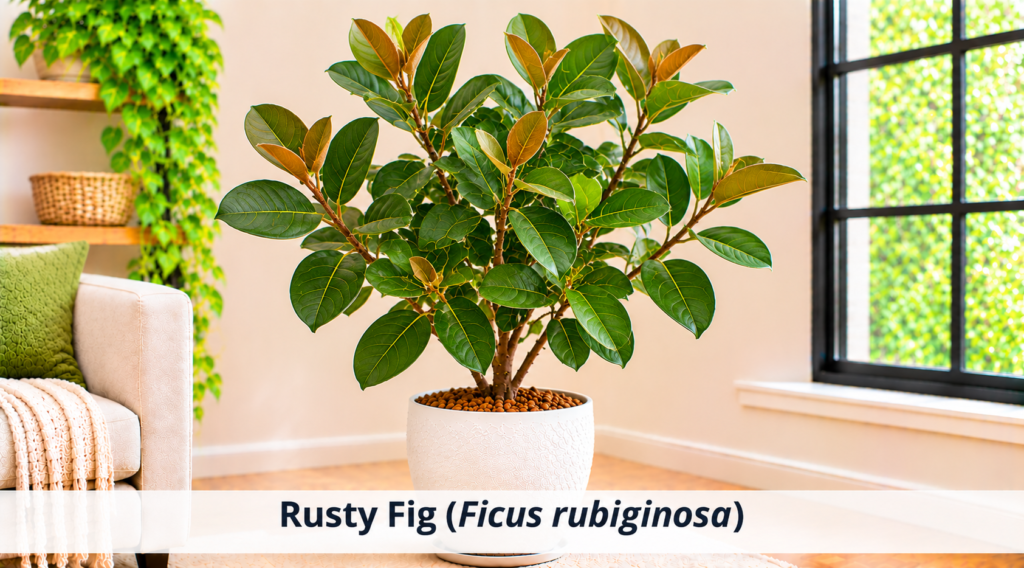
The Rusty Fig is an evergreen tropical tree recognized for its glossy green leaves and rusty-brown hairs on the undersides of its foliage. It is also known as the Rusty-Leaved Fig and Port Jackson Fig. Although it can grow into a large outdoor tree, young specimens can be maintained in indoor containers with regular pruning. Its attractive leaves and dense branching make it an interesting choice for indoor plant enthusiasts.
Identification
- Common Name: Rusty Fig
- Scientific Name: Ficus rubiginosa
- Plant Height: 3–10 feet indoors with pruning
- Leaf Shape: Oval to elliptical leaves
- Leaf Color: Glossy green with rusty-brown undersides
- Growth Habit: Upright with spreading branches
- Lifespan: Several decades with proper care
Ideal Indoor Growing Conditions
Rusty Fig grows best in bright, indirect sunlight and warm indoor conditions. Place it near a bright window where it receives consistent natural light. Maintain temperatures between 65°F and 85°F. Use well-draining potting soil containing organic matter and choose a container with drainage holes. Moderate humidity supports healthy foliage and steady development.
Watering & Maintenance Tips
Water when the upper 1–2 inches of soil become dry. Avoid overwatering and allow excess water to drain completely. Prune unwanted branches to maintain a manageable indoor size. Remove damaged leaves and clean the foliage occasionally. Apply balanced liquid fertilizer during the active growing season to encourage healthy growth.
24. Moreton Bay Fig (Ficus macrophylla)

The Moreton Bay Fig is a magnificent evergreen tree famous for its enormous spreading branches, thick trunk, and extensive aerial roots. It is native to eastern Australia and is commonly planted in parks and large landscapes. Although mature trees become far too large for ordinary homes, young Moreton Bay Fig plants can be grown in large indoor containers with sufficient light and regular pruning. Its dramatic tropical appearance makes it an interesting specimen for spacious indoor environments.
Identification
- Common Name: Moreton Bay Fig
- Scientific Name: Ficus macrophylla
- Plant Height: 3–10 feet indoors with pruning
- Leaf Shape: Large, oval-shaped leaves
- Leaf Color: Dark green with lighter undersides
- Growth Habit: Upright with spreading branches and aerial roots
- Lifespan: Many decades under suitable conditions
Ideal Indoor Growing Conditions
Moreton Bay Fig requires bright natural light to grow successfully indoors. Place it near a large, sunny window where it receives plenty of light. It prefers temperatures between 65°F and 85°F. Use a fertile, well-draining potting mixture and a sturdy container with drainage holes. Because it naturally develops into a very large tree, regular pruning and sufficient growing space are important.
Watering & Maintenance Tips
Water when the top 1–2 inches of soil become dry. Keep the soil moderately moist during active growth without allowing water to collect around the roots. Remove damaged leaves and prune branches to control its size. Clean the foliage regularly and provide balanced fertilizer during spring and summer.
25. Port Jackson Fig (Ficus rubiginosa)

The Port Jackson Fig is an evergreen Australian tree known for its dense canopy, glossy green leaves, and attractive spreading branches. It is commonly grown as an ornamental landscape tree and can also be maintained as a small container specimen through regular pruning. Its thick foliage and adaptable growth make it an interesting option for large indoor spaces with plenty of natural light. It is important to note that Port Jackson Fig is another common name for the Rusty Fig, so both names refer to the same species.
Identification
- Common Name: Port Jackson Fig
- Scientific Name: Ficus rubiginosa
- Plant Height: 3–10 feet indoors with pruning
- Leaf Shape: Oval to elliptical leaves
- Leaf Color: Glossy green with rusty-brown undersides
- Growth Habit: Dense, spreading evergreen tree
- Lifespan: Several decades with suitable care
Ideal Indoor Growing Conditions
Port Jackson Fig prefers bright, indirect sunlight and warm temperatures. Place it near a large window where it receives consistent natural light. Maintain temperatures between 65°F and 85°F and provide moderate humidity. Use well-draining potting soil and a container with drainage holes. Regular pruning is necessary to keep this naturally large tree at a manageable indoor size.
Watering & Maintenance Tips
Water when the upper 1–2 inches of soil become dry. Avoid excessive watering and make sure the container drains properly. Prune branches occasionally to maintain its desired shape and remove damaged foliage. Wipe the leaves with a damp cloth to remove dust. Feed with balanced liquid fertilizer during spring and summer.
FAQs
1. Which Ficus tree is best for growing indoors?
The Weeping Fig, Rubber Plant, Fiddle-Leaf Fig, and Ginseng Ficus are popular indoor choices. They offer attractive foliage and can grow successfully in containers when provided with suitable light, watering, and temperature conditions.
2. How much sunlight do indoor Ficus trees need?
Most indoor Ficus trees prefer bright, indirect sunlight. Some varieties tolerate moderate lighting, but insufficient light can slow growth and cause leaf drop. Placing them near a bright window usually provides suitable growing conditions.
3. How often should I water indoor Ficus trees?
Watering frequency depends on the variety, pot size, temperature, and soil conditions. Generally, water when the upper 1–2 inches of soil become dry. Reduce watering during winter when many indoor Ficus plants grow more slowly.
4. Why are my indoor Ficus tree leaves falling off?
Leaf drop can happen because of overwatering, underwatering, insufficient light, cold drafts, or sudden environmental changes. Check the soil moisture, provide consistent lighting, and avoid frequently moving the plant to reduce stress.
5. Are Ficus trees safe for pets?
Most Ficus plants contain a milky sap that can irritate the skin and digestive system. If cats or dogs chew their leaves or stems, they may experience vomiting, drooling, or mouth irritation. Keep Ficus trees away from pets.