
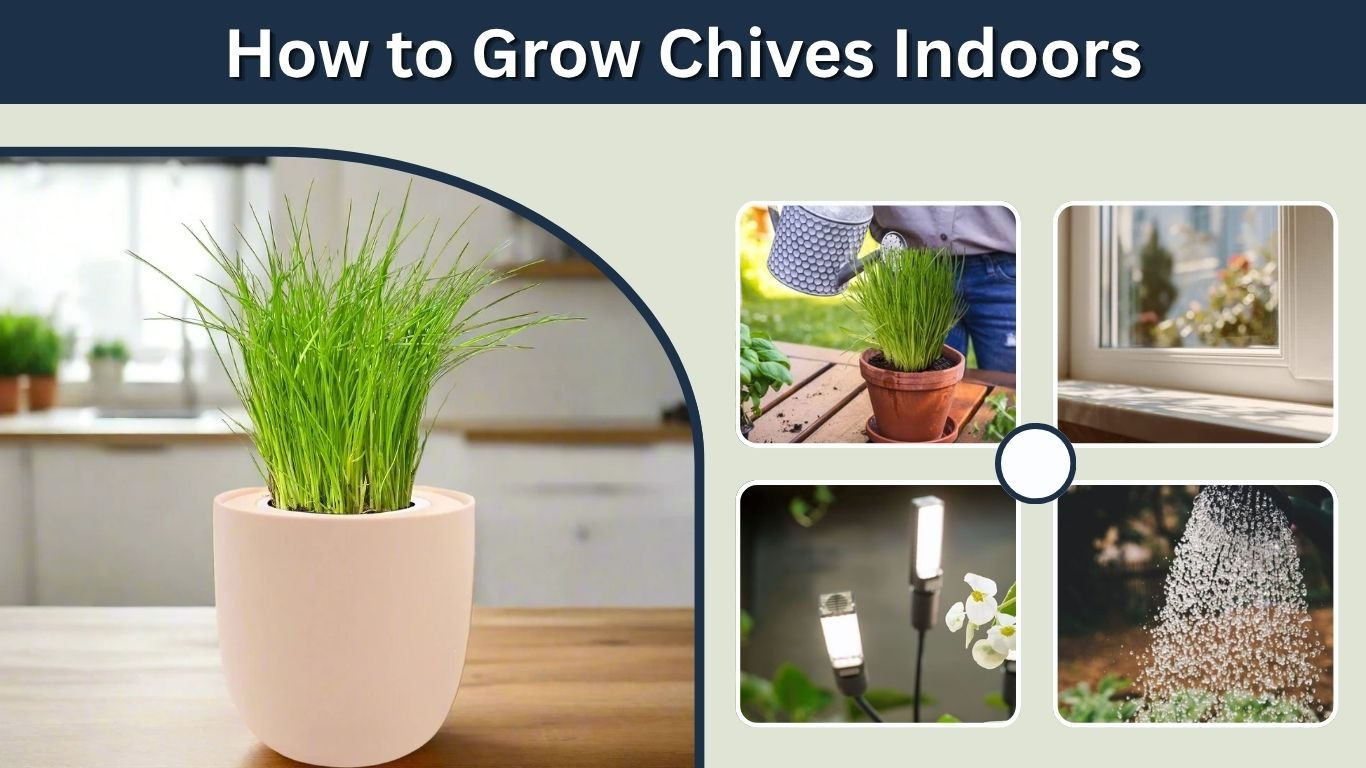
Growing chives indoors is a simple way to keep fresh herbs close to your kitchen throughout the year. Chives adapt well to containers and can grow successfully on a bright windowsill or under artificial light when given the right soil, water, and temperature. You can start them from seed, divisions, or established plants and harvest the leaves repeatedly. This guide explains how to grow chives indoors, choose the right pot and soil, manage light and watering, grow garlic chives, and keep plants productive through winter.
Can You Grow Chives Indoors?
Yes, chives can grow indoors very well when they receive enough light and steady care. They are compact, tolerant of container growing, and do not require much space. Indoor chives can produce edible leaves for months, making them a practical herb for apartments, kitchens, and homes without outdoor garden space.
Are Chives Easy to Grow Indoors?
Chives are considered one of the easier herbs to grow indoors.
They tolerate regular harvesting, grow well in pots, and usually recover quickly after cutting. Their main needs are bright light, well-draining soil, and consistent moisture.
Once established, the plants can continue producing new leaves from the base.
Can Chives Grow Indoors Year-Round?
Chives can be grown indoors year-round when light and temperature remain suitable.
During spring and summer, a bright window may provide enough natural light. In winter, shorter days can slow growth, so a grow light may be useful.
Healthy plants can continue producing leaves indoors even when outdoor conditions are cold.
What You Need for Growing Chives Indoors
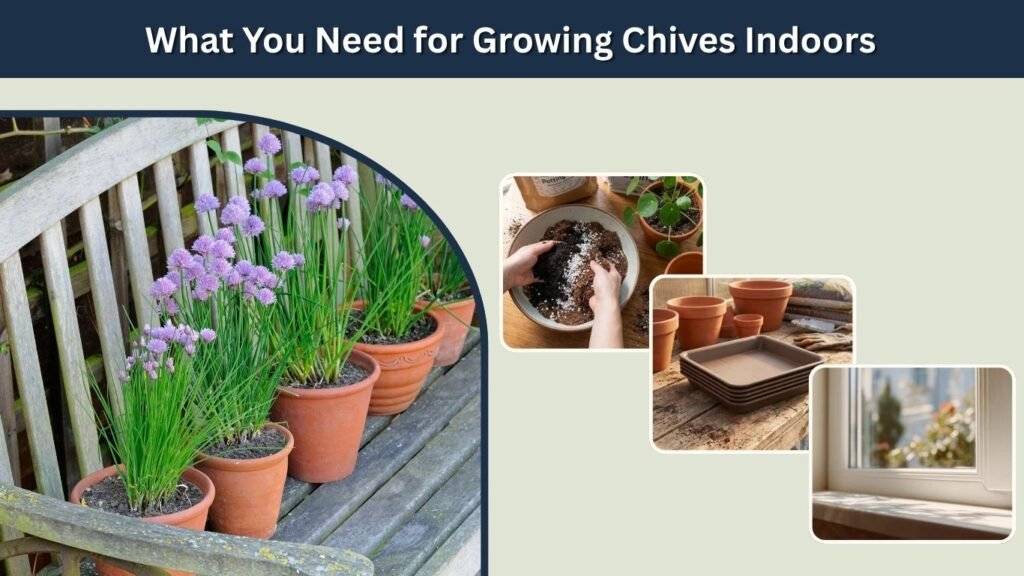
Growing chives indoors does not require complicated equipment. A suitable pot, good-quality soil, adequate light, and regular watering are usually enough. Choosing the right supplies at the beginning helps prevent poor drainage, weak growth, and overcrowding later.
Basic Supplies
You will need:
- Chive seeds or an established plant
- Pot with drainage holes
- Well-draining potting mix
- Saucer or tray
- Watering can
- Sunny windowsill or grow light
- Clean scissors for harvesting
A container about 6 to 8 inches deep is usually sufficient because chives have relatively compact root systems.
Best Soil for Indoor Chives
Chives prefer loose, fertile soil that drains well.
A standard indoor potting mix usually works well. Avoid dense garden soil because it can become compacted in containers and hold too much moisture.
If drainage is poor, roots may remain wet for too long and become unhealthy.
How to Grow Chives Indoors From Seed
Growing chives from seed indoors is inexpensive and allows you to start several plants at once. Seeds are small and should be planted shallowly. Germination can take a little time, but once seedlings become established, they usually grow steadily under bright light.
Step 1: Prepare the Pot
Fill the container with moist potting mix, leaving a small gap below the rim.
Gently firm the surface without compressing it heavily.
Make sure drainage holes are open so excess water can escape.
Step 2: Sow Chive Seeds
Scatter seeds lightly over the soil surface.
Cover them with about ¼ inch of potting mix.
You can plant several seeds together because chives naturally grow in clumps.
Step 3: Keep the Soil Moist
Mist or water gently after sowing.
Keep the soil consistently moist but not soggy while seeds germinate. Chive seeds often germinate in roughly 1 to 3 weeks depending on temperature and growing conditions.
Do not allow the surface to become completely dry during this stage.
Step 4: Provide Bright Light
Once seedlings appear, move them into strong light.
Place the pot in a sunny window or beneath a grow light. Weak light can cause seedlings to become pale, thin, and floppy.
Rotate the pot regularly so the plants grow more evenly.
Best Conditions for Growing Chives Indoors

Indoor chives grow best when light, temperature, moisture, and airflow remain reasonably stable. They are more forgiving than many herbs, but poor lighting or constantly wet soil can still reduce growth. Providing the right conditions helps produce thicker, greener leaves.
Light Requirements
Chives prefer about six hours or more of bright light each day.
A south-facing or west-facing window often works well. If natural light is limited, artificial lighting can support healthier growth.
Keep grow lights positioned according to the manufacturer’s guidance so plants receive enough intensity without heat damage.
Temperature
Chives grow well in typical indoor temperatures.
A range around 60°F to 75°F is generally suitable. They can tolerate slightly cooler conditions, especially compared with warm-season herbs.
Avoid placing plants directly beside heating vents or strong cold drafts.
Watering
Water chives when the upper layer of soil begins to feel slightly dry.
The goal is to keep the root zone evenly moist without leaving the pot waterlogged.
Empty excess water from the saucer after watering to prevent the roots from sitting in standing water.
Growing Chives in Pots Indoors
Growing chives in pots indoors makes it easy to move plants toward better light and control moisture. Chives form clumps, so they can remain productive in containers for a long time if they have enough space. Dividing mature plants occasionally can also prevent overcrowding.
Choose the Right Pot
A pot about 6 to 8 inches deep is usually suitable for a small clump.
Wider pots allow more plants to grow together.
Useful container features include:
- Drainage holes
- Stable base
- Enough width for clump expansion
- Easy access for harvesting
- A saucer to protect indoor surfaces
Avoid decorative pots without drainage unless you place a properly draining nursery pot inside them.
Prevent Overcrowding
As chives mature, the clump becomes denser.
Overcrowded plants may produce thinner leaves and dry out more quickly. If the pot becomes packed with roots, divide the plant into smaller sections and replant them.
This also gives you an easy way to create additional pots.
Growing Chives Indoors in Winter
Chives are naturally cold-tolerant plants, but indoor winter growth is still affected by shorter daylight hours. They may grow more slowly during winter unless you provide supplemental light. Keeping plants away from dry heating vents and maintaining steady moisture can help them stay productive.
Use Artificial Light When Needed
A grow light can help maintain stronger growth during short winter days.
Place it above the plant and provide consistent daily light. If leaves become pale or begin leaning heavily toward the window, they likely need more light.
Protect From Dry Indoor Air
Heating systems can dry both soil and leaves more quickly.
Check moisture regularly during winter and move plants away from direct blasts of warm air.
Chives do not require tropical humidity, but extremely dry conditions can affect leaf quality.
Growing Garlic Chives Indoors
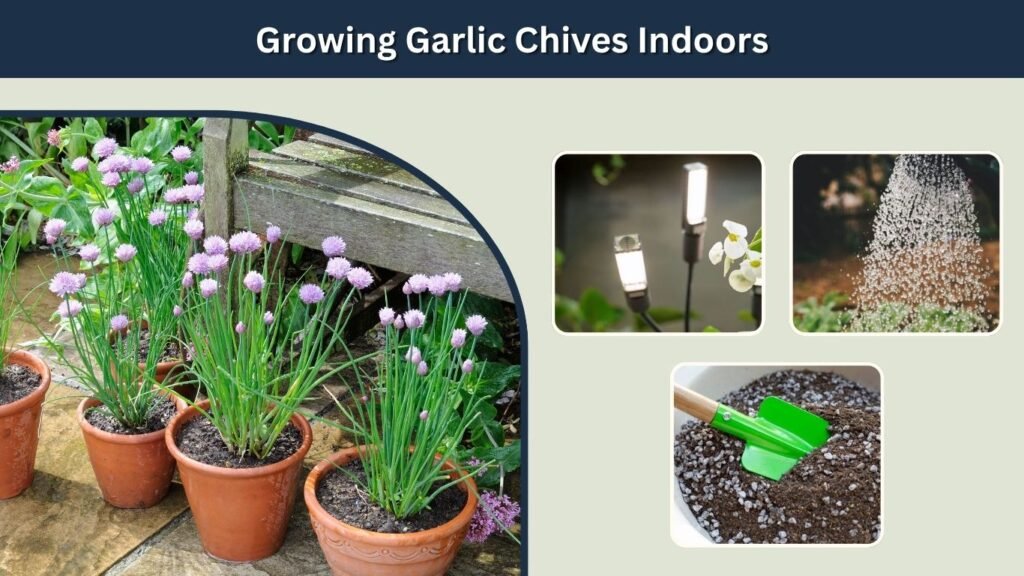
Garlic chives can also be grown indoors successfully. They have flatter leaves and a mild garlic-like flavor compared with common onion chives. Their general care is similar, although garlic chives can become slightly larger and may benefit from a wider container.
How to Grow Garlic Chives
You can start garlic chives from seed or divisions.
Provide:
- Bright light
- Well-draining potting soil
- Regular moisture
- Moderate indoor temperatures
- Enough container space for clump growth
Garlic chive seeds may germinate slowly, so maintain even moisture and be patient.
Garlic Chives vs. Common Chives
Common chives have hollow, cylindrical leaves and a mild onion flavor.
Garlic chives have flatter leaves and taste more like mild garlic.
Both can grow indoors, and the best choice depends mainly on the flavor you prefer for cooking.
How to Care for Indoor Chives
Once established, indoor chives require only basic maintenance. Regular harvesting actually helps keep the plant neat and encourages new growth from the base. Proper light and watering remain more important than heavy fertilizing.
Fertilizing Chives
Chives do not need large amounts of fertilizer.
If the potting mix contains nutrients, additional feeding may not be necessary immediately. For long-term container plants, you can use a diluted balanced fertilizer occasionally during active growth.
Too much fertilizer may produce weak, overly soft leaves.
Trim Yellow or Damaged Leaves
Remove yellow, dried, or damaged leaves with clean scissors.
This keeps the plant tidy and improves airflow around the clump.
If large numbers of leaves begin turning yellow, check for overwatering, poor drainage, or insufficient light.
Common Problems When Growing Chives Indoors
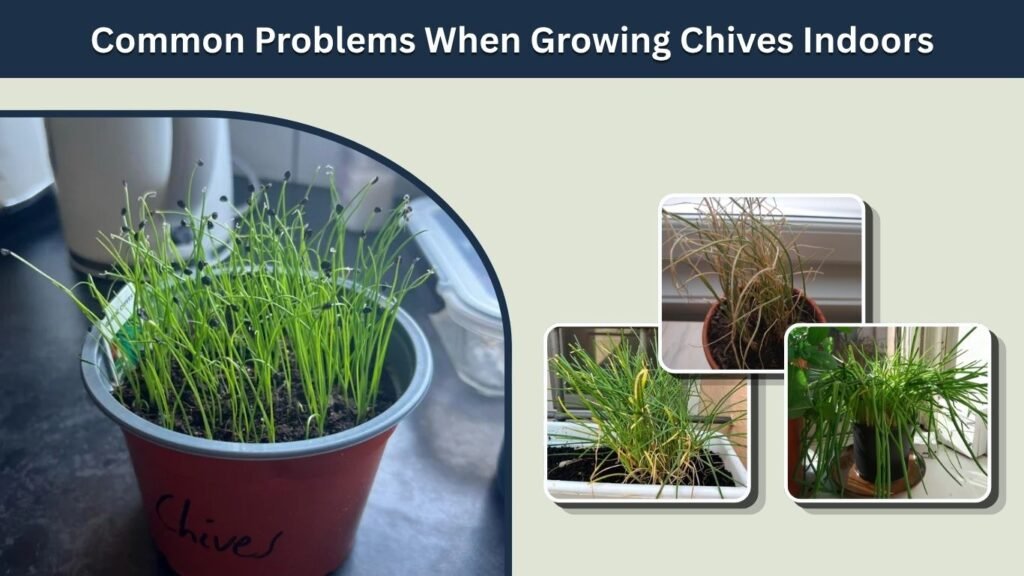
Most indoor chive problems are linked to lighting, watering, or crowded roots. Healthy chives should produce upright green leaves and steadily recover after harvesting. When growth slows, checking the basic conditions usually reveals the cause.
Problems to Watch For
- Yellow leaves: Often linked to too much water or poor drainage.
- Weak, thin growth: Commonly caused by low light.
- Dry leaf tips: May result from underwatering or very dry indoor air.
- Slow growth: Can occur with low light or cool conditions.
- Crowded roots: Mature plants may need dividing.
- Floppy leaves: Can develop when light levels are inadequate.
Correcting the growing environment early can help the plant recover.
How to Harvest Chives Indoors
You can begin harvesting once the leaves are established and several inches tall. Chives regrow from the base, which makes repeated harvesting possible. Cutting correctly helps keep the plant productive and prevents unnecessary damage.
Harvest Chives Correctly
Use clean scissors to cut leaves about 1 to 2 inches above the soil.
Avoid removing every leaf from a weak or newly established plant.
For established plants, harvest outer leaves first or cut a portion of the clump at a time.
Keep Chives Producing
Regular cutting encourages fresh leaves.
For continued indoor production, maintain strong light and avoid allowing the plant to become severely root-bound.
If growth declines after a long period, dividing and refreshing the potting mix can help restore vigor.
FAQs
Can I grow chives indoors?
Yes. Chives grow well indoors in containers when they receive bright light, well-draining soil, regular watering, and moderate temperatures.
How long do chives take to grow indoors?
Chive seeds often germinate within about 1 to 3 weeks. Harvest timing depends on growing conditions, but plants should be allowed to establish before frequent cutting begins.
Can you grow chives indoors in winter?
Yes. Chives can grow indoors during winter, although supplemental lighting may be needed because daylight is shorter.
Can you grow garlic chives indoors?
Yes. Garlic chives grow successfully indoors under conditions similar to common chives. They need bright light, good drainage, and consistent moisture.
Can chives grow indoors all year round?
Yes. Chives can grow indoors year-round when provided with adequate light, moderate temperatures, proper watering, and occasional division as the plants become crowded.