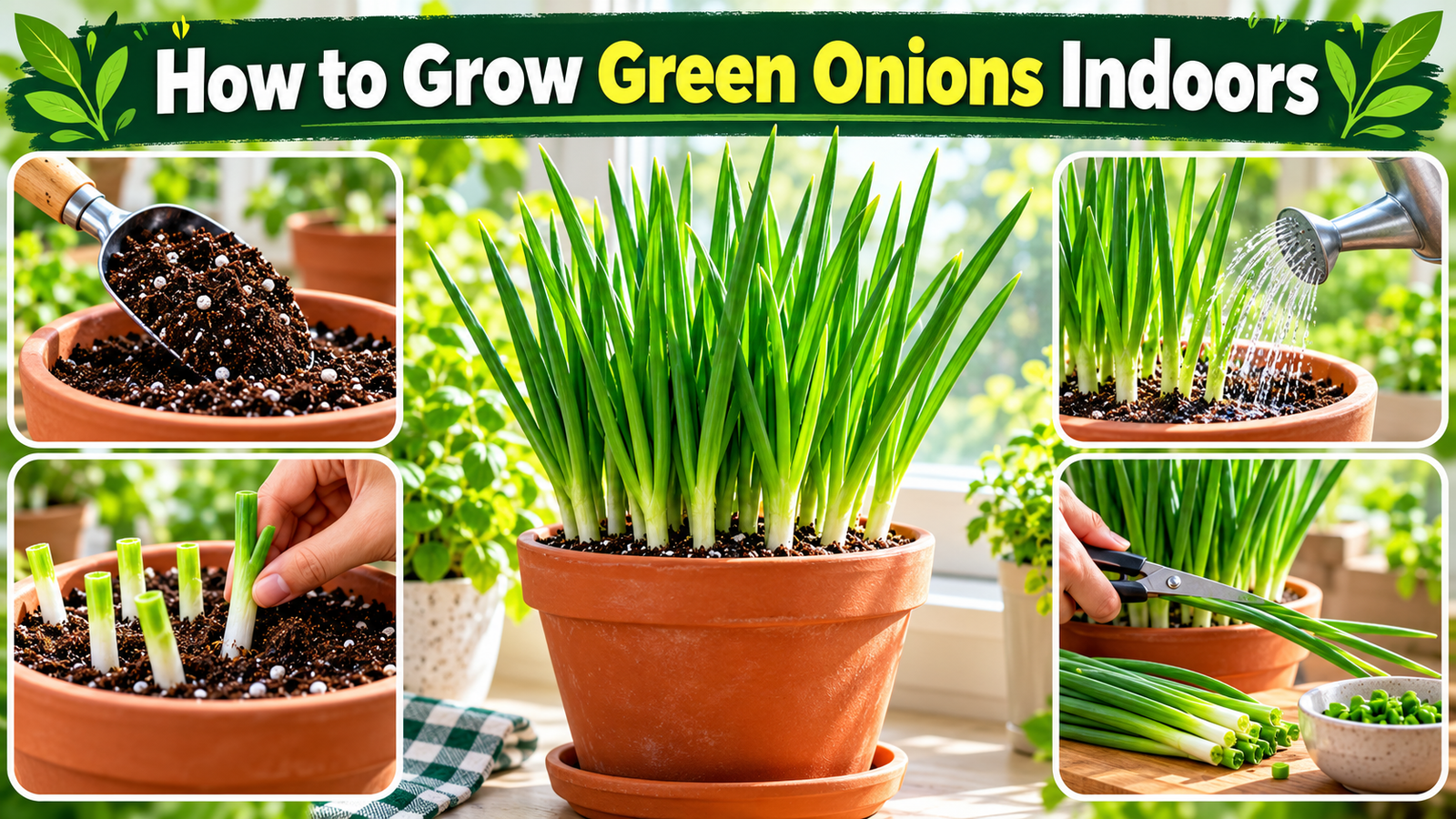
Growing green onions indoors is an easy and rewarding way to enjoy fresh vegetables throughout the year. Whether you have a sunny windowsill, a small kitchen counter, or limited gardening space, green onions can grow successfully in containers. You can start them from seeds, regrow kitchen scraps, or grow them in water without soil. With proper sunlight, watering, and basic maintenance, you can harvest fresh green onion leaves repeatedly. This guide explains how to grow green onions indoors using simple methods suitable for beginners.
Can You Grow Green Onions Indoors?
Yes, you can grow green onions indoors throughout the year when you provide enough light, moisture, and suitable growing conditions. Green onions, also called scallions or spring onions, are compact vegetables that grow well in pots and small containers. They require relatively little space and can produce edible green leaves within weeks.Unlike many larger vegetables, green onions do not need deep containers or complicated gardening equipment. A bright window or suitable LED grow light can support their growth. You can also regrow store-bought green onion scraps in water, although growing them in soil is generally better for sustained harvests.
What You Need to Grow Green Onions Indoors
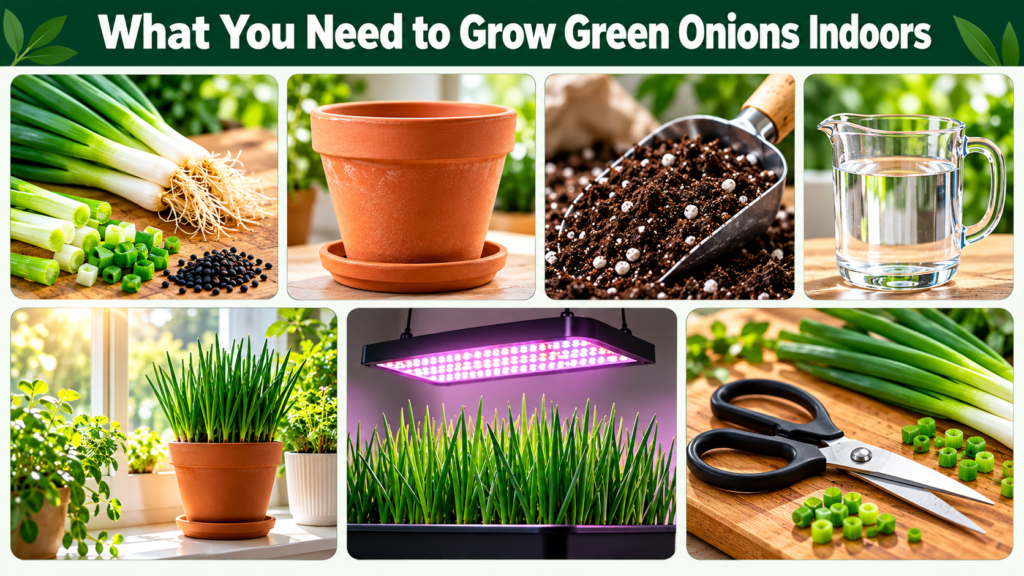
Before planting, gather a few basic gardening supplies. Green onions are beginner-friendly vegetables, and most necessary materials are inexpensive and easy to find. Your growing setup depends on whether you plan to use soil, seeds, or water. A suitable container, healthy planting material, and sufficient lighting will help establish strong roots and encourage fresh green growth.
Essential Supplies
- Green onion seeds or scraps: Choose fresh seeds or healthy store-bought green onions with intact white bases and roots.
- Growing container: Use a pot approximately 6–8 inches deep with drainage holes for soil growing.
- Potting mix: Select lightweight, well-draining potting soil designed for container vegetables.
- Clean water: Use fresh water for planting, watering, and regrowing scraps.
- Sunny windowsill: Choose a location receiving approximately 6–8 hours of direct sunlight when possible.
- LED grow light: Provide supplemental lighting when natural sunlight is insufficient.
- Small scissors: Use clean scissors to harvest the green leaves without disturbing the roots.
How to Grow Green Onions Indoors in Soil

Growing green onions indoors in soil is one of the most reliable methods for producing healthy leaves and repeated harvests. Soil provides nutrients, root support, and moisture that allow plants to continue growing. You can plant rooted grocery-store onions or young seedlings in ordinary containers. With adequate light and careful watering, this approach works well in kitchens, apartments, and small indoor gardens.
Step-by-Step Planting Instructions
- Choose a container: Select a pot around 6–8 inches deep with drainage holes.
- Prepare the soil: Fill the container with well-draining potting mix, leaving some space at the top.
- Prepare green onion scraps: Cut off the green tops, leaving approximately 1–2 inches of white base with roots attached.
- Plant the onions: Place the rooted bases into the soil with the roots covered and the growing tips exposed.
- Space the plants: Leave approximately 1–2 inches between individual green onions.
- Water gently: Moisten the soil evenly without making it waterlogged.
- Provide sunlight: Place the container near a bright window or beneath an LED grow light.
- Monitor growth: Check soil moisture and watch for new green shoots over the following days.
How Long Does It Take to Grow?
Rooted green onion scraps may begin producing noticeable new leaves within a few days under favorable conditions. You can often harvest a small amount of new growth after approximately 2–3 weeks.Plants grown from seeds take longer to reach harvestable size, typically around 8–12 weeks, depending on variety and growing conditions.
How to Grow Green Onions Indoors in Water
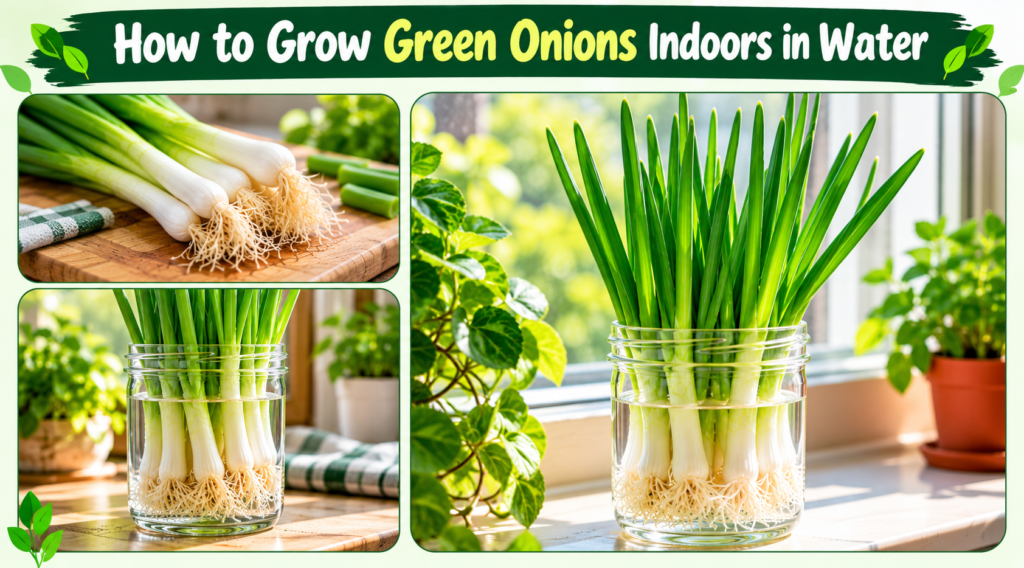
Growing green onions indoors in water is a simple method for regrowing kitchen scraps without potting soil. This approach is especially convenient for beginners who want to experiment with indoor gardening. You only need healthy green onion bases, a small glass, and clean water. Although water regrowing produces quick green shoots, the original onion bases eventually lose their stored nutrients and may decline.
Steps for Growing Green Onions in Water
- Save the white bases: Cut green onions approximately 1–2 inches above their roots.
- Choose a glass: Select a small jar or glass that holds the onions upright.
- Add water: Cover the roots and bottom portion of the white bases without submerging the cut tops.
- Position the container: Place it near a bright window with sufficient indirect light or gentle sunlight.
- Change the water: Replace it daily or whenever it becomes cloudy to reduce bacterial growth.
- Watch for regrowth: New green shoots may appear within several days.
- Harvest carefully: Trim the green leaves when they become long enough to use.
Can Green Onions Grow in Water Permanently?
Green onions can regrow temporarily in plain water, but they generally cannot maintain productive growth indefinitely without additional nutrients. As the stored energy in the original plant becomes depleted, new leaves may become thinner or weaker.For a more sustainable indoor garden, transfer rooted onions into potting soil. A properly maintained hydroponic system with a balanced nutrient solution is another option for longer-term soil-free growth.
How to Grow Green Onions Indoors from Seeds
Growing green onions indoors from seeds is an economical way to produce fresh scallions over an extended period. Unlike regrowing grocery-store scraps, starting from seeds allows you to establish new plants with complete root systems. Choose a variety intended for harvesting as green onions, such as Evergreen Bunching or White Lisbon. Seeds grow best in consistently moist soil with sufficient light and moderate temperatures.
Starting Green Onion Seeds Indoors
Fill a shallow seed tray or small container with moist seed-starting mix. Sow green onion seeds approximately ¼ inch deep, following any specific instructions on the seed packet. Cover them lightly with soil and water gently.Keep the growing medium evenly moist, not saturated, and maintain temperatures around 65–75°F (18–24°C) for germination. Seeds typically sprout within 7–14 days under suitable conditions.Once seedlings appear, provide bright lighting to prevent weak, stretched growth. Thin crowded seedlings as necessary or transplant them into deeper containers when they become established. The provides additional guidance on sowing and caring for young onions.
Best Indoor Growing Conditions for Green Onions
Green onions need adequate light, moisture, and suitable temperatures to develop healthy leaves. Although these vegetables are relatively easy to grow, poor indoor conditions may cause yellow leaves, weak stems, or slow growth. Creating a consistent growing environment will improve plant health and help support repeated harvests. Pay particular attention to lighting and watering, especially during winter when indoor sunlight may be limited.
Sunlight and Temperature Requirements
Green onions grow best with approximately 6–8 hours of direct sunlight daily. A bright south-facing window is often suitable in the Northern Hemisphere.When natural light is limited, use a full-spectrum LED grow light for approximately 12–16 hours daily, adjusting its distance according to the manufacturer’s recommendations.Maintain indoor temperatures around 60–75°F (16–24°C). Protect the plants from extreme heat, cold drafts, and direct exposure to heating vents.
Watering and Fertilizing
Water your green onions when the upper portion of the potting mix begins to dry. Keep the soil consistently lightly moist without allowing water to accumulate around the roots.Plants growing in containers may require more frequent watering than outdoor plants because smaller volumes of soil dry out faster.If the potting mix contains limited nutrients, apply a diluted, balanced liquid fertilizer according to product instructions during active growth. Avoid excessive fertilizer, which can damage roots or cause unwanted salt buildup.
How to Harvest Green Onions Indoors
Harvesting green onions correctly allows you to enjoy fresh leaves while encouraging additional growth. Most indoor gardeners prefer cutting the green tops instead of removing the entire plant. This technique preserves the rooted white bases, allowing healthy onions to produce new shoots. Harvest frequency depends on the growing method, light availability, and overall plant health. Plants established in nutrient-rich soil generally support more repeated harvesting than scraps kept in plain water.
When Are Green Onions Ready to Harvest?
Green onions grown from seeds are commonly ready when their leaves reach approximately 6–8 inches tall and have developed sufficient thickness.For regrown scraps, you can begin trimming once the new leaves reach a useful length.Use clean scissors to cut leaves above the white base, leaving enough green growth for continued photosynthesis. Avoid removing all the foliage repeatedly, as this can weaken the plant.
How to Encourage Continuous Harvests
Harvest only the leaves you need and allow the remaining foliage to continue growing. Maintain adequate sunlight, moisture, and nutrition to support fresh growth.You can also plant small batches of green onion seeds every few weeks to maintain a more consistent indoor supply.
Common Problems When Growing Green Onions Indoors
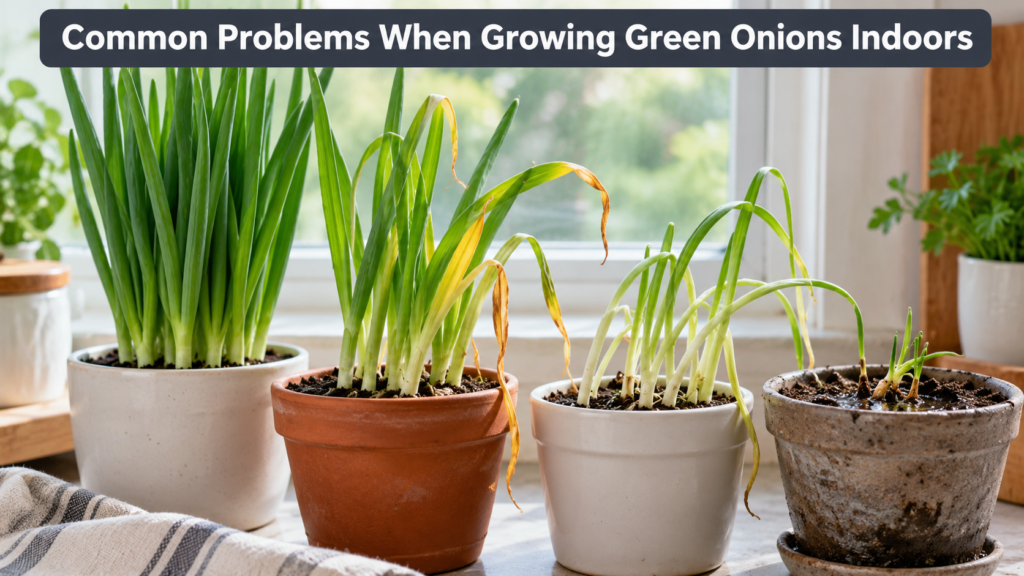
Even though green onions are relatively easy to grow, indoor plants can sometimes develop yellow leaves, weak stems, or slow growth. These symptoms often result from insufficient sunlight, excessive watering, poor drainage, or nutrient deficiencies. Identifying the underlying problem early makes it easier to restore healthy growth. Regular observation and simple adjustments to your growing conditions can prevent many common indoor gardening difficulties.
Yellow or Weak Green Onion Leaves
Yellow leaves can result from overwatering, insufficient light, depleted nutrients, or natural aging. Check soil moisture before adding more water and ensure the container drains properly.If leaves appear pale and stretched, increase the available light. Older leaves may occasionally yellow as part of the plant’s natural growth cycle.
Slow Growth and Root Rot
Slow growth is commonly associated with inadequate light, low temperatures, or poor nutrient availability.Root rot may develop when soil remains excessively wet or green onion bases sit in stagnant water. Remove affected material, improve drainage, and replace contaminated growing media when necessary.Healthy green onions should have firm white bases and roots without a foul smell.
FAQs
1. Can You Grow Green Onions Indoors Year-Round?
Yes. Green onions can grow indoors year-round when they receive adequate light, suitable temperatures, consistent moisture, and nutrients. During winter, supplemental LED grow lights may be necessary.
2. How Long Do Green Onions Take to Grow Indoors?
Green onion scraps may produce harvestable leaves within approximately 2–3 weeks. Green onions started from seeds generally take around 8–12 weeks, depending on variety and growing conditions.
3. Is It Better to Grow Green Onions in Water or Soil?
Soil is generally better for sustained growth because it provides nutrients and supports healthy root development. Water is convenient for quickly regrowing kitchen scraps but does not provide sufficient nutrients for indefinite growth.
4. How Many Times Can You Regrow Green Onions Indoors?
Green onions can produce multiple harvests when their roots remain healthy and they receive adequate nutrients and light. Water-grown scraps usually decline sooner than established plants growing in soil.
5. Do Green Onions Need Direct Sunlight Indoors?
Green onions grow best with approximately 6–8 hours of direct sunlight. If sufficient sunlight is unavailable, a full-spectrum LED grow light can provide the additional illumination needed for healthy indoor growth.