
Growing basil indoors puts fresh, fragrant leaves within easy reach whenever you cook. Whether you start with seeds, root a cutting, or rescue a supermarket plant, success depends on providing enough light, warmth, and suitable watering. A sunny window may work during brighter months, while a grow light helps maintain stronger growth through winter. This guide explains how to grow basil indoors, choose a practical setup, avoid common care mistakes, and harvest regularly while keeping your plants productive for as long as possible.
What You Need to Grow Basil Indoors
Start with a small setup that fits your available light and space. One healthy plant can provide occasional leaves for cooking, while several plants are more practical for frequent harvesting. Choose a location where you can inspect the foliage, check soil moisture, and water without damaging nearby furniture.
Choose Your Basil and Container
Sweet basil is a familiar choice for pesto, salads, and sauces. Genovese basil produces aromatic leaves, while compact bush varieties suit smaller growing spaces. Thai basil offers a different flavor for stir-fries and other dishes.
Prepare these supplies:
- Planting material: Basil seeds, a healthy cutting, or a potted plant.
- Container: A pot with drainage holes and a waterproof saucer.
- Growing medium: Fresh, well-draining container potting mix.
- Lighting: A sunny window or suitable LED grow light.
- Basic tools: Clean scissors and a small watering can.
An approximately 8-inch pot is a practical starting point for one young plant. Move vigorous plants into larger containers when their roots fill the available space.
Ideal Indoor Basil Growing Conditions
Basil needs strong light and comfortable warmth to produce steady growth. A plant may survive in a dim kitchen without providing many usable leaves. Before changing fertilizer or watering routines, assess whether the location supplies enough light and whether temperatures remain suitable throughout the day and night.
Provide Sunlight or Grow Lights
Place basil near your brightest suitable window. Aim for around six hours or more of direct sunlight when relying on natural light, while watching for overheating against the glass. University of Maryland Extension identifies basil as a full-sun herb.
For indoor basil under artificial lighting:
- Use an LED fixture intended for growing plants.
- Follow the manufacturer’s recommended distance from foliage.
- Start with approximately 14–16 hours daily, using a timer.
- Provide a regular dark period overnight.
Maryland Extension recommends supplemental lighting for indoor herbs during winter. Light duration alone cannot compensate for a fixture that is too weak or too far away.
Maintain Warmth and Gentle Air Movement
A room around 70–80°F generally provides a useful growing environment. Keep basil away from cold drafts, air-conditioning outlets, and hot radiators.Leave space between plants so air can move around their leaves. Avoid trapping foliage against windows or crowding several pots tightly together. Basil is sensitive to cold; chilling can discolor its leaves and slow growth.
How to Grow Basil Indoors From Seed
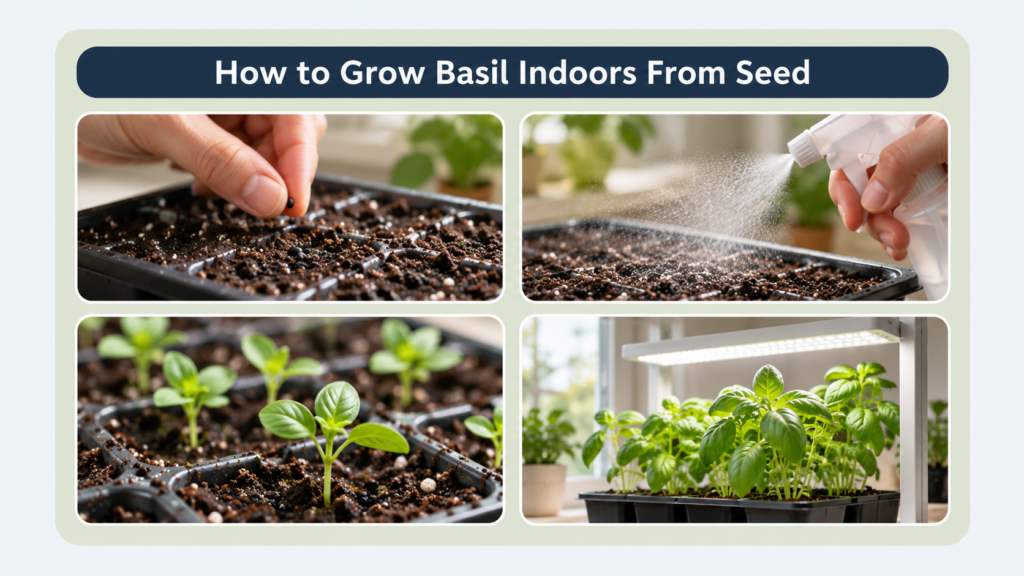
Seeds give you access to different varieties and allow you to raise replacement plants inexpensively. Sow a manageable number rather than filling a small pot with an entire packet. Seedlings need space as they develop, and overcrowding makes watering, thinning, and later transplanting more difficult.
Sow Seeds and Care for Seedlings
Fill clean containers with lightly moistened seed-starting mix. Follow the packet’s planting instructions; basil is commonly sown about ¼ inch deep.
- Sow a few seeds in each small pot or cell.
- Cover lightly and water gently.
- Keep the mix moist without saturating it.
- Place containers somewhere warm.
- Provide strong light as soon as seedlings emerge.
Seeds often germinate within roughly 5–10 days under favorable conditions, although timing varies.Remove any humidity cover after emergence. Once seedlings develop true leaves, thin them or transplant them into separate containers. Handle seedlings gently, keeping as much of their root system intact as possible.
How to Grow Basil Indoors From Cuttings
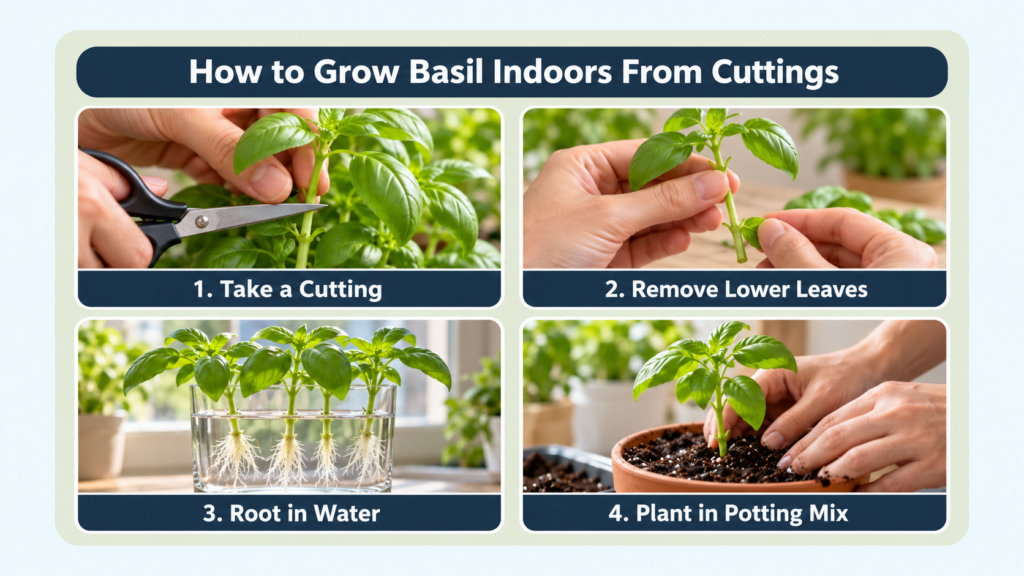
Cuttings are useful when you already have a healthy basil plant or can obtain fresh, undamaged stems. They also provide a way to replace an aging plant before its productivity declines. Choose leafy shoots without flowers, checking carefully for insects, discoloration, or soft tissue before starting.
Root a Healthy Stem
Take a cutting approximately 4–6 inches long, making the cut just below a leaf node. Remove the lower leaves while retaining several healthy leaves at the top.Place the bare lower stem in clean water, keeping all leaves above the waterline. Set the container in bright light away from intense, hot sunshine.Replace the water regularly and clean the container if it becomes cloudy. Basil cuttings root readily in water, according to Penn State Extension.Once several roots reach approximately 1–2 inches long, transplant into moist potting mix. Keep the newly potted cutting evenly moist while it establishes, then gradually adopt your normal watering routine.
How to Grow Basil Indoors in Water
Rooting a cutting in water and maintaining a productive hydroponic plant are different processes. A cutting can develop roots using its stored resources, but continued growth requires nutrients. Decide whether your goal is to produce a rooted cutting for potting or maintain basil in a complete water-based growing system.
Support Long-Term Hydroponic Growth
For sustained water growing, use a hydroponic setup that supplies nutrients and manages oxygen around the roots. Plain water is not a complete long-term feeding solution.Choose a food-safe reservoir, suitable plant supports, and hydroponic nutrients labeled for edible crops. An opaque reservoir limits light reaching the nutrient solution.Follow the system’s instructions for solution strength, water replacement, and root aeration. Keep leaves and the stem base above the solution. Check for unhealthy roots, unpleasant odors, and algae, and clean equipment between plantings.For beginners, rooting cuttings in water and then moving them into potting mix is often easier to manage.
How to Keep Grocery Store Basil Alive Indoors

Supermarket basil frequently contains numerous seedlings growing together in a small pot. Its full appearance can hide competition for root space and moisture. Inspect the plant when you bring it home, remove packaging that restricts airflow, and check whether the potting mix is dry or waterlogged.
Reduce Crowding and Repot Carefully
If the pot contains a dense cluster of seedlings, gently separate the root ball into a few manageable groups. Avoid pulling apart every individual stem when the roots are tightly tangled.Replant the groups into separate draining containers with fresh potting mix. Water thoroughly, let excess drain, and place them in bright conditions.Allow recovery before harvesting heavily. Some older or damaged leaves may decline after repotting; judge recovery by healthy new growth. If the root ball is badly deteriorated but some stems remain healthy, take cuttings as a backup.
Watering, Feeding, and Year-Round Care
Basil benefits from consistent moisture, but its roots also need air. Watering requirements change with container size, temperature, lighting, and plant growth. Check the potting mix instead of following a fixed daily schedule, and adjust care when winter light or indoor heating changes the growing environment.
Water and Fertilize According to Growth
Check the top inch of potting mix. When it begins to feel dry, water thoroughly until excess drains away, then empty the saucer.Avoid allowing the entire root ball to dry repeatedly. Equally, do not keep the pot standing in water.Use a fertilizer labeled for edible container plants, following its application directions. Account for any fertilizer already included in the potting mix. Excess feeding can harm growth and reduce herb quality.
Grow Basil Indoors in Winter
Move plants away from cold glass overnight and provide supplemental lighting when needed. Water less frequently if growth slows and the mix stays moist longer.For year-round harvests, start replacement plants periodically. Most familiar culinary basils are annuals and eventually flower and decline, even indoors. Good care extends productivity but does not keep one plant growing indefinitely.
How to Harvest Basil and Prevent Common Problems

Harvesting shapes basil as well as supplying leaves. Wait until a young plant is established and has several sets of true leaves. Begin lightly, then increase harvesting as branching develops. A struggling or recently repotted plant should recover before you remove substantial growth.
Cut Above a Leaf Pair
Use clean scissors to cut a stem just above a healthy pair of leaves. This encourages branching from the remaining nodes.Leave plenty of foliage behind and avoid removing more than roughly one-third of the plant at once. Pinch out flower buds when leaf production is your priority.If stems become stretched, assess lighting. If leaves yellow, check drainage, moisture, and feeding before treating the problem. Inspect leaf undersides regularly for pests.
FAQs
Can Basil Grow Indoors Without Direct Sunlight?
Yes, with adequate artificial lighting. A bright-looking room alone may not provide enough light for productive growth.
How Long Does Basil Take to Grow From Seed?
Light harvesting often begins around six to eight weeks after sowing, depending on variety and growing conditions.
Why Does Supermarket Basil Wilt So Quickly?
Crowded roots, irregular moisture, transport stress, and inadequate light can contribute. Check the root ball before deciding whether it needs water or repotting.
Can Basil Grow in Water Forever?
Plain water cannot support dependable long-term production. Hydroponic basil needs nutrients and an appropriate root environment, and plants still require eventual replacement.
Does Basil Grow Back After Cutting?
Healthy basil usually produces new shoots when cut above leaf nodes. Leave sufficient foliage and avoid cutting into bare, unproductive lower stems.