
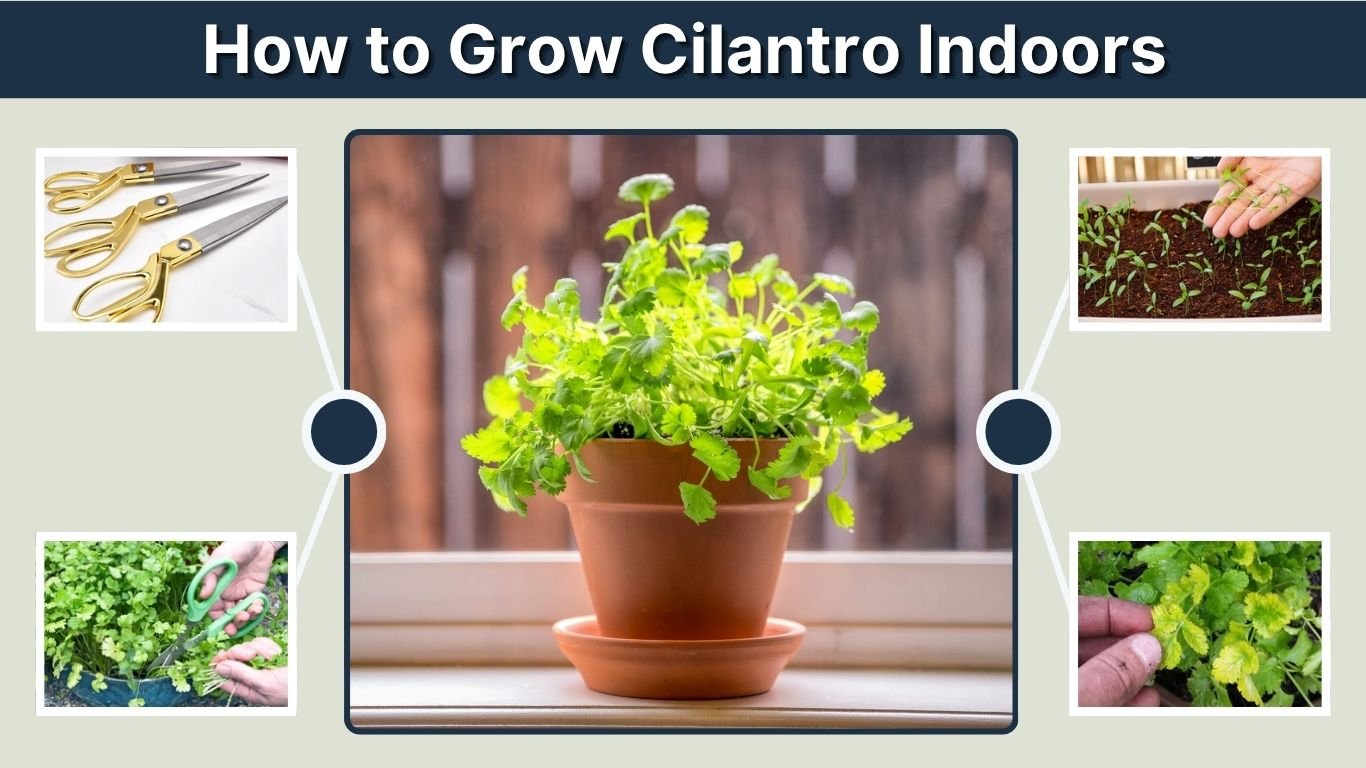
Learning how to grow cilantro indoors is a practical way to keep fresh, flavorful leaves available for cooking throughout the year. Cilantro grows quickly in containers when it receives bright light, moderate temperatures, consistent moisture, and well-draining soil. Unlike many herbs, it prefers cooler conditions and has a relatively short growing cycle. This complete guide explains how to plant cilantro indoors, choose the right container, manage watering and light, prevent common problems, extend the harvest, and keep healthy plants growing successfully inside your home.
What You Need to Grow Cilantro Indoors
Growing cilantro indoors does not require complicated equipment, but starting with suitable materials makes the process much easier. Cilantro develops a fairly deep taproot, so container depth matters more than it does for many shallow-rooted herbs. Quality potting soil, reliable drainage, fresh seed, sufficient light, and moderate temperatures provide the foundation for strong growth and flavorful leaves.
Essential Growing Supplies
Prepare these basic items:
- Fresh cilantro seeds
- Deep container with drainage holes
- High-quality potting mix
- Drainage saucer
- Watering can
- Bright windowsill
- Grow light if necessary
- Clean scissors for harvesting
Choose the Right Container
Cilantro grows best in a container that gives its taproot enough room to develop. A pot around 8 to 10 inches deep is generally a practical choice.
Wider containers are useful if you want to grow several plants together. Make sure the bottom has drainage holes so excess water can escape instead of collecting around the roots.
How to Grow Cilantro Indoors in 8 Easy Steps
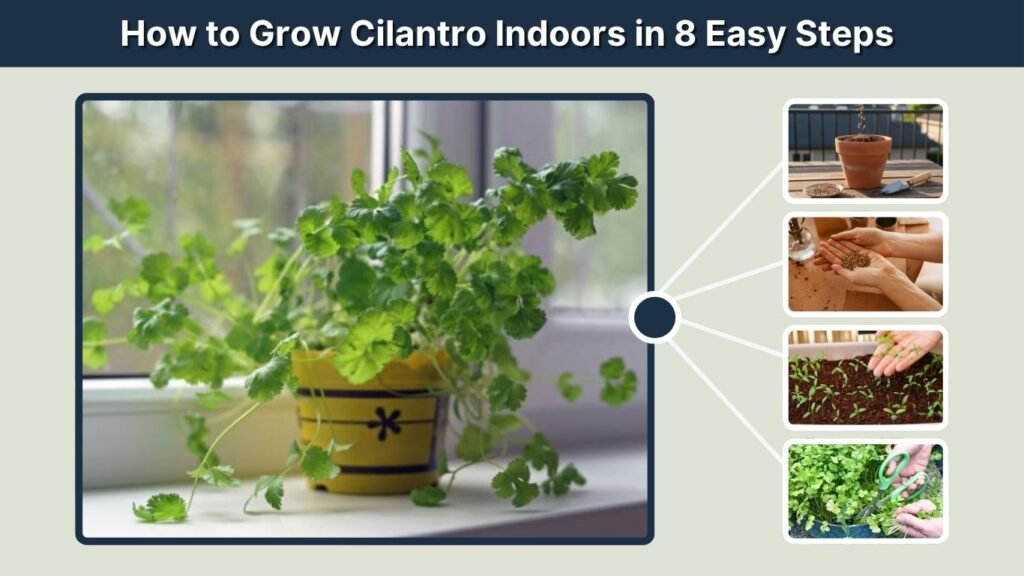
Cilantro is usually easiest to grow directly from seed because the plant does not respond particularly well to repeated transplanting. Once germinated, it grows rapidly under suitable conditions. Consistent moisture, bright light, and cooler temperatures are especially important. Following these basic steps can help establish healthy plants while reducing common problems such as weak stems, poor germination, and early flowering.
1. Prepare the Pot
Fill your chosen container with well-draining potting mix, leaving a little space below the rim.
Moisten the soil before planting so it feels evenly damp without becoming muddy or saturated.
2. Prepare the Cilantro Seeds
Cilantro seeds have a hard outer shell that contains the individual seeds.
You can gently press or lightly crack the outer husk before planting, although this is not essential. Using fresh seed generally improves germination.
3. Sow the Seeds
Plant the seeds approximately 1/4 to 1/2 inch deep.
Space them about 1 to 2 inches apart if you plan to thin the seedlings later. Cover them lightly with soil and water gently so the seeds remain in place.
4. Keep the Soil Moist
Maintain consistent moisture while the seeds germinate.
Do not allow the upper soil layer to dry completely, but avoid soaking the container. Excessive moisture can reduce oxygen around the developing roots.
5. Provide Bright Light
Once seedlings emerge, move the container to a bright location.
Cilantro benefits from several hours of light each day, but intense heat from a sunny window can encourage early bolting.
6. Thin the Seedlings
When seedlings develop several true leaves, remove weaker plants so stronger seedlings have enough space.
Avoid disturbing the remaining roots more than necessary.
7. Keep Temperatures Moderate
Cilantro prefers cooler conditions than warm-weather herbs such as basil.
Keep the pot away from heaters, hot appliances, and other sources of excessive warmth.
8. Begin Harvesting
Once plants become established and produce several healthy stems, start harvesting gradually.
Cut outer stems first while leaving the center growth intact so the plant can continue producing leaves.
Best Light for Growing Cilantro Indoors
Light strongly influences the shape, strength, and productivity of indoor cilantro. Plants grown in insufficient light can become tall and weak, while excessive heat from intense sunlight may trigger early flowering. The goal is to provide bright conditions without allowing the plant to become overheated. Supplemental lighting can help maintain steady growth when natural daylight is limited.
How Much Light Does Cilantro Need?
Cilantro generally performs well with around four to six hours of bright light each day.
Morning sunlight is particularly useful because it provides brightness without the intense heat often associated with afternoon sun.
If stems stretch toward the window or become thin and floppy, the plant probably needs more light.
Using a Grow Light
A grow light can help maintain healthy cilantro during darker months or in rooms with limited natural sunlight.
Position the light directly above the plants according to the manufacturer’s recommended distance. Overhead placement encourages straight growth and prevents seedlings from leaning heavily toward one side.
A timer can make the lighting schedule more consistent.
How to Water Indoor Cilantro Correctly
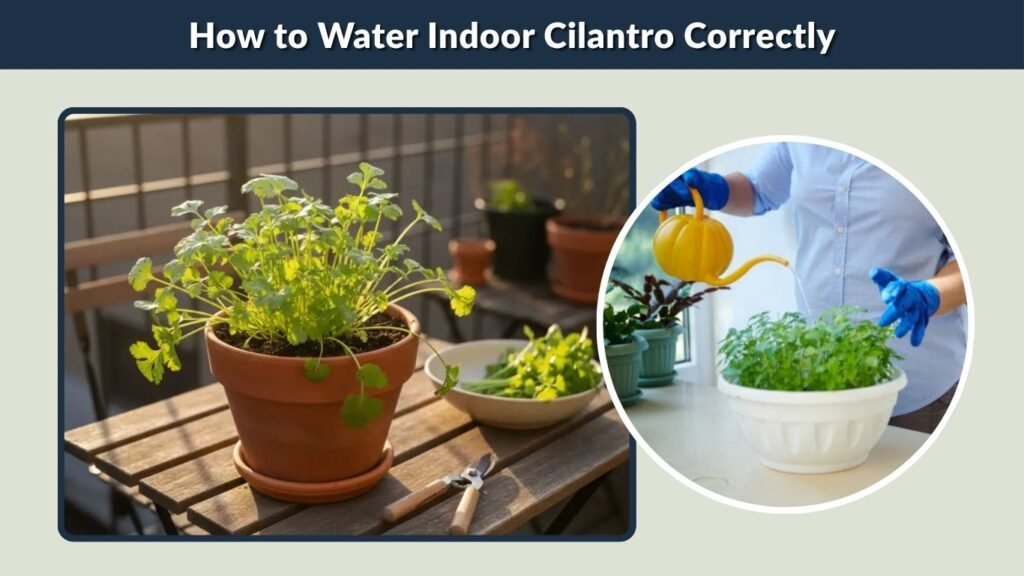
Cilantro prefers evenly moist soil, especially while plants are young. However, roots can struggle if the container remains constantly saturated. Indoor watering needs change according to pot size, soil type, temperature, humidity, and light exposure. Checking soil moisture before watering is more reliable than following a fixed schedule and can help prevent both drought stress and root problems.
Check Soil Moisture First
Insert your finger about an inch into the potting mix.
If the upper layer feels slightly dry, water thoroughly until moisture begins draining through the bottom of the container.
If the soil still feels wet, wait before watering again.
Common Signs of Watering Problems
Watch for these symptoms:
- Drooping leaves
- Yellow foliage
- Dry or crispy edges
- Constantly wet soil
- Soft stems
- Unpleasant-smelling potting mix
Avoid Standing Water
Always allow excess water to drain completely after watering.
If the pot sits on a saucer, empty any collected water. Cilantro likes moisture but does not perform well when roots remain surrounded by stagnant water for long periods.
Best Temperature for Indoor Cilantro
Temperature is especially important when growing cilantro indoors because warm conditions can shorten the leafy growth period. Cilantro naturally moves from leaf production to flowering as it matures, and higher temperatures can accelerate this process. Keeping the plant in a cooler indoor location can help extend harvesting and delay the development of flower stalks.
Ideal Temperature Range
Cilantro generally prefers indoor temperatures around 60°F to 75°F.
Conditions toward the cooler end of this range can help maintain leafy growth for longer. Avoid placing the container beside heating vents, hot kitchen appliances, or windows that become extremely warm during the afternoon.
Why Cilantro Bolts
Bolting means the plant begins producing flowers and seeds instead of focusing mainly on leaves.
Warm temperatures, long daylight periods, maturity, root stress, and irregular watering can all contribute to bolting.
Once flowering begins, the leaves may become smaller and stronger in flavor. The plant can then be allowed to produce coriander seeds.
How to Harvest Cilantro Indoors
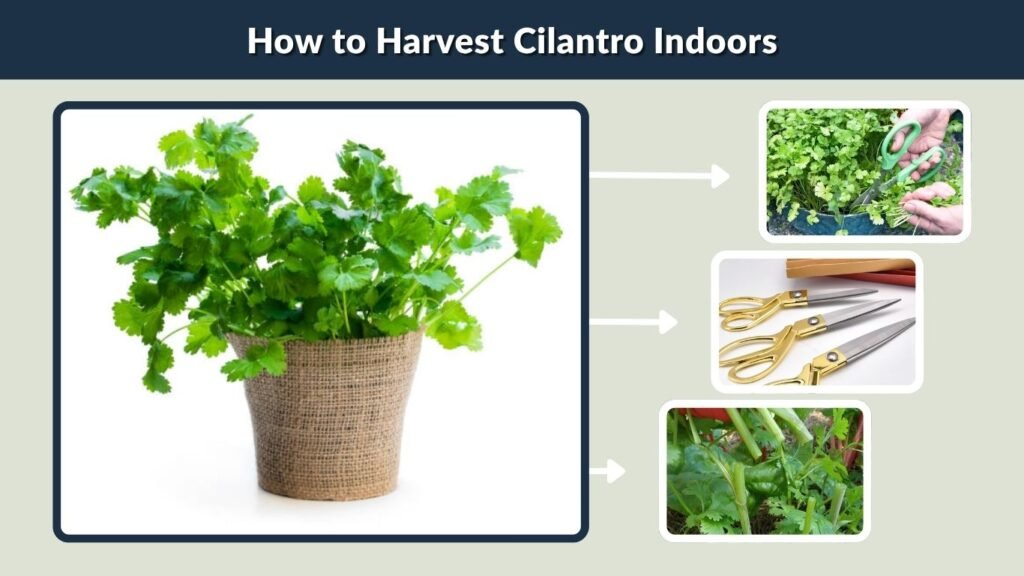
Harvesting cilantro correctly can extend the useful life of the plant and provide a steady supply of fresh leaves. Cilantro does not continue producing indefinitely, but light, frequent harvesting generally works better than removing the entire plant at once. The youngest leaves usually have the most tender texture and familiar cilantro flavor.
Best Harvesting Practices
Follow these simple tips:
- Harvest outer stems first
- Cut stems near the soil line
- Leave the center growth intact
- Use clean scissors
- Avoid removing most of the plant at once
- Harvest regularly once plants are established
When to Start Harvesting
Begin harvesting when the plants are several inches tall and have developed multiple true leaves.
Take a few stems at a time for normal kitchen use. Leaving plenty of foliage allows the plant to continue photosynthesizing and producing additional growth.
For larger harvests, wait until the plant becomes fuller.
How to Keep Cilantro Growing Longer
Cilantro naturally has a shorter productive life than many common kitchen herbs. Even under excellent indoor conditions, individual plants eventually flower and produce seeds. Instead of trying to keep one plant producing indefinitely, succession planting is usually the most reliable strategy. This gives you plants at several growth stages and helps maintain a continuous supply.
Use Succession Planting
Sow a new batch of seeds every two to three weeks.
As older plants approach flowering, younger plants will be developing and preparing for harvest. This method is especially useful if you cook with cilantro regularly.
Succession planting also reduces the impact of losing one plant to bolting or other growing problems.
Ways to Delay Bolting
You can help extend leaf production by:
- Keeping temperatures moderate
- Maintaining consistent soil moisture
- Avoiding root disturbance
- Providing enough light without excessive heat
- Growing plants in deep containers
- Harvesting regularly
Bolting cannot be prevented permanently, but reducing stress can help delay it.
Feeding Cilantro Grown Indoors
Cilantro grows rapidly and generally does not need heavy fertilization. Fresh potting mix often contains enough nutrients to support the early stages of growth. If plants become pale or growth slows despite good light and proper watering, occasional feeding may help. The goal is moderate nutrition rather than forcing extremely fast growth.
How to Fertilize Cilantro
Use a balanced liquid fertilizer at a diluted strength during active growth.
Follow the product directions carefully and avoid feeding more frequently than needed. Cilantro grown mainly for leaves generally requires only modest amounts of additional nutrition.
If your potting soil already contains fertilizer, wait before adding more.
Avoid Excess Fertilizer
Overfertilization can cause weak growth or allow mineral salts to build up in the soil.
If your cilantro looks green, healthy, and continues producing leaves, frequent feeding is unnecessary. Good light, moisture, temperature, and drainage are usually more important than heavy fertilization.
Common Indoor Cilantro Problems
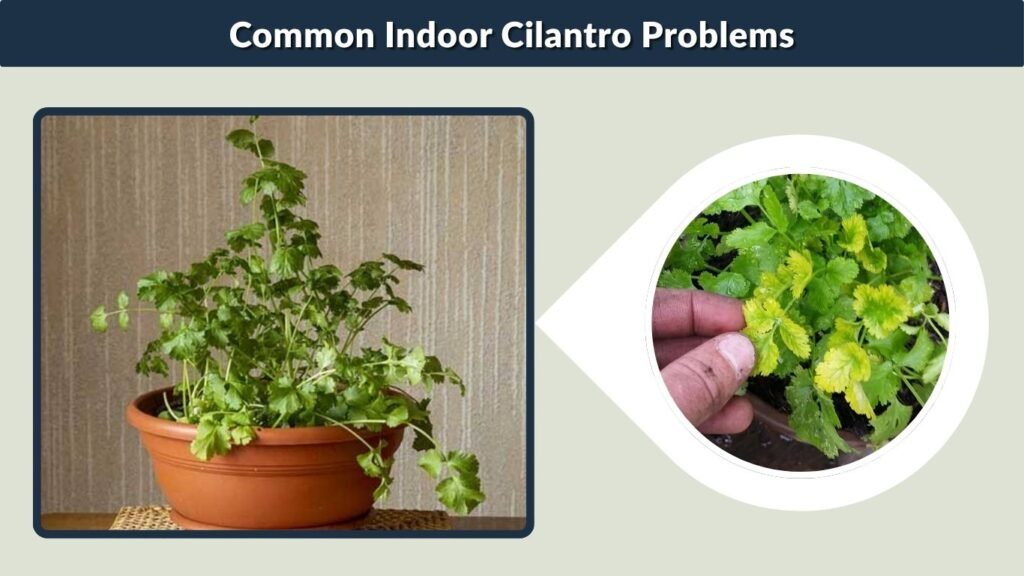
Most cilantro problems are related to light, heat, watering, airflow, or the plant’s naturally short life cycle. Regularly inspecting leaves and stems can help you identify issues early. Many problems can be corrected simply by adjusting the growing environment rather than applying additional fertilizer or replacing the plant immediately.
Leggy Cilantro
Long, thin stems usually indicate inadequate light.
Move the container closer to a brighter window or provide supplemental lighting. Rotating the pot can also help seedlings develop more evenly.
Yellow Leaves
Yellow cilantro leaves may result from excessive watering, poor drainage, nutrient problems, or older foliage naturally declining.
Check the soil first. If it remains wet for long periods, allow it to dry slightly and confirm that the drainage holes are functioning properly.
Poor Seed Germination
Poor germination can result from old seeds, planting too deeply, dry soil, or excessively wet conditions.
Use relatively fresh seed and keep the soil consistently moist during germination. Avoid burying seeds much deeper than recommended.
Growing Cilantro From Store-Bought Plants
Starting cilantro from seed is usually more reliable than rooting cut stems. Unlike mint or basil, cilantro does not readily produce new roots from ordinary leafy cuttings. However, grocery-store cilantro sold with roots still attached may sometimes be replanted and kept growing indoors under suitable conditions.
Transplant Cilantro With Roots
If the cilantro still has healthy roots attached, place it in moist potting soil as soon as possible.
Keep the plant in bright but gentle light while it adjusts to the new container. Avoid damaging the taproot during planting because cilantro can be sensitive to root disturbance.
After new growth appears, care for it using the same watering and lighting routine as seed-grown plants.
FAQs
1. Can cilantro grow indoors all year?
Yes. Cilantro can be grown indoors throughout the year when it receives adequate light, moderate temperatures, and consistent moisture. Succession planting is usually the best way to maintain a continuous supply.
2. How much sunlight does indoor cilantro need?
Indoor cilantro generally benefits from around four to six hours of bright light each day. A grow light can help when natural daylight is insufficient.
3. How often should I water cilantro indoors?
Water when the upper inch of soil begins to feel slightly dry. The goal is to keep the soil evenly moist without allowing the container to remain waterlogged.
4. Why does my cilantro flower so quickly?
Cilantro naturally flowers as it matures, but warm temperatures, stress, and long days can speed up the process. Cooler growing conditions and consistent moisture may help delay bolting.
5. Does cilantro grow back after cutting?
Cilantro can produce more leaves after moderate harvesting if the center growth remains intact. However, it does not regrow indefinitely, so planting new batches every few weeks is usually the most reliable approach.