
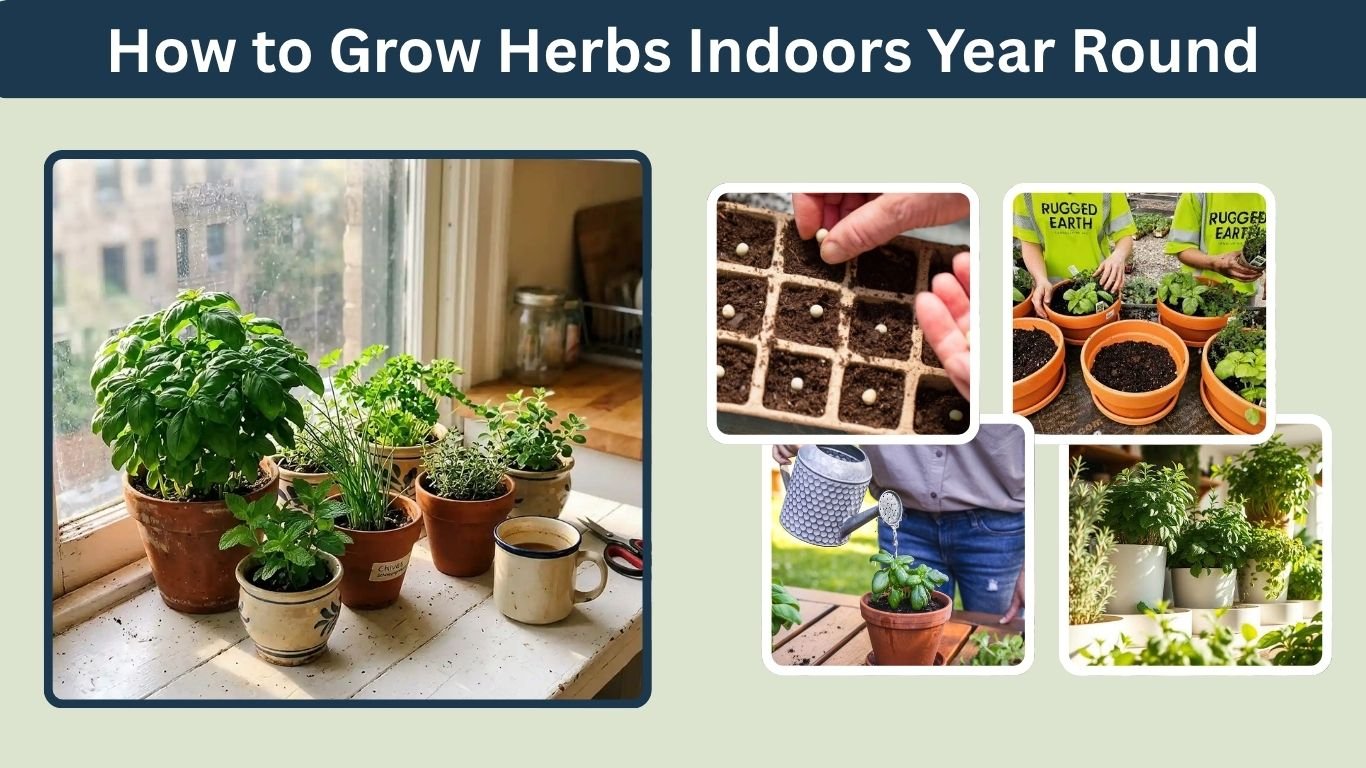
Imagine picking fresh basil, mint, or parsley straight from your kitchen windowsill, even during the coldest winter months. Learning how to grow herbs indoors year round makes this possible without requiring a backyard, greenhouse, or expensive gardening equipment. With proper lighting, suitable containers, and consistent care, you can enjoy homegrown herbs throughout every season. Whether you’re a beginner or an experienced gardener, this guide explains how to create a productive indoor herb garden that provides fresh flavors for your favorite meals all year.
1. Choose the Best Herbs to Grow Indoors Year Round
Choosing suitable herbs is the foundation of a successful indoor garden. Some herbs adapt naturally to indoor conditions, while others require stronger lighting and more careful watering. For beginners, selecting plants that tolerate container growing makes maintenance easier. Consider their growth habits, lighting requirements, and harvesting potential before deciding which herbs deserve a place in your indoor garden.
Best Herbs for Indoor Growing
- Basil: Prefers warm temperatures and strong light. Regular pruning encourages fuller, bushier growth.
- Mint: Grows vigorously in containers and tolerates slightly lower light levels than many Mediterranean herbs.
- Parsley: Performs well in bright indoor locations and provides flavorful leaves for regular harvesting.
- Chives: Compact, productive plants that regrow after cutting when given adequate light and nutrients.
- Thyme: Prefers excellent drainage, bright light, and slightly drier growing conditions.
- Oregano: A flavorful perennial herb that grows successfully indoors with sufficient sunlight.
- Cilantro: A cool-season herb that benefits from repeated sowing because individual plants eventually flower.
Which Herbs Are Easiest for Beginners?
Mint, chives, parsley, and basil are excellent starting choices. They grow relatively quickly under suitable conditions and provide useful harvests without occupying much space.Begin with two or three herbs rather than filling an entire windowsill immediately. Once you understand their watering patterns and lighting needs, expand your collection.
2. Create the Perfect Indoor Herb Garden Setup
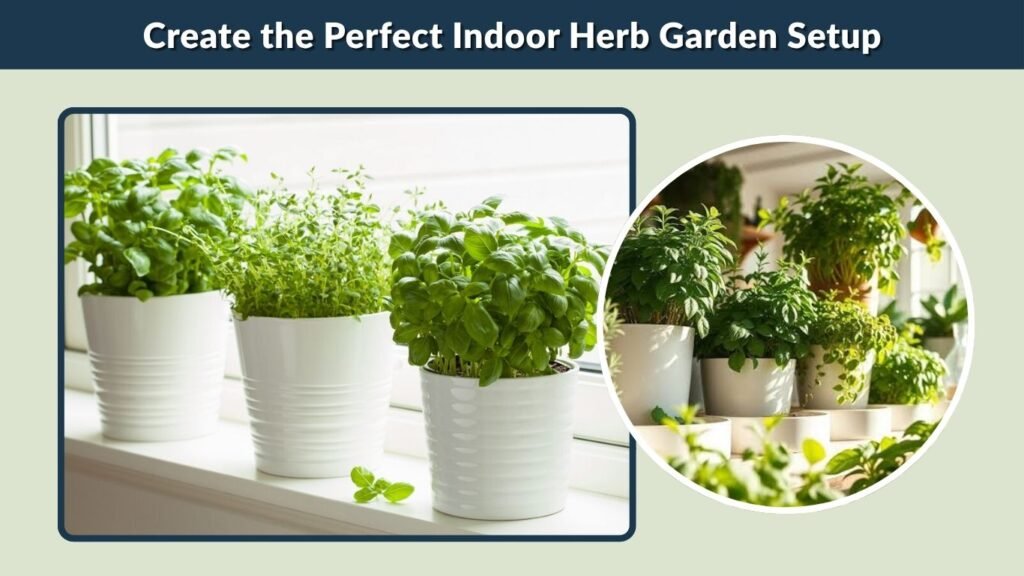
Your growing environment significantly influences how successfully herbs develop throughout the year. Indoor plants depend on you for appropriate lighting, airflow, moisture, and nutrients. A suitable location and basic equipment can prevent many common gardening problems. The objective is to recreate favorable outdoor conditions while protecting plants from extreme temperatures and unpredictable weather.
Choose the Right Indoor Location
A bright windowsill is often the simplest location for an indoor herb garden. In the Northern Hemisphere, south-facing windows generally receive the strongest sunlight, although building orientation and surrounding shade matter.Keep herbs away from heating vents, cold drafts, and windows that experience extreme temperature changes.
Select Suitable Containers
Choose containers that accommodate the plant’s roots while allowing excess water to escape.
- Use pots with drainage holes to prevent waterlogging.
- Start many young herbs in containers approximately 4–6 inches wide.
- Choose larger pots as roots expand.
- Place saucers beneath containers to protect indoor surfaces.
- Grow vigorous mint separately to prevent competition.
Prepare Well-Draining Potting Mix
Use a lightweight commercial potting mix rather than ordinary outdoor garden soil. Adding perlite can improve drainage and aeration.Mediterranean herbs such as rosemary and thyme generally appreciate faster-draining conditions, while mint and parsley prefer more consistent moisture.
3. Provide Enough Light for Year-Round Herb Growth
Light is frequently the biggest challenge when growing herbs indoors, particularly during winter. Without sufficient light, plants may develop weak stems, pale foliage, and disappointing harvests. Different herbs have different requirements, but most culinary varieties benefit from several hours of direct sunlight or supplemental artificial lighting. Understanding these requirements helps maintain healthy growth regardless of seasonal daylight changes.
How Much Sunlight Do Indoor Herbs Need?
Most culinary herbs perform best with approximately four to six hours or more of direct sunlight daily, depending on the species.Basil, thyme, and rosemary generally demand brighter conditions, while parsley, mint, and chives can tolerate somewhat less intense light.
Using LED Grow Lights for Herbs
Full-spectrum LED grow lights are useful when natural sunlight is insufficient. During darker months, supplemental lighting for around 12–16 hours daily can support healthy growth.Position lights according to the manufacturer’s recommended distance and monitor plants for stretching or leaf scorching.A programmable timer maintains consistent lighting without requiring daily adjustments.
4. Plant and Grow Herbs Indoors Step by Step

Starting an indoor herb garden does not require advanced gardening knowledge. Most culinary herbs can be grown from seeds, nursery plants, or cuttings, depending on the species. Providing suitable conditions during establishment encourages stronger roots and healthier foliage. Following a simple planting process also reduces the likelihood of overcrowding, poor germination, and early growth problems.
How to Start an Indoor Herb Garden
- Prepare containers: Fill clean pots with slightly moistened, well-draining potting mix.
- Plant seeds or seedlings: Follow seed packet instructions for planting depth and spacing.
- Water carefully: Moisten the growing medium without leaving it saturated.
- Provide adequate light: Position containers near a bright window or underneath grow lights.
- Maintain suitable temperatures: Keep plants comfortably warm, particularly heat-loving basil.
- Thin crowded seedlings: Remove weaker seedlings so healthy plants have enough growing space.
- Monitor new growth: Check regularly for moisture problems, pests, and developing leaves.
Growing Herbs From Seeds vs. Cuttings
Seeds are inexpensive and provide opportunities to grow numerous varieties. Basil, cilantro, parsley, and chives are commonly started this way.Cuttings offer another approach for herbs such as mint and basil. Healthy stem cuttings can develop roots in water or suitable propagation media before transplanting into containers.
5. Water and Fertilize Indoor Herbs Properly
Watering and feeding influence herb flavor, foliage production, and long-term plant health. Indoor containers often retain moisture longer than outdoor garden beds, making overwatering a common problem. Fertilizer requirements also vary according to growth rate and season. Developing a consistent but flexible care routine keeps herbs productive without encouraging root damage or excessive, weak foliage.
How Often Should You Water Indoor Herbs?
Check the potting mix before watering rather than following a rigid daily schedule.Mint and parsley generally prefer evenly moist soil, while thyme, rosemary, and oregano benefit from some drying between waterings.Water thoroughly when needed, allowing excess moisture to drain completely.
Fertilizing for Healthy Herb Growth
Use a diluted, balanced fertilizer periodically during active growth. Excessive feeding can encourage soft foliage and unnecessarily rapid growth.Reduce fertilization when plants are growing slowly, particularly during darker winter months.
6. Maintain Healthy Herbs Throughout Every Season
Year-round herb gardening requires occasional adjustments because temperature, sunlight, and plant growth change with the seasons. Even indoors, herbs may grow slowly during winter or become stressed during hot summer afternoons. Regular observation allows you to respond before small problems develop. Proper pruning, temperature management, and preventive maintenance help keep your indoor garden attractive and productive.
Adjust Care During Winter
Winter often brings shorter daylight hours and drier indoor air. Supplemental lighting can compensate for reduced sunshine, while careful watering prevents roots from remaining excessively wet.Avoid placing herbs directly beside radiators or heating vents.
Encourage Growth During Summer
Strong summer sunlight can dry containers quickly or scorch leaves near hot windows.Check moisture more frequently and provide good ventilation. Move plants slightly away from intense afternoon sunlight when necessary.
Prevent Common Indoor Herb Problems
Inspect leaves regularly for aphids, spider mites, and other pests. Remove damaged foliage and isolate infested plants.Yellow leaves may indicate overwatering, insufficient light, or nutrient problems, so examine growing conditions before taking corrective action.
7. Harvest Indoor Herbs for Continuous Production

Harvesting is an important part of maintaining a productive indoor herb garden. Removing appropriate amounts of foliage encourages many herbs to develop fresh shoots and maintain compact growth. However, excessive cutting can weaken plants, especially when indoor light levels are low. Understanding when and how to harvest helps balance immediate kitchen needs with long-term plant health.
How to Harvest Herbs Without Damaging Plants
- Basil: Pinch stems above a leaf pair to encourage branching.
- Mint: Cut healthy stems just above leaf nodes to stimulate fresh growth.
- Parsley: Harvest mature outer stalks near their base.
- Chives: Trim leaves above the soil, leaving enough growth for recovery.
- Thyme: Snip tender stems without cutting deeply into old woody growth.
Keep Fresh Herbs Available All Year
Grow several plants of frequently used herbs and harvest them alternately.For short-lived varieties such as cilantro, sow new seeds every few weeks to help maintain a continuous supply. Replace aging basil plants when their productivity declines.
8. Build a Sustainable Year-Round Herb Garden
A productive indoor herb garden is not necessarily a collection of plants that survive indefinitely. Some herbs naturally decline, flower, or require replacement after repeated harvesting. Maintaining reliable production means planning fresh plantings alongside established herbs. With appropriate care and occasional renewal, even a small growing area can provide flavorful ingredients through every season.
Create a Continuous Planting Schedule
Start new basil or cilantro plants before older ones finish producing. Maintain established perennial herbs such as mint, oregano, and thyme through periodic pruning and repotting.This overlapping approach reduces interruptions between harvests.
Expand Your Indoor Herb Collection
As your confidence improves, experiment with rosemary, sage, lemon balm, or additional basil varieties.Choose plants according to available lighting, kitchen preferences, and container space rather than growing too many varieties at once.
FAQs
1. Can You Grow Herbs Indoors All Year Round?
Yes. Many culinary herbs can grow indoors throughout the year when provided with sufficient light, suitable temperatures, well-draining soil, and appropriate watering. Some varieties require periodic replacement to maintain continuous harvests.
2. What Are the Best Herbs to Grow Indoors Year Round?
Basil, mint, parsley, chives, thyme, oregano, and cilantro are popular choices. Mint, parsley, and chives are particularly suitable for beginners, while thyme and oregano appreciate brighter conditions.
3. Can You Grow Herbs Indoors Without Sunlight?
Yes. Full-spectrum LED grow lights can replace natural sunlight when operated for an appropriate duration and positioned correctly. Most herbs benefit from approximately 12–16 hours of artificial lighting daily.
4. How Long Do Indoor Herb Plants Last?
Lifespan varies by species. Basil and cilantro often need regular replacement, while perennial herbs such as mint, rosemary, thyme, and oregano can survive for several years with suitable care.
5. How Often Should Indoor Herbs Be Watered?
Watering frequency depends on the herb, container size, temperature, and potting mix. Check soil moisture regularly and water when appropriate for the individual species rather than following a fixed schedule.