
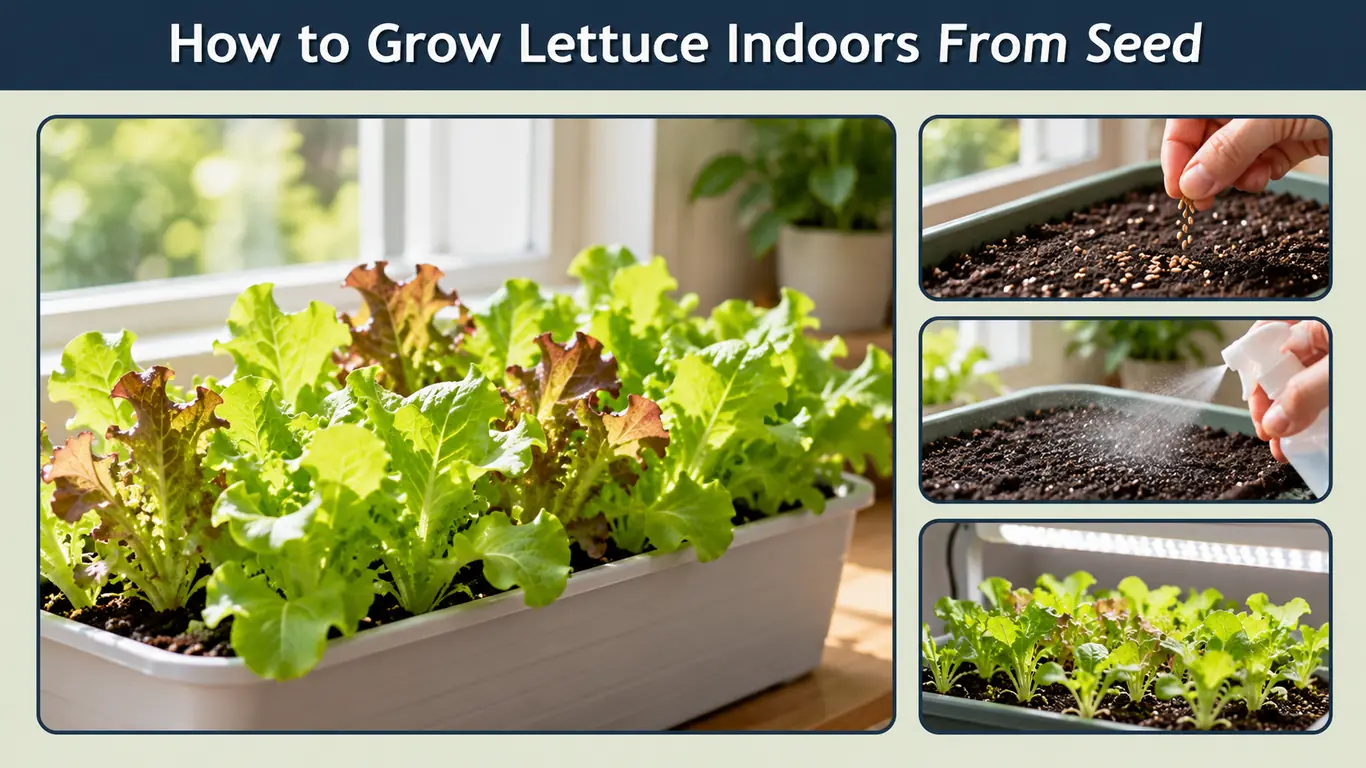
Growing lettuce indoors gives you fresh salad leaves without needing a backyard or a large gardening setup. A small container, suitable potting mix, and reliable light can turn a spare shelf or bright windowsill into a productive growing space. Loose-leaf varieties are especially practical because you can harvest individual leaves while the plants continue growing. This guide explains how to grow lettuce indoors from seed, care for it throughout the year, try hydroponics, and understand what to expect when regrowing a store-bought lettuce head.
What You Need to Grow Lettuce Indoors
A successful indoor lettuce garden starts with a manageable setup. Begin with one or two containers so you can learn how quickly the potting mix dries and whether your lighting supports healthy growth. Choose a location that is easy to reach for watering and harvesting, with protection from hot appliances and strong heating drafts.
Choose Suitable Lettuce Varieties
Loose-leaf lettuce is a practical starting point because it does not need to develop a tight head before harvesting. Compact butterhead varieties and smaller romaine cultivars are other options when you have enough space.
Consider these choices:
- Black Seeded Simpson: A loose-leaf variety with tender, light-green foliage.
- Salad Bowl: Produces deeply lobed leaves suitable for picking individually.
- Red Salad Bowl: Adds red-tinted foliage to mixed indoor harvests.
- Tom Thumb: A compact butterhead suited to smaller growing spaces.
Check the seed packet for mature size, spacing, and harvest timing. Large heading varieties require more room and patience than baby-leaf crops.
Gather Containers and Growing Supplies
Choose a container approximately 6–8 inches deep with drainage holes and a waterproof tray underneath. A wider planter can accommodate several plants, provided their leaves have room to expand.
Useful supplies include:
- Lettuce seeds and fresh container potting mix.
- Clean pots or a shallow growing trough.
- An LED grow light and timer.
- A small watering can.
- Fertilizer labeled for edible container plants.
Avoid dense garden soil, which can compact inside pots. Keep drainage water away from electrical equipment and furniture.
How to Grow Lettuce Indoors From Seed
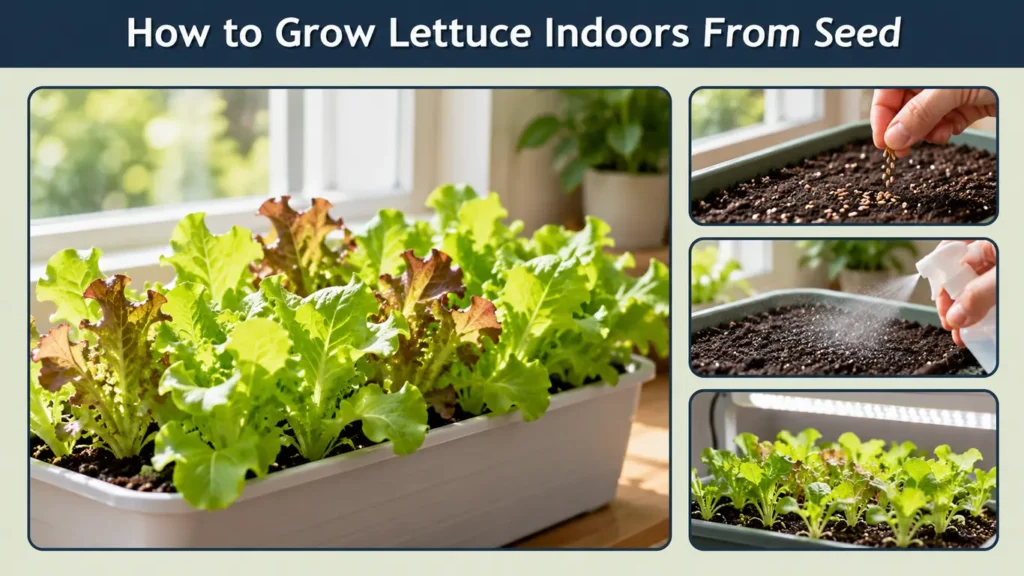
Starting from seed gives you control over variety and planting frequency. You can sow directly into the final container, avoiding the need to move delicate seedlings later. Lettuce seeds are small, so careful sowing and gentle watering help prevent them from washing into clumps or becoming buried too deeply.
Prepare the Container and Sow Seeds
Moisten the potting mix before filling your container. It should feel evenly damp, without dripping when squeezed. Fill the pot, leaving a little space below the rim for watering.
Follow these steps:
- Scatter seeds thinly across the surface.
- Cover lightly, following the packet’s sowing depth.
- Mist gently to settle the seeds.
- Label the container with the variety and date.
- Keep the surface moist while germination begins.
Many lettuce packets recommend sowing around ⅛–¼ inch deep. Follow your specific variety’s instructions rather than burying every seed at the same depth.
Provide Light and Thin Seedlings
Move emerging seedlings into strong, even light. A windowsill may support growth, but changing daylight and one-sided exposure can make results inconsistent. University of Minnesota Extension recommends approximately 12–16 hours of daily light for indoor seedlings. Use a timer and leave a regular dark period overnight.
Set the fixture at the manufacturer’s recommended distance. Powerful LEDs and low-output lights require different positioning.
Once seedlings develop true leaves, thin crowded plants with clean scissors. Allow roughly 4–6 inches between small leaf-lettuce plants, adjusting for the variety. Baby-leaf crops can grow closer together when harvested young.
Ideal Indoor Lettuce Growing Conditions
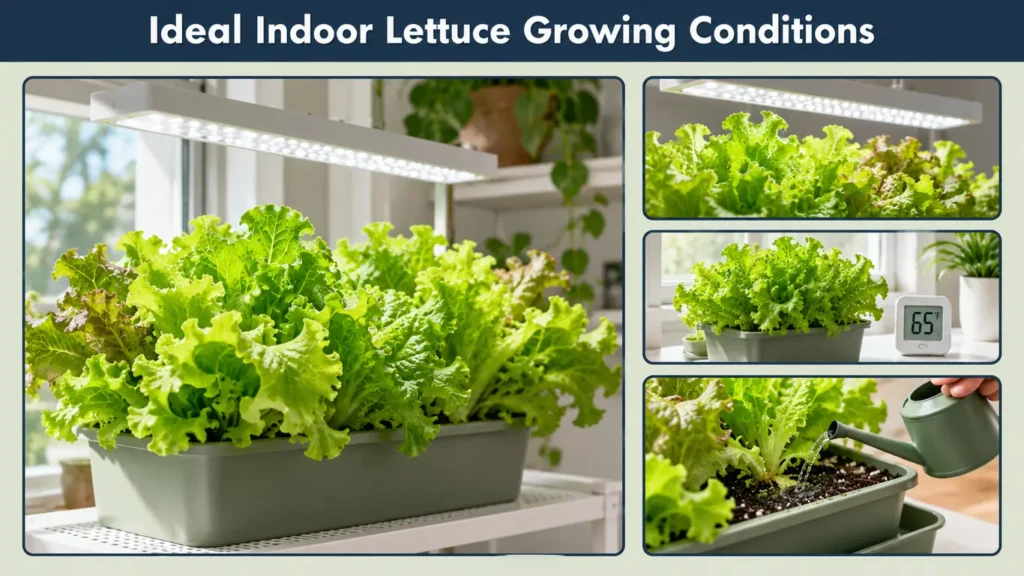
After germination, steady conditions matter more than frequent adjustments. Lettuce generally performs best when it receives adequate light, moderate temperatures, and consistent moisture. Check plants regularly, but avoid watering or fertilizing simply because another day has passed. Let the condition of the leaves and potting mix guide your routine.
Light and Temperature
Choose a cool, bright growing location. Around 60–70°F is a useful starting range for indoor lettuce, although varieties differ in their tolerance.
Keep plants away from radiators, ovens, and windows that become intensely hot. Excess heat can encourage bolting, when lettuce produces a flowering stem and leaf quality declines. Long days and other growing conditions can also influence flowering.
If growth becomes stretched or leans strongly toward the window, assess light coverage. Pale, weak growth is a reason to review the setup, rather than automatically adding fertilizer.
Watering and Feeding
Check moisture with a finger before watering. When the surface begins drying, water gently until some excess drains from the bottom. Empty the saucer afterward.
Keep the root zone evenly moist without leaving it saturated. Small pots and warm rooms may require more frequent checks than larger containers in cool locations.
If your potting mix includes fertilizer, follow its guidance before adding more. Otherwise, use a product labeled for edible container crops at its recommended rate. Extra fertilizer cannot compensate for inadequate light.
How to Grow Lettuce Indoors Year Round
Year-round growing depends on replacing harvested plants and maintaining suitable indoor conditions. A single lettuce plant will not produce indefinitely. Plan for several small batches at different stages so that older plants can be removed while younger ones move toward harvest.
Adjust Your Setup in Winter
Winter windows often provide less usable light, making a grow light helpful for maintaining dependable growth. Check temperatures near the glass overnight; a comfortable room can still have a cold windowsill.
For cool-season vegetables such as lettuce, University of Maryland Extension lists approximately 3–5 hours of direct sun for container growing. Indoor winter conditions vary, so assess actual plant growth instead of assuming every bright window provides enough light.
During summer, watch for the opposite problem: excessive heat around sunny glass.
Sow Small Batches Regularly
Try sowing a small container every two weeks, then adjust the interval to match your household’s consumption and actual growth rate.
Record sowing dates and first harvests. These notes reveal whether you need more containers or fewer seeds per batch. Replace plants when their leaves become poor quality, growth slows substantially, or flowering begins.
How to Grow Lettuce Indoors in Water
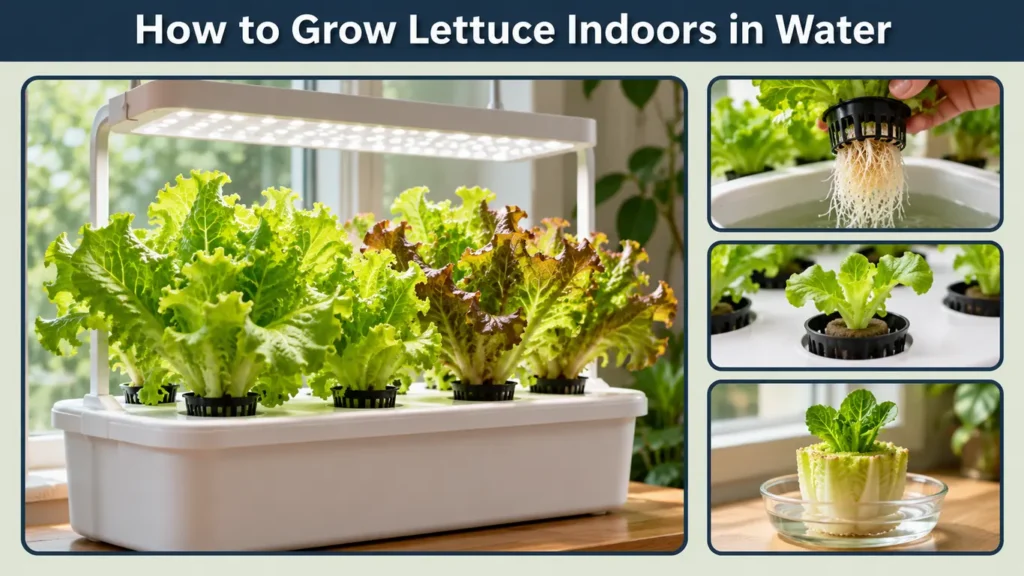
Growing lettuce in water can mean either hydroponic production or regrowing a kitchen scrap. These methods have different goals. Hydroponics supports a crop through a managed nutrient solution, while a cut lettuce base usually produces a limited amount of regrowth.
Growing Lettuce Hydroponically
Hydroponic lettuce needs water containing appropriate dissolved nutrients, along with support for the plant and a suitable root environment. Plain water alone is not a complete long-term feeding system.
A beginner setup generally includes:
- An opaque, food-safe reservoir.
- Net cups and suitable growing plugs.
- Hydroponic nutrients intended for leafy vegetables.
- Adequate lighting.
- Aeration or an air gap appropriate to the system.
Follow the instructions for your chosen design. Aerated systems and passive systems manage root oxygen differently. Penn State Extension identifies lettuce as suitable for passive hydroponic growing, but the reservoir and root arrangement still need to follow a workable design.
Regrowing Lettuce From a Head
Save the firm base of a romaine head and stand it in a shallow dish with a little water touching the bottom. Keep most of the base above water, replace the water frequently, and provide good light.
New leaves may emerge from the center. Lettuce can regrow from its bottom section, making this a useful observation project.
Expect a modest amount of growth rather than a dependable replacement for a full head. Discard the base if it becomes slimy, moldy, or foul-smelling.
Harvesting and Solving Common Problems
Harvest timing depends on the variety, growing conditions, and whether you want baby leaves or mature plants. Use the seed packet as a guide, then judge the actual crop. Pick leaves while they are tender and the plant is growing actively.
Harvest Without Removing the Whole Plant
Use clean scissors to remove selected outer leaves, leaving the central growing point intact. Take a modest portion at each picking so enough foliage remains to support recovery.
Alternatively, harvest an entire plant when it reaches the size you want. Wash harvested leaves under clean running water before eating.
Recognize Problems Early
Stretched seedlings usually warrant a lighting check. Yellow leaves can result from several causes, including poor drainage or unsuitable feeding. Inspect moisture and roots before making changes.
Crowded, constantly wet plants need more space and improved watering practices. Check leaf undersides for pests regularly, especially after bringing other plants indoors.
FAQs
Is It Easy to Grow Lettuce Indoors?
Yes. Loose-leaf lettuce is manageable for beginners when lighting and watering are consistent. Start with a small container and a few plants so you can learn their needs.
Can Lettuce Grow Indoors Without a Grow Light?
It can grow beside a sufficiently sunny window. Results depend on season, window direction, shading, and temperature. Supplemental lighting helps when natural light produces weak growth.
How Long Does Indoor Lettuce Take to Grow?
Baby leaves may be ready in roughly a month under suitable conditions. Larger plants take longer. Use the variety’s packet estimate as a guide, allowing for slower indoor growth.
Can You Grow Lettuce Indoors in Water Only?
A lettuce base may produce limited regrowth in plain water. For sustained hydroponic production, plants need a suitable nutrient solution and an appropriate root environment.
Will Indoor Lettuce Keep Growing After Harvest?
It can continue producing leaves if you preserve the central growing point and leave sufficient foliage. Eventually, plants age or bolt, so regular replacement sowings are necessar