
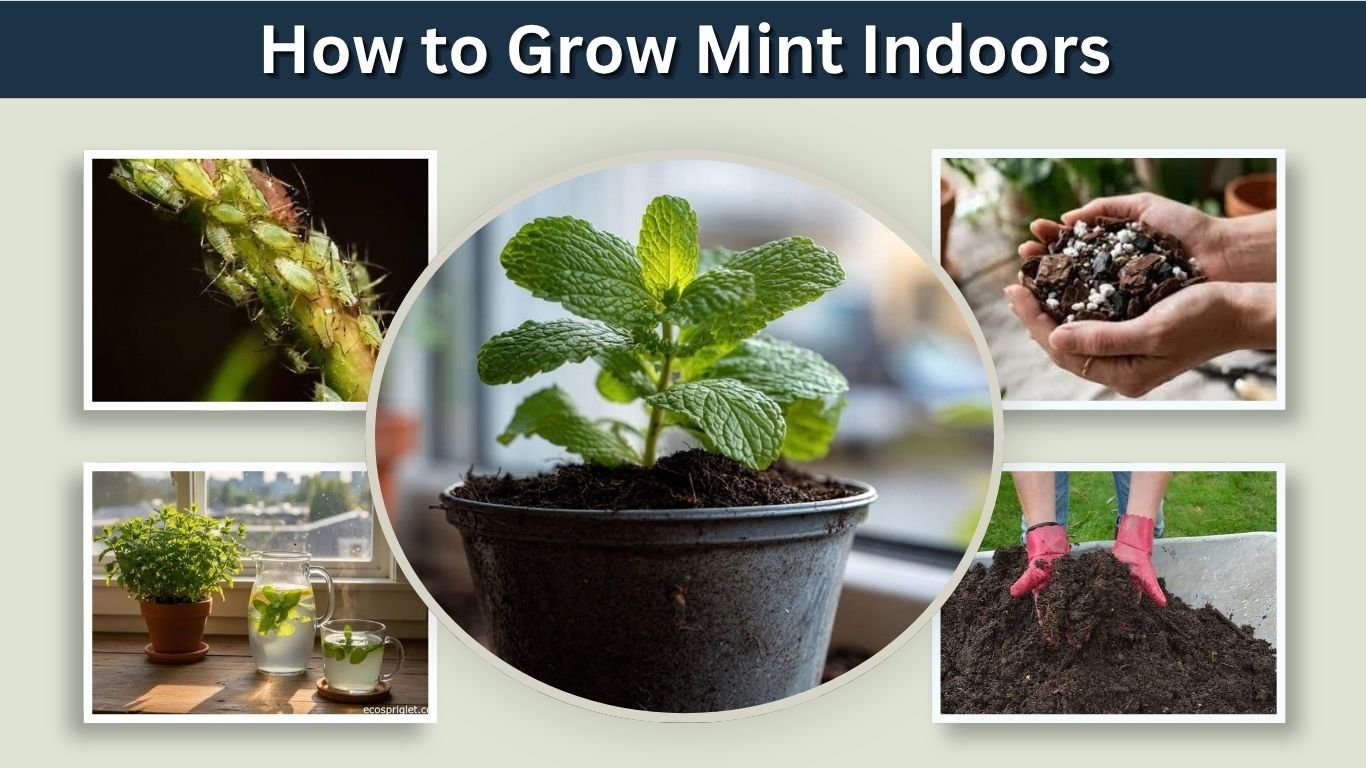
Learning how to grow mint indoors is a simple way to enjoy fresh, aromatic mint leaves throughout the year. Mint grows quickly in containers and needs only basic care, including bright light, moist but well-draining soil, regular pruning, and occasional feeding. You can grow peppermint, spearmint, chocolate mint, and other varieties on a kitchen windowsill or under a grow light. This guide explains how to plant, water, fertilize, prune, harvest, and maintain healthy indoor mint plants successfully.
How to Grow Mint Indoors Successfully
Growing mint indoors starts with creating conditions similar to those the herb enjoys outdoors. Mint prefers bright light, consistently moist soil, moderate temperatures, and enough room for its spreading roots. Because mint is naturally vigorous, container growing is an excellent option. With proper indoor mint care, one healthy plant can provide fresh leaves for cooking, tea, drinks, and garnishes for months.
Choose the Best Mint Variety for Indoors
Most common mint varieties can grow well inside. The best choice depends mainly on flavor and how you plan to use the leaves.
Popular varieties include:
- Spearmint: Mild, sweet flavor for cooking and drinks
- Peppermint: Strong flavor suitable for tea and desserts
- Chocolate mint: Minty aroma with subtle chocolate notes
- Apple mint: Mild, fruity flavor and soft leaves
- Pineapple mint: Attractive variegated foliage and sweet fragrance
For beginners, spearmint and peppermint are among the easiest varieties to maintain indoors.
Start With a Plant or Cutting
Although you can grow mint from seed, starting with a nursery plant or stem cutting usually produces faster results.
A healthy mint cutting can develop roots in water within a relatively short period. Once the roots become established, you can transfer the cutting into a container filled with fresh potting soil.
This method is especially useful when you already have access to a mature mint plant.
Select the Right Container
Mint spreads rapidly through its root system, so choosing a suitable container is important.
Use a pot approximately 8 to 12 inches wide with drainage holes at the bottom. A wider container provides space for roots and new shoots to develop.
Avoid pots without drainage because waterlogged soil can damage mint roots.
Best Soil for Growing Mint Indoors

Indoor mint grows best in fertile, loose, and well-draining soil. The soil should hold enough moisture to prevent the roots from drying out while still allowing excess water to escape. Dense or compacted soil can reduce oxygen around the roots and increase the risk of root problems, so using a quality indoor potting mixture is usually better than ordinary garden soil.
Use Well-Draining Potting Mix
A general-purpose indoor potting mix works well for mint.
You can improve drainage and fertility by combining potting soil with organic materials such as compost. Perlite or similar amendments can also improve airflow around the roots.
Avoid using heavy garden soil in indoor containers because it may compact easily.
Keep Soil Slightly Moist
Mint prefers soil that remains slightly moist rather than completely dry.
The ideal soil should feel damp but never muddy or saturated. Good drainage is especially important because excessive moisture around the roots can lead to yellowing leaves or root rot.
How Much Light Does Indoor Mint Need?
Light plays a major role in healthy mint growth. Indoor mint plants need several hours of bright light every day to develop dense foliage and strong stems. Plants receiving insufficient light often become leggy, pale, or weak. A sunny windowsill may provide enough natural light, while an LED grow light can help maintain growth in darker rooms or during winter.
Provide 4 to 6 Hours of Bright Light
Place your mint near a bright window where it can receive approximately four to six hours of strong light each day.
South-, west-, or east-facing windows can work well depending on the intensity of sunlight in your home.
If intense afternoon sun causes leaf scorching, move the pot slightly away from the glass.
Use a Grow Light When Necessary
A grow light is helpful when natural light is limited.
Position the light above the plant according to the manufacturer’s recommended distance. Consistent artificial lighting can encourage compact, leafy growth during winter or in rooms without bright windows.
Watch for Signs of Low Light
Common signs that indoor mint needs more light include:
- Long, thin stems
- Large gaps between leaves
- Pale foliage
- Slow growth
- Stems leaning toward the window
- Small new leaves
Rotate the pot regularly so all sides of the plant receive similar amounts of light.
How to Water Mint Indoors
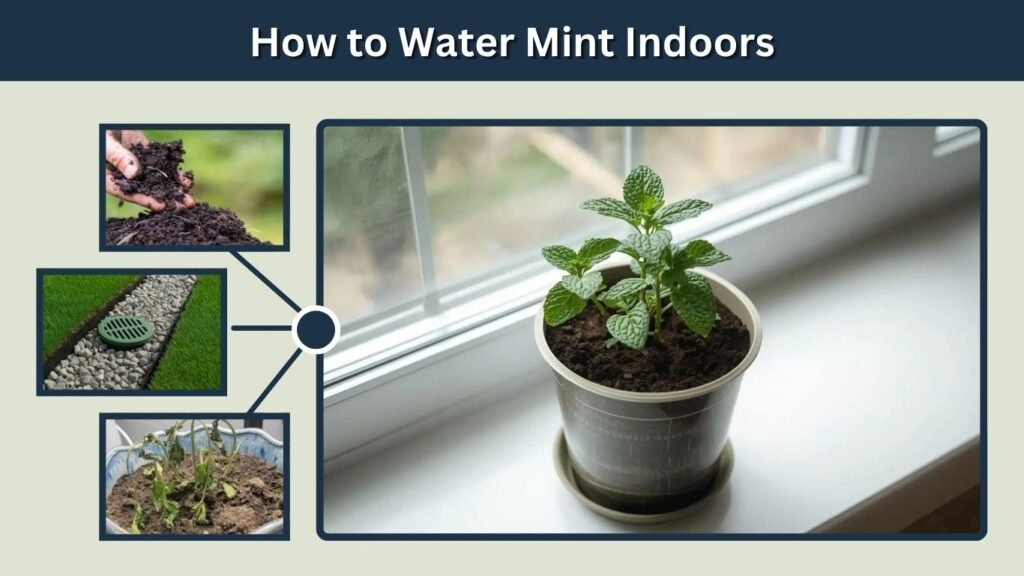
Proper watering is one of the most important parts of indoor mint plant care. Mint likes consistent moisture, but constantly saturated soil can harm the roots. Rather than watering according to a strict calendar, check the soil regularly. Indoor temperature, sunlight, humidity, pot size, and season can all affect how quickly the soil dries.
Check the Top Inch of Soil
Insert your finger about one inch into the soil.
If the top layer feels slightly dry, water the plant thoroughly. If it still feels noticeably moist, wait before watering again.
This simple moisture test is more reliable than watering every day.
Water Until Excess Moisture Drains
Water slowly until you see excess moisture coming through the drainage holes.
Allow the pot to finish draining before returning it to its normal position.
Do not leave the container sitting in standing water for long periods.
Signs of Overwatering Mint
Overwatered mint may develop:
- Yellow leaves
- Soft stems
- Drooping foliage
- Persistently wet soil
- Slow growth
- Unpleasant-smelling soil
Reducing watering and improving drainage can often correct the problem.
Best Temperature and Humidity for Indoor Mint
Mint is adaptable to normal household conditions, which makes it an excellent herb for indoor gardening. It performs best under moderate temperatures with reasonable humidity and steady airflow. Very hot rooms, cold drafts, or dry air can stress the plant. Maintaining stable conditions helps indoor mint continue producing fresh leaves without requiring complicated environmental controls.
Maintain Moderate Temperatures
Indoor mint generally grows well at approximately 60°F to 75°F.
Keep the plant away from:
- Heating vents
- Air-conditioning vents
- Cold windows during winter
- Extremely hot appliances
- Strong drafts
Normal household temperatures are usually adequate.
Provide Moderate Humidity
Mint can tolerate average indoor humidity, but very dry air may cause brown or crispy leaf edges.
If your home is especially dry, placing plants together or using a room humidifier can improve humidity around the foliage.
How to Fertilize Mint Grown Indoors
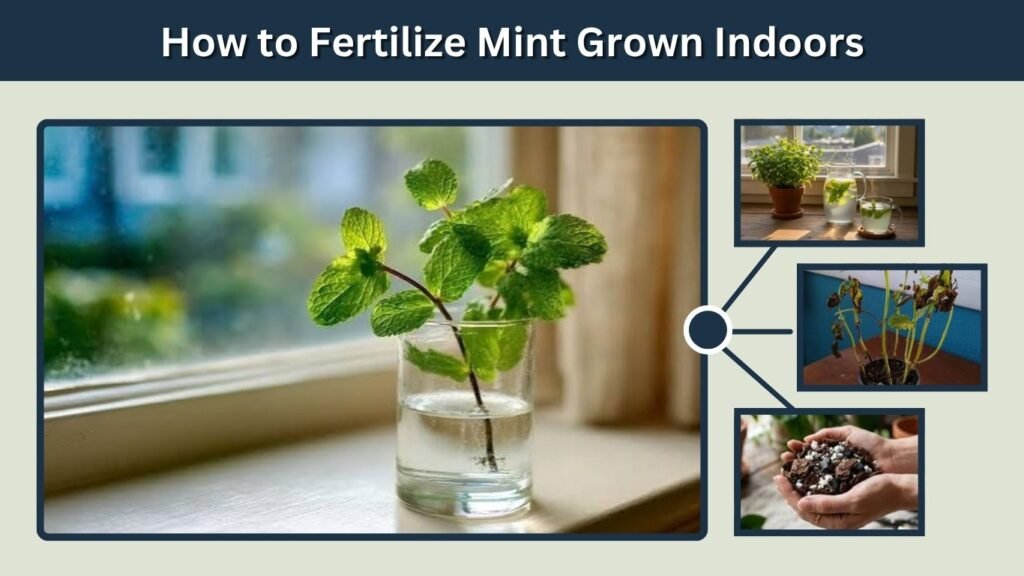
Mint grows quickly but does not usually require heavy fertilization. Too much fertilizer can encourage excessive soft growth and may reduce the intensity of the plant’s flavor. A small amount of balanced fertilizer during active growth is generally enough to support healthy foliage. Newly potted mint may not need immediate feeding if the potting mix already contains nutrients.
Feed Lightly During Active Growth
Apply a diluted balanced liquid fertilizer roughly every four to six weeks during periods of active growth.
Follow the fertilizer label and avoid applying stronger concentrations than recommended.
Avoid Overfertilizing
More fertilizer does not necessarily mean more flavorful mint.
Excessive feeding may produce:
- Weak stems
- Excessive leaf growth
- Reduced aroma
- Salt buildup in soil
- Brown leaf tips
If the plant is already growing vigorously, frequent feeding may not be necessary.
How to Prune and Harvest Indoor Mint
Regular pruning is essential when growing mint indoors because it encourages the plant to develop more branches instead of long, sparse stems. Harvesting leaves also serves as a form of pruning. Once your mint becomes established, removing small amounts regularly can promote fresh growth and help maintain an attractive, bushy shape.
Pinch the Growing Tips
Use clean fingers or pruning scissors to remove the tip of each growing stem just above a pair of leaves.
New shoots can develop from nodes below the cut, making the plant fuller.
Harvest Mint Leaves Regularly
Harvest leaves as needed once the plant has enough established growth.
For healthy regrowth:
- Cut stems just above a leaf node
- Choose healthy green foliage
- Harvest frequently in small amounts
- Avoid removing most of the plant at once
- Use clean scissors when making larger cuts
Leaving plenty of foliage allows the plant to continue photosynthesizing and producing new growth.
Remove Mint Flowers
Mint may eventually produce flowers, especially under strong light.
If your main goal is leaf production, pinch off developing flower buds. Removing flowers encourages the plant to direct more energy toward foliage.
Common Problems When Growing Mint Indoors
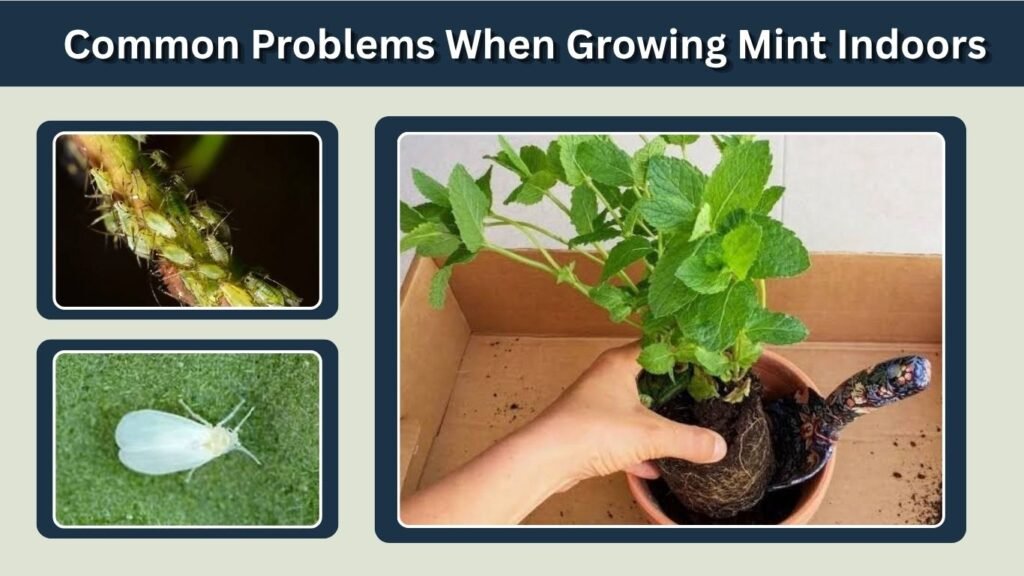
Indoor mint is generally resilient, but several common issues can affect its appearance and growth. Most problems are associated with watering, inadequate lighting, overcrowded roots, or pests. Regularly inspecting your mint plant makes it easier to identify problems early and adjust care before significant damage occurs.
Why Is My Indoor Mint Turning Yellow?
Yellow mint leaves commonly indicate excessive watering, poor drainage, inadequate light, or occasionally nutrient problems.
Check the soil first. If it remains wet for long periods, allow it to dry slightly and confirm that the pot drains properly.
Why Is My Mint Plant Leggy?
Leggy mint usually indicates inadequate light or insufficient pruning.
Move the plant to a brighter location and pinch long stems regularly to encourage branching.
Common Indoor Mint Pests
Mint grown indoors may occasionally attract:
- Aphids
- Spider mites
- Whiteflies
- Fungus gnats
Inspect both sides of the leaves regularly. Removing affected foliage and rinsing small pests from the plant can help control minor infestations.
How to Grow Mint Indoors Year-Round
You can keep mint growing indoors throughout much of the year by maintaining consistent lighting, moisture, pruning, and temperature. Growth may slow during winter because of shorter daylight hours, but supplemental lighting can help. Mint plants also benefit from occasional repotting or division because their fast-growing roots can eventually fill an entire container.
Repot Root-Bound Mint
Signs that mint may need repotting include roots growing through drainage holes, rapid soil drying, overcrowded stems, or noticeably slower growth.
Move the plant into a slightly wider pot filled with fresh potting mix.
Divide Overgrown Mint
Large mint plants can be divided into smaller plants.
Remove the plant from its container, carefully separate sections containing healthy roots and stems, and replant each section in its own pot.
Propagate Mint From Cuttings
Mint is one of the easiest herbs to propagate.
Cut a healthy stem just below a node and remove the lower leaves. Place the stem in a glass of water with the lower nodes submerged.
After roots develop, transfer the cutting into moist potting soil.
FAQs
1. Can You Grow Mint Indoors All Year?
Yes. Mint can grow indoors year-round when it receives sufficient light, consistent moisture, regular pruning, and moderate temperatures. Growth may slow during winter, especially when natural daylight becomes limited.
2. How Often Should I Water Mint Indoors?
Water indoor mint when the top inch of soil feels slightly dry. Depending on temperature, humidity, sunlight, and pot size, this may occur several times per week, but the soil moisture level should determine when you water.
3. Does Mint Need Direct Sunlight Indoors?
Mint benefits from several hours of bright light daily. Around four to six hours of direct or strong filtered sunlight is often sufficient. A grow light can supplement natural light when necessary.
4. Can Mint Grow Indoors Without Sunlight?
Mint cannot grow well without adequate light, but natural sunlight is not essential. A suitable grow light can provide the artificial light required for healthy indoor growth.
5. How Long Does Mint Take to Grow Indoors?
Established mint plants and rooted cuttings can produce usable new growth relatively quickly under good conditions. Mint grown from seed generally takes longer. Consistent light, moisture, warmth, and pruning help the plant become productive faster.