
Starting an indoor herb garden is one of the easiest ways to grow fresh ingredients at home, even without a backyard. With a few containers, suitable potting mix, and enough light, beginners can grow flavorful herbs on a kitchen windowsill, shelf, or countertop. Basil, parsley, mint, and chives are popular choices for small indoor gardens. However, each herb has different watering, sunlight, and growing requirements. This beginner-friendly guide explains how to choose herbs, prepare containers, provide proper care, and harvest fresh leaves throughout the growing season.
What Is an Indoor Herb Garden?
An indoor herb garden is a collection of culinary or aromatic herbs grown inside a house, apartment, or other enclosed space. Herbs can grow in traditional soil-filled containers or specially designed hydroponic systems. Indoor gardening gives you convenient access to fresh leaves while allowing greater control over temperature, watering, and lighting. Success depends primarily on matching plant requirements with indoor conditions.
Benefits of Growing Herbs Indoors
Indoor herb gardening makes fresh ingredients accessible near your cooking area. It also allows you to grow plants in apartments and homes with limited outdoor space.
Many herbs have attractive foliage and pleasant aromas, making them useful additions to kitchens and bright living spaces.
Best Herbs for an Indoor Herb Garden
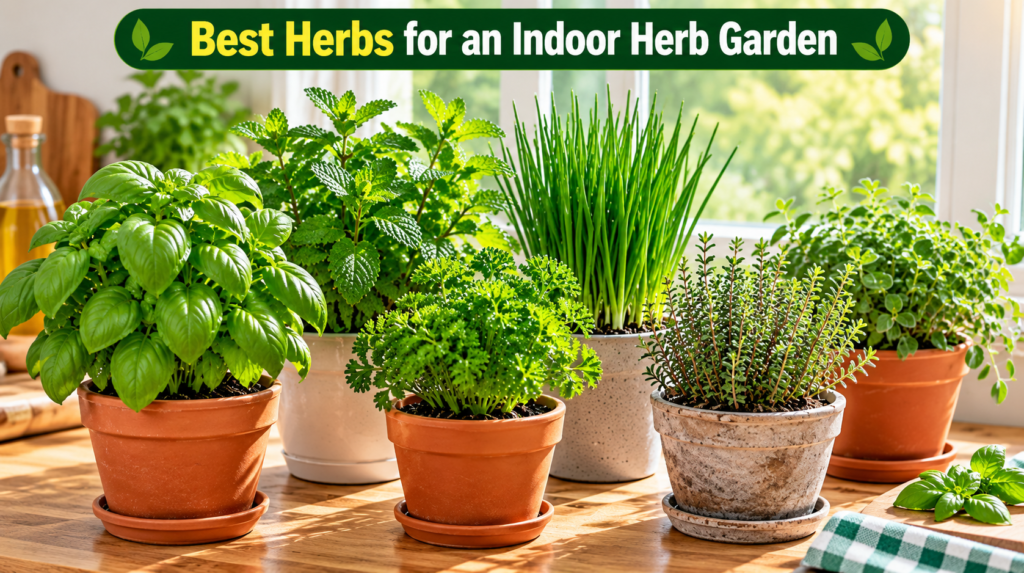
Choosing suitable herbs is essential for beginners. Some varieties adapt easily to container growing, while others require stronger lighting or more consistent moisture. Starting with a few manageable plants allows you to learn their individual needs before expanding your collection. Choose herbs that you regularly use in cooking and can support with your available sunlight.
6 Easy Herbs to Grow Indoors
- Basil: Enjoys warmth, bright light, and regular harvesting.
- Mint: Grows vigorously and prefers consistently moist, well-drained soil.
- Parsley: Suitable for containers and tolerates moderately bright conditions.
- Chives: Compact, productive, and useful for frequent harvesting.
- Thyme: Prefers strong light and soil that dries between waterings.
- Oregano: Grows well in sunny conditions with good drainage.
Which Herb Should Beginners Grow First?
Chives, mint, and parsley are reasonable starting choices when adequate light is available.
Basil is another popular option, particularly in warm indoor locations with strong sunlight or supplementary grow lighting.
What Do You Need for an Indoor Herb Garden?
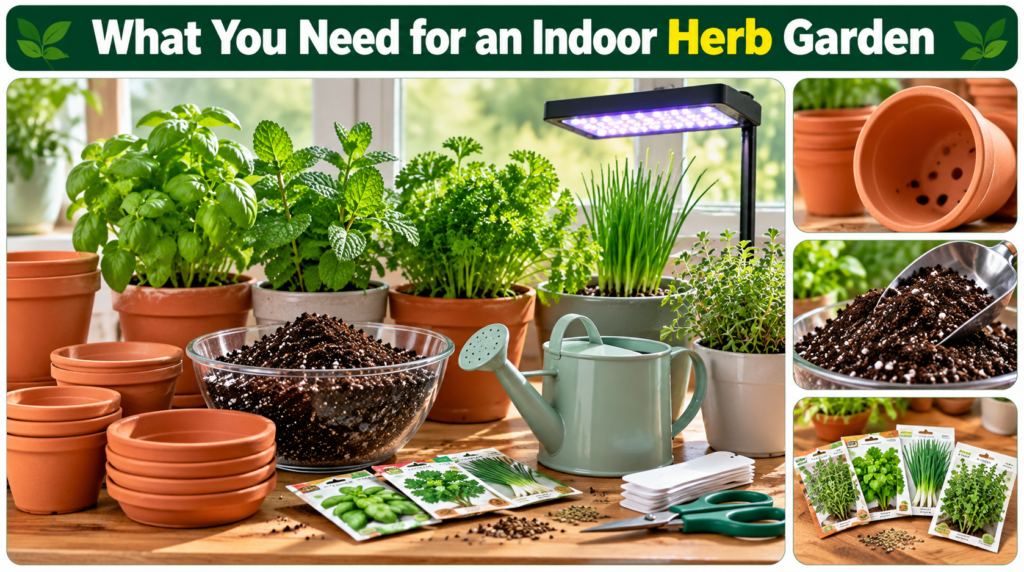
You do not need expensive equipment to create a small indoor herb garden. Most beginners can start with individual pots, suitable potting mix, and a bright location. Additional supplies become useful when natural sunlight is limited. Selecting proper materials from the beginning helps prevent drainage problems, weak growth, and unnecessary maintenance difficulties.
Essential Indoor Herb Gardening Supplies
- Plant pots: Containers with drainage holes.
- Potting mix: Lightweight, well-draining mix intended for containers.
- Herb seeds or starter plants: Choose healthy, suitable varieties.
- Watering can: A small container with controlled water flow.
- Plant saucers: Protect indoor surfaces from drainage.
- Grow light: Useful when windows provide insufficient sunlight.
- Plant labels: Help identify herbs and track planting dates.
Choosing the Right Containers
Small starter herbs often grow well in pots around 4–6 inches wide, although mature plants may need larger containers.
Select pots with drainage holes and avoid oversized containers that remain wet for too long. Mint generally benefits from its own container because of its vigorous growth.
How to Start an Indoor Herb Garden Step by Step
Setting up your first indoor herb garden becomes easier when you follow a simple process. Begin by evaluating available sunlight and choosing a few compatible herbs. Prepare the containers before planting, then establish a watering routine based on soil moisture. Starting with two or three herbs reduces the risk of overcrowding and allows you to monitor their progress.
Step 1: Choose a Suitable Location
Select a bright windowsill or another location receiving several hours of direct sunlight.
South-facing windows are often useful in the Northern Hemisphere, although surrounding buildings and seasonal conditions influence actual light exposure.
Step 2: Prepare the Containers
Fill containers with fresh potting mix, leaving some space below the rim.
Moisten the mixture lightly and ensure that excess water can escape through drainage holes.
Step 3: Plant Seeds or Starter Herbs
Sow seeds according to packet instructions, paying attention to planting depth and spacing.
For starter plants, position the root ball at approximately its original soil level. Firm the surrounding mix gently and water after planting.
Step 4: Monitor Early Growth
Check soil moisture regularly and observe how the leaves respond to indoor conditions.
Seedlings need adequate light to avoid becoming weak and stretched. Thin crowded seedlings when necessary to provide growing space.
How Much Light Do Indoor Herbs Need?
Light is one of the most important factors in successful indoor herb gardening. Most culinary herbs grow best with several hours of strong sunlight, although individual requirements vary. Window orientation, seasonal daylight, and surrounding structures affect how much usable light reaches plants. When natural light is insufficient, a suitable grow light can support healthier foliage.
Indoor Herb Garden Sunlight Requirements
Many herbs benefit from approximately 6–8 hours of direct sunlight daily, with some requiring even more light for vigorous growth.
Basil, rosemary, and thyme generally favor bright conditions. Parsley and chives can tolerate somewhat less intense light, although growth may slow.
Using Grow Lights for Indoor Herbs
LED grow lights are useful for apartments or kitchens with limited sunlight.
Many indoor herbs benefit from roughly 12–16 hours of supplemental lighting, depending on light intensity and the species. Follow the light manufacturer’s positioning recommendations and provide a daily dark period.
How to Water and Fertilize Indoor Herbs
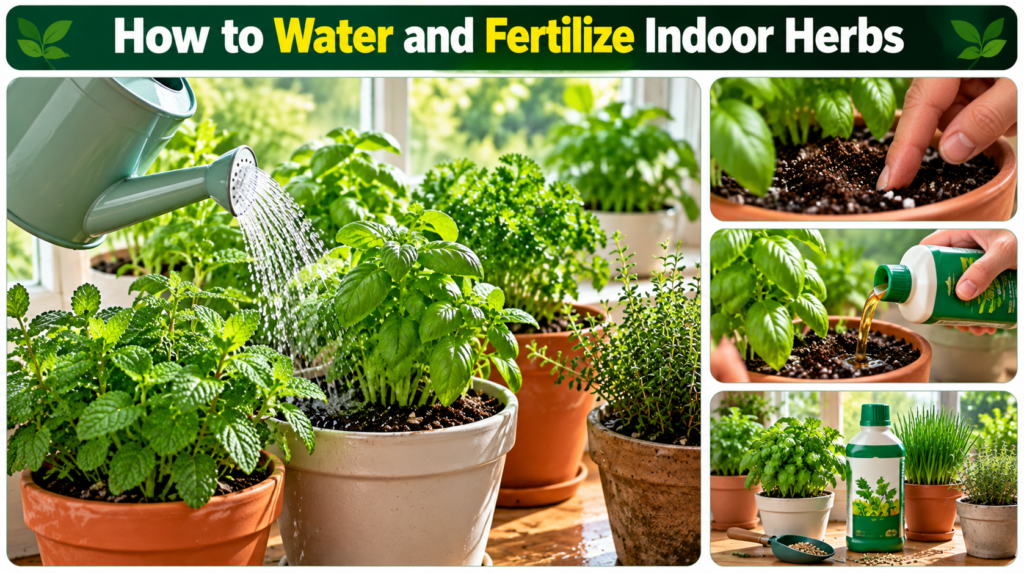
Watering habits strongly influence whether indoor herbs remain healthy. Overwatering can damage roots, while prolonged dryness may cause wilting and reduced growth. Different herbs also have different moisture preferences. Instead of watering every plant on the same fixed schedule, evaluate each container individually and adjust care according to plant type, temperature, and light exposure.
How Often Should You Water Indoor Herbs?
Check the upper portion of the potting mix before watering.
Mint and parsley generally appreciate more consistent moisture, while thyme and oregano prefer greater drying between waterings. Water thoroughly when needed, then allow excess moisture to drain.
Do Indoor Herbs Need Fertilizer?
Container-grown herbs may benefit from occasional light feeding during active growth.
Use a fertilizer labeled for edible container plants and follow its instructions. Excess fertilizer can encourage weak growth and may reduce desirable flavor concentration in some herbs.
How to Harvest Herbs Without Damaging Plants
Regular harvesting encourages productive growth in many culinary herbs. However, cutting too much foliage at once can weaken small indoor plants. Begin harvesting when herbs are established and producing healthy new leaves. Use clean scissors, choose suitable stems, and maintain enough foliage for continued photosynthesis and recovery.
Harvesting Basil, Mint, and Parsley
Pinch basil stems just above a leaf pair to encourage branching.
Cut mint stems above a node when sufficient growth is available. For parsley, remove mature outer stalks near the base while leaving younger central growth.
How Much Should You Harvest?
A useful beginner guideline is to remove no more than about one-third of healthy foliage at once.
Harvest lightly from small or slow-growing plants and allow time for new growth before cutting again.
Common Indoor Herb Garden Problems
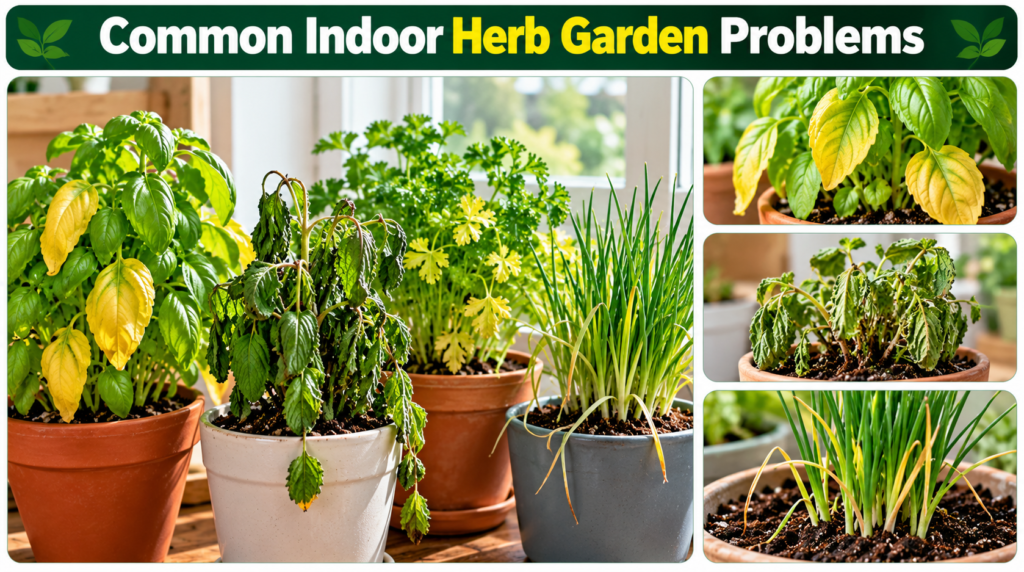
Indoor herbs can develop problems when lighting, watering, drainage, or growing conditions are unsuitable. Yellow leaves, weak stems, and slow growth are common warning signs. Fortunately, many issues improve when the underlying conditions are corrected. Monitoring your plants regularly makes it easier to identify problems before they seriously affect growth.
Why Are My Indoor Herbs Turning Yellow?
Yellow leaves may result from overwatering, insufficient light, nutrient problems, or natural aging.
Check soil moisture and drainage first, then assess the available sunlight. Avoid adding fertilizer until the likely cause is understood.
Why Are Indoor Herbs Growing Slowly?
Limited light is a frequent cause of poor indoor herb growth.
Move plants to a brighter location or provide suitable supplemental lighting. Also consider container size, temperature, root health, and seasonal growth patterns.
Can You Grow an Indoor Herb Garden Year-Round?
Indoor herb gardening can provide fresh leaves throughout much of the year, particularly when plants receive sufficient light and suitable temperatures. However, not every herb remains equally productive indefinitely. Some annual herbs eventually flower and decline, while perennial plants may slow their growth seasonally. Replanting and occasional maintenance help maintain a continuous supply.
Maintaining Fresh Herbs Throughout the Year
Replace aging annual herbs as productivity declines and start new plants when needed.
For reliable winter growth, use supplemental lighting and avoid exposing plants to cold drafts or direct heat from vents.
FAQs
1. What Are the Easiest Herbs to Grow Indoors for Beginners?
Mint, chives, parsley, and basil are popular beginner choices. Success depends on providing appropriate sunlight, drainage, and watering.
2. Can I Grow an Indoor Herb Garden Without Sunlight?
Herbs need adequate light for photosynthesis. If natural sunlight is unavailable, a suitable LED grow light can support indoor growth.
3. How Often Should I Water My Indoor Herb Garden?
Water according to soil moisture and herb requirements rather than following a fixed schedule. Most herbs grow poorly in constantly waterlogged soil.
4. Do Indoor Herbs Need Special Soil?
Use a well-draining container potting mix rather than compacted garden soil. Good drainage supports root health and reduces waterlogging.
5. Can Indoor Herbs Grow All Year?
Yes, many herbs can grow indoors year-round with adequate light, suitable temperatures, and proper care. Some annual herbs require periodic replanting.